{Tonight I Sat and Traveled Halfway Around the Globe}

Tonight I sat with friends and together we traveled
half way around the globe.  We watched
with awe, and respect and for me no small amount of envy
to be totally honest images of another world in Kenya.

I tasted the grit
in the air from the coal burning fires.  I felt, and saw the sorrow
and anguish in the hearts and eyes of women who have been thrown out, for having HIV/AIDS.  Saw a deep sadness that I have never known. Never.

I saw it and just for a moment felt
pain.  I heard the goats bleating, the children running barefoot
in the dirt, saw their wondrous angelic smiles.
I was there. Tonight

I sat with friends and travelled halfway around the globe and then I came home
to my air conditioning, my working fridge, a room for each child
and more.  Stuffed with a great meal,
I sit here with awe, respect and no small amount of envy

And wonder what’s next?  How am I to respond?
I am a doer.  Is it just that I like change?  I am used to going places, making things happen and
I want to make a difference.  What’s next?
I can’t help but wonder.

{a midstream update on “ch-ch-ch-changing”} part 2 of “I Hate Being Fat”

Sometime in May I admitted to myself and “the world”  in a post that I hated being fat.

It’s now late June and I want you to know that I’ve been busy.  More importantly, I faced something about myself that I don’t like, I can even admit that I hate about myself, my weight.  I wrote about it, which was cathartic just in itself, and it was a kick in the pants for Tom and for me to do something! 

There’s something about our culture that has your average person (I am including myself here) convinced that we can’t do anything about our appearance.  And if you’re not already thin, or already beautiful, or already in shape, stay out of the fitness clubs.

I had myself so talked into a pathetic corner of apathy, that I thought I shouldn’t even be seen on the streets exercising because I was such a joke.

I had my head so full of excuses that I felt hopeless, and worthless, and hated the sight of myself.

I’m here to tell you that I started exercising!  I read a book and stopped eating wheat.  I no longer have acid reflux.  I have lost (since March) thirteen pounds. More importantly I decided that I want to be around when my grandchildren get here. (No, this is not an announcement.)

I get out there and walk or walk/jog with my Couch Potato to 5K phone app cheering me along.  I do it five or six times a week, and have now going into my third week.  More than anything I decided that it was possible to change.

Do you believe you can change things about yourself?  There comes a point in “middle age” when we must either give in and give up OR do something.  I don’t think very many people believe they can change.  The stories of successful exercise or weigh loss or even giving up something like alchohol are too dramatic, too flashy, too much turn-your-life-upside-down unbelievable.

But this is a story mid stream — to tell you that if you want to you can change anything!

In March of this year I was the heaviest I have ever been — I was 179 pounds fat.  I felt horrible.  In May I decided perhaps I could do something about it.  I’m 166 pounds now and I won’t tell you my goal because I don’t want to jinx myself.  I am changing habits.  Changing lifestyle.  Changing the way I look at myself.  I am changing my future — likely extending my life, certainly I have more energy and optimism and hope for the future.  There is a power that comes from doing.

But I just want you to know that if you decide to, you can do anything.  What I have learned (at least about myself) is that it is a lot like being an alcoholic, in this way…

All I need to think about is today.  

All I know that I can change is today.  

Will I choose to go and walk/jog in 90 degree heat today, because this is what I decided to do? Yes, I will.  Yes I did.

What will you choose?  What will you decide to change today?

{My Father is Dead} A Remembrance on Father’s Day

“I will not leave you orphaned… I don’t leave you the way you’re used to being left–feeling abandoned, bereft… I’m leaving you well and whole.” — John 14

My father is dead
but he is alive in my head.
He haunts me.
I often wish I could kill him 
off for good, then I remember how much
I miss him.

My father is alive. In my heart and in my head.  And in the quick stream of my soul,
where pain rushes, he lives.  The deep scars of his voice,
the disappointed echo in the canyons of my mind
is strong.
I just want to be well and whole, I cry.

My father is dead
but he is alive in my head.
And on those days when every child needs a father, I cling
to an image of him smiling
at me, he is
enjoying
a brief moment of respite from the demons
that terrorized him.
(And us.)

My father is dead, but still he bullies
(me.)  I think,
he never meant to hurt anyone.
I think,
he’s watching me, from afar.
I hope he’s happy with me (now, finally.)

My father is dead, but he’s alive
every day that I go on strong, loving, powerful, a remnant
of him. Memories fade.
Forgetting is sometimes good.
But he left us so much more that we must remember.

My father is alive
in me.

MELODY

Other things I have written about my father.

{Growing up in a house chock-o-block full of Resentments and Grudges}

Yesterday I was a jerk.

And the odd thing, and what was quite alarming to be honest, is in the moment I felt justified.

So I shot out a petty email, said couple of things that I can’t get back.  While possibly true, I was dragging up old issues – my old issues.  And it’s entirely my fault that I have held on to this old difference of opinion. I don’t know what to do with Resentments. I vacillate when there is a potential for conflict and sometimes this turns into resentment.

I grew up in a house chock-o-block full of Resentments and Grudges.  My parents were always feeling insulted or resenting or holding a grudge from something someone did or said.  I suppose it sounds like I’m blaming them for today, but not really.

I just don’t have the tools to sort out what resentments are worth getting into and hashing out. And which ones you surrender and ask God to help you forget and of course eventually forgive.

I carried a resentment from Christmastime that reared its ugly head yesterday when asked a favor (and it was not a small favor mind you, but normally something that I would consider gladly).  Whew! Rather than slowing down and asking myself what to do about that Ugly Old Thing, I kind of made the person asking for the favor pay for it now.

Blindsided by this old concern, this person justifiably lashed back.

And then it was an opportunity to get into it and really hurt each other.  Or I could admit that I was wrong.  And, after much discussion and processing with Tom (I am so grateful for him), feeling attacked, and justified, and unfairly accused, and self-righteous, I did finally manage to get around to being genuinely conciliatory.

Today I sit here, sorely disappointed with myself and trying not to think about whether the other person was also wrong….because ultimately I am not their conscience.

But I thought I was passed this sort of immature crap.

And gratefully, this morning I was led to scripture. 

Alive in Christ is supposed to mean dead to your transgressions and sins, in order to do good works.  (Ephesians 2:1-10).   We are purified by him to slander no one, be peaceable and considerate, to show to humility to all. (Titus 2:14) At one time you lived in malice and envy, but when the kindness and love of God appeared … He saved us (not because of good things we have done) but because of his mercy.  Through washing, rebirth, renewal by the Holy Spirit (Romans 2:2) put off your old self to be made new in the attitude of your minds, put on new self. (Ephesians 4:30-31)  Do not grieve the Holy Spirit, get rid of all bitterness, rage and anger, malice, be kind and compassionate to one another, forgiving one another, be children of light whose fruit are goodness and truth and righteousness.

It’s hard to admit when I am wrong.  Being rigid and inflexible is not what we are meant for nor are we ever justified to carry around resentments because they can, and likely will, rear up at the worst moment.  As we rub against people in life, we’re going to make mistakes. For me, in those moments, it is sometimes most difficult to forgive myself. 

{On Parenting and Being}

Parenting is undoubtedly the most difficult job I’ve ever done. It’s not instinctive for me or intuitive, though Tom frequently argues with me on this, the fact remains that I do not feel like a good mother.  

I’m a perfectionist. I’m hard on myself. Most days I fear I’m such a f-up that I can’t raise healthy kids.  I fear that things that made me the way I am will be repeated in my children.  I vacillate between fear that I am too hard on my kids and fear that I’m not hard enough.  And I know that no matter what I do, kids ultimately make their own choices. How does one become a good parent before it’s too late?

If we look at how we were raised we can compare but there’s so much left …

to sheer randomness,

to the personalities of parents and each child,

to the context or environment,

to the spirituality of every person involved.

So we observe others.  We learn from our friends. We work on our personal shit. I find myself hoping  that the days will s t r e t c h out.  And that time will slow down.

Who doesn’t need more time to improve upon themselves?   With life moving so quickly and my children dashing into their teen years, I suddenly want to press the slow motion button. I see how quickly we got here, If only there were more time.

If the Bible were a parenting manual (which it is not) I think perhaps it would say work on yourself (character) first and the fruits of your life (spirit) and then perhaps God will add to these things, but there are no guarantees.

One thing I know. The more you try to control the outcome, the less likely you’ll get it exactly the way you want it.

So what’s a person to do?   Getting my kids report cards, I felt as if I was back in middle school.  I want so much more for my kids than what I had, everyone does.  I don’t want their choices in life to be limited by their current lack of imagination, or willingness to work hard, or the incentives as they perceive them.  And as I rail internally against my own feelings of failure, I relive my wretched school years and I cry a bucket of tears, full of my own regrets and feelings of failure.

I am left with more questions.

How do we teach our children that we love them unconditionally – that no matter what they EVER DO, seriously I mean EVER — That our love is irreversible?  This is a super power, this unconditional love.  If they get this one thing I believe all the rest will fall into place for them.

I never believed I was unconditionally loved growing up.  I thought love I received or didn’t was connected to my behaviours, choices, failures and successes, “the B should have/could have been an A” because nothing was ever good enough to make my father happy.

How do we make it absolutely clear to our children that no matter what job they do some day, or what grades they get or what degrees they accomplish, or what hobbies, interests, sports or other talents they choose or naturally have, no matter, they are loved!

And I think perhaps parenting is a daily laying down of my life — giving up my rights — my power — my control, and sitting with the Holy One, admitting my weakness, my brokenness and that I cannot do it alone.

For a perfectionist it is hard to admit there is no perfect parent, that mistakes will be made, are made daily.  And ultimately I am not in control.

For a perfectionist it is hard to let go and accept that who my children become is entirely up to them!

Celebrate them.  Enjoy them.  Affirm them.  Give them every opportunity.

And also give them space to find themselves.

Just as I am.


{Listening for God}

I listen for you.

But I am no good at hearing.

For you, my God speak quietly; a whisper.

Hints of your love

blow in the grasses,

the bird’s song,

the wind wafting in the trees,

in children’s laughter.

I listen for you.

Help me to hear.

{A Cautionary Tale of Sobriety}

When I first began this blog in 2008, it was (in many ways) a place to process my alcoholism and recent sobriety.  I felt very alone and thought, why the hell not?  One of the first things I wrote was a poem (of sorts) titled It’s Lonely Here on The Wagon.

That poem chronicled the lonely place of being an alcoholic and a Christian who had lost her faith.

At that time, I knew that I had to stop hanging out with my “drinking friends” and even had one tell me she couldn’t help me with my sobriety.  She had enough problems of her own.

I know she didn’t mean to reject me, but that’s what it felt like.

And I began to tell myself that my friends with whom I had sat around late at night smoking and laughing with, drinking to a buzz, then way past a buzz, didn’t like me anymore and that I was unlikable.  I told myself that the only reason they hung out with me was because I’d drink with them.  I convinced myself that they didn’t like me, sober Melody.  To be quite honest I don’t even have answers to speculation like that, but I know this.

In the light of day I was a manipulative bitch sometimes.  I was petty.  I could be petulant.  I constantly needed affirmation that they liked me.  I even did things to prove to them that I was “cool.” If it sounds like the emotional needs of a high school aged kid, it’s because that is what it was.

I was emotionally stunted and didn’t know how to be a good friend.  In fact, sometimes I don’t think I really know how to be one now.  Perhaps I’m a little better at boundaries. 

I tell myself that I’ve come a long way from those days of drunken insecurity, but something hit me just this week.

I pretty much live my life expecting pain

I expect rejection and so I keep people at arm’s length.  I assume others won’t like me and so I stay aloof thus proving I’m unlikeable.  I assume that I am uninteresting, so I don’t engage in conversation.  I believe that I’m incapable of deep intimacy and so I stay standoffish, even remote.  This is what I do.  Now that I see it, perhaps I can begin to change.  Why assume people are going to hurt you by rejecting you?

Today I have to go to a school picnic and see a few of those same friends that I pulled away from four years ago.  My head and heart are telling me that they rejected me, but I know it isn’t true.  I’m feeling afraid.  Later I have to go to a graduation and see more of those old friends.  I’m sick to my stomach, afraid.  My shyness, aloofness, insecurities are flaring and for just a moment I think that it would be easier if I could just have a drink.

Yes, four years in July I’ve been sober and those thoughts return just like that.  Even though I know it’s a lie, the weight of social, emotional, and historic pressures are great.

I won’t drink.  But I want to and that is a cautionary tale for me.

MELODY

This is a part of a series titled: A Different Kind of Real, where I just write what’s on my heart without a lot of self editing or worrying about what you’ll think.

Some of the things I have written about my alcoholism:

I am not Ashamed
The Slow Crawl Of Healing
What Can I Say About Two Years of Sobriety?
Choose Joy
For Everything There is A Season.
Eulogy to Life.
Letting Go.  Thoughts on Being An Alcoholic
ReThink Everything
My First AA Meeting
My Crooked Heart
It’s Lonely Here on the Wagon
The Place of Nowhere
A New Way to be Human
Eulogy to Life
Winter Comes
Splintered Truth
This Epic Grief
No Dignity
I Need a Filling
Addict

{When Did you First Believe that God is Male?} #mutuality2012

Where do we form our ideas about God?  And more importantly when?  How young does it begin to register in your head and heart, your idea of God as a masculine figure and that your daddy is also male? How did they become so mixed together, mingled and intertwined?

And I asked myself today.  How do you pull them apart, which you must for a variety of reasons but most of all because you don’t know how to pray to that God. You don’t know that God.

What if you grew up feeling that you will never measure up, never have a day in your small, inconsequential life of being good enough, no matter what you do.  What if you grew up believing that your life, whatever you become, whatever you might

Hope for, dream or wish, whatever you might be today isn’t enough? 

What if you have believed since you were a very young girl, that all your striving will make Daddy love you more and yet it doesn’t work? Did not work.  What then?

What if you learned that God isn’t male What if God isn’t just a daddy or a father but a mother, a healer, even a lover?  God is something beyond our comprehension, wild and incredible, beyond imagination.

How are we to pull those ideas apart, with their

Deep Roots that have grown up all over us, entangled

with one another, clinching our chest tighter year after year – strangling,

smothering,

killing you.

I know that I cannot separate these things.  In my human effort it’s impossible to make my shouting, critical, mean-spirited, controlling, effortlessly (it seemed) horrible and cruel daddy to stop.

I have to throw that idea away.  I have to toss that idea of human daddy being God or or God being like my daddy, toss it far into the ocean with all the other idols I have collected in my life.  I’ve got a few, but this one is a huge Monster of an idol and in my power I cannot even lift it, to toss it away into the vast murky universal ocean.

I cannot.

So I sit here, on the beach.  My feet sandy, my toes getting wet just a little, I pick up a pebble and fling it as far as I can.  I do not see how far flies, but I know that it is gone.

My hand is empty.

I imagine that I hear it fall, then swirl down into the waves, the tide pulling it out, further and further away

from me.

That’s how far I toss the idol of my human daddy being my God.

Out of my mind.

out of my heart,

out of my life,

daddy’s gone.  Human-daddy-formed-god, to be replaced with …

Something New, that I do not know yet.

“God is not limited by gender because God is Spirit.” – Mimi Haddad

I want to know that God.

So I am going to stay here on the beach a little while longer waiting, hoping, dreaming, believing that this God, who I cannot even comprehend yet, wants to know me.

Melody

“The point of the incarnation was that Christ represents your flesh and mine. Perhaps for this reason, Christ’s self-appointed name was most frequently Son of Man (anthropos—humankind) not Son of Male (aner). Gendered deities were part of the Greek dualistic system, which Jesus, as your flesh and mine, stands against.”  – Mimi Haddad, CBE

{On Staying in My Wonderful, yet Complementarian Church}

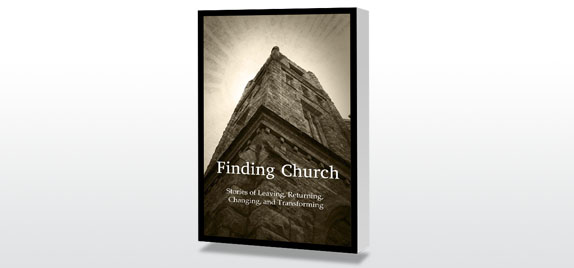
I’m pleased and immensely honored to have an essay included in the upcoming book, Finding Church, a Civitas Press community project.

This particular essay was difficult to write as it addresses the choice to stay at our wonderful and yet Complementarian church. Suffice it to say that I sweated blood, shed tears and lost sleep writing this one.

The estimated publishing date November 2012. I will let you know how to order it as we get closer.

{To the Elders and leaders of X Church, fellow believers in Christ} #mutuality2012

I believe this letter to my church’s Elder Board could have been written to almost any Complementarian church’s elder board.

To the Elders and leaders of X Church, fellow believers in Christ:

If anyone is in Christ they are a new creation.  The old had passed away, behold, the new has come.  All this is from God, who through Christ reconciled us to himself and gave us the ministry of reconciliation.  2 Corinthians 5:17-18

I am writing today in response to the request for Elder submissions.  Understanding that your responsibilities as elders are to guide an enormous church made up of a diverse population, I want you to know that this letter is ten years in coming and has been written with respect for the authority of scripture and for your roles as leaders. Your responsibilities, I am certain, cause you some “fear and trembling” and I believe that you have a sincere desire to listen well to many people with unlimited perspectives.  I have utmost respect for “authority” both within the church and in life and I hope that you will consider these thoughts prayerfully, before God and one another, and with the full congregation of X, both men and women, in mind.  Young and old, educated and less knowledgeable, Conservative and liberal, Black, white, Asian, international and US citizens, we all make up the beautiful and complex church of X.  What a daunting task you have.

I am writing about the roles of women at X.  I have been in dialog with Pastor about this topic for years and always appreciate his frankness and perspective.  I respect the need to be aware of the climate in X, the Church at large, as well as within our culture.

As you know, many Christian denominations continue with the practice of male-authority.  And others are open to change.  Though a clear, Biblical viewpoint was preached recently about how men and women are to treat one another, I know there are many at X, perhaps some of you, who believe in the universal male-headship principle. Obviously if it were simple, things would have changed with cultural and societal changes.

But it is a complex thing to parse through scripture to find what is Core Truth and what is cultural truth, of a time.  There are dozens of perspectives on the place of and roles for women in the church.

I appreciate the women who do serve at X church, though support staff in the church is dominated by women and the leadership is dominated by men, which I find strange and a bit backward and tells me that things haven’t progressed as much as I would wish.  What speaks loudest is that there are no women on the teaching team.  And, though perhaps this is even more difficult to change, women are still not considered for the leadership of being an Elder (who lead, manage, govern) and Deacons (who serve, care, guide) are invisible and do what?  I don’t know.

In my conversations with pastor, it has been clear to me that some of you over the years (I realize you’re a revolving door of men) do feel empathetic to the changes in the Church at large.  Perhaps you have even studied this on your own?

The New Testament church thought that the Lord was coming in their day and therefore did not very courageously attempt to speak to the injustices of their time.  Paul backed away from it so much that he prefered to be single than complicate his life with a woman and family.

But today, more than 2,000 years later, it is quite clear that Christ is yet to come, and I find it imperative that believers in Christ individually and corporately, with the power and influence each has been given by our Lord, speak to the injustices that plague humanity — war, poverty and hunger, and sexism are just a few as well as prejudice, bigotry and racism.

I ask therefore: Do you believe that women must not teach Biblical doctrine?  Do you believe that women are unacceptable for Church governance or pastoral and preaching roles?  Because that  is the current example being set at x.  And I would press back saying, if women are not to be in teaching  and in authority over men, why are women encouraged to be missionaries and managers at x?  This inconsistency implies that women can have authority over men in certain circumstances, just not over men of their own race and in their own church.  This I do not understand and ask if you see the conflict?

I urge you to consider the message you are sending to young people in the church, men and women who are considering how they might serve God with their lives.  And this has rampant implications for the relationships between men and women, boys and girls, as they see this conflict of ideas.

Church historian Janette Hassey, in her book No Time for Silence, talks about the fact that American evangelicals before the turn of the century and after, advocated and practiced women in pastoral ministry.   My own grandmother, a missionary in the 1930s, was an evangelist and preacher in upstate New York, alongside my grandfather.  Together they were missionaries in Tibet before the war.  Returning home because of WWII, they continued their work here.  I don’t think my grandmother would have been encouraged to use that gift if she were at our church.  It is sad that the twentieth century took such steps backward for women in the church.

I would like to ask you, individually, if you prescribe to the concept of male headship – or not — as heard in the recent sermon?   Whether you think headship is a part of the created order or merely a necessity in wake of the Fall it is not good thing for women.  And perhaps you say, “So what?  The Bible says what it says. Live with it.” I would push back asking whether you knew that next to alcohol and drug abuse the most reliable predictor of wife battering is “zealous conservative religiosity?”   This is just an example of how this policy within the Church at large has hurt women.

As I said before, I believe one call for Christians is to resist chronic injustice – to speak out when it is seen.  I see women being subjugated in the church, being kept from being elders when their full gifting, experience and knowledge is toward leadership. I see no women being encouraged toward teaching, serious scholarship and study of theology even when God has given them an ability, a passion for and a call to scriptural truth and teaching.  I see women who outside of the church are being affirmed and are leading faithfully and well, within the Church not even being considered to serve with the full capacity of those God-given abilities.

It seems to me that the current perspective takes parts of scripture and holds to it as if it were a Universal or Core Truth, while rejecting many other parts of the Old Testament and New Testament, that are cultural rules and are obviously outdated.

I don’t think women’s subjugation is any part of the core Truth of scripture.

The Church has changed its stance on many important things in the last 2,000 years: like strict or flexible observing of the Sabbath, pacifism vs. a just war, Christian’s cultural involvement or separation from culture, but gender roles remains set in what has “always been” especially in denominations, especially in ours.

Change in something this important is difficult and tumultuous, I understand.  To be different than your denomination, to think for ourselves, to study Scripture openly looking at original text with a heart for all people — all this is messy and painful and even unfortunately divisive. It is much easier to ignore it until the culture and climate change so much that you don’t have to risk.  I get that.  But it breaks my heart.

I would agree that on gender roles, the Bible is less than clear.  Just like the NT church was ambiguous about slavery, but we never question that change on Biblical grounds.  It is obvious today, that slavery is an ugly and abhorrent part of the Old and New Testament times. And in the fifties it was believed in the church that women are better suited for parenting and that idea has been rejected over time ,seeing clearly that children need both parents involved in their upbringing.  There are many things that we reject, as the culture and as times change.  But though the Bible isn’t clear it isn’t silent either about gender in the church.

And Jesus was not silent, he was constantly affirming women.

As Mary Stewart Van Leeuwen so beautifully describes, it is more like an …

“… unfolding drama in which salvation is made available to more and more groups that were previously considered marginal.  Salvation and equality of access to its privileges and responsibilities, is not just for Jews, but for non-Jews;  not just for free persons, but for slaves; not just for men, but for women – and so on, in keeping with the principles of Paul found in Galatians 3:28.”

So, if the Bible is ambiguous about gender roles and headship, how can I be confident and so sure that my belief in changing the roles is sound?  For me it comes down to our hermeneutic.

Willard Swartley in Slavery, Sabbath, War and Women asks the following questions, which I most respectfully pose to you, asking you to consider, as it relates to the issue of Women in the Church:

  • How are the two Testaments related to each other?
  • How is the authority of Jesus related to all Scriptures?
  • What is the relationship between divine revelation and the culture in which the revelation is given and received?
  • Does Scripture mandate, regulate, or challenge certain practices such as those associated with slavery, war, and the subordination of women?
  • Does the Bible say only one thing on a given subject, or does it sometimes show differing, even contradictory, points of view?
  • What does it mean to take the Bible literally?  Is that a vice or a virtue?  Does “literal” signify the intended meaning of the author or a meaning that seems natural to us?
  • To what extend does an interpreter’s predetermined position, even ideology (such as patriarchy or feminism) affect the interpretive task?

I think we can all agree the Bible is the incarnate revelation but one should also be taking into serious consideration the audience, time and place to which each book is addressed. Would you not agree that the Bible tailors its message to real people in real, culturally diverse situations?  This is the strength of, the power found, in Biblical revelation.

According to Willard Swartley:

“Scriptural diversity is the natural result of the one true God’s graciously relating to humans, drawing humans into a relationship, inviting free response and full engagement … Biblical truth is concrete, shaped usually by specific contexts, needs and opportunities.  Interpretation should affirm and celebrate this feature of divine revelation, communicated through many different writers in different linguistic, cultural and political contexts.  The variety itself becomes the missionary’s textbook [for] the biblical text spoke God’s word in a variety of cultural, economic, political, and social settings.”

And then Mary Stewart Van Leeuwen whose book Gender & Grace has profoundly changed my perspective on men and women and the Gospel says this beautiful and profound statement:

“For the sake of the advancement of God’s kingdom in a given time and place, temporary compromise can and often must be made with the societal status quo.  … Therefore Scripture is accommodated to the cultural setting of its varying audience, constantly being augmented by a move toward the vision of God’s coming kingdom.  Indeed, Jesus’ elimination of the sexual double standard was so surprising to his disciples that they concluded it was safer not to marry at all! “

Van Leeuwen continues that “the basic impulse being the Fall – the wish to be independent of God – is no respecter of persons.  Feminists and patriarchalists are equally in need of redemption.”

Again, theologian Willard Swartley with a good test of the degree to which our ideologies warp our reading of Scripture.

“Our willingness to be changed by what we read, to let the Bible function as a “window” through which  we see beyond self-interested ideologies, and not a “mirror” which simply reflects back to us what we want it to show.  Biblical interpretation, if it is worthy to be so called, will challenge the ideology of the interpreter.  It can and will lead to change, because people do not come to the text thinking as God thinks, or even as the people of God thought in serving as agents of divine revelation.  Interpreters [must] listen to the text carefully enough not to like it.  [When they do so] it powerfully demonstrates that the text’s message has been heard and respected.”

This is challenging because I am full of self-interest when it comes to being a Christian woman — that is a tribe that I belong to and feel a responsibility to care for — not because I crave authority, but because I long to see women carrying out every gift from God in their lives, not just in the marketplace, but within the church!  I am hopeful that this will happen in my lifetime.

I must ask you, individually, whether God is challenging you to reconsider your thinking on women’s leadership, governance and teaching roles at X, and whether the time has come to face that the current roles are stifling more than half of the church to be heard fully and uniquely.

But even more important (to me) is that this stance just may be holding back the fullness of the Kingdom of God from being revealed in our generation.  And my heart weeps with that thought.

Gretchen Gaebelein Hull, in her book Equal to Serve sees Scripture as pointing toward equality and mutual submission between the sexes and I’ll leave you with this quote from her book:

“Today, like James and John, so many people pluck at Christ’s sleeve: dogmatists, traditionalist, egalitarians, feminists, liberationists, all sorts of activists.  They all say the equivalent of “Seat me nearest You, Lord; show those other people that my system is best.” As they pluck at Christ’s sleeve, thinking that places at His right and His left will bring them honor and power and worldly recognition, He looks at them – and at all of us – and still asks: “Can you drink my cup? Don’t you see that whoever stays nearest me must … go where I go, serve where I serve?  Don’t you see that, loving the world as I do, I must serve it to the uttermost?”

It may come down to this: Can you personally serve under a woman, at work or at Church, and why not?  Could you accept that your wife, sister, mother, friends have gifts that make her more visible, knowledgeable, or experienced than you?  Could you dare to be like Joseph, step-father of Jesus, playing a lesser role than Mary?  What prevents you from rethinking, studying anew these things?

Fear? Ambivalence?  Prejudice?

I am incessantly asking myself over the last ten years at X, would I put aside my perspective if the time isn’t right for this church?  Would I work for change in a patient and loving way, rather than sinking into anger or bitterness?  I do feel that as an active participant (not a member) at X Church I have done that, meanwhile praying for the timing, the hearts of the church members, that God’s revelation on women would come.  And asking what part I should or shouldn’t play in that.

I have participated in women’s ministry here and seen women teaching who do not have the confidence that they been given the authority to speak definitively about scripture.  This undermines their ability to open scripture and speak prophetically.   This saddens me.   I have seen many women serving in various roles and respect them and know that they are listened to, but I still am not hearing anyone speak to this central issue.

I don’t know why God has given me such a burden for this but I carry it. 

Over the years I have written and sought clarity about why this practice of male elders and teaching team continues?  And since I do not feel confident that the issue is being discussed fully, openly or seriously (being sidelined for many other important issues of the church) I send this to you, asking for you to consider it now.

Each of us must ask ourselves, male and female alike, are we living as an old person or a new creation?  In the flesh or in the Spirit?    And what are we being called to, as we serve together?

I hear God’s call as a voice for certain voiceless populations, including women in the Church. 

I am constantly clarifying, are you sure Lord?  And at times I have been unproductive, and not very Godly, allowing myself to be anxious or angry or even bitter.  I have experienced a lot of pain.

In these years, I have come to a certain amount of peace with simply speaking up from time to time, meanwhile to be in study and prayer.  And then to been in a place of seeking the rest of the time.  But as the spirit seems to speak (or as elder nominations come up) I ask God what I should do, again  — do this time.

So thank you for reading this and hopefully giving it serious consideration.  I have purposefully not tried to write a treatise for the Biblical interpretation of all the key and most controversial verses — I’m no biblical scholar and you have one on staff.  I would ask you to free him up to study this if he hasn’t already.  Listen to him.  Then give space and time for your own study and careful deliberation.

God will speak.  God has a plan.

With respect and gratitude for your sacrifice of service,

Melody Harrison Hanson

October 7, 2010

The major ideas that persuaded my thinking and inspired this are from Gender & Grace: Love, Work & Parenting in a Changing World by Mary Stewart Van Leeuwen, ©1990, IVP.  She did the scholarship, I just happen to agree with her.  Also, Call Me Blessed: The Emerging Christian Woman by Faith Martin.

Other things I have written on these topics search for Women in the Church or Feminism.  I have written a lot.

I have intentionally removed the name of my church, though it wouldn’t be hard to figure it out, because I think these issue are relevant to almost any Complementarian church.  

{Do I see, hear, or know the least of these? Do I know Jesus? (and an apology to white men)}

For several days I’ve been trying to figure something out. Why did it hurt so much?

I like to ask questions and throw things out on Facebook, sometimes (many times) that I don’t even think through carefully. I’m something of a rabble-rouser. I sometimes even take pride in it, thinking it’s my “special gift” to provoke others.

Why did it hurt each time I read her words?  And I did read them, over and over, again and again.  I thought about it all weekend.  Even becoming grumpy, bothered, then deeply troubled as my stomach lurched and tears sprang to my eyes, after days there was still, so much pain. And I have come to know what this means — linger here.  Deeply, scrupulously sit with this, discover what it is.

I am mouthy, petulant and troublesome, even stupid at times, on Facebook. This is what I said:

“I’ve long wondered why it doesn’t occur to white men that they are so privileged, but as Julie Clawson says if you don’t get that you are a part of the problem. It’s not tokenism rather catching up to the world, where women and non-white are your equals and simply want the opportunities to represent themselves.  In a WHITE and in a MALE dominated culture.” 

Okay (in retrospect) that was arrogant and whiny. (Perhaps I really do need to give up Facebook.  It feeds all the wrong parts of me.)

Then my old  and dear friend, she challenged me. I quote the entire conversation because it matters to me.  Here is exactly what she said (Emphasis is mine):

I wonder Mel if in the logic of what you are saying in your statement whether it cannot be applied to anyone who has any privilege in any part of the world. And I do mean that literally within the logic of your statement. It is known as systemic sin and it can be applied in other ways…I wonder why people who earn over $20,000 a year, or I wonder why persons who were able to go to college, or I wonder why people who have running water in their homes and carry through the logic. I think you are able to speak in these ways because you are part of a white and economically dominant culture so then you are in a similar situation to the people you are accusing.

I am not saying therefore change cannot be brought about. I am saying we all live in power dominated systems. It is what Scripture means when it talks about principalities and powers, and we ALL have our blind spots where we don’t see our privilege and we don’t see our power orientation and we don’t see that we don’t see. I do see that the Gospel calls us to a different way – of being the servant in love. I find it fascinating that Jesus was among an oppressed people, the memory of about 2000 Jews having been hung on crosses at one time within the living memory of people alive at Jesus time,

the fact that the centurions came out at Passover in huge numbers because Rome knew what Passover celebrated,

the fact that Jesus told them don’t just walk one mile, walk two…what is that about…it is about

the fact that by law a centurion could require you to carry all his gear for a certain length of his journey,

the fact that Paul didn’t free the slaves but gave alternate teaching…

So even those who do get it who have a household of over $20,000 a year, or a University/college education, or have water running through pipes to their homes are still part of systemic inequality how often do YOU, do I not get it when we eat an ice cream when that money could have gone to digging wells etcetera….

I am not saying stop seeking to bring about change but let’s recognize we white women are parts of a fallen world too…

And then ask ourselves what concretely does it mean to be a servant in love to those whose lives we can impact concretely … Why does Jesus define His kingdom in the manner he separates the sheep from the goats…

Me: So, what then? Certainly yes, white women are born into a world of privilege and opportunity and we too should look for ways to give up our power. I suppose I just assumed this was understood.

She said: But why do you assume it was understood, when you constantly are commenting about white men…

Me: I never/rarely say “white” men, but it must be implied. Your “constantly” gives me pause perhaps I just talk too much.  I don’t mean “white” when I talk about men. We all have our lens through which we process obviously.

And that was the line that cut so deep …

when you constantly are commenting about white men…” 

You see I don’t want to be known for that, for constantly commenting and complaining about white men.  Even if I do feel a challenge to speak on issues of women in the church, as I do, I do not want to be known for that.  That feels wrong.

That is wrong. 

To my friends who I have offended or verbally accosted, white men mostly I ask you to forgive me if you can.  

[Friends, I hope you will bear with me, I think you will be glad that you read to the end.]

And not having read about the sheep and the goats and not remembering the story at all (apologies to all my Sunday School teachers) today, it’s still bothering, even nagging at me. So I read the account from Matthew 25:31-46 of the Sheep and the Goats (again emphasis mine):

 “When the Son of Man comes in his glory, and all the angels with him, he will sit on his glorious throne. All the nations will be gathered before him, and he will separate the people one from another as a shepherd separates the sheep from the goats. He will put the sheep on his right and the goats on his left.

“Then the King will say to those on his right, ‘Come, you who are blessed by my Father; take your inheritance, the kingdom prepared for you since the creation of the world. For I was hungry and you gave me something to eat, I was thirsty and you gave me something to drink, I was a stranger and you invited me in, I needed clothes and you clothed me, I was sick and you looked after me, I was in prison and you came to visit me.’

“Then the righteous will answer him, ‘Lord, when did we see you hungry and feed you, or thirsty and give you something to drink?  When did we see you a stranger and invite you in, or needing clothes and clothe you? When did we see you sick or in prison and go to visit you?’

“The King will reply, ‘Truly I tell you, whatever you did for one of the least of these brothers and sisters of mine, you did for me.’

“Then he will say to those on his left, ‘Depart from me, you who are cursed, into the eternal fireprepared for the devil and his angels. For I was hungry and you gave me nothing to eat, I was thirsty and you gave me nothing to drink, I was a stranger and you did not invite me in, I needed clothes and you did not clothe me, I was sick and in prison and you did not look after me.’

 “They also will answer, ‘Lord, when did we see you hungry or thirsty or a stranger or needing clothes or sick or in prison, and did not help you?’

“He will reply, ‘Truly I tell you, whatever you did not do for one of the least of these, you did not do for me.’

“Then they will go away to eternal punishment, but the righteous to eternal life. ”

Whatever you did for the least of these …

I have so much it’s sick.  I am rich.  I am white.  I am educated and privileged.  I have every opportunity and I have every responsibility to see and to do something. 

And most days, other than that, if I am not going to do that I think I just need to shut up. Yes, I write.  And I may have “things to say.” But I was struck to my core, shattered, stunned with the conviction that this is the core message so many of us (me, I am missing) are missing.

Do I see, do I hear, do I know the least of these? Do I know Jesus?

Thanks to a dear friend, who loved me enough to challenge me, I may never (I hope) be the same.  This is one of those serendipitous and life altering moments.  I have a choice — to see Jesus, to invite Jesus in, to clothe Jesus, to care for and heal Jesus.  I have a choice to know him.

The question remains what that looks like with my hands and feet.  I remain open for that.

I am so grateful.

{This Kind of Week}

You must descend from

your head into your heart.

At present your thoughts of God

are in your head. And God Himself is,

as it were, outside you, and

so your prayer and other spiritual

exercises

remain exterior. Whilst you are still

in your head,

thoughts will not easily be subdued but

will always be whirling about, like snow

in winter or

clouds of mosquitoes in summer.

—Theophan the Recluse