I listen for you.
But I am no good at hearing.
For you, my God speak quietly; a whisper.
Hints of your love
blow in the grasses,
the bird’s song,
the wind wafting in the trees,
in children’s laughter.
I listen for you.
Help me to hear.
Logic will get you from A to B. Imagination will take you everywhere. – Einstein
When I first began this blog in 2008, it was (in many ways) a place to process my alcoholism and recent sobriety. I felt very alone and thought, why the hell not? One of the first things I wrote was a poem (of sorts) titled It’s Lonely Here on The Wagon.
At that time, I knew that I had to stop hanging out with my “drinking friends” and even had one tell me she couldn’t help me with my sobriety. She had enough problems of her own.
I know she didn’t mean to reject me, but that’s what it felt like.
And I began to tell myself that my friends with whom I had sat around late at night smoking and laughing with, drinking to a buzz, then way past a buzz, didn’t like me anymore and that I was unlikable. I told myself that the only reason they hung out with me was because I’d drink with them. I convinced myself that they didn’t like me, sober Melody. To be quite honest I don’t even have answers to speculation like that, but I know this.
In the light of day I was a manipulative bitch sometimes. I was petty. I could be petulant. I constantly needed affirmation that they liked me. I even did things to prove to them that I was “cool.” If it sounds like the emotional needs of a high school aged kid, it’s because that is what it was.
I was emotionally stunted and didn’t know how to be a good friend. In fact, sometimes I don’t think I really know how to be one now. Perhaps I’m a little better at boundaries.
I tell myself that I’ve come a long way from those days of drunken insecurity, but something hit me just this week.
I expect rejection and so I keep people at arm’s length. I assume others won’t like me and so I stay aloof thus proving I’m unlikeable. I assume that I am uninteresting, so I don’t engage in conversation. I believe that I’m incapable of deep intimacy and so I stay standoffish, even remote. This is what I do. Now that I see it, perhaps I can begin to change. Why assume people are going to hurt you by rejecting you?
Today I have to go to a school picnic and see a few of those same friends that I pulled away from four years ago. My head and heart are telling me that they rejected me, but I know it isn’t true. I’m feeling afraid. Later I have to go to a graduation and see more of those old friends. I’m sick to my stomach, afraid. My shyness, aloofness, insecurities are flaring and for just a moment I think that it would be easier if I could just have a drink.
Yes, four years in July I’ve been sober and those thoughts return just like that. Even though I know it’s a lie, the weight of social, emotional, and historic pressures are great.
I won’t drink. But I want to and that is a cautionary tale for me.
MELODY
This is a part of a series titled: A Different Kind of Real, where I just write what’s on my heart without a lot of self editing or worrying about what you’ll think.
Some of the things I have written about my alcoholism:
I am not Ashamed
The Slow Crawl Of Healing
What Can I Say About Two Years of Sobriety?
Choose Joy
For Everything There is A Season.
Eulogy to Life.
Letting Go. Thoughts on Being An Alcoholic
ReThink Everything
My First AA Meeting
My Crooked Heart
It’s Lonely Here on the Wagon
The Place of Nowhere
A New Way to be Human
Eulogy to Life
Winter Comes
Splintered Truth
This Epic Grief
No Dignity
I Need a Filling
Addict

Where do we form our ideas about God? And more importantly when? How young does it begin to register in your head and heart, your idea of God as a masculine figure and that your daddy is also male? How did they become so mixed together, mingled and intertwined?
And I asked myself today. How do you pull them apart, which you must for a variety of reasons but most of all because you don’t know how to pray to that God. You don’t know that God.
What if you grew up feeling that you will never measure up, never have a day in your small, inconsequential life of being good enough, no matter what you do. What if you grew up believing that your life, whatever you become, whatever you might
Hope for, dream or wish, whatever you might be today isn’t enough?
What if you have believed since you were a very young girl, that all your striving will make Daddy love you more and yet it doesn’t work? Did not work. What then?
What if you learned that God isn’t male? What if God isn’t just a daddy or a father but a mother, a healer, even a lover? God is something beyond our comprehension, wild and incredible, beyond imagination.
How are we to pull those ideas apart, with their
Deep Roots that have grown up all over us, entangled
with one another, clinching our chest tighter year after year – strangling,
smothering,
killing you.
I know that I cannot separate these things. In my human effort it’s impossible to make my shouting, critical, mean-spirited, controlling, effortlessly (it seemed) horrible and cruel daddy to stop.
I have to throw that idea away. I have to toss that idea of human daddy being God or or God being like my daddy, toss it far into the ocean with all the other idols I have collected in my life. I’ve got a few, but this one is a huge Monster of an idol and in my power I cannot even lift it, to toss it away into the vast murky universal ocean.
I cannot.
So I sit here, on the beach. My feet sandy, my toes getting wet just a little, I pick up a pebble and fling it as far as I can. I do not see how far flies, but I know that it is gone.
My hand is empty.
I imagine that I hear it fall, then swirl down into the waves, the tide pulling it out, further and further away
from me.
That’s how far I toss the idol of my human daddy being my God.
Out of my mind.
out of my heart,
out of my life,
daddy’s gone. Human-daddy-formed-god, to be replaced with …
Something New, that I do not know yet.
“God is not limited by gender because God is Spirit.” – Mimi Haddad
I want to know that God.
So I am going to stay here on the beach a little while longer waiting, hoping, dreaming, believing that this God, who I cannot even comprehend yet, wants to know me.
Melody
“The point of the incarnation was that Christ represents your flesh and mine. Perhaps for this reason, Christ’s self-appointed name was most frequently Son of Man (anthropos—humankind) not Son of Male (aner). Gendered deities were part of the Greek dualistic system, which Jesus, as your flesh and mine, stands against.” – Mimi Haddad, CBE
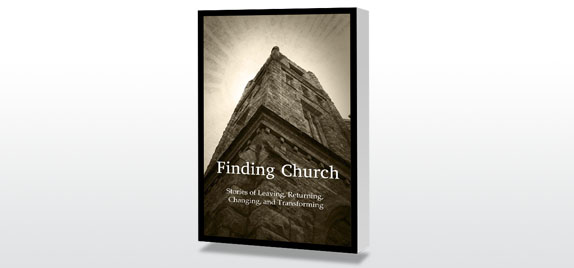
I’m pleased and immensely honored to have an essay included in the upcoming book, Finding Church, a Civitas Press community project.
This particular essay was difficult to write as it addresses the choice to stay at our wonderful and yet Complementarian church. Suffice it to say that I sweated blood, shed tears and lost sleep writing this one.
The estimated publishing date November 2012. I will let you know how to order it as we get closer.
I believe this letter to my church’s Elder Board could have been written to almost any Complementarian church’s elder board.

To the Elders and leaders of X Church, fellow believers in Christ:
If anyone is in Christ they are a new creation. The old had passed away, behold, the new has come. All this is from God, who through Christ reconciled us to himself and gave us the ministry of reconciliation. 2 Corinthians 5:17-18
I am writing today in response to the request for Elder submissions. Understanding that your responsibilities as elders are to guide an enormous church made up of a diverse population, I want you to know that this letter is ten years in coming and has been written with respect for the authority of scripture and for your roles as leaders. Your responsibilities, I am certain, cause you some “fear and trembling” and I believe that you have a sincere desire to listen well to many people with unlimited perspectives. I have utmost respect for “authority” both within the church and in life and I hope that you will consider these thoughts prayerfully, before God and one another, and with the full congregation of X, both men and women, in mind. Young and old, educated and less knowledgeable, Conservative and liberal, Black, white, Asian, international and US citizens, we all make up the beautiful and complex church of X. What a daunting task you have.
I am writing about the roles of women at X. I have been in dialog with Pastor about this topic for years and always appreciate his frankness and perspective. I respect the need to be aware of the climate in X, the Church at large, as well as within our culture.
As you know, many Christian denominations continue with the practice of male-authority. And others are open to change. Though a clear, Biblical viewpoint was preached recently about how men and women are to treat one another, I know there are many at X, perhaps some of you, who believe in the universal male-headship principle. Obviously if it were simple, things would have changed with cultural and societal changes.
But it is a complex thing to parse through scripture to find what is Core Truth and what is cultural truth, of a time. There are dozens of perspectives on the place of and roles for women in the church.
I appreciate the women who do serve at X church, though support staff in the church is dominated by women and the leadership is dominated by men, which I find strange and a bit backward and tells me that things haven’t progressed as much as I would wish. What speaks loudest is that there are no women on the teaching team. And, though perhaps this is even more difficult to change, women are still not considered for the leadership of being an Elder (who lead, manage, govern) and Deacons (who serve, care, guide) are invisible and do what? I don’t know.
In my conversations with pastor, it has been clear to me that some of you over the years (I realize you’re a revolving door of men) do feel empathetic to the changes in the Church at large. Perhaps you have even studied this on your own?
The New Testament church thought that the Lord was coming in their day and therefore did not very courageously attempt to speak to the injustices of their time. Paul backed away from it so much that he prefered to be single than complicate his life with a woman and family.
But today, more than 2,000 years later, it is quite clear that Christ is yet to come, and I find it imperative that believers in Christ individually and corporately, with the power and influence each has been given by our Lord, speak to the injustices that plague humanity — war, poverty and hunger, and sexism are just a few as well as prejudice, bigotry and racism.
I ask therefore: Do you believe that women must not teach Biblical doctrine? Do you believe that women are unacceptable for Church governance or pastoral and preaching roles? Because that is the current example being set at x. And I would press back saying, if women are not to be in teaching and in authority over men, why are women encouraged to be missionaries and managers at x? This inconsistency implies that women can have authority over men in certain circumstances, just not over men of their own race and in their own church. This I do not understand and ask if you see the conflict?
I urge you to consider the message you are sending to young people in the church, men and women who are considering how they might serve God with their lives. And this has rampant implications for the relationships between men and women, boys and girls, as they see this conflict of ideas.
Church historian Janette Hassey, in her book No Time for Silence, talks about the fact that American evangelicals before the turn of the century and after, advocated and practiced women in pastoral ministry. My own grandmother, a missionary in the 1930s, was an evangelist and preacher in upstate New York, alongside my grandfather. Together they were missionaries in Tibet before the war. Returning home because of WWII, they continued their work here. I don’t think my grandmother would have been encouraged to use that gift if she were at our church. It is sad that the twentieth century took such steps backward for women in the church.
I would like to ask you, individually, if you prescribe to the concept of male headship – or not — as heard in the recent sermon? Whether you think headship is a part of the created order or merely a necessity in wake of the Fall it is not good thing for women. And perhaps you say, “So what? The Bible says what it says. Live with it.” I would push back asking whether you knew that next to alcohol and drug abuse the most reliable predictor of wife battering is “zealous conservative religiosity?” This is just an example of how this policy within the Church at large has hurt women.
As I said before, I believe one call for Christians is to resist chronic injustice – to speak out when it is seen. I see women being subjugated in the church, being kept from being elders when their full gifting, experience and knowledge is toward leadership. I see no women being encouraged toward teaching, serious scholarship and study of theology even when God has given them an ability, a passion for and a call to scriptural truth and teaching. I see women who outside of the church are being affirmed and are leading faithfully and well, within the Church not even being considered to serve with the full capacity of those God-given abilities.
It seems to me that the current perspective takes parts of scripture and holds to it as if it were a Universal or Core Truth, while rejecting many other parts of the Old Testament and New Testament, that are cultural rules and are obviously outdated.
I don’t think women’s subjugation is any part of the core Truth of scripture.
The Church has changed its stance on many important things in the last 2,000 years: like strict or flexible observing of the Sabbath, pacifism vs. a just war, Christian’s cultural involvement or separation from culture, but gender roles remains set in what has “always been” especially in denominations, especially in ours.
Change in something this important is difficult and tumultuous, I understand. To be different than your denomination, to think for ourselves, to study Scripture openly looking at original text with a heart for all people — all this is messy and painful and even unfortunately divisive. It is much easier to ignore it until the culture and climate change so much that you don’t have to risk. I get that. But it breaks my heart.
I would agree that on gender roles, the Bible is less than clear. Just like the NT church was ambiguous about slavery, but we never question that change on Biblical grounds. It is obvious today, that slavery is an ugly and abhorrent part of the Old and New Testament times. And in the fifties it was believed in the church that women are better suited for parenting and that idea has been rejected over time ,seeing clearly that children need both parents involved in their upbringing. There are many things that we reject, as the culture and as times change. But though the Bible isn’t clear it isn’t silent either about gender in the church.
And Jesus was not silent, he was constantly affirming women.
As Mary Stewart Van Leeuwen so beautifully describes, it is more like an …
“… unfolding drama in which salvation is made available to more and more groups that were previously considered marginal. Salvation and equality of access to its privileges and responsibilities, is not just for Jews, but for non-Jews; not just for free persons, but for slaves; not just for men, but for women – and so on, in keeping with the principles of Paul found in Galatians 3:28.”
So, if the Bible is ambiguous about gender roles and headship, how can I be confident and so sure that my belief in changing the roles is sound? For me it comes down to our hermeneutic.
Willard Swartley in Slavery, Sabbath, War and Women asks the following questions, which I most respectfully pose to you, asking you to consider, as it relates to the issue of Women in the Church:
- How are the two Testaments related to each other?
- How is the authority of Jesus related to all Scriptures?
- What is the relationship between divine revelation and the culture in which the revelation is given and received?
- Does Scripture mandate, regulate, or challenge certain practices such as those associated with slavery, war, and the subordination of women?
- Does the Bible say only one thing on a given subject, or does it sometimes show differing, even contradictory, points of view?
- What does it mean to take the Bible literally? Is that a vice or a virtue? Does “literal” signify the intended meaning of the author or a meaning that seems natural to us?
- To what extend does an interpreter’s predetermined position, even ideology (such as patriarchy or feminism) affect the interpretive task?
I think we can all agree the Bible is the incarnate revelation but one should also be taking into serious consideration the audience, time and place to which each book is addressed. Would you not agree that the Bible tailors its message to real people in real, culturally diverse situations? This is the strength of, the power found, in Biblical revelation.
According to Willard Swartley:
“Scriptural diversity is the natural result of the one true God’s graciously relating to humans, drawing humans into a relationship, inviting free response and full engagement … Biblical truth is concrete, shaped usually by specific contexts, needs and opportunities. Interpretation should affirm and celebrate this feature of divine revelation, communicated through many different writers in different linguistic, cultural and political contexts. The variety itself becomes the missionary’s textbook [for] the biblical text spoke God’s word in a variety of cultural, economic, political, and social settings.”
And then Mary Stewart Van Leeuwen whose book Gender & Grace has profoundly changed my perspective on men and women and the Gospel says this beautiful and profound statement:
“For the sake of the advancement of God’s kingdom in a given time and place, temporary compromise can and often must be made with the societal status quo. … Therefore Scripture is accommodated to the cultural setting of its varying audience, constantly being augmented by a move toward the vision of God’s coming kingdom. Indeed, Jesus’ elimination of the sexual double standard was so surprising to his disciples that they concluded it was safer not to marry at all! “
Van Leeuwen continues that “the basic impulse being the Fall – the wish to be independent of God – is no respecter of persons. Feminists and patriarchalists are equally in need of redemption.”
Again, theologian Willard Swartley with a good test of the degree to which our ideologies warp our reading of Scripture.
“Our willingness to be changed by what we read, to let the Bible function as a “window” through which we see beyond self-interested ideologies, and not a “mirror” which simply reflects back to us what we want it to show. Biblical interpretation, if it is worthy to be so called, will challenge the ideology of the interpreter. It can and will lead to change, because people do not come to the text thinking as God thinks, or even as the people of God thought in serving as agents of divine revelation. Interpreters [must] listen to the text carefully enough not to like it. [When they do so] it powerfully demonstrates that the text’s message has been heard and respected.”
This is challenging because I am full of self-interest when it comes to being a Christian woman — that is a tribe that I belong to and feel a responsibility to care for — not because I crave authority, but because I long to see women carrying out every gift from God in their lives, not just in the marketplace, but within the church! I am hopeful that this will happen in my lifetime.
I must ask you, individually, whether God is challenging you to reconsider your thinking on women’s leadership, governance and teaching roles at X, and whether the time has come to face that the current roles are stifling more than half of the church to be heard fully and uniquely.
But even more important (to me) is that this stance just may be holding back the fullness of the Kingdom of God from being revealed in our generation. And my heart weeps with that thought.
Gretchen Gaebelein Hull, in her book Equal to Serve sees Scripture as pointing toward equality and mutual submission between the sexes and I’ll leave you with this quote from her book:
“Today, like James and John, so many people pluck at Christ’s sleeve: dogmatists, traditionalist, egalitarians, feminists, liberationists, all sorts of activists. They all say the equivalent of “Seat me nearest You, Lord; show those other people that my system is best.” As they pluck at Christ’s sleeve, thinking that places at His right and His left will bring them honor and power and worldly recognition, He looks at them – and at all of us – and still asks: “Can you drink my cup? Don’t you see that whoever stays nearest me must … go where I go, serve where I serve? Don’t you see that, loving the world as I do, I must serve it to the uttermost?”
It may come down to this: Can you personally serve under a woman, at work or at Church, and why not? Could you accept that your wife, sister, mother, friends have gifts that make her more visible, knowledgeable, or experienced than you? Could you dare to be like Joseph, step-father of Jesus, playing a lesser role than Mary? What prevents you from rethinking, studying anew these things?
Fear? Ambivalence? Prejudice?
I am incessantly asking myself over the last ten years at X, would I put aside my perspective if the time isn’t right for this church? Would I work for change in a patient and loving way, rather than sinking into anger or bitterness? I do feel that as an active participant (not a member) at X Church I have done that, meanwhile praying for the timing, the hearts of the church members, that God’s revelation on women would come. And asking what part I should or shouldn’t play in that.
I have participated in women’s ministry here and seen women teaching who do not have the confidence that they been given the authority to speak definitively about scripture. This undermines their ability to open scripture and speak prophetically. This saddens me. I have seen many women serving in various roles and respect them and know that they are listened to, but I still am not hearing anyone speak to this central issue.
I don’t know why God has given me such a burden for this but I carry it.
Over the years I have written and sought clarity about why this practice of male elders and teaching team continues? And since I do not feel confident that the issue is being discussed fully, openly or seriously (being sidelined for many other important issues of the church) I send this to you, asking for you to consider it now.
Each of us must ask ourselves, male and female alike, are we living as an old person or a new creation? In the flesh or in the Spirit? And what are we being called to, as we serve together?
I hear God’s call as a voice for certain voiceless populations, including women in the Church.
I am constantly clarifying, are you sure Lord? And at times I have been unproductive, and not very Godly, allowing myself to be anxious or angry or even bitter. I have experienced a lot of pain.
In these years, I have come to a certain amount of peace with simply speaking up from time to time, meanwhile to be in study and prayer. And then to been in a place of seeking the rest of the time. But as the spirit seems to speak (or as elder nominations come up) I ask God what I should do, again — do this time.
So thank you for reading this and hopefully giving it serious consideration. I have purposefully not tried to write a treatise for the Biblical interpretation of all the key and most controversial verses — I’m no biblical scholar and you have one on staff. I would ask you to free him up to study this if he hasn’t already. Listen to him. Then give space and time for your own study and careful deliberation.
God will speak. God has a plan.
With respect and gratitude for your sacrifice of service,
Melody Harrison Hanson
October 7, 2010
The major ideas that persuaded my thinking and inspired this are from Gender & Grace: Love, Work & Parenting in a Changing World by Mary Stewart Van Leeuwen, ©1990, IVP. She did the scholarship, I just happen to agree with her. Also, Call Me Blessed: The Emerging Christian Woman by Faith Martin.
Other things I have written on these topics search for Women in the Church or Feminism. I have written a lot.
For several days I’ve been trying to figure something out. Why did it hurt so much?I like to ask questions and throw things out on Facebook, sometimes (many times) that I don’t even think through carefully. I’m something of a rabble-rouser. I sometimes even take pride in it, thinking it’s my “special gift” to provoke others.
Why did it hurt each time I read her words? And I did read them, over and over, again and again. I thought about it all weekend. Even becoming grumpy, bothered, then deeply troubled as my stomach lurched and tears sprang to my eyes, after days there was still, so much pain. And I have come to know what this means — linger here. Deeply, scrupulously sit with this, discover what it is.
I am mouthy, petulant and troublesome, even stupid at times, on Facebook. This is what I said:
“I’ve long wondered why it doesn’t occur to white men that they are so privileged, but as Julie Clawson says if you don’t get that you are a part of the problem. It’s not tokenism rather catching up to the world, where women and non-white are your equals and simply want the opportunities to represent themselves. In a WHITE and in a MALE dominated culture.”
Okay (in retrospect) that was arrogant and whiny. (Perhaps I really do need to give up Facebook. It feeds all the wrong parts of me.)
Then my old and dear friend, she challenged me. I quote the entire conversation because it matters to me. Here is exactly what she said (Emphasis is mine):
I wonder Mel if in the logic of what you are saying in your statement whether it cannot be applied to anyone who has any privilege in any part of the world. And I do mean that literally within the logic of your statement. It is known as systemic sin and it can be applied in other ways…I wonder why people who earn over $20,000 a year, or I wonder why persons who were able to go to college, or I wonder why people who have running water in their homes and carry through the logic. I think you are able to speak in these ways because you are part of a white and economically dominant culture so then you are in a similar situation to the people you are accusing.
I am not saying therefore change cannot be brought about. I am saying we all live in power dominated systems. It is what Scripture means when it talks about principalities and powers, and we ALL have our blind spots where we don’t see our privilege and we don’t see our power orientation and we don’t see that we don’t see. I do see that the Gospel calls us to a different way – of being the servant in love. I find it fascinating that Jesus was among an oppressed people, the memory of about 2000 Jews having been hung on crosses at one time within the living memory of people alive at Jesus time,
the fact that the centurions came out at Passover in huge numbers because Rome knew what Passover celebrated,
the fact that Jesus told them don’t just walk one mile, walk two…what is that about…it is about
the fact that by law a centurion could require you to carry all his gear for a certain length of his journey,
the fact that Paul didn’t free the slaves but gave alternate teaching…
So even those who do get it who have a household of over $20,000 a year, or a University/college education, or have water running through pipes to their homes are still part of systemic inequality how often do YOU, do I not get it when we eat an ice cream when that money could have gone to digging wells etcetera….
I am not saying stop seeking to bring about change but let’s recognize we white women are parts of a fallen world too…
And then ask ourselves what concretely does it mean to be a servant in love to those whose lives we can impact concretely … Why does Jesus define His kingdom in the manner he separates the sheep from the goats…
Me: So, what then? Certainly yes, white women are born into a world of privilege and opportunity and we too should look for ways to give up our power. I suppose I just assumed this was understood.
She said: But why do you assume it was understood, when you constantly are commenting about white men…
Me: I never/rarely say “white” men, but it must be implied. Your “constantly” gives me pause perhaps I just talk too much. I don’t mean “white” when I talk about men. We all have our lens through which we process obviously.
“when you constantly are commenting about white men…”
You see I don’t want to be known for that, for constantly commenting and complaining about white men. Even if I do feel a challenge to speak on issues of women in the church, as I do, I do not want to be known for that. That feels wrong.
That is wrong.
To my friends who I have offended or verbally accosted, white men mostly I ask you to forgive me if you can.
[Friends, I hope you will bear with me, I think you will be glad that you read to the end.]
And not having read about the sheep and the goats and not remembering the story at all (apologies to all my Sunday School teachers) today, it’s still bothering, even nagging at me. So I read the account from Matthew 25:31-46 of the Sheep and the Goats (again emphasis mine):
“When the Son of Man comes in his glory, and all the angels with him, he will sit on his glorious throne. All the nations will be gathered before him, and he will separate the people one from another as a shepherd separates the sheep from the goats. He will put the sheep on his right and the goats on his left.
“Then the King will say to those on his right, ‘Come, you who are blessed by my Father; take your inheritance, the kingdom prepared for you since the creation of the world. For I was hungry and you gave me something to eat, I was thirsty and you gave me something to drink, I was a stranger and you invited me in, I needed clothes and you clothed me, I was sick and you looked after me, I was in prison and you came to visit me.’
“Then the righteous will answer him, ‘Lord, when did we see you hungry and feed you, or thirsty and give you something to drink? When did we see you a stranger and invite you in, or needing clothes and clothe you? When did we see you sick or in prison and go to visit you?’
“The King will reply, ‘Truly I tell you, whatever you did for one of the least of these brothers and sisters of mine, you did for me.’
“Then he will say to those on his left, ‘Depart from me, you who are cursed, into the eternal fireprepared for the devil and his angels. For I was hungry and you gave me nothing to eat, I was thirsty and you gave me nothing to drink, I was a stranger and you did not invite me in, I needed clothes and you did not clothe me, I was sick and in prison and you did not look after me.’
“They also will answer, ‘Lord, when did we see you hungry or thirsty or a stranger or needing clothes or sick or in prison, and did not help you?’
“He will reply, ‘Truly I tell you, whatever you did not do for one of the least of these, you did not do for me.’
“Then they will go away to eternal punishment, but the righteous to eternal life. ”
I have so much it’s sick. I am rich. I am white. I am educated and privileged. I have every opportunity and I have every responsibility to see and to do something.
And most days, other than that, if I am not going to do that I think I just need to shut up. Yes, I write. And I may have “things to say.” But I was struck to my core, shattered, stunned with the conviction that this is the core message so many of us (me, I am missing) are missing.
Do I see, do I hear, do I know the least of these? Do I know Jesus?
Thanks to a dear friend, who loved me enough to challenge me, I may never (I hope) be the same. This is one of those serendipitous and life altering moments. I have a choice — to see Jesus, to invite Jesus in, to clothe Jesus, to care for and heal Jesus. I have a choice to know him.
The question remains what that looks like with my hands and feet. I remain open for that.
I am so grateful.

—Theophan the Recluse
So I’m trying something new. Picking a subject at random that I seem to obsess about or fixate on, something that grips my imagination in compulsive and ugly ways, (I started with one of my secret obsessions.) I’ll write honestly without a lot self-editing or controlling “the message” to see what comes out. No answers. No over spiritualizing. Just the real, gritty, sometimes awkward me. I’m trying to push myself in my style to loosen up a little. Have you noticed that I take myself a bit too seriously? This is my second excursion into a different kind of real.
Parenting surely is the most difficult job I’ve ever had. Many times in a day I think “I am not qualified.” But it’s too late, for those regrets.
No one is qualified to be a parent, not really.
Yesterday, I was reflecting on our exceptionally verbal, strong as steel, at times tyrannical daughter who is so like my father! I just wanted to fall down on my knees, humbled by my own lack. Again, as if a prayer, whispering this time as a lament: I am not qualified to be a mother.
I went through most of my life in some strange, surreal auto pilot.
I went through forty years utterly afraid of life. I sometimes think back, strange as it sounds and wonder aloud how I even survived the catastrophes of living in our home. My father’s spirit and soul crushing rage destroyed me, my personality and I spent many years just grieving who I might be, might have been. That sort of grief is debilitating.
Oh there were moments, especially outside of home, where I found parts of myself. I loved my youth pastor; he listened to me and allowed for my incessant questions about the Bible. He listened to my ideas and fears. He never once yelled at me, or told me my sarcasm or sense of humor or quick thinking and verbal sparring was bad. He somehow validated me and I loved him.
But for the most part I went through my tens and twenties and thirties heart-sick, depressed, and afraid.
So when my daughter rages at me (I told you she is like my dad) or the world, or she stands up to me, or questions … every little thing, a small part of me is cheering inside!!
She is alive.
She is breathing, kicking and screaming, going into the world believing that her thoughts, her questions, her jokes, her ideas matter and for that I am so pleased.
She is alive and I am slowly coming alive too. I believe my father had to die for me to begin living. A new friend, after hearing about the childhood that I had said to me yesterday “It’s a wonder that I have any faith at all.”
I am simply grateful I am alive. Yes, this life of believing is really hard; harder for me than it seems to be for many people I know. I’ve come to accept and understand this to be a part of what makes me, me. And yes, this is something I embrace.
I may not be qualified, but I am grateful to be alive.
Why is God sometimes silent, while evil and sorrow hang on, clutching to us all. Why?
I cannot hear him.
I carry my father’s raging. Inside, like a ghostly spirit, speaking soft deceits; his rage came from his internal sense of failure, a fear. He thought he never measured up, to some ideal taunting him. His head, in his heart he had no peace. He was not whatever it was he thought he should be. His rage came from his lack.
I carry his lack; it has become my own.
It is the truest sense of the absence of Truth, yes my empty spaces where fear, comparison, greed, envy, the need to be brilliant, for credit, to be better than others … or even just to be good enough, just for once to a Good Mother, to raise achievers, successors. To have children whose lives somehow prove that I am something – children to reflect my achievements. Just like my father did; had me, made me into who I am.
All this is me playing god.
Do I seek him, so that I will be something? Motivated by self-interest, because I have nothing else?
Do I seek him so that my pleasure or happiness will be satisfied?
Do I seek such a shallow, easy love?
The Holy One is a jealous God – so unlike us, that we cannot even comprehend him. So unlike me.
No, God is not silent, but so much greater.
We love his creation, his riches, his gifts, the joy he offers, the peace he conveys, and truth.
My worship, my life, my offering must come
out of
because of
his infinite and splendid greatness.
He is all. He is not silent.
I’ve been quiet, because the world is so loud. So many days I just cannot do anything more than put my hands over my ears and shut it all out.
This world where exegesis and hermeneutic and “being right “are more important than generosity and love.
A world where the decision of the Church or the Government feeding the hungry becomes intellectual and spiritual sport.
A world critical of mystical devotion of Henri Nouwen whom I revere.
A world where conviction over sexuality and what is or is not love makes people hate one another, aren’t we all God’s creatures?
A world where your or my “place” and opportunities depend on being born a boy or a girl; where little boys refuse to let a little girl play ball. just because she’s a girl.
The world, even the Church that cannot agree on much of anything. And sometimes I think how Jesus must just weep over us all.
This world is upside down, crazy and it just makes me sad, even deeply wounded by it.
I’ve been quiet because I have been writing. And I find that blogging makes me want more clicks, and comments, and there is never enough attention. It feeds the part of my soul is ugly, that longs for significance. Blogging doesn’t suit this heart .
Empty, shaken, longing for solitude, then I know. I need more of Jesus.
I’ve been quiet because I’ve been writing and when I write I doubt. I doubt my Call. I doubt my talent. I doubt that these things that tug on my heart, these words that seem so clear, that wake me up from a dead sleep, that dance around me like pixies while I mow the straight lines of the lawn, that chatter inside me telling me I’m stupid.
Yes, I’ve been quiet because when I write I doubt myself, and
this too is a challenge of a person who finds herself committed to words — to creating and giving them away.
I don’t know enough.
I don’t have a big enough audience.
I don’t say things that matter.
I don’t know much of anything.
Seeing a theme here, I, I, I, …
I get even more so — I need deep quiet. And I know again that I need to drink from the spigot that is of forgiveness and true purpose and being transformed. When Jesus said “I have come” he meant come to stay. He’s here with us. He’s here by my side, as I tap-tap-tap on the laptop.
More of him,
less of me.
That means deep quiet.
She drank coffee
at 4:29 in the afternoon but knew it won’t do the job on a soul that’s stopped dead.
And no amount of caffeine
is going to wake it.
It happened a long time ago, so far back in time
she can’t see
it, certainly can’t remember when a little girl of puddles and jumping, cartwheels
and skinned knees stopped dreaming. Mistrust
became more real to her than hope. Forever
uncertain, she lost
Wonder.
Step on a crack, break your Mamma’s back. Did she do that?
When mamma’s don’t dream children are left
to the Monsters — imagined enemies
everywhere. This little girl got scared, petrified and turned to
Stone, too afraid to live. Now she’s the Mamma she’s got to get up,
Dance in the rain, again! See
this is real, the bad dreams are gone.
Find courage.
Live.
For as long as I can remember I have wanted to do anything that a boy could, continuously looking for the chance to prove myself as a girl and eventually as a woman. That theme has circled throughout my life, drumming in the background incessantly— even to the point of becoming what felt like a blasphemy. As Christian women our destinies, our dreams for our lives aren’t large and hopeful, but small and inconsequential.
Something inside me has pushed back at those ideas, the invisible barriers. As I shut out what felt demeaning and battled with personal doubt, what persisted was a powerful belief that the universal ideas about women in the church might be wrong.
It is only by God’s grace that I have become resolute, and eventually open, about my belief in the biblical equality of men and women in the church. This had become central to my identity, and I believe God gave me that understanding — but things quite beyond my control converged to make it highly unlikely that I would ever become the woman that I am today.
My formative years were spent in the southern United States one of four daughters of missionaries. I came to love God early and enthusiastically studied scripture. That knowledge of scripture has been important, even as I wrestled internally with what I was taught. I have been the kind of person that responded to God with an unequivocal “yes” even as I saw how the conventional understanding limited the dreams of girls and women.
My youth pastor led a camping survival trip for boys. When I asked if I could go, to his credit my pastor didn’t say no, he asked me “Why would you want to go? It’ll be hard.” I suppose it never occurred to my pastor that girls would want that sort of physical pain and mental challenge because most didn’t. That trip, which was very difficult, taught me that I am strong, tenacious and hard-working. Those are things I did not know and may never have learned if I hadn’t pushed to go. I have always been inquisitive and contrary by nature. My youth pastor encouraged it as strength, even while I must have driven him crazy with my never-ending interrogations about the Bible. At that point in my life, I was ready, open and willing to do anything God wanted of me.
Although I felt encouraged by my youth pastor, it was the subtler messages growing up that hurt me. My home life was not healthy. My father constantly berated me for things I could not control, and I watched my mother stifled in the expression of her gifts. This led to depressive thoughts throughout high school and college. I was afraid to open my mouth—I wouldn’t even pray out loud. I suppose I was afraid of messing up, of being wrong, of not knowing something. I still wrestle with that. I can remember coming home from a prayer meeting and praying under my covers, only imagining myself saying it out loud. I wanted to believe that one day I would have the confidence and peace to say what I believed.
Even from those formative childhood years and on into adulthood, I had been driven by fear and need to be perfect. I recall being yelled at for grades that were below my potential. Roared at to stop stammering, because I had a small lisp. It only took a look from my father to shatter me, tears slowly leaking out of my eyes, fearful he would be angry for the tears but not being able to control them. I learned to control them and to this day find it hard to cry. I remember gazing at my bitten & bleeding fingernails under the microscope in high school biology, wondering if I would ever feel good about myself. Somehow, my hands came to symbolize my pain and the ugliness I saw in myself. Spacing out was one way I coped with the unpredictable nature of my father’s anger which could be triggered by anything—a slip of the tongue, a comment coming out a too sarcastically or being considered disrespectful. Of course having ideas other than his enraged him and though he was never physically punishing to us, he verbally hounded us long into adulthood.
Shortly after graduating I moved back home, which was now in the Midwest, and started working for my father who was by now at a different ministry organization. My mom and my older sister were both working for my father. On some level we all longed for his approval, still. I started doing clerical work part-time and was soon promoted. Suddenly I was receiving affirmation from my father and acclaim from others. As I worked, I began to remember things that I had completely lost track of – I was naturally gifted as a leader, a critical thinker, and an artist, a passionate and gifted communicator. Though I nearly threw up each time, I even became an effective public speaker. After all those years, I had come a long way from the timid and shy girl that hid under her covers, too afraid to pray out loud.
But deep down, I was full of self-loathing which came, I believe, from the incessant yelling and shaming of my father. I was unsure about what God really thought of me—I had never understood the grace Jesus offers. I was extraordinarily insecure and wasn’t able to fully access my spiritual gifts. I became rigid, caught up in petty competition, critical of others. I became a workaholic as I needed to prove to everyone that I was “good enough.” Though I was promoted quickly up the organization — even with all of the “success” — deep down I was terrified of it all shattering. I was utterly lost. I longed for a mentor or spiritual director or a boss to give me insight into my own despair, but it wasn’t offered to me and I didn’t know enough to ask for it.
I walked away from work burned out and cynical. Only then, by losing that aspect of my identity, did I finally face who I had become. Whether I was conscious of it or not, I had lost my way, my spiritual center, in many ways becoming just like my father. Over the years my true voice had become silent. I shut down. I learned the safe thing was to not speak out loud. I forfeited living for peace. I lost my way.
The church and its teachings, my father’s influence, and my internal journey all converged into great confusion, when in my forties I learned that my spiritual gifts were leadership, teaching, wisdom and mercy. I didn’t know how to reconcile that. I obviously had been misusing my talents. I was afraid of my “spiritual gifts.” I had not been mentored or helped to become a Godly leader—to be gentle, peaceful, generous, patient and kind. This is something I learned is crucial for all young leaders, to have another wiser elder come alongside and guide them. Was it because I was a woman that I didn’t receive it? I’ll never know. When I left work to be a stay-at-home mom, I set that entire part of me aside refusing any leadership capacity or take any responsibilities at our new church. I was afraid of my gifts and unsure how to use them well, or if I even should. So I became silent, again.
I have spent these years at-home personally inventorying my heart – crying out to God. I know that I have a strong and powerful voice. If God made me a leader, with heart care for others; if he made me a critical thinker; if he breaks my heart over injustice; what does he want from me? And if God wants me to do something, how do I figure out how that fits into my church? I have felt like a misfit, disobedient not using my spiritual gifts. I’ve been made a certain way and yet I’m stubbornly withholding out of fear. Fr. Richard Rohr, the Franciscan monk, says that the typical trajectory of our life is that our hurts, disappointments and betrayals will embitter us. Unless we allow God to heal and transform our pain we will transmit it. This I have most certainly done. Even as I’m still learning discernment I know that I cannot remain silent. The challenge for me now is finding a place and a way to speak that is worth the risk.
All of my life, I got the message that the person that God made me—tough, opinionated and full of questions, capable and yet bullheaded—was somehow wrong. Though I have seen the ways that these qualities have hurt others I am figuring out how to be that person God made, not bitter and destructive but transformed. I long to be useful. As I wrestle every day with the tension between my earthly father, now dead, who raised me and what scripture says about our heavenly father, I have to admit that this part of my story is not complete. My ideas about a Father God are not yet redeemed. No matter what I have learned, there are some days that God is still mean, angry, and out of control, railing at me in my head. And that’s going to take a miracle to heal. Still, I’m confident at this point that I am worthwhile, because God loves me and made me in his image.
I strive ahead, hoping to be useful to the faith community that I am a part of, though it is at times uncomfortable and frustrating! Will I always struggle with the feeling that I have to prove myself? Probably. If this life is merely a process of becoming, I welcome it. Like the old hymn says, “I want to be ready.” Not afraid to speak.
Jesus met the Samaritan woman the poorest and most broken of women in the gospels. She had made her share of mistakes, was rejected and marginalized. When Jesus meets her, he doesn’t ask her to get her act together rather he exposes to her his own need. He said “Give me a drink.” I am quite sure that she did not believe she had anything to offer Jesus, and yet he revealed to her the truth. Wouldn’t it be amazing if we could accept that truth? I would no longer need to be grasping for proof of my worth or working and competing for my value. I have always wanted to be great in the world’s and in God’s eyes, with little understanding of this truth.
We are called to a life of love, justice and hope to the “least of these.” Each one of us is made in God’s image and as we are being transformed, we can know our value to Him. No, I am not yet perfected, nor am I perfect but that too is adequate as I ponder the greater question of what it means to be an empowered woman of faith. I will always remember what I came from, even while seeking the path of greatest usefulness, even today responding unequivocally yes to God.
——————–