{I am a Hoarder: A Confession}

I clutch at my stuff, even my money, as if it were mine. I live as if I cannot imagine losing it and yet fearful that I will.  

For many years I have wrestled with God’s promises about money, wishing to be more faithful but living as if I must take care of myself. I realized these things reading the book “Enough” by Will Davis Jr. over the fourth of July week.  And that I have an easy life, even what some would call a life of abundance not because I am overly spiritual, devoted or even worthy of this wealth, rather that I was born into a white, middle class family, in the United States of America. (I wrote about that in A 4th of July Ode to Power & Privilege.)

This begs the question of what I do with all that I have?  And pushing that self-knowledge further, how do I trust God to provide if I think that all that I have has been acquired by my privilege and is preserved by my hoarding?  And most importantly, can I continue to live in this way?

I suppose a part of accepting the idea of ENOUGH is acknowledging that I am a spiritual hoarder.  It’s an attitude, a heart issue, and a matter of trusting God (or not.)

The American Dream is the antitheses of ENOUGH.

The idea of having enough is unsatisfactory, perceived as weak and yet that is the challenge of this simple little book.  It asks, as followers of Christ how do we live counter to the American dream of providing “the very best of everything” for our children — home, education, trips, clothes, electronics, all this is striving after something empty.   And if we do continue to live in this way aren’t we living just like everyone else?  What is distinctive about being a follower of Christ, what should be, when it comes to our possessions and money?

Jesus promises that if we live to bless others we will find joy and hope. Davis suggests that our money isn’t ours, we’re entrusted to manage it, and if we look at our abundance as enough then we can be generous with our excess. Jesus taught, as does all of scripture, that we are to help the poor, widows and orphans. Why do my eyes glaze over when I read these words found hundreds of times in scripture?  I live like I believe that I don’t have enough to be more generous than I already am.

Reality check.

It seems to me, no matter how much money we make, we never have enough by the end of the month.  The more we make the more we spend.  The more we spend the less we have.  We’re caught in this trap of the deceitfulness of wealth, the idea that we always need more and the lie that we’d give more away if we only made more!  Although we pay our debts and other obligations, we save for retirement, we provide for our children, we give to the church and to missions, at the end of the month I am always left worrying about the next month’s debts, obligations,  and needs, … it is an endless cycle of stress and lack of trusting God. 

I wonder why Jesus prayed “give us this day our daily bread?” And why the Israelites only received Manna for the day with no left overs, no saving, no hoarding, why? And John said in 1 John 2:15-17 that “you cannot love the world and God at the same time.”

This book, Enough, poked holes in any fragile peace I have made with our money.  It shone the light of Jesus’ words through all my fragile lies, saying what you have is actually enough.  And if you trust God for today, you will find you have excess.

Your excess is a possible solution to someone else problem.  

My more than enough just might be someone else’s enough?! 

And living with more than enough, makes me believe that somehow that I acquired it, that I’m entitled to it, gives me a false sense of security in it, it distracts me, makes me hungry for more (Ecclesiastes 5:10), and makes me unappreciative of what I already have.  Somehow I did something to get all this.

Davis challenges us to see that if we see that we have enough, even more than enough, then we can ask how we can bless others.  This requires acknowledgment first, then slowing down, listening to God, asking what to do with all this abundance, praying for courage and wisdom and trusting that God is good.  God will always give us enough.

Jesus talked about the perils of wealth, not that it is wicked to be wealthy but that it is dangerous and difficult to sustain our faith and devotion.  Davis argues that we develop a false sense of security and entitlement, a stinginess, even a busyness with maintaining our stuff, which is alluring but dangerous.

As I read the words of scripture with new eyes, asking “what is enough?” I realized that not only do I have more than enough, but I am a hoarder in my heart of hearts.

This hit home the other day in a simple way.  I saw our neighbor’s daughter out on my trampoline, on the 107 degree day, with a friend. They had dragged a sprinkler over and were enjoying jumping in the cool air and water and I was angry.  I wanted her off my trampoline! As I examined my silly response, with this new lens of enough, I realized with a start that I was hoarding.  I cannot express exactly why it bothered me so much, because we’ve told her she’s welcome to use it.  I had this visceral MINE response and I realized in that moment that this is how I look at all my stuff. Protect at all costs as if it belongs to me.

  • A person that knows she has more than enough of everything would have been delighted that her trampoline was being enjoyed and her lawn watered at the same time.
  • A person that knows she has enough doesn’t need to buy things for entertainment or security or out of boredom.
  • A person that knows she has enough gives ten percent to the church at the beginning of the month and trusts, then lives carefully, even frugally knowing that all she has isn’t hers at all.
  • She looks for ways to be generous with her things, time and energy.
  • A person that knows she has more than enough trusts that is she has enough for today, to eat and wear, and that God will give for tomorrow.

This he has promised. This is the life of one who has enough, even more than enough, and knows it!

I challenge you to read this book with open hands and heart.  Be ready for many simple, practical ideas and scriptural proofs that all of us have more than enough.  The question is how will we respond?  Do we trust God to give us enough?  Do we hoard our things and our money as if we have to take care of ourselves?   Or can we accept that we have MORE THAN ENOUGH for the very reason that we might be someone else’s ENOUGH?

This little book is a fast read but if you take it in, if you scour scripture for the truth it contains, you will find that your heart is struck with its conviction.  I pray it is so.

“Therefore I tell you, do not worry about your life, what you will eat or drink; or about your body, what you will wear. Is not life more important than food, and the body more important than clothes? Look at the birds of the air; they do not sow or reap or store away in barns, and yet your heavenly Father feeds them. Are you not much more valuable than they?

Who of you by worrying can add a single hour to his life? And why do you worry about clothes? See how the lilies of the field grow. They do not labor or spin. Yet I tell you that not even Solomon in all his splendor was dressed like one of these. If that is how God clothes the grass of the field, which is here today and tomorrow is thrown into the fire, will He not much more clothe you, O you of little faith? So do not worry, saying, `What shall we eat?’ or `What shall we drink?’ or `What shall we wear?’ 

For the pagans run after all these things, and your heavenly Father knows that you need them. But seek first His kingdom and His righteousness, and all these things will be given to you as well. Therefore do not worry about tomorrow, for tomorrow will worry about itself. Each day has enough trouble of its own.”

A part of the Patheos Book Club on the book “ENOUGH: Finding More By Living with Less” by Will Davis Jr.

It doesn’t end there.  Enough, Continued.

{On Staying in My Wonderful, yet Complementarian Church}

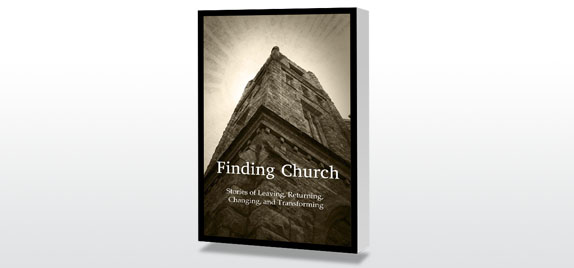
I’m pleased and immensely honored to have an essay included in the upcoming book, Finding Church, a Civitas Press community project.

This particular essay was difficult to write as it addresses the choice to stay at our wonderful and yet Complementarian church. Suffice it to say that I sweated blood, shed tears and lost sleep writing this one.

The estimated publishing date November 2012. I will let you know how to order it as we get closer.

{To the Elders and leaders of X Church, fellow believers in Christ} #mutuality2012

I believe this letter to my church’s Elder Board could have been written to almost any Complementarian church’s elder board.

To the Elders and leaders of X Church, fellow believers in Christ:

If anyone is in Christ they are a new creation.  The old had passed away, behold, the new has come.  All this is from God, who through Christ reconciled us to himself and gave us the ministry of reconciliation.  2 Corinthians 5:17-18

I am writing today in response to the request for Elder submissions.  Understanding that your responsibilities as elders are to guide an enormous church made up of a diverse population, I want you to know that this letter is ten years in coming and has been written with respect for the authority of scripture and for your roles as leaders. Your responsibilities, I am certain, cause you some “fear and trembling” and I believe that you have a sincere desire to listen well to many people with unlimited perspectives.  I have utmost respect for “authority” both within the church and in life and I hope that you will consider these thoughts prayerfully, before God and one another, and with the full congregation of X, both men and women, in mind.  Young and old, educated and less knowledgeable, Conservative and liberal, Black, white, Asian, international and US citizens, we all make up the beautiful and complex church of X.  What a daunting task you have.

I am writing about the roles of women at X.  I have been in dialog with Pastor about this topic for years and always appreciate his frankness and perspective.  I respect the need to be aware of the climate in X, the Church at large, as well as within our culture.

As you know, many Christian denominations continue with the practice of male-authority.  And others are open to change.  Though a clear, Biblical viewpoint was preached recently about how men and women are to treat one another, I know there are many at X, perhaps some of you, who believe in the universal male-headship principle. Obviously if it were simple, things would have changed with cultural and societal changes.

But it is a complex thing to parse through scripture to find what is Core Truth and what is cultural truth, of a time.  There are dozens of perspectives on the place of and roles for women in the church.

I appreciate the women who do serve at X church, though support staff in the church is dominated by women and the leadership is dominated by men, which I find strange and a bit backward and tells me that things haven’t progressed as much as I would wish.  What speaks loudest is that there are no women on the teaching team.  And, though perhaps this is even more difficult to change, women are still not considered for the leadership of being an Elder (who lead, manage, govern) and Deacons (who serve, care, guide) are invisible and do what?  I don’t know.

In my conversations with pastor, it has been clear to me that some of you over the years (I realize you’re a revolving door of men) do feel empathetic to the changes in the Church at large.  Perhaps you have even studied this on your own?

The New Testament church thought that the Lord was coming in their day and therefore did not very courageously attempt to speak to the injustices of their time.  Paul backed away from it so much that he prefered to be single than complicate his life with a woman and family.

But today, more than 2,000 years later, it is quite clear that Christ is yet to come, and I find it imperative that believers in Christ individually and corporately, with the power and influence each has been given by our Lord, speak to the injustices that plague humanity — war, poverty and hunger, and sexism are just a few as well as prejudice, bigotry and racism.

I ask therefore: Do you believe that women must not teach Biblical doctrine?  Do you believe that women are unacceptable for Church governance or pastoral and preaching roles?  Because that  is the current example being set at x.  And I would press back saying, if women are not to be in teaching  and in authority over men, why are women encouraged to be missionaries and managers at x?  This inconsistency implies that women can have authority over men in certain circumstances, just not over men of their own race and in their own church.  This I do not understand and ask if you see the conflict?

I urge you to consider the message you are sending to young people in the church, men and women who are considering how they might serve God with their lives.  And this has rampant implications for the relationships between men and women, boys and girls, as they see this conflict of ideas.

Church historian Janette Hassey, in her book No Time for Silence, talks about the fact that American evangelicals before the turn of the century and after, advocated and practiced women in pastoral ministry.   My own grandmother, a missionary in the 1930s, was an evangelist and preacher in upstate New York, alongside my grandfather.  Together they were missionaries in Tibet before the war.  Returning home because of WWII, they continued their work here.  I don’t think my grandmother would have been encouraged to use that gift if she were at our church.  It is sad that the twentieth century took such steps backward for women in the church.

I would like to ask you, individually, if you prescribe to the concept of male headship – or not — as heard in the recent sermon?   Whether you think headship is a part of the created order or merely a necessity in wake of the Fall it is not good thing for women.  And perhaps you say, “So what?  The Bible says what it says. Live with it.” I would push back asking whether you knew that next to alcohol and drug abuse the most reliable predictor of wife battering is “zealous conservative religiosity?”   This is just an example of how this policy within the Church at large has hurt women.

As I said before, I believe one call for Christians is to resist chronic injustice – to speak out when it is seen.  I see women being subjugated in the church, being kept from being elders when their full gifting, experience and knowledge is toward leadership. I see no women being encouraged toward teaching, serious scholarship and study of theology even when God has given them an ability, a passion for and a call to scriptural truth and teaching.  I see women who outside of the church are being affirmed and are leading faithfully and well, within the Church not even being considered to serve with the full capacity of those God-given abilities.

It seems to me that the current perspective takes parts of scripture and holds to it as if it were a Universal or Core Truth, while rejecting many other parts of the Old Testament and New Testament, that are cultural rules and are obviously outdated.

I don’t think women’s subjugation is any part of the core Truth of scripture.

The Church has changed its stance on many important things in the last 2,000 years: like strict or flexible observing of the Sabbath, pacifism vs. a just war, Christian’s cultural involvement or separation from culture, but gender roles remains set in what has “always been” especially in denominations, especially in ours.

Change in something this important is difficult and tumultuous, I understand.  To be different than your denomination, to think for ourselves, to study Scripture openly looking at original text with a heart for all people — all this is messy and painful and even unfortunately divisive. It is much easier to ignore it until the culture and climate change so much that you don’t have to risk.  I get that.  But it breaks my heart.

I would agree that on gender roles, the Bible is less than clear.  Just like the NT church was ambiguous about slavery, but we never question that change on Biblical grounds.  It is obvious today, that slavery is an ugly and abhorrent part of the Old and New Testament times. And in the fifties it was believed in the church that women are better suited for parenting and that idea has been rejected over time ,seeing clearly that children need both parents involved in their upbringing.  There are many things that we reject, as the culture and as times change.  But though the Bible isn’t clear it isn’t silent either about gender in the church.

And Jesus was not silent, he was constantly affirming women.

As Mary Stewart Van Leeuwen so beautifully describes, it is more like an …

“… unfolding drama in which salvation is made available to more and more groups that were previously considered marginal.  Salvation and equality of access to its privileges and responsibilities, is not just for Jews, but for non-Jews;  not just for free persons, but for slaves; not just for men, but for women – and so on, in keeping with the principles of Paul found in Galatians 3:28.”

So, if the Bible is ambiguous about gender roles and headship, how can I be confident and so sure that my belief in changing the roles is sound?  For me it comes down to our hermeneutic.

Willard Swartley in Slavery, Sabbath, War and Women asks the following questions, which I most respectfully pose to you, asking you to consider, as it relates to the issue of Women in the Church:

  • How are the two Testaments related to each other?
  • How is the authority of Jesus related to all Scriptures?
  • What is the relationship between divine revelation and the culture in which the revelation is given and received?
  • Does Scripture mandate, regulate, or challenge certain practices such as those associated with slavery, war, and the subordination of women?
  • Does the Bible say only one thing on a given subject, or does it sometimes show differing, even contradictory, points of view?
  • What does it mean to take the Bible literally?  Is that a vice or a virtue?  Does “literal” signify the intended meaning of the author or a meaning that seems natural to us?
  • To what extend does an interpreter’s predetermined position, even ideology (such as patriarchy or feminism) affect the interpretive task?

I think we can all agree the Bible is the incarnate revelation but one should also be taking into serious consideration the audience, time and place to which each book is addressed. Would you not agree that the Bible tailors its message to real people in real, culturally diverse situations?  This is the strength of, the power found, in Biblical revelation.

According to Willard Swartley:

“Scriptural diversity is the natural result of the one true God’s graciously relating to humans, drawing humans into a relationship, inviting free response and full engagement … Biblical truth is concrete, shaped usually by specific contexts, needs and opportunities.  Interpretation should affirm and celebrate this feature of divine revelation, communicated through many different writers in different linguistic, cultural and political contexts.  The variety itself becomes the missionary’s textbook [for] the biblical text spoke God’s word in a variety of cultural, economic, political, and social settings.”

And then Mary Stewart Van Leeuwen whose book Gender & Grace has profoundly changed my perspective on men and women and the Gospel says this beautiful and profound statement:

“For the sake of the advancement of God’s kingdom in a given time and place, temporary compromise can and often must be made with the societal status quo.  … Therefore Scripture is accommodated to the cultural setting of its varying audience, constantly being augmented by a move toward the vision of God’s coming kingdom.  Indeed, Jesus’ elimination of the sexual double standard was so surprising to his disciples that they concluded it was safer not to marry at all! “

Van Leeuwen continues that “the basic impulse being the Fall – the wish to be independent of God – is no respecter of persons.  Feminists and patriarchalists are equally in need of redemption.”

Again, theologian Willard Swartley with a good test of the degree to which our ideologies warp our reading of Scripture.

“Our willingness to be changed by what we read, to let the Bible function as a “window” through which  we see beyond self-interested ideologies, and not a “mirror” which simply reflects back to us what we want it to show.  Biblical interpretation, if it is worthy to be so called, will challenge the ideology of the interpreter.  It can and will lead to change, because people do not come to the text thinking as God thinks, or even as the people of God thought in serving as agents of divine revelation.  Interpreters [must] listen to the text carefully enough not to like it.  [When they do so] it powerfully demonstrates that the text’s message has been heard and respected.”

This is challenging because I am full of self-interest when it comes to being a Christian woman — that is a tribe that I belong to and feel a responsibility to care for — not because I crave authority, but because I long to see women carrying out every gift from God in their lives, not just in the marketplace, but within the church!  I am hopeful that this will happen in my lifetime.

I must ask you, individually, whether God is challenging you to reconsider your thinking on women’s leadership, governance and teaching roles at X, and whether the time has come to face that the current roles are stifling more than half of the church to be heard fully and uniquely.

But even more important (to me) is that this stance just may be holding back the fullness of the Kingdom of God from being revealed in our generation.  And my heart weeps with that thought.

Gretchen Gaebelein Hull, in her book Equal to Serve sees Scripture as pointing toward equality and mutual submission between the sexes and I’ll leave you with this quote from her book:

“Today, like James and John, so many people pluck at Christ’s sleeve: dogmatists, traditionalist, egalitarians, feminists, liberationists, all sorts of activists.  They all say the equivalent of “Seat me nearest You, Lord; show those other people that my system is best.” As they pluck at Christ’s sleeve, thinking that places at His right and His left will bring them honor and power and worldly recognition, He looks at them – and at all of us – and still asks: “Can you drink my cup? Don’t you see that whoever stays nearest me must … go where I go, serve where I serve?  Don’t you see that, loving the world as I do, I must serve it to the uttermost?”

It may come down to this: Can you personally serve under a woman, at work or at Church, and why not?  Could you accept that your wife, sister, mother, friends have gifts that make her more visible, knowledgeable, or experienced than you?  Could you dare to be like Joseph, step-father of Jesus, playing a lesser role than Mary?  What prevents you from rethinking, studying anew these things?

Fear? Ambivalence?  Prejudice?

I am incessantly asking myself over the last ten years at X, would I put aside my perspective if the time isn’t right for this church?  Would I work for change in a patient and loving way, rather than sinking into anger or bitterness?  I do feel that as an active participant (not a member) at X Church I have done that, meanwhile praying for the timing, the hearts of the church members, that God’s revelation on women would come.  And asking what part I should or shouldn’t play in that.

I have participated in women’s ministry here and seen women teaching who do not have the confidence that they been given the authority to speak definitively about scripture.  This undermines their ability to open scripture and speak prophetically.   This saddens me.   I have seen many women serving in various roles and respect them and know that they are listened to, but I still am not hearing anyone speak to this central issue.

I don’t know why God has given me such a burden for this but I carry it. 

Over the years I have written and sought clarity about why this practice of male elders and teaching team continues?  And since I do not feel confident that the issue is being discussed fully, openly or seriously (being sidelined for many other important issues of the church) I send this to you, asking for you to consider it now.

Each of us must ask ourselves, male and female alike, are we living as an old person or a new creation?  In the flesh or in the Spirit?    And what are we being called to, as we serve together?

I hear God’s call as a voice for certain voiceless populations, including women in the Church. 

I am constantly clarifying, are you sure Lord?  And at times I have been unproductive, and not very Godly, allowing myself to be anxious or angry or even bitter.  I have experienced a lot of pain.

In these years, I have come to a certain amount of peace with simply speaking up from time to time, meanwhile to be in study and prayer.  And then to been in a place of seeking the rest of the time.  But as the spirit seems to speak (or as elder nominations come up) I ask God what I should do, again  — do this time.

So thank you for reading this and hopefully giving it serious consideration.  I have purposefully not tried to write a treatise for the Biblical interpretation of all the key and most controversial verses — I’m no biblical scholar and you have one on staff.  I would ask you to free him up to study this if he hasn’t already.  Listen to him.  Then give space and time for your own study and careful deliberation.

God will speak.  God has a plan.

With respect and gratitude for your sacrifice of service,

Melody Harrison Hanson

October 7, 2010

The major ideas that persuaded my thinking and inspired this are from Gender & Grace: Love, Work & Parenting in a Changing World by Mary Stewart Van Leeuwen, ©1990, IVP.  She did the scholarship, I just happen to agree with her.  Also, Call Me Blessed: The Emerging Christian Woman by Faith Martin.

Other things I have written on these topics search for Women in the Church or Feminism.  I have written a lot.

I have intentionally removed the name of my church, though it wouldn’t be hard to figure it out, because I think these issue are relevant to almost any Complementarian church.  

{on writing, prayer and photography}

I have reflected on the idea of prayer and I am reading (with a friend) the wonderful book  Prayer by Hans Urs von Balthasar.  This book is so rich that I’m left both breathless for more, even while being totally flabbergasted by his meaty thoughts.  I find myself studiously copying down paragraph after paragraph.  I will be writing on prayer soon, after I have more time to learn from friends on the topic and think.

I don’t get prayer – it isn’t easy for me to understand or practice. And the longer I am a person of faith the more crazy I feel in group prayer meetings.  I’d value any insights.

Also, I’m thinking about the tensions and paradox of the life of faithfulness to God pursuing this illusive life of a writer.

I scribbled this down earlier in the week in my moleskin.

If someone would tell ME

or tell THE WORLD that something

I wrote

move them, and I

would choose for them to tell THE WORLD, then

I know that I write for the wrong reasons.

Forgive me.

Other than that.  I will leave you to the rest of your Sunday – whether you practice Sabbath or not, I hope you will enjoy a moment, walking through the Botanical Gardens of Madison.

If you’d like to see my whole set of the walk through Madison’s Botanical Gardens, it is here.

Melody

EATING ANIMALS by Jonathan Safran Foer

For the last two weeks I have been enjoying life meat free.  I never thought that was possible.  Here’s why I no longer eat animals from America’s factory farms.

This review originally appeared on The Englewood Review of Books website.


“99% of the meat sold in the United States today comes from a factory farm.”

In the 1970s, my missionary parents uprooted us from the barefoot paradise of Papua New Guinea and planted us in Southern California.  My mother, suffering a bizarre set of health issues, began looking for answers in healthy eating practices.  While other kids ate Twinkies and Ding Dongs, Mother read Adelle Davis books on nutrition and force-fed us cod liver oil.

Perhaps because of this, my need to fit in urged me to become a steak-loving “normal” person. Food, for me, was always more than mere sustenance; it was a visceral, beautiful, even creative thing. But as far being a political statement or a critical health issue, well that was strictly for the weirdoes.

Reading Jonathan Safran Foer’s Eating Animals was the first time that I seriously considered that the Chicken Parmesan in front of me or the meat neatly stacked in my refrigerator was once a living thing.  And confronted by the horrors of modern animal farming, as recounted in shocking detail by Foer, I had to face certain facts: factory farms are disgusting and dangerous for our health.

Foer made a three-year investigation into the sickening story that is American meat, describing with ghastly precision the disease, deformity and eventual mutilation of animals that defines factory farming today. I was filled with revulsion as Foer chronicled his grisly experience and quickly came to understand why Ellen DeGeneres has called Eating Animals “one of the most important books [she’s] ever read.”

The story is heart-wrenching, repulsive and barbaric.  One learns that the idyllic family farms we picture in our minds (think Charlotte‘s Web) have been transformed into secretive, highly secured factories lined with rows of “confinement pens” where animals languish, never seeing real daylight.  Foer admits to clandestinely breaking into a turkey farm to discover locked pen doors, gas masks on the walls, chicks with blackened beaks, and both dead and living birds matted with blood and covered in sores.  He details dozens of eerily similar stories indicting the farming of pigs, chickens, cows and even fish:

“The power brokers of factory farming know that their business model depends on consumers not being able to see (or hear about) what they do.”

In a riveting (if also occasionally, rambling) narrative, Foer contends the meat industry is corrupt, with structures supporting the consumer-driven “need” for cheap meat.  Foer notes that prices haven’t substantially increased since the mid-fifties, and that the “efficiencies” of the factory system are the source of this “benefit.”  I was stunned to learn that only 1% of the meat we consume comes from family-run old-fashioned farms.  The rest is from factories where biodiversity is replaced by genetic uniformity, and the antibiotic-laced animals may be contributing to strange flu like symptoms ravaging millions of Americans.

With gritty specifics, allowing for many perspectives, Foer draws personal conclusions, while making it clear that our collective actions can change these practices.  But only by agreeing individually to stop purchasing factory farmed meat.

In this philosophical horror story, I was confronted with my “need” and realized I can no longer be a part of supporting this corrupt system.  A “normal” evangelical Mom, I am choosing to no longer eat animals unless they come locally and humanely from a farm.

We the collective consumer must make conscious choices, even sacrifices.   Foer says it well, “We are defined not just by what we do. We are defined by what we are willing to do without.”  We need to put meat in the middle of the plate of our public discourse.

Melody

What’s changing, so that I can be writing!

This is such a busy time for folks with kids.  We are living the last month or so of school and for whatever reason my kids seem to teeter on the brink of things this year academically, spiritually, emotionally — this has been a challenging and demanding year.  With summer looming, there will be any opportunities to stick our feet in the river and less time to write.

I am thinking about that tension.

I’m starting to work more seriously on writing projects. As I listened hard at the Festival of Faith & Writing  and looked at my writing life and habits, I realize that I need to cut back on some things before I can ever dream of space to write every day.  (I know I have a lot to tell you about that experience, the festival.  We’ve been back a week and there’s been no time!)

Projects that I’m working on:

I am working on a book review of the book Eating Animals by Jonathan Safran Foer for The Englewood Review of Books and hope to do more of those, both for Englewood and other publications.

I continue to write for Provoketive magazine:  This included a review of  the book Resignation of Eve by Jim Henderson, a piece titled The Accidental Stay-At-Home Mom and others, but by far the most popular essay was The Voice of the Feminine.  That content is not repeated here on my blog  so you will have to pop over to there to read it.  I hope you will.

I am working on a short series of articles on “The F word and the Church.” (Yeah, that F word: feminist.)

I am really excited to hear that I will have some poem in a book about fear titled Not Afraid to be published around August, 2012 by Civitas Press.  (This is the same press that published my essay on Depression in their book Not Alone which is available now. If you know someone who suffers from depression this book may help.  I have been told by many people that it has been a good, honest resource.  I also have many pieces on my blog about my personal trials with the black dog of depression.  They are collected here. )

What I want to change:

One thing that I find to be soul crushing and destructive for me is Facebook.  Being at-home with such great flexibility to my schedule  I see that I allow many things to interfere with the “work” of writing and with spiritual growth.  Facebook is such a time waster for me.  I’m inherently curious, nosy kind of person and the fact that I can vicariously follow along other’s lives is bad for me.  That’s where the soul crushing part comes in.   It’s like high school insecurity all over again.  So I’ve been tempted to quit completely.

Image by JJ Pacres on Flickr

But at the Festival of Faith & Writing I heard over and over that writers must have online presence and following.  We have to nurture that and  be able to “prove” our popularity to a publisher.   But the flip side of that is that it is just not good for me!

If I don’t have time

to think,

to be,

to write and

to allow the Holy One to mold and move me (not really in that order.)

So I’m backing off of social media  for a season — except here.  I’m really going to try to do this moderately.  When I got hooked on Farmville (of all things — proves I can get addicted to anything!) I had to quit cold turkey and I did.  I don’t want to do that with Facebook because I don’t like being an all or nothing person.  But I’m going to try to limit my time there.  And set some writing goals for the next few months.  I look forward to sharing those with you.

Another thing that I learned at the festival was that I need to hone the purpose of my blog.  Mine has multiple messages and intents.  I have been known to write about:

  1. family (dysfunctional and otherwise.)
  2. God and devotion, faith and (dis)belief
  3. women in the church, feminism as a Christian’s option
  4. various justice issues
  5. my alcoholism and addictions
  6. my church – Blackhawk Evangelical Church
  7. poetry on all these topics
  8. prose on all these topics

Is there anything in particular that you come here to read?  Where do you see my passions and strengths converging in helpful ways?  Would you add more of anything?

Grace & Peace. Melody

When you are Afraid of Home

It was stunning for me to realize that I had no anxiety the entire time I was away at the Festival of Faith & Writing. The thought of returning home brought the familiar burning in my chest — so unwelcome.  I do not want to accept its presence. And just for a minute I know that I must drill down and try to find the truth there, asking myself Can I figure out why I am afraid of coming home?

There was a small sense in which this place, this moment wasn’t real.

Just as I lament to myself (a regular foible  of mine, to be sure) that I didn’t have any real relationships here at the festival, another part of me knows that it was quite wonderful to wander anonymously.  Soaking in wisdom and not be expected to say anything. I didn’t have to be wise or special in any way. I could many times, for hours on end, not utter a single word to another human being; which I found was peaceful, even liberating. (Not speaking except perhaps to an infrequent stranger in a seminar, so that I wouldn’t come off a weirdo.)

But mostly, I was silent. 

I wasn’t even writing this week. My head was going, of course. Especially my dreams which were full of thoughts, words, conjectures and I would wake every morning with all that magical and perplexing jumble.  Words.  Ideas.  Inspiration came unbidden, naturally, because of all the incredible people and ideas surrounding. And then it would drift away as my mind became clear and the caffeine settled into my veins.

And then, we return home  and there it is. The fear.

Here it is.  I didn’t have the sense this week that God is disappointed in me. It was gone – that feeling that is always hovering in and around me that I’m not measuring up. The legacy of a childhood gone awry, the anger and disappointment of my human father killing joy.

Where did it go and why did it have to return?  Drilling down, still further, to that little place where I feel God’s displeasure.  I have a hunch this is not of God or from God at all.

I was having this amazing conversation at dinner with Tom. He expressed his belief that most American Christians have this lover relationship with God, I knew that I don’t. I have a disappointed-with-me-and-angry-at-me-parent type of relationship with God.

I think I know God. Fact is I hardly know God. If he is even knowable fully in a human lifetime, I sure doubt it.  And God knows everything about me. And God is very much not disappointed with me. In fact he’s thrilled. He made me to be a creative, a thinker, a deeply passionate, mostly introverted whittler of words and pictures.

And God likes me – generally.

Of course I’m am still an ugly sinner. Deeply aware of my spiritual lack. Needing a Holy filling daily, even moment by moment.  Needing a Holy shaping, a changing by the beautiful Potter who is creating something beautiful out of the pieces and parts of my little life.

No, he’s not disappointed and there it is, that’s the source of my anxiety. That’s the place that I must return to work on, over and over, and again, even as I perfect this craft of writing it is the being that matters most. I must always, and frequently, sit with him and allow the Holy One to perfect me.

It’s a homecoming I am unused to — this beautiful welcome he is offering.  It is so good to know that I am home.

The Offering. (A poem about our words being an offering)

I have always known that words have power
to disappoint and even threaten.
They so often offend and injure, colliding with others
perceptions

of me,
of themselves,
of life together in this messy place.

And words heal,
offered as a rich confession that brings one to the edge of truth
and back again to our plain old lives.
Sometimes it’s a sweet and holy thing,
words.  The offering.

If I didn’t choose to put pen to paper, finger to keyboard?
What if, what then?  If I didn’t fight to get
this very moment down through distractions, through issues and problems of my day.
What if I stopped fighting for these words?
Driving along, I feel that anxious gnawing in my stomach, again.
I am full of self-loathing, doubt and fear. I hate this weakness, but I am questioning every word put down,
wondering how and why.
Why try so hard?
But then I know.

I would write even if no one tells me I’m good.
Then it’s said to me: “you’re good” and I don’t believe.  Or I wonder,
is this enough?
These thoughts, do they change
anything
anyone
for
the
better?
This not merely about purpose.
It’s not simply about being good or even great at this craft.

I don’t know why I write, except that I was made for this.
Each thought, scratched out on a piece of tattered envelope is an offering.
Each confession a piece of me. My flesh, my hopes, my mind
are all there on the page. I write.
This is what I was made to do.
And I will have to leave the rest up you.

———————————————

Something else I wrote on the negative power of our words, Hatred’s Sweet Kiss.

Today I Said No

Today I said no.

I said no to something that might have been sweet and good, something that I would enjoy and that would make me feel good about myself – helping other people.  It was something that was even noble.  Can I be honest and tell you that I need some things to do that make me feel good about myself?  The recent Stations of the Cross exhibit, which I was a part of, was profound for me in that it was a thing that I did, for me.

Today I said no.

No because there are other good things, needs, jobs for me to do.  And I have to be careful as an addict, to not feed that need to help others.

Things are going on in my family, screaming out to me, which need resolution and clarity and my time.  My children are of the age that they need my daily prayer, daily.  My attention, fully.  My love and affirmations, honestly.  This takes the kind of attention that I haven’t had for them as of yet.  My widowed mother living alone needs more of my attention, care and to be blunt she needs errands accomplished.  My sisters each deserve my love and attention in a way that I haven’t ever had the courage to give them.  My marriage isn’t perfect; it has holes that need patching even though, after eighteen years together, we know it’s for life.  We’re in the boat together but we’ve sprung a few leaks.  No one’s sinking but we deserve to give the time that a good marriage requires.

So, today I said no – no to something good.  So that I could say yes to being a mother, a sister, a daughter, a wife and more than anything I said yes to be a writer.

Today I said yes.

Good People (those that toil, so that others can create)

There are people,

good people who toil every day

at work they don’t love and some

days simply endure.

Why do these people, good people do that?

They’re partnered with a creative soul;

a dreamer, someone

who scribbles words one after another, collected into pages

of an idea that is yet to come;

that hears a different drum beat and dance;

who changes others’ trajectory through an image or a song;

who observes  life for its beauty and complexity;

who follows an uncomfortable path into the unknown.

These people, good people do

their everyday work because they love a dreamer.

Here’s to the good people whose love’s labor

is a gift to us all.


For Tom and Carol and the other good people.

I am human. Join me. (Thoughts on faith, confession and writing)

Part two of … this.  A response.

You know it’s funny.  Several people responded to what I wrote today with what I found to be a slightly odd, or at least a surprising response to me.  Okay, odd isn’t fair.  They expressed concern.   You need to know something. If I have gotten to the place of putting my thoughts down, I have lived it — bled it — known each word like a friend.  I am on the other side enjoying the lesson, learning and knowing I am beloved.  The things I write while true still, are not cloaked about me oppressively.  

You see, no matter how many times I have to learn it — like the Israelites who were incredibly short sighted, foolish and distrusting of God, over and over — I do know I am a beloved child.  I do. Don’t worry so about me.

I read an interview with Anne Lamott, a writer that I adore.  When asked about her writing about her faith (since she’s “pretty outspoken, eccentric artist—a quality we love and admire in her. How does she successfully reconcile the perhaps stereotypical connotations of ‘Christian’ in this polarized day and age—when Christian in the political sense often means an extreme conservative—with her clearly open-minded, open-hearted point of view and way of living.”)

Oh yeah, that.  I can relate.

She said:

“That’s a complicated question. A good question. You do the best you can. A certain percentage of self-identified Christians think I am doomed and just fucked beyond all imagining because I don’t believe the Bible is the literal word of God. I’m a progressive Christian. I’m more of a liberation theology person.

My religious life, my life as a recovering alcoholic, my life as a writer, and life as a public person are the center of my life along with Sam and Jackson [Sam’s son].   People are going to think what they think. It’s called “another thing I have no control over.”

And when asked about her writing process she confessed unabashedly, “Right now I have prepublication jitters, mental illness, and distraction.”

Here is what I think, we are all simply human.  And in writing about our “walk” with faith, some are more honest than others.  I try to be crystal clear, yes even hopelessly honest. That’s my style, my voice, my path.  Sure, I hope one day to write out of a place of certainty.  Just when I wish for that, then I know that I don’t really hope for that.

I carry the scars of my life, not proudly — as if — but I am not ashamed of them either. I am a child of a raging man, who was verbally abusive and controlling.  That makes me different than a lot of kids who grew up with unconditional love and certainty.  I am an alcoholic (in recovery.)  It is a part of my dna and I will write about it.  I’m a compulsive, addictive person — whether it be to Facebook, or Farmville, or television shows like Stargate, watching episode after episode for hours — and I will never have all the answers for why I am like that.  I will never know complete release from that this side of heaven.  That’s what I think.  That much is absolutely certain. But this won’t sink me, it will push me.  Humble me.  Help me to know how much I need God, and the community of believers. And what I must do is be a person that is committed to the spiritual disciplines of prayer and study, to the humble place of making callouses on my knees, and to surrendering myself to service of others.

Daily, hourly.  Sometimes moment by moment, this sweet surrender admission of my broken places.  That’s me.

Reading the incredible words today from Enuma Okoro who said in an essay on faith and the writing life, written to people who seek her wisdom, she said:

“Engaging in the craft of creative writing is where they feel most alive and the means by which they feel most passionate about witnessing to “the things about which [they] have been instructed” (Luke 1:4 NRSV).  … These men and women seek counsel on discerning how writing can be ministry and where they might turn for support and encouragement in understanding how faith and writing intersect…

and she said later:

“Take the leap of faith and trust in your gift to proclaim God’s word in new ways.” I hope I can grow into the sort of mentor who recognizes the writing gift and call in others and boldly and daringly says to them, “Write for the love and power of words. Write for the love of God.””

So, dear friends know this. When I write about the pain of being an artist in the church, or of being a feminist in an evangelical church or the f-word being a dirty word, or my struggles to totally surrender to God’s absolute love, I am simply telling you that I bleed.  I am human. Won’t you join me?

On Writing, On Being


I’ve been thinking a lot about my traumas and God’s grace, about sin and  God’s grace, about my separation from God, actually pushing God away, and the act of drawing near to him again. About the things in our lives that keep us from total dependence. My life, to be clear, my dependence.

I find it interesting the pathways we travel in life.  For me, being at home, working solidly on my writing now for months, even years, perfecting my craft, reading and writing, studying scripture, and rethinking how I read the Bible, learning the Story of the Bible.  Rethinking what it means to be a woman in the evangelical church.  Being healed, yes coming utterly unstuck with regards to bitterness over women in the EFCA denomination and specifically feeling ignored, unheard, and unimportant and then chastised for being so outspoken, but simply wanting to talk with others about their experiences as women in ministry, and not finding people like that except online.  Years of feeling very alone in all respects about all these things.

And then there is the writing; being challenged by two friends (one being my husband) to write, and remembering the others over the last year or two.  I should take up with Nike because writing, really comes down to just doing it.  Right?

Sure, you need a plan.  Perhaps there is a proposal for a book.  You need connections, eventually an agent or a publisher.  But first, you must simply be willing to write; to occupy your story and to portion out your life experiences for others; be exposed and yet trustworthy with yourself and others.  That’s the objective, but even as one engraves their story on the “page”, lives, shares, replies to others.  There is the parallel deepening comprehension that you must remain vulnerable and open to the Holy Spirit, to growing in the faith journey, to see God work – in his most miraculous, deeply challenging, sometimes abysmal challenges, promptings, and difficult though it may be – to grow!  As the scriptures are open before me, to thank God for the challenges, the scares, the mistakes, and the sin.  He won’t turn away from me.

Writing is about remembering, acknowledging the power of God in my life.  It’s about believing and knowing.  Not being perfect.  And as the two paths run parallel I suppose the challenge is to not allow the writing overtake the growing, the life story outshout the holy spirit and the narrative of scripture and all that should and is doing inside me.

And so, this place will be less a place of perfection but a place of perfecting.

Perhaps you will enjoy the process. I thank you for your grace as you journey along.