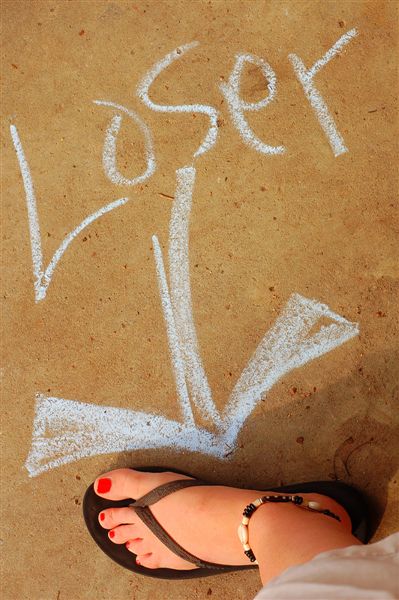
Creativity is an Act of Faith, Like Forgiveness

It’s a simple idea really that life gives us many opportunities to change and we have the choice to continuously grow or remain stuck.  It stuns me when I realize how often and how easily we do choose just that — to be stuck.  We get stuck in bitterness toward another person.  We get stuck in the pain of a transgression or mistake we have made.  I came to the realization recently that I have been stuck creatively for a long time.  And this is connected to lack of forgiveness on my part. It is also connected to putting my achievements artistically and what others think of me ahead of my relationship with Christ.  I took my eyes off Christ and put them on my status and what other people think of me.

Looking Back.

I have long imagined working for an NGO — long before I found my passion for photography.  It started with being a missionary kid and doing that work as my first and only career path. Years ago, I began to see there might be a way to fuse a lifelong passion for service to others with my burgeoning photography skills.  Granted, photographers are a dime a dozen and many are do-gooders that want to serve globally.

I knew my chances were slim to make a living at it, but I was full of passion and enthusiasm in 2008 when I applied and was accepted in a Master’s Photography Class to be held in Cambodia.  When I wrote an email to friends to raise money for the trip I felt honored to be going to Siem Reap to learn.  A close friend that I respected as a photographer wrote back opposed the idea and discouraged me from “wasting my money.”  The details of why he was so sure don’t matter now, but the important thing is that I allowed his comments to become overly significant.  I perceived them to be an assessment of my talent or potential as a photographer and an artist. Too easily I let it crush me and I didn’t end up going to Cambodia.  I talked myself out of it for a variety of reasons and over time that choice and his advice became large and loud in my life.

When I look back I see that this is when I began close down creatively by allowing the idea that I wasn’t “good enough” to wind its way into my marrow and psyche.  I lost confidence in myself and eventually I quit my professional photography pursuits.  More importantly my friend’s untended message eventually became louder in my head than what Jesus thought of me. I was isolated and alone creatively and did not have other voices speaking into my world.

(Although my husband disagrees interjecting here that in his opinion I did have a type of community online.  And lots of other people affirming my work which is true.  I even had someone track me down on Flickr, because of my work.  And that began a creative relationship with Our Lives Magazine which continues today.) But I didn’t know other artists in the community and I felt alone creatively and spiritually.

Let’s be clear. I know that my friend is not responsible for any of the events that transpired after our disagreement.  In retrospect what he said should not have had the power that it did but I lacked creative confidence.  I am only now realizing these things because I am in a healthier place.  I became bitter toward the person and situation. I was unable to enjoy the God-given gift of creativity.  I could not longer enjoy participation with any sort of creative process. And I doubted my artistic talent.  Eventually I quit.  And I was so wrong to do that.

The Healing.

I am working my way through a creative “recovery” of sorts in a book The Artist’s Way.  In it, Julia Cameron says:

“Art is a spiritual transaction.  Artists are visionaries.  We routinely practice a form of faith, seeing clearly and moving toward a creative goal that shimmers in the distance — often visible to us, but invisible to others.

… Art is an act of faith, and we practice practicing it. Sometimes we are called on pilgrimages on its behalf and, like many pilgrims, we doubt the call even as we answer it.”

How true for me.  And I wonder if I had been a part of any kind of artistic community, Christian or otherwise, at the time that I went through this “creative identity crisis” would I have given it up so easily? Why are artists are so isolated and have trouble supporting one another? How do we find community?  

I am not the first to wonder these things.  David Taylor is has thought and written extensively on the subject of supporting artists of faith.  As a pastor at Hope Chapel in Austin, Texas, he oversaw the arts ministry and adult education program. He also edited the book For the Beauty of the Church: Casting a Vision for the Arts. He has degrees in theology (MCS) and biblical studies (ThM) and is doing doctoral studies at Duke University. He wrote the best thing I have read on the topic A Meditation on the Art of Encouragement.

As I have gone through this experience God has put on my heart the question of how Christian artists help one another in the work of integration growing our faith and our creative pursuits?  If I had a mentor as I was starting out with my photography how would things have gone differently?  To continue with Julia Cameron,

“We must remain ready to ask, open-minded enough to be led, and willing to believe despite our bouts of disbelief.  Creativity is an act of faith and we must be faithful to that faith, willing to share it to help others, and to be helped in return.”

Artists need one another in order to be encouraged and mature in their craft.  We need to gather and share what we are working on, talk about how we create and discuss any challenges we may be facing as practitioners regardless of our discipline, skill level, or experience.   An artist’s ongoing creativity and belief in themselves are acts of faith that must be set at the foot of the Cross regularly.  Reaching out to other artists for encouragement and to encourage others are acts act of faith and although scary sometimes it is important enough to take the risk, just as forgiving and letting go of bitterness are also important acts of faith. These beautiful actions as believers require faith in the living God, the power of the Holy Spirit and in the death of Jesus on the Cross for us all.

Becoming UnStuck!

If I can only take my eyes off myself and off the views and opinions of others, and put them where they should be at Jesus feet.  And so recently I began to reach out based on the conviction that we artists need one another!  We need to be encouraged in the “faith” of creativity.  And I could do it because I know now that this isn’t about me and whether I’m good or bad at my art.  It is simply, I believe, right!

I thank God that we can grow and change and experience redemption in the form of healing and that through the resurrection we can become unstuck. That in the very act of forgiving we can lose our bitterness.  I thank God for the promises of Romans 6.

I am grateful that time offers us a panoramic view of our life so that we learn and grow by looking backward.

David Taylor seems to understand what it is like.

“If you asked me to tell you the Top Three Most Important Things I Have Observed throughout all my years as a pastor, one would be this: artists need continuous encouragement. This isn’t because they are a particularly weak. All humans need encouragement. But artists need it principally because of the nature of their work. Their work requires them to travel frequently into the realm of their own emotions, and then deeper still into their soul, and this can be demanding, wearying work.

“The two assumptions that inform my work of encouraging artists are that the natural condition of human beings, from Adam and Eve to the present day, is the condition of being afraid. For artists to become all that God intends for them to be, they must pass through many experiences of pain, each experience ushering them to a new level of growth and maturity.”

Amen and amen.  We must be willing to look back and address the things in our past that have made us stuck spiritually, creatively, or emotionally and forgive ourselves.  I’m grateful that this is what I have been able to do.  And I am praying and looking for ways that  I can play a role in encouraging and supporting other artists in the Madison community.

———

This is a part of a series titled BE REAL.  Still, many days, as I search, as I long for, need, wander, hope and fear — the process becomes an idol.  The process becomes this thing that distracts me from who God is, what it means to be his beloved child, and the few things that he calls me to each day.

  1. I wrote a poem in response to a sermon about the greatest of idols self-identity. This sermon  kicked off a series titled American Idols.  The premise is that anything in your life, even a good thing, that becomes more important than God is an idol.  In an age of psychology and self-healing, through medicines and talk therapy, self-worth can all too quickly become an idol.  For me, the journey of finding my way back to faith and belief was so huge in my development of a healthy identity.
  2. Here is what I wrote the week before in response to the sermon Stop.

These are a series I am writing called: Be Real.  One of the ways I’m going to do that– be real — is by writing a response to the sermons I hear at my church, Blackhawk. These responses are not from the church they are my personal reflections.  I am always challenged by teachers at Blackhawk, sometimes profoundly, but I don’t — to be honest — always take the time needed to apply them to my life. But, if life is too busy to apply what you’re learning about your faith and if you don’t change and grow, what’s the point? So here goes.  Many people are busier than I, including my husband, and I just hope that this helps reinforce in some small way what God was already saying to you.

————————


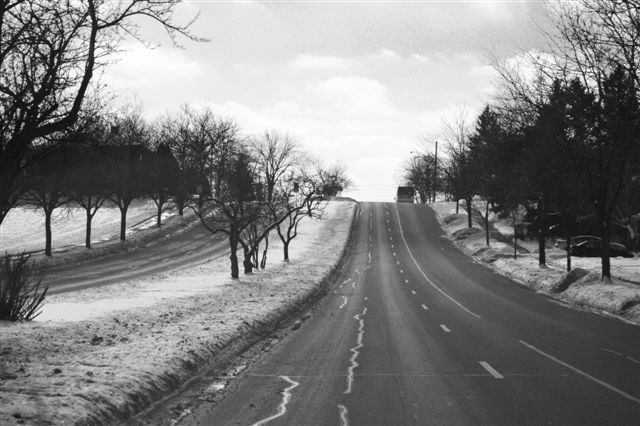
Long and Winding [a poem about aging and perspective]

long and winding

I am glad that life
is a long and winding road.
This gives me space enough
to live and breathe in the Grace of God.
This gives me time.

Time is there, if you want it.
For you to experience change and healing
and then change again.  Growth
and knowledge and then more growth.
Time is there, if you want it.

I feel the fragility of life as it is ever moving forward.
Turning forty-five feels like I’m dying.  I am ever aware
that I am not young, not any more. I can never again be young.
‘We are celebrating my being closer to death,”
I joked with my family. I was struck by the fact that I am half done.

I look into the sad, ancient eyes
of my neighbor. She is turning eighty-five
this year.  She is home bound, pain bound, stricken with the limitations
of her life and yet she must resolve hard within herself, because
she never complains. I need that Holy perspective to remind me
that she is the one that feels like she’s dying, because she is.
Her life is all about limitations and simply what she cannot do.

I am more aware of it today than I ever have been.
I am still alive and, this is for you too my friends,
The road is long and winding for a reason.
And time is there if you want it.

by MELODY HARRISON HANSON, September 27, 2011

Other poetry I have written.

The Second Half of my Life, Indeed.

Happy Birthday to me.  

Crossroads

by Joyce Sutphen
The second half of my life will be black to the white rind of the old and fading moon. The second half of my life will be water over the cracked floor of these desert years. I will land on my feet this time, knowing at least two languages and who my friends are. I will dress for the occasion, and my hair shall be whatever color I please. Everyone will go on celebrating the old birthday, counting the years as usual, but I will count myself new from this inception, this imprint of my own desire.

The second half of my life will be swift, past leaning fenceposts, a gravel shoulder, asphalt tickets, the beckon of open road. The second half of my life will be wide-eyed, fingers shifting through fine sands, arms loose at my sides, wandering feet. There will be new dreams every night, and the drapes will never be closed. I will toss my string of keys into a deep well and old letters into the grate.

The second half of my life will be ice breaking up on the river, rain soaking the fields, a hand held out, a fire, and smoke going upward, always up.

Someday In September, I Won’t be so Glum

Someday in September I won’t be so glum.  It hits me around this time every year as everything in the garden is dying.

I look out my kitchen window at the wilted and black stems and the herbs that need cutting before the first frost.  I have cucumbers and tomatoes still, but I can feel the death in the garden.  Yes, it is the same feeling I get around this time every year. Have I mowed the grass for the last time? All I can think of is winter looming.

I cannot enjoy the sunny, blustery September days because I am thinking of the cold that is coming.  And I am wondering when the leaves start falling? Thinking that if it is warm this weekend I should clean up the yard for winter.  I will be glad that I did, come spring.

And every year around this time, I think this is the year that I will plant bulbs.  Some years I have even gone so far as to buy Tulips and Daffodils bulbs then I procrastinate, setting them in the garage for “a while.”  Blubs in Wisconsin have to get in the ground before the ground gets frozen hard, so I have months to ponder it, and the truth known already.

I won’t do it.

I think it is mostly because I haven’t the faith to believe that Spring will come.

But it does.

Oh that I had the faith required today to plant.  To wait.  To believe in spring.

Therefore the Lord waits

to be gracious to you, and therefore

he exalts himself to show mercy to you.

For the Lord is a God of justice;

blessed are all those

who wait for him.

Isaiah 30:18

This is what got me inspired, after having a gloomy wretched day.  I read about hope from Ann Voscamp.  Thank you Ann.


I Regret Not Being Happy (A poem)

I regret not being happy. Or happier if that makes you feel
better. As if I could do anything to change myself.
I doubt that it is in my power at all
to change me. Particularly when I feel this heavy.  Smothered by a lingering gloom.
And I know that disaster sits around the corner waiting. No, I do not choose
my moods. I don’t believe one can
choose to simply be something else. If I did, I would not last long
sitting with this regret.

September 21, 2011

Sleeping poorly and feeling increasingly unsettled the last few days.  I’m not sure what’s going on or what this poem even means, but this was the result of trying to write about it. MH

I Sold My Soul to Work: A response to Blackhawk’s sermon “Success”

One of the strongest messages I received from my father was don’t be a slackerFairly regularly he communicated to me that he was fearful that I just might be one.  It was subtle, but I got the message that I needed to work harder. He was always pushing.

He was very driven.  I thought being driven was a positive quality growing up.  And Dad’s motives were good I believe.  Dad and Mom were doing the Lord’s work and how could we not give the Lord 120%?  I suppose that is why I was so afraid to quit my job to stay home with my children.  I was afraid that deep down I was the slacker he saw in me.  What would happen to me if I didn’t have fear of failure, or good-natured competition, or general-freaking-out-all-the-time-to-get-things-done pushing me? For those were the things motivating me at the time.

As I sought God’s direction for my life in the decision to stay or leave InterVarsity, I had no idea how much I needed to learn.  And that began a decade long journey.  Ironically, this simple message was taught on Sunday at church about the idol of Success.  I sat there wishing that I had heard the sermon fifteen years ago, perhaps it would have saved me a lot of grief.  But truthfully I likely would not have “heard” it.  I needed to go through what I did, to learn a difficult lesson.  I hope the younger people listening yesterday can learn this earth shattering lesson without living it out painfully like I did.

I grew up believing that I WAS what I accomplished.  My worth was in what I could DO.   I don’t think my parents knew they were teaching me that, but I got the message that the harder you worked, the better you could and should feel about your contribution.  The more degrees you got, the better you could feel about your brilliance.  The more areas of responsibility you were given, obviously, the more of a Star you were and the more respect and affirmation I received from Dad.  I sat at the master’s feet, my father, who was a doer.  He was an extremely talented, hard-working person that motivated others to do great things.   He was always coming up with new ideas.  He was generally a big shot in the mission world, quite important and well-respected.   I learned my ideas about work from him.

I went to work for my father soon out of college mostly because I wanted him to like me.  When he gave me my first promotion I heard angels singing and the sun came out a little brighter.  I had finally arrived in his good graces.  And then I quickly became scared to death, because even though I knew what was expected of me – DO NOT FAIL – I didn’t believe I was capable, or talented, or smart enough.

That began my decade of perfecting the life of a workaholic.  I would not fail, because I worked longer and harder than everyone around me.  (This is what I thought at the time anyway.  There were many workaholics at my side as well as balanced people who worked smarter than I did.)

I sold my soul to the god of success.  The truth was more painful.  My identity was completely wrapped up in what I did and accomplished.  Tim Mackie said on Sunday, “Our culture worships at the altar of success and achievement.”  And how!  He also said, “A counterfeit god is anything that is so central to your life that should you lose it your life would not be worth living.”

That was my job.   I completely lost my way.  I lost my faith, kneeling at the idols of work, perfectionism, achievement and power.  I was ironically doing many good things for all wrong reasons.  Every day at work I attempted to prove to everyone, but especially my dad, but also the doubters and haters who (quite rightly) worried about Dad hiring two of his children for major roles in the Urbana convention.   Every day I thought I had to prove that I was good enough and deserved to have my job.  Deeply insecure, I didn’t know my value as a child of Yahweh. I finally burned out and then I quit—mostly out of a need to get away from all that, from the person that I had become, who I didn’t like at all—to be at home with my children.  I had three under the age of four and a pre-teen step daughter.

Right about now you are thinking, those poor kids.  Yeah, in some ways it is true that you could feel sorry for them but the lessons God taught me have made me who I am today and I wouldn’t trade them even knowing my children had to live with me through several struggles with major depression and my alcoholism.

This breakdown of Ecclesiastes 4 was so beautiful in its simplicity.

Then I saw that all toil and all skill in work come from one person’s envy of another. This also is vanity and a striving after wind.  Fools fold their hands and consume their own flesh.  Better is a handful of quietness than two handfuls of toil and a striving after wind. (Ecclesiastes 4:5-6)

The same word hand in English means three different things in Hebrew. (And people wonder why we don’t trust the translators?)  Hand is used three times here to mean three different things.

  • “Folding your hand (yad)” in Hebrew is forearm, visualize folding your arms on your chest.  That is the slacker or lazy person I spoke of. The person taking it easy dishonors themselves and God, and is a fool.  It is good to use your time and talents to honor the Lord.
  •  “A handful (kaph)” is a word that helps you visualizes an open hand, palm up.
  • “Rather than two handfuls (khophen).”  This  is grabbing a fistful of something.

When I worked, I was grabbing for everything—the next project, the next department.  I was constantly dwelling on what I didn’t have and could not appreciate the honor and responsibility of what was before me.  I couldn’t enjoy my own successes.  I trampled on people in my department blindly so that I could grab at more responsibility and power.  I was never satisfied with my own work.  I was never content with my accomplishments.  I look back now, ashamed.  I was too young and more importantly without the spiritual maturity to know what I was doing.  Being raised to believe that I was what I accomplished, well, I was doomed — destined to fail.

The open hands of tranquility!  Even now, there are still areas where I push myself out of insecurity and fear and out of a desire to “be somebody.”  And a big one for me is being a feminist.  Let me explain.  I fret continuously about the lack of power and influence that women have – not only in the Church, but that is a large part of what I think about.  The role of women and being a feminist has been  at times an idol in my life in that I have made it the ultimate thing.  I am afraid of personally giving up whatever bit of power or influence i have as a women and think about this for all women in the Church.  I am afraid of women being perceived as lightweights, that men (who already have power) might think we take up needless space in the universe and really only have one significant purpose.  I know!  I have been totally two-fisted toward God about this, distrusting the leadership of the church as well as individuals I interact with on this subject. 

I come to my role as a feminist woman in the evangelical church often suspicious, fearful and distrusting.  I have not been tranquil or at peace about this for a long time.  And here’s an earth shattering realization for me.  I feel like I am letting “womankind” down by being a stay-at-home mom.  As if somehow I should have a career that shows that women can make money, contribute ideas, and make a significant difference in the world just as well as men, and I should be doing that for womankind.  I know how silly and pathetic that sounds.  I care so much more about my own reputation as a woman and I deeply care what others think of me still.  I worry that I am not doing enough or not proving my worth with my choice to be at home.

This remains unresolved in my and all I can do today is admit it, confess it and pray that I can do this work that God has put before me from a place of trust that my life is a gift from God. I must trust that He gave me my mind and heart; he gave me the things that make my heart ache or my soul sing.  All these are from Yahweh!   Pray for the peace found in doing the things He put before me – in raising my children which is profoundly challenging, daunting, and an incredible honor.   I want to approach motherhood openhandedly while bringing my screwed up, sinful, dysfunctional ideas about my value to the Cross every day.  I want to breathe in the peace of knowing I am beloved and that I am forgiven for those years of fretting and striving for significance and meaning in things that would never satisfy.  I am forgiven for the years of trying to earn my earthly father’s and Yahweh’s love.   My task is to wake up every day remembering that I have nothing to prove — not to my father, not to myself, not to men or women, not to anyone.

Melody

———

Here is a poem I wrote in response to last week’s sermon, about the greatest of idols self-identity – allowing our meaning and purpose to come from anything but Yahweh.   The sermon  kicked off a series titled American Idols.  The premise is that anything in your life, even a good thing, that becomes more important than God is an idol.  In an age of psychology and self-healing, through medicines and talk therapy, self-worth can all too quickly become an idol.  For me, the journey of finding my way back to faith and belief was so huge in my development of a healthy identity.  Still, many days, as I search, as I long for, need, wander, hope and fear — the process becomes an idol.  The process becomes this thing that distracts me from who God is, what it means to be his beloved child, and the few things that he calls me to each day.

Here is what I wrote the week before in response to the sermon Stop.

These are a series I am writing called: Be Real.  One of the ways I’m going to do that– be real — is by writing a response to the sermons I hear at my church, Blackhawk. These responses are not from the church, just my reflections.  I am always challenged by teachers at Blackhawk, sometimes profoundly, but I don’t — to be honest — always take the time needed to apply them to my life. But, if life is too busy to apply what you’re learning about your faith and if you don’t change and grow, what’s the point? So here goes.  Many people are busier than I, including my husband, and I just hope that this helps reinforce in some small way what God was already saying to you.

————————

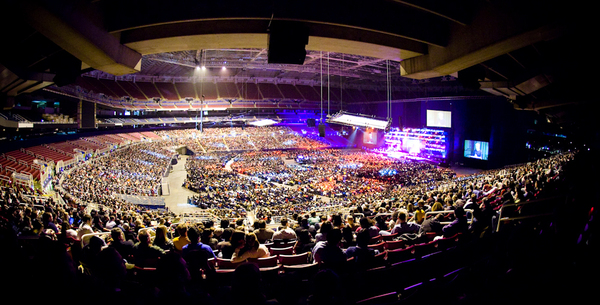
I searched hard for an image from Urbana 96 or Urbana 2000 because those are the events that I did the promotion for, but the website seems to be stripped of the historic images. The image above was taken after I left.  I suppose I should say for the record that I by no means failed at filling the Urbana conventions that I worked on.  They were both more than full, bursting.  If that is what you are measuring as success.

I Am More (a poem response to Blackhawk’s Sermon “Who Is Your God?”)

I Am More

By Melody Harrison Hanson

The future disturbs,
chases at my sanity and sensibilities.
I am scared of each intake of breath, every thought
and this moment. I am stuck.

The only thing that makes sense is Jesus.
I lean in to Him.  I cry, ready for anything.
If only I could cry actual tears. 
That too soon reminds me I am only partly healed.
I feel barely human.
What kind of person cannot cry?
The weight on my chest is unimaginably heavy. 
Hope is cloying and oppressive.

I am scared of the future, looming dark and cold.
I am afraid of these days I am living now.
I want to believe that eventually this life of mine will have a purpose beyond this day.

I am more than the money I don’t earn.
I am more than the things I do.
I am more than what I give.
I am more than what I take.
I am more than the words I write, slipping them into the cosmos with trepidation.
I am more than merely a daughter, a wife, a mother, and a friend.

Why doesn’t being beloved feel better than this?
In the end I am stuck with myself, I am barely human.

I want it all to mean so much more.  I want
the children I meet to change me.
I want the people I love to make me feel alive.
I want each action I take to mean something.
And yet it is all utterly meaningless unless
Yahweh is everything.

———————————————————————————

This poem is about the greatest of idols self-identity — allowing our meaning and purpose to come from anything but Yahweh.  The sermon at Blackhawk this week kicked off a series titled American Idols.  The premise is that anything in your life, even a good thing, that becomes more important than God is an idol.  In an age of psychology and self-healing, through medicines and talk therapy, self-worth can all too quickly become an idol.

For me, the journey of finding my way back to faith and belief was so huge in my development of a healthy identity.  Still, many days, as I search, as I long for, need, wander, hope and fear — the process becomes an idol.  The process becomes this thing that distracts me from who God is, what it means to be his beloved child, and the few things that he calls me to each day.

Here is what I wrote last week in response to the sermon Stop.  It is a part of a series I am writing called: Be Real.  

One of the ways I’m going to do that– be real — is by writing a response to the sermons I hear at my church, Blackhawk. These responses are not from the church, just my reflections.  I am always challenged by teachers at Blackhawk, sometimes profoundly, but I don’t — to be honest — always take the time needed to apply them to my life. But, if life is too busy to apply what you’re learning about your faith and if you don’t change and grow, what’s the point? So here goes.  Many people are busier than I, including my husband, and I just hope that this helps reinforce in some small way what God was already saying to you.

Do You Trust God? (A response to Blackhawk’s sermon “Stop”)

BE REAL.

One of the ways I’m going to do that – be real — is to write a response to the sermons I hear at my church, Blackhawk. These responses are not from the church, just my reflections.  I am always challenged by teachers at Blackhawk, sometimes profoundly, but I don’t — to be honest — always take the time needed to apply them to my life. But, if life is too busy to apply what you’re learning about your faith and if you don’t change and grow, what’s the point? So here goes.  Many people are busier than I, including my husband, and I just hope that this helps reinforce in some small way what God was already saying to you.

Stop

I’m privileged I know.  I don’t have to work.  And through that I have learned I am more than my job.  I am more than what I do.

I’m “unemployed” and have been for ten years, since I left a busy career with InterVarsity Christian Fellowship.  I quit my job the year of the tragedies of 9/11. But I had worked through three pregnancies.  I had been “successful.”  Why did I quit?  Why did I stop?  I can tell you that today I would have considered that decision more carefully — found a way to scale back responsibilities rather that cut all ties.  But one cannot live in “what might have been.”

In 1991, I had a few months old baby, a two-year old and a three-year old, and a pre-teen and worked in full-time ministry.  I don’t think I would have admitted it then, but I was utterly overwhelmed by my life.   I was tired, burned out, bored with my job, and looking for change.

So I quit.  I thought it would be simple to stay at home with the kids.  What I found was that I was uncomfortable in my skin.  And not emotionally or spiritually healthy.  Produce and get things done was how I operated.  I was competitive by nature.  I was busy by choice.  I was productive, one of the 20% that does 80% of the work in a church or non-profit.

Here’s something I wrote about myself, looking back at that time:

It struck me, how sad it is when one spends their whole life striving, working, driven by the next “important” thing.  Having worked in a not-for-profit ministry for thirteen years and having grown up in Dan Harrison – the missionary leader’s home — I know about striving!!!    I used to work like that.  I used to get such a rush from doing — it defined me.  It drove me.   I would wake in the morning frantic that I was somehow already behind and go to bed at night anxious over what I had forgotten or worse NOT gotten done.  

That sad picture was me!  The world was about getting it done for me. I was my job. It is no exaggeration when I say I got my identity from what I was able to acocmplish.I was always thinking, working, doing.  It was my legacy from my father which he held on to even as he was dying — that he hadn’t finished all he could do!  He wasn’t even able to stop when he got brain tumors.

Stop and Be Filled

But this sermon was not about work being bad, but being able to stop and be filled. It was about trusting God. It was about being mature enough to sit with God, quiet in his presence with an open heart, for periods of your day.

My pastor confessed that he’s constantly on the go and like I once did, he sounds like he also measures his self-worth by his productivity. My pastor is a workaholic, I think, though he manages it.  He seems to have boundaries, he exercises, and he maintains ongoing relationships, and the staff at church seem healthy too and so though I don’t know him personally but I respect his public life anyway.

He is learning after all these years that God says stop in Psalms 46 and the context isn’t one of peace and tranquility, it is chaos.  More like how I used to live my life, than my life now.   The psalmist describes the world gone crazy and things upside-down, where you can’t count on anything — In that moment just — stop.

God is an ever present help in trouble.  I will not fear… This is poetry that shows God offers us refuge —  a “basement in a tornado warning” kind of security.

The Hebrew:  Refuge — Machceh {makh-seh’}; from chacah; a shelter (literally or figuratively) — hope, (place of) refuge, shelter, trust.

“I am your refuge.”   In this poetry, you can understand God is our Safe Place.

Relax! Cease. Stop! Be still!

When the world says go, when things are falling apart, when something reflexive and internal says fix it, do it — God says, when it is most chaotic, raphah!  Be Still!   

“Anyone can stop and not do something but guilt overcomes!” said Chris and went on to talk about how guilty he feels for not “doing.”   How difficult his sabbatical was because he was unlearning a lifelong habit of being a doer.

“Stopping is the same as trusting, which is easy when life is peaceful.  It is more difficult and a sign of our maturity when life is falling apart.”

How is this done practically speaking?  How does one find time to stop and trust who God is for a few minutes in our day.

  1. Put yourself in a different location like doing for a walk.
  2. Be quiet. Turn off the noise. i.e. i-everything.  Find the off button.
  3. Get up early or stay up late.
The world says go.  God says stop.  Relax. Get alone.  Become helpless.  Cease.  Let it go. Loosen your hold.  Wait.  
And this means you have to trust Him.

Life is Work, Hard Work (but there is a ray of hope)

To want–to strive–to long for more is to be human. Isn’t it?

We are all on that journey of life, which for some comes so easily and for others, I include myself here, is work, hard work.

Jesus says in John 8:32 “the truth will set you free” and that I believe.  It is what makes me a believer.  The truth will free me from my constant desiring, striving and longing for more out of life.

But in the meantime it also can make you quite miserable don’t you think?

As Richard Rohr says, “Medieval spiritual writers called it “compunction,” the necessary sadness and humiliation that comes from seeing one’s own failures and weaknesses … Without confidence in a Greater Love, none of us will have the courage to go inside, nor should we. It merely becomes silly scrupulosity and not any mature development of conscience or social awareness.”


Desiring. Striving. Longing. It can become a burden.  And a weight.  And before you know it you are running from the truth, any truth.

What does that have to do with my nearly ten-year wrestling with major depression?  That experience made me into a different person.  I stopped running.  I began to face the past, the present and the future and admitted how scared I was.  I began working on my life. And it was hard work.

But I have become a different person.

I am more content and able to just be than at any other time in my life.  I once was filled with the pain of needing to prove myself, heavy with the belief that I had to be significant and do incredible things with my life in order to be loved.  I thought I was unlovable.   Instead, I am different and happy for the first time in … as long as I can remember.

  • I found my way back to Belief.  I know I am Beloved.
  • I am a more empathetic, genuinely loving and generous person with my time, resources and life experiences.
  • I am able to face my addictions:  alcohol (three years in July), cigarettes, shopping, work, to name just a few.
  • I have forgiven and I have been forgiven.
  • I have learned that in telling my story others are somehow compelled to grow.  It is almost as if knowing what I have been through opens up a place in others to believe that it is possible to be healed.

I took some time this summer to write briefly about my experience and it will be published in a book titled Not Alone — It has stories of living with depression.  The book is available for pre-order.   I hope it helps and encourages others who may suffer with this confusing and difficult illness of depression.

helmet

From the book:

Depression is a very real experience for many people. The causes can be varied. Abuse. Chemical imbalances. Divorce. Rejection. There is no one reason that a person might suffer depression. However, one common theme is that it can leave the person feeling isolated and alone. Because of the stigma that is often associated with depression, people often remain silent about it, never knowing that the person next to them is going through the same thing or has experienced it in the past. Instead, they hide away, believing that no one understands, believing that no one cares.

In this book, the authors break the silence, boldly sharing their stories of depression.  Whether sharing how they first discovered that what they were feeling was depression, telling how they sought help for their depression or giving words of hope that depression can be managed, the authors all tackle the lie that you must suffer in solitude. With courage and honesty, these stories give a glimpse into the depressed existence. While you will not find a cure for depression in these pages, you will find a sense of community. You will find words of hope. You will find that you are Not Alone.

And here are links (chronologically and a list) to other things I have written here about my experience with depression.

Generosity? It’s complicated.

The other night I couldn’t sleep.

This is rare for me as I am a good sleeper.  I go to bed directly after I kiss my children good night.  I want to read.  I drift off many nights before ten o’clock.  But Saturday night I kept waking up feeling like I couldn’t breathe. Additionally I felt anxious about something that I could not name.  This happens to me sometimes.  My asthma acts up from years of smoking.  It was never the less keeping me awake.

As noxious thoughts began to swell and demand attention, circling like buzzards above me, I finally threw back the covers in frustration.  I got up.

I don’t do the middle of the night very well.

Sleepers generally don’t I think as we are not used to how different it is being awake in the middle of the night.  I was aware of all the fears I managed to push away which tend to take over during the nocturnal hours.

Gone is rationality.  Gone is perspective and patience.

And so, I found myself awake, breathing with difficulty at three in the morning and I finally decided to get up.

Creeping down the stairs and into the kitchen, I was going to use my inhaler and then write.  I find writing is the best way for me to sort out what is bothering me.

There were people in my living room!

I was shocked, though it is not as if it was totally unlikely.  Molly is often coming in from work or being out and it is usually in the hours long past midnight.  But she was sitting there idly chatting with our two guests at three in the morning.  They looked at me like I was crazy (for being up) and I looked at them the same way.  I quickly high tailed it out of there!  As I scuttled back to bed, pissed off and feeling as if I had done something wrong, I recalled the two young people who had slept in our basement off and on for the last week or so.

When we returned from Seattle, we found out that friends of Molly were “homeless” and living in their car.  They had stayed a few nights in our basement while we were away, but had cleared out when we returned.  So I invited them back again.

For months, years, I have tried to resolve where to step in to the tragedy of the homeless here in Madison.

I want to do something.  I want to be intelligent and compassionate about it.  We all do the various things like offer a ride or or give money to the person with a sign outside the mall. Bring a bag of food when our church asks.   But those are band aids (and some would say giving money to transients is wrong.  In Madison it is considered breaking the law).

But I want to help real people advance in their life situation.

And so, it was easy to take these two people in and allow them to sleep on our futon in the basement and eat a few meals. When I pursued their situation further, it turns out they are “intentionally without a home, off the grid, dependent on no-one.” Okay, I think.  Why not? We had no idea what their short and long-term plans were.  One more night quickly turned into a week, more…

We have so much.

As the week progressed, it became less convenient to have them in the basement where Tom’s studio is and where we have and do our laundry.  Dare I say inconvenient?  And we soon learned that our guests slept until two in the afternoon and stayed up all night, as I discovered when I wanted to use my computer in the middle of the night.

One day, as Tom and I cleaned toilets, washed dishes and laundry, they woke up late and laid about on the back porch. What had begun as an easy kindness had quickly become something else.  Something you hate to think, much less say out loud to one another in whispered annoyance.

I caught myself thinking “they’re just freeloaders.”  To be sure, by the end of the week, if they had not made their intentions clear to us we were going to ask, to clarify how long they would need our help.

I woke this morning to a note.  They are moving on — going to live with his parents for a while in Cleveland, work and pay off debt.  And though they were polite, and picked up after themselves, and were extremely appreciative, I was kind of relieved to see them go.

Generosity is quickly complicated when it involves real people.

And all too quickly I saw how small my heart is.  I felt willing to be generous as long as it didn’t infringe too much on my comforts and needs, my daily schedule or priorities.  I have to keep asking what’s next for us?  I let them stay with us because I wanted to “do something” for the homelessness.  They were just two people, fairly affluent with a car, cell phones, a laptop and other luxuries but they have no home.   I was surprised to learn that only 18% of the homeless are chronically homeless.  Perhaps more people on the street are like them?  I don’t know.

Generosity — yes it’s complicated.

Understanding homelessness requires a grasp of several social issues: poverty, affordable housing, disabilities, and others.

Having these kids living in our basement brought up all sorts of complicated feelings and thoughts.  Why aren’t they working?  And yet how can I not share the warmth and shelter that we are blessed with?

In a letter to our mayor Paul Soglin’s assistant, Brenda Konkel recently wrote:

Over the years a great many who live homeless in Madison have found daily shelter in either the basement of the State Capitol, or the Public Library on W. MIfflin St. As it currently stands soon neither will be available. Word from the State is that there are no plans to reopen the basement of the State Capitol to the public, and the downtown Public Library at its current location on Mifflin will close in October for approximately two years. The library’s temporary location will offer very limit seating and space.

The consequence of these two factors is to cast out many of our neighbors to the dangers and sufferings of winter.

This will be a grave time in Madison especially downtown if the people of our city do not take note.    What is being done?  What needs to be done?

Luke 3:11. And [John the Baptist] would answer and say to them, “Let the man with two tunics share with him who has none, and let him who has food do likewise.”

It’s a heavy thing all this knowledge–the question is what do we do with our knowledge and our power?  Do we have open generous hearts.  Are we willing to have our lives disrupted and changed by others who are less fortunate than we?

Selah. Yes, stop and listen.  No answers today, just hard questions.

Melody

PS I did not take a photo of our guests.  This photograph was taken downtown Madison of a homeless woman.

At Some Point (A poem) This is an old old poem, from 2008.

At Some Point

(May 15, 2008)

Anxious, chaotic thoughts
My fears unexplained by logic or even a specific memory.
I am caught in the tangle of what happened long ago.
This story is about what didn’t happen.

Undetected was your love.
Like a puzzle missing pieces,
a puzzle that can’t
be finished.

Suffering the affliction of neglect.
Anguish is something difficult to define.
It hurts.
It brings toxic thoughts.

Why am I unclear? Do you love me?
Why is it that, continuously, it seems I return,
To anxious, chaotic thoughts.
Confusing, violent, soul-crushing dreams.

Undetected was your love.
Like a puzzle missing pieces,
a puzzle that can’t
be finished.

Again and again, year after year,
no matter how hard I work
Always back to this again,
Do you love me? Why am I unsure?

Boundaries crossed, again and again,
you take me places a child should never go.
And then, you push me away (that’s what it feels like) but it is
More like indifference.

Boundaries crossed, and you share
From your life things I was never meant to know.
Perhaps that is the only way to be your child;
The only open place in your heart.

I must go there, within my own discomfort.
Must I allow you to take me down those twisted paths
That only led to mortification.
Boundaries crossed. I am uneasy.

Distressed.
Nervous.
Unsettled.
Why that’s how I felt growing up!

Undetected was your love.
Like a puzzle missing pieces,
a puzzle that can’t
be finished.

No longer a child, when will I
let you go?
An anxious, chaotic life is no longer for me.
At some point, I must walk away

And find within
what I need to survive.
Acceptance of who I am,
lovable, genuine, predictable.

Moody, insecure, doubtful.
Pulled in two directions,
it is time to Become.
At some point, I must grow up.

Daily, I choose.
I choose the path I will journey down.
Will I walk the path of anxious, chaotic thoughts?
Or will I walk away?

{I Know What “ezer” Means — Further thoughts on being a Woman in the Church}

Sometimes people listen to me.  And I think,
I have a responsibility to talk about what it is like to be a woman in the Church.

Sometimes people listen,

so hear me,

this is what I don’t understand

Why are women still oppressed?

And why do (some) men not understand?
Why do (some) men treat women the way they do?

It’s not like I want to live my life angry.
It’s not like I want to live my life on the defensive.
It’s not like I want to be oppressed.

(Some) men will always question

the word “oppressed.”
They will ask: How are you exploited? How are you possibly offended

when you can be our helper?

Here’s my problem.  I know what ezer means.

Jesus was a liberator.
Women traveled with him,
supported his ministry,
anointed him for burial,
stayed with him at the crucifixion, and
saw his resurrection because they were waiting, believing.

Jesus loved women and wasn’t afraid of us.
He healed us.
He talked to us.
He listened to us.
In the early Church women were teachers, donors, apostles, ministers, laborers.

Why is the Church today so unlike what I think Jesus meant it to be?
I read the Bible and I see
Jesus gave women freedom.  Why do (some) men read it
and see separation? Partitions.
Why do (some) men only see all of our differences?
I am simply a person in love with Jesus.

I look at the Church today—so many men reading and teaching theBible from a masculine perspective. 
I see the Church today, its teachers and preachers—its magazines—its writers—its leaders —its conference speakers.
Man oh man, it is so full of men.
It is so full of entrenched hierarchy and deep biases
that the Church perhaps thinks is subtle, if they even think about it at all. 

But I see and hear the lack—of a Female Voice.
And even when She speaks, is she heard?

He said:
“There is no longer male or female.”
And I say, except— in the Church.
Sometimes people listen.
Are you listening?

P.S. Donald Miller: Women are so much more than simple sexual beings waiting for you to write our story. And you may have erased the “Love Story for Girls” but women have longer memories. You should take more care with your words.

One Perspective.