Miscellany that Bewilder Me

Midnight.

Last night, my ten year old son said he wanted to stay up until midnight — insisting that he had to do it. — But why? I asked slightly bewildered.

“If I do, I will have not cracked my knuckles for a whole day!” he told me in all seriousness.  He has a nervous habit.  It makes him self-conscious but I had no idea how much.  He came up with this promise to himself.  I reassured him that he could “not crack his knuckles in his sleep and that would still count.”

But it strikes me and stays with me today.  That little self-improvement goal seemed so simple to me and yet it was such a challenge for him as he made a promise to himself and kept it.  It made me wonder how many times I promise God something and don’t do it.  Does he, like a mother feel admiration for me that I even try?  Or is he disappointed when I fail?

Blessings & Curses.

I wonder.  Does God withhold blessings from us if there was something that God has wanted us to learn and we knew it full well but resisted.  Or ignored God?  Pretend we don’t hear, like child who acts like they can’t hear their mother calling from the next room.

Sermons are like that sometimes.  Most of the time not offending seems to be the order of the day and sermons become nothing more than a gentle reminder.  Not exactly optional, but full of choices and options … How many of those softball sermons have I ignored or just not allowed them to change me?  Or when they challenge do I consider it “optional?”

Yes I do that.  I ignore God regularly.  Stubbornly.  Foolishly, knowing fully that God has my best interest in mind and yet I can’t gather up the willpower to obey.  To stop cracking my (spiritual) knuckles.

What?  You don’t?  I don’t believe you.

And do we miss out on blessings, on a level of happiness or contentment because certain challenges from God seem too hard? Not that serious.  Life goes on.

Of that we can be sure.

Floodgate of Social Media.

I cannot seem to deal lately with the torrent of information coming into my life through the media.  A friend, who is a Scientist at the university, said he thought perhaps evolutionarily (is that the right way to say that? what is the word I’m searching for?) we are not capable of taking it all in.  Our minds and hearts just can’t absorb it.

Some days I feel my heart cracking open reading about suffering in Japan and Christ Church,NZ, ongoing efforts in Haiti and areas of Africa, our nearly decade long wars in Iraq and Afghanistan, cholera outbreak in Ghana, ethnic minority Christians facing religious persecution in Vietnam, unrest in Yemen promoting Somali refugees to flee there, political unrest in Nigeria, drought in Niger, measles epidemic in Kenya, even AIDS being still the number one killer was brought up on the Colbert Report last night.  Can’t even escape the pain in humor.

We cannot get away from it.  How would God have us respond?  It’s too much.  I cannot bear it.  I need to know what God would have us do to respond.

Justice.

My understanding of the gospel is becoming enriched by the truth of a recent sermon series at Blackhawk on Justice.  And reading Timothy Keller’s book, Generous Justice.  God’s justice is not a distraction from the gospel but a centering on its fullness.  Whenever anyone argued with Amy Carmichael that the gospel was only a proclamation and didn’t include acts of mercy and social justice, she emphatically said to her critics:  “God didn’t make you all mouth.”   Ha.  I love that.

And Bishop J.C. Boyle, a nineteenth-century British evangelical, said:  “Let the diligence of Christ be an example to all Christians… Like Him, let us labor to do good in our day and generation, and to leave the world a better world than we found it….Let us awake to a sense of our individual responsibility.”

My Church & Women: The ongoing Crusade.

I’ve decided to acknowledge to myself that I am on a crusade.  It may be small.  It may be ineffective.  But I am.  In my reading this week I read that if you truly disagree with the premises of your church on women in ministry or ordination of women you will eventually leave that church.  People just do.  For the most part churches don’t change — especially those connected to a denomination.   People give up.  Lose hope.  And leave.

While that was devastating on one level, because I love my church dearly.  It also made me accept the truth that I am on a crusade to change it.

One can’t simply learn the truth and sit on it.

Truth not only changes how we see ourselves, it changes what we do and how we live.

Carolyn Custis James, Half the Church.

What I know.  Jesus loved women.  He consistently reinforced human equity.  He mobilized and recruited and listened to and even hang out with those who were on the margins.  He valued women and they served with him and spoke for him, gave witness faithfully in the Bible, which seems to me to be a story of redemption for marginal people.   And there are leaders in my church who do too.  They believe, they agree, they are willing to concede.  But moving a church is as I’ve said like moving the Titanic.  It won’t happen any time soon.   I will be the quiet, prayerful voice of change.

More on this in the future, but for now…

Authorities at my church have decided to phase out the Bibles that are on hand every week, calling it a Bible Revolution. They want people to use their own personal Bible.  Yay.  The best thing that will come of this, besides the obvious, is that they won’t be tied to the New International Version any longer and can perhaps use an inclusive translation like the New Revised Standard Version that speaks to women as well as men.  That one uses language that is more welcoming to women.

Halle — fricken — lujah!

“Is the gospel truly good news for women who live in entrenched patriarchal cultures?” — Carolyn Custis James

The Titanic didn’t move this week, but the iceberg it is stuck in melted a little.  Viva La Revolution!

Winter seems to be lingering here in the Midwest.  I dug out an old poem from October, 2009.

WINTER COMES

Winter is uninvited, yet it always comes.

No matter how long  I postpone trying on last year’s coats, hats and gloves,

even still winter comes.  If I leave the hose out until it’s frozen stiff, snaking through the yard,

still winter comes.  The pots and the plants they crack and curl from the cold.  Winter, comes.

Winter comes in the cold,

dark mornings heralding sad thoughts and memories.

I lost my father to the winter.  I discovered, accepted and revealed a family’s ancient addiction.

I miscarried.  I fell down.  I fell apart.  Always winter comes.

Winter means waking early with darkness bringing in the day.

Though I try to overcome, the anxious thoughts settle in.

Remember the cold. Remember, remember.  I am always falling, in winter.

Good things are lost, so do not hold too tight

to what you desire most.  You will lose them to winter.

Love hurts more in winter, dries up and becomes need.

Love becomes memory. I am falling.  In winter.

And at the moment when the winter once again threatens to overcome, I end my slumber.

On that icy morning I wake early. Snuggle in.

Sipping coffee, by the fire.   And I think of Spring.

As you, I am thinking of spring!

Feeling grateful during the season of Lent, as I process how much God has done to redeem me from the pit where my life was.  I must never forget.  Ever.  I cannot.  Reading Henri Nouwen and he speaks to this:

“In our lives there are moments when we realize that, even if we may have done everything to destroy ourselves, we have never lost our true identity as beloved daughters or sons. That identity is never taken away. And that moment of realization is a very, very important moment.

“But take care what you do and be on your guard. Do not forget the things your eyes have seen, nor let them slip from your heart all the days of your life…” (Deut. 4)

MH

————————————————————–

Comments on Luke 8:1-3, from J.C. Ryle, Expository Thoughts on the Gospels: St. Luke (1860)

From Wikipedia:

Amy Wilson Carmichael was a Protestant Christian missionary in India, who opened an orphanage and founded a mission in Dohnavur. She served in India for 55 years without furlough and wrote many books about the missionary work there.  While serving in India, Amy received a letter from a young lady who was considering life as a missionary. She asked Amy, “What is missionary life like?” Amy wrote back saying simply, “Missionary life is simply a chance to die.”
Carmichael’s work also extended to the printed page. She was a prolific writer, producing thirty-five published books including Things as They Are: Mission Work in Southern India (1903), His Thoughts Said . . . His Father Said (1951), If (1953), Edges of His Ways (1955) and God’s Missionary (1957).  In 1931, Carmichael was badly injured in a fall, which left her bedridden much of the time until her death. She died in India in 1951 at the age of 83. She asked that no stone be put over her grave; instead, the children she had cared for put a bird bath over it with the single inscription “Amma”, which means mother in the Tamil.  Her biography quotes her as saying: “One can give without loving, but one cannot love without giving.”


Parenting by Free Fall

I don’t think about my father very often — any more. After he died, there was a time when my relationship with him clouded everything I did, or thought, or believed.  Before he died, I had no real understanding of how much he made me who I am.  He and my mother.  Every choice I made, sadly was in some way a reaction to his control over my mind and my heart.  I don’t think he meant to have that kind of power over me, nor would he have wanted it.  But it happened that way because I was so afraid of him.  I so wanted his approval.  And longed for more from him and my mother.

I talk a lot about the mind and heart in my writing because though two different organs they are connected psychologically to  — what makes us  — human.  I believe they make us who we are and it is through our choices (by making up our mind) that we grow into different people (transforming our heart.)

It’s strange to think back. I had no idea how unwell my parents were — as a child I thought they were just being parents.  Thought all parents were like mind.  I had no notion that there was a good or bad way to be a parent.  Nor could I conceive that I might one day stand in some sort of judgment over them and I am still very uncomfortable being perceived that way.

[I feel when I write about my mom and dad, I have to give this caveat every time:  I know my parents did the best they could with what they had.  I figured that out through lots of therapy.  I do accept it now.]

Listening to a radio interview yesterday of Anne Sexton’s daughter, Linda Gray Sexton, I was struck once again by how very dysfunctional my home life was growing up.  If you don’t know, Anne Sexton was a poet, known for her confessional verse who won a Pulitzer Prize for her poetry in 1967, a year after I was born.   She suffered through out her life with clinical depression and after many attempts,  killed herself when she was 45 and her daughter Linda was 21.

While I listened to Linda talk about her relationship with her mother as a love/hate and like/dislike, oh how much I related as it is unpleasantly close to what I experience today with my mother.

I love my mother dearly, but I can’t figure out a very good way to be with her. I want to be in her life. And I try, sometimes.  And at other times not very hard at all.  I know that I must be a better daughter.  And that she is a widow.  And I have all that weight on my shoulders which I want to live up to.  But often we hardly see one another and she lives ten minutes away.

Certain things she does hurts me, over and over again.  And no matter how much I have learned to not take it personally it is hard not to do so.  For example, it is not personal that she does not show up to things that are important to me because she got sick or is not “up to” it or is genuinely in some physical pain.  She’s done that my whole life and it feels personal!  But it’s not.  I think she just shuts down sometimes.  I believe it is because of my father’s treatment all those years — her brain blitzes out and she just can’t “do” life.  It comes and goes.  Sometimes she’s all over me.  And then she’s gone.

I simply want to escape the pain of not being able to understand my parents and how they treat me.

For Linda, growing up it was taboo for her to talk about her mother’s suicide attempts.  For us it was forbidden to talk about my father’s rage, my mother’s illnesses, and later the drinking.  There were so many secrets.  I wrote about that in a poem to my sisters titled A Sacred Contract and that’s what it was.

Linda Sexton said how much her mother’s depression and suicide attempts hurt her.  I’ll say it.  These are the things that broke my heart early on in life and God is beginning to repair. My father’s rages.  My mother’s obvious misery.  My father’s belittling and constant picking at her and us.  My mother’s frequent sinking into illness to “get away” from him.  My father’s work and frequent travel with subsequent fatigue.  My mother’s constant “support” and appalling attempts to build him up when he was in one of his Funks of insecurity and fear of failure. I think because if he fell apart the whole thing — our lives — would fall apart also. At least that was the threat.  That was the fear.  That tsunami was constantly just off the coast for years.

Relationships with parents are difficult and complicated.  On the one hand we know how we are so like our parents in their dysfunction and we castigate ourselves for it.  There is a level of shame involved that must be overcome.

Forgiving your parents for being who they were. And forgiving ourselves for being so like them or for choosing not to be like them any longer which also somehow becomes a betrayal as well.

No Boundaries.

Linda went on to say, as she put in her book Half in Love, another dilemma of living with such parents is that there are no boundaries appropriately set up by the adult.  And so the child feels unsafe — life feels precarious all the time.  My father’s rage was so unpredictable.  Even while it was on some level expected, it came at unexpected times.  If you cannot count on or predict the bad, on some level you cannot believe in the affirmation and love.  I don’t know why.  You just can’t.

And yet I worshiped my father.  There I said it.  And it is true.  Just as others did, I did.

And that was also my betrayal.  I worshiped my father and came to unfairly loath my mother.  It’s twisted.  She suffered from his rages more than anyone.  She endured.  She protected us by holding that fragile matchstick house together all those years.  But I saw her as the betrayer of us after all those years.  Thinking somehow she should have left him.  And what would have become of us if she had walked out on him after one of his thousands of verbal beatings over the years?   All I know is now.  Now without him we are a fractured family.  We don’t know how to be with each other.  We are all alone in our lives together.

Parenting by free fall.

As a mother, after all these years I see how this way of growing up gave me “no map for how to be a mother”  as Linda Sexton put it so well yesterday in her interview.

I have struggled so much with the confusion of that reality.  At times, saying I should never have become a mother.  What was I thinking, thinking I could be a Mother?  Sure, I can do the driving, and wipe away tears, help with the homework (not math!) and in the classrooms.  My mother was a great homemaker. She cooked exceptionally well.  I’ve gotten than from her but kids can survive without it.  And she loved to garden as do i.  She was a terrible cleaner, as am I.  It is not that I cannot clean, I just do not.

But shouldn’t home be “a self-sustaining world unto itself.  And mothers world-makers?” as David Griffith says in his essay Homemaker about his mother.

The fact of the matter is that I feel about as able to be a parent as a Mime.

I copy other people.  I try to mimic Mothers that I admire.  But I am mute.  And a fake.   I continuously hit some strange, solid and impenetrable internal wall.  I cannot break through it to discover what it would mean to be a “normal” or “good” parent.  A good mother.  I have not found the answers in parenting books either.  They are not the answer.

It’s something deeper.  I don’t trust myself. And beyond that I do not even have words for it because I have never experienced it.  There are missing pieces of my soul, my experiences, my character and person.

How can I ever hope to be a healer?  Because that is one word I do have for motherhood.  

Mothers are meant to be healers.

I am left with the knowledge that my only hope is that The Healer will infuse me with the Spirit of God.  Then and only then, there and only there something good will come.  I have to trust in that.

I have to set all my hope in that.  Because left to my own devices there is only fear, insecurity, depression, addiction, rage, and broken hearts.  There is only an inability to love, to connect, to nurture, to receive, to cohabitate  — to be human. I am not being overly dramatic although it sounds so.  When all you knew was rage you are unable to be normal.

I wrote this poem i 2004 after my father died.  It felt like a betrayal  then, when the words came out of me they were as much of a shock to me as to others I think.  But now I see that they were s t e p s toward my own healing.

Good Dad.  Bad Dad.

I shed no tears today
for the warrior who has fallen.
Taken down by Cancer’s sword.
My heart is full of memories,
good and bad.

Good Dad. Bad Dad.
Constant worry.
Constant change.
Who could have foreseen
the Cancer overtaking his mind;
that became my liberation
in five short months.

The danger –
of loving too much;
needing tenderness,
and all the things Daddy’s are supposed to be.

PAIN. FEAR.
Emotions jangling around inside me
like some kind of white noise;
pushing their way into my conscious thoughts.
Invaders, threatening to undo
the weak hold I’ve found on The Good Life.
So many memories
good and bad,
bad and good.

Who was he? Why was he MY dad?
MY tormentor.
MY warrior;
Finally broken,
beaten by the Cancer
that was to become my friend.

Betrayal, these thoughts which plague me.
Broken; the unspoken promise
to keep our secrets to the end.
How do I remember?
How do I stay true and honest,
when the Truth causes an ache
too strong to feel,
to face,
to bear.

Good Dad. Bad Dad.
Who was he in the end?
A Demon? A Saint?
Now simply a Muse?
Remembered, but no longer feared?
Thought of in furtive,
anxious moments?

Good Dad. Bad Dad.
Who is he to me now?
A man driven to despair
Living a chaotic, frantic life.

Not the Good Life I choose,
Not the legacy I will repeat.

Good Girl. Bad Girl.
Who will I listen to?
Who will I believe?
I am the woman I choose to become
today, tomorrow.
These are the Good Days
that I can change.
Yesterday is dead.
Burned in the funeral pyre.
Vapors.
Mist.
Dust settling around me.

Good Girl. Bad Girl.

Good.

Bad.

Good.

I certainly don’t know what it means to be a Mother.  A Daughter.  A Sister.  A Wife.  A Friend.

I

just

don’t

know.

But I can only take this life one day at a time and hope in God.

None of us can rewrite our history.  Nor should we try.  It makes us who we are today.  And for me, it makes me strong enough to write tomorrow.

If You Had One Talent More [a poem]

in the interview, she said:

If you could buy any one talent what would it be?

She asked guilelessly, unknowingly.

Did she know she was asking me:

What is your prison? What deprives you of freedom? To what fear do you fall prey?

Please, oh please would you take away the endless, maddening worry over words.
The words I love as I endlessly twist and turn

them.  Allowing the words to loll about on my tongue.

I cannot get them out loud.  Not well enough.

And it makes me boil with fury. Powerless because in my brain it is all

so clear. On paper every word concise and even brilliant, a time or two.

But out loud I am a clown.

If I could buy any talent in the world I ask

would you give me the ability to actually say what I think?
The persuasive magic of breaking down walls of misunderstanding?
Of bringing people together toward an idea, a prayer, a prophetic word, an affirmation that needs saying.

Oh the words, the intent, the message in my heart I just want it out.  Out of my head.

In the interview, I spoke of comfort speaking publicly, but it is so much more.

It

comes

down

to the

w o r d s

CrowdingInMyHead.

Please, oh please
take away the endless, maddening worry over w o r d s turning

me into a clown.

Sometimes Life is Stunning


Sometimes

life is stunning. if you stop

and look.


forget the heavy stuff you carry on your shoulders

(perhaps) set it aside for a minute.


look down

and be filled with wonder,

sometimes.

What is Lent Anyway, Besides Strange?

Ashes imposed on the forehead of a Christian o...
Image via Wikipedia

Lent is strange for those that don’t follow the tradition.  Or if followed at all it may mean giving up a vice for 40 days, an addiction to technology or caffeine or sugar, but not really knowing why.

That was true for me for many years.  If you grew up in an evangelical church like I did, you may not know that much about Lent either.

It is the period of fasting leading up to Easter to remember Jesus’ 40-day fast in the wilderness.  Like his fast, it is to be a time of sacrifice and listening.  Lent begins on Ash Wednesday and ends right before the evening service of Holy Thursday or Maundy Thursday, depending on your tradition.  This year Lent begins on March 9 in the Western Church.

For the longest time I was attracted to the idea of giving up a vice that had persistently bothered me, but I had no theological understanding of the tradition.  I think evangelicals are remiss in not teaching about Lent, which can be a beautiful and profoundly meaningful tradition of growing closer to God.

I think we miss out because we give things up but don’t replace them with anything.

The intended purpose of Lent is a season of fasting, penitence, and self-denial, but also of spiritual growth, conversion, receiving from and embracing simplicity.

“Lent, which comes from the Teutonic (Germanic) word for springtime, can be viewed as a spiritual spring cleaning: a time for taking spiritual inventory and then cleaning out those things which hinder our corporate and personal relationships with Jesus Christ and our service to him. Thus it is fitting that the season of Lent begin with a symbol of repentance: placing ashes mixed with oil on one’s head or forehead.

However, we must remember that our Lenten disciplines are supposed to ultimately transform our entire person: body, soul, and spirit. Our Lenten disciplines are supposed to help us become more like Christ. Eastern Christians call this process theosis, which St. Athanasius aptly describes as “becoming by grace what God is by nature.”1

The aim in observing Lenten disciplines is to be changed as a person — body, soul and spirit!

Therefore there is more to it than giving something up, which I’ll admit for the longest time I thought was fairly impressive in and of itself.  I don’t do well without caffeine which is something I habitually gave up. Or sweets.  Yikes that one is hard.

As one endeavors to grow to be more like Christ and know him better, with the grace of God the tradition says you would be focusing on Fasting, Praying, Almsgiving (Charity or service) and Scripture.

  • Fasting: The Catholic Church requires its members age 18 to 59 “to fast on Ash Wednesday and Good Friday, unless a physical condition prevents otherwise. This means only one full meal is permitted. The Fridays of Lent are days of required abstinence, meaning meat, and soups or gravies made of meat, are not permitted.”  This traditional way of fasting I have have never observed.  Giving up meat once a week or only drinking water for the 40 days is a way to remind ourselves of our abundance and to draw our attention to Christ’s sacrifice for us all.  And to be more conscious of how much we have.
  • Prayer: Lent is a good time to develop a discipline of daily prayer if you don’t have it already. Whatever it might be, the idea is to add the discipline of listening and seeking through prayer, whatever that looks like for you.
  • Almsgiving (Charity): While giving something up you are also to put something positive in its place. They say the best way to remove a vice is to cultivate virtue.  What might you do for someone else over Lent?
  • Scripture Reading: As he faced temptation in the desert, Jesus relied on Scripture to counter the trickery of the devil.  Growing up I was encouraged to memorize scripture, but today this rarely occurs in the Church. Memorize a section of scripture like the Beatitudes in Matthew 5.   Or if you are thinking of reading a whole book of the Bible promise yourself to read two chapters a day or finish a medium-sized book of the Bible by Easter.

Also, here is a wonderful compilation of books to read, rituals and fasts to consider, and meditations to read from Rachel Held Evans.

When it comes down to it, so often we don’t take the time to ask why we do a certain thing.  Why do I need to observe Lent?

I found Evan’s ten questions helpful to ask myself as I prepare for Lent.  But I winnowed and edited them down to three simple questions.

  • Is there a habit or sin in my life that repeatedly gets in the way of my loving God or loving others?

Ask God to get a hold of that habit over the next 40 days and help you have the discipline to give it to him, forever.

  • Is there anyone in my life with whom I need to pursue forgiveness or reconciliation? This is unlikely to happen in 40 days, but preparing your hearts for it — yes, that can happen if you ask!  Here is a poem that I wrote during a time of profound grieving knowing I had done and said what I thought was “unforgiveable.”  It is called Longing for Mercy.


Ask God to begin to work in your heart (and in the other person) to ready you both for reconciliation in God’s perfect timing.

  • What am I willing to give up to carve out extra time for daily contemplation and listening to God?  So often we allow life to press in and set our priorities and not decide for ourselves.  What is important?  Perhaps you need to get up an hour earlier during Lent to be with God? I started doing this in September and I can tell you that my life will never be the same.  I find myself craving that time and (most mornings) it is not difficult to get up.  You may need to go to bed earlier to do it.  I do!  Again a sacrifice, but well worth it in my experience.

Ask God to show you what you need to stop doing to have more time with him.

Ultimately we simply strive to live with the attitudes of humility, repentance and thankfulness.  I pray that you will be richly met as you seek to know Jesus better.

-mhh

A few things I wrote last year about Lent.

And if you’re more confused than satisfied with my post, here is a great description of Lent as described by Marcel & Sarah who have a blog named Aggie Catholics and lots of reading material.

————————————————————–

Other sources I used.

http://www.churchyear.net/lent.html

2 http://rachelheldevans.com/40-ideas-for-lent-2011

http://niv.scripturetext.com/matthew/5.htm

I Looked Up and The Sky Was Blue: What I Want vs. What I Need

I looked up and the sky was blue.

I don’t know why that is so important, except that it is — blue — today.  And I would have missed it, if I hadn’t looked up.

There are so many days when I don’t. Because it usually looks like this.

How often do we miss out on the amazing beauty in our life because we just don’t look up?

“What if we believed in the deep places, the darkest recesses, that God always provides — and not barely, but abundantly?   Wouldn’t we always be at peace — no matter what?  What if thanks in all things actually could be easy — because we believe that God always gives us the thing we exactly need? What if gratitude was as natural as breathing, because we knew in our bones that the air we breathe is grace? (… A Holy Experience)”


We are having an ongoing discussion in our house about “Needs vs. Wants.”

Do we need cable?  Do I need books of my own or will the library suffice?  Does my daughter need rain boots or want them? Why won’t snow boots work in the rain? Do we need Ezekiel 4:9 Organic Sprouted Whole Grain bread or just want it?  Are we desperate for fizzy water (what we call mineral water in our house) or can we live without?  Does the cat need a new collar when her old one works perfectly well?  My daughter is concerned that she (the cat) got her feelings hurt because she received the dead cat’s collar.  Hm … Does Tom need seven or eight guitars, even if they are a knock off brands from China?  But you see what I mean?  And that’s just scratching the surface.

“Your Father knows the things you have need of before you ask Him” (Matt. 6:8).

“My God shall supply all your needs, according to His riches in glory by Christ Jesus” (Phil 4:19).

Things.  Needs.  Wants.  It’s hard.  It’s complicated!!!

I think we have many different motivations for making change in our lives.  It is smart or prudent or loving or generous or “the adult” thing to do.  I’m thinking of money and resources now, all the stuff of life.  To begin to make those choices because it is all God’s anyway, well, that’s a whole other league of maturity.  Dang, why is it so hard?

What I’m talking about here is complicated.

Our motivations.  Why do we think we need all this stuff?  Cable.  Books.  Rain boots.  Gourmet food.   Stuff for the animals.  More than one of anything? Yes, I have money on the brain.

But it is more than that.  It’s about being discontent on a deep, cellular level.  My pastor called it a cancer and I think it really is.

If you have spent time overseas or simply in a different less abundant and materialistic culture you likely were  floored by how great that was. For me, a summer pared down to a forty pound backpack was still more than my Russian students had.  I seriously never wanted to come back to America.  I felt for the first time an incredible freedom from caring about the things that are so important in America.

I believe.  I believe that God will care for me all my life.

Not that good things will always happen to me or that bad things won’t. Rather that in the midst of life and its icky messes God is here and he loves me.  I’ve never had the courage to read the book of Job all the way through because I’ve always thought that if I read it God will think I’m ready to live it.

I have never felt persecuted.  Even in the midst of my father’s illness and mother’s illness going on at the same time.  Even with major depression not receding no matter how much effort and work I spent on it.  Even needing medication and finding out I was pregnant.  And then losing the baby.  Losing my father.  Helping my mother get into recovery.  Already struggling with my own addictions.  Even in the midst of all that — which I found myself recounting to a friend the other day — I believed. Deep down I believed God would care for me.

I’m reading, slowly as it applies, The Women’s Bible Commentary. (see desc. below)  As I was reading about the Psalms I read this:

“Those who speak with complete candor in the presence of God, those who articulate their doubts and their pain as well as their trust in God are all included among the faithful in the Psalms.  Women who have been taught  (like children) to be “seen and not heard” in relation to faith and religion should notice that the very act of putting anger, impatience, and frustration into words often enables the speakers in the Psalms to come to a renewed sense of assurance in God’s continuing care. The confessional stance of the Psalmists (their willingness to articulate feelings of anger and pain as well as joy in the presence of God, their refusal to submit passively to oppressive circumstances, and their confidence in God’s concern for their needs) has had and continues to have a significant influence in shaping the theology, the piety and the lives of many women.”

This has been my experience.  I think this is why during all of that which I listed above the one thing I was able to do was cry out to God.  Many times by writing but also with friends, and in prayer or through reading Bible, especially the Psalms.  My bitterness toward my parents manifested in depression, low self-esteem, alcoholism …  My poetry is so real because it came from that core.

When I first wrote it was God cleansing and healing me.  A secondary result has been how my words have helped others — perhaps jog a mind or heart to circumstances  between themselves and God.  That was an unexpected delight.

Do you believe God will care for you, abundantly?

If you aren’t sure cry out to him.  He listens.  He is good and he is our Shepherd. (John 10)   This section of scripture describes the most incredibly loving relationship between Jesus and people.  He calls his sheep by name.  The sheep know his voice.  Jesus is the gate for the sheep.  Whoever enters by Jesus will be saved and will come in and go out and will find pasture.  The thief comes to steal kill and destroy.  “But I came that they may have life and have it abundantly!”

Write thy blessed name, o Lord, upon my heart, there to remain so indelibly engraved, that no prosperity, no adversity shall ever move me from thy love.  Be thou to me a strong tower of defense, a comforter in tribulation, a deliverer in distress, a very present help and a guide to heaven through the many temptations and dangers of this life.

— Thomas a Kempis

I want to be content.  I want it to be true of me.  All I need is my pasture.  And the Good Shepherd calling me by name.

Be well, Melody

I highly recommend The Women’s Bible Commentary if you preach or teach, especially if you’re male.  It will give you a perspective that you cannot possibly have since you are not a woman.

From the back of The Women’s Bible Commentary — an outstanding groups of women scholars introduced and summarized each book of the Bible and commented on those sections of each book that have particular relevance to women, focusing on female characters, symbols, life situations such as marriage and family, the legal status of women, and religious principles that affect relationships between women and men.  (It also has a huge bibliography!)

A Poem: I Never Knew Love


I never knew
that love would be so good.

Our beautiful chaotic life
of music, creativity and ideas. Of
trust, values, and goodness.
Of dreams.

I’ve learned
what it means to give up yourself, yes die
to self. That’s love
to me.

Often the world says
otherwise. But they don’t have
this beautiful chaotic life
we share.

I thought we had to fight,

and disagree
more than not. I imagined
we would be in constant friction.
Because the house that raised me
burned to the ground.

But I learned
the way to live is to give. Then
you get it all back without even realizing you are loved.

My dear, you are, everything.
And from you I have learned
to live.

These eyes, …

The recent events in Egypt have struck me in a strange way.

I was driving along the road this week listening to NPR and I find I am reacting emotionally to the news of the dictator Mubarak — like I did to my father’s treatment growing up.

The fear and the almost frantic way in which the people of Egypt stayed in Freedom Square — the fear of a vicious dictator. I know that feeling.

This is something I wrote in 2007. I am so, so grateful that most of these emotions are not still with me today.

These eyes, …

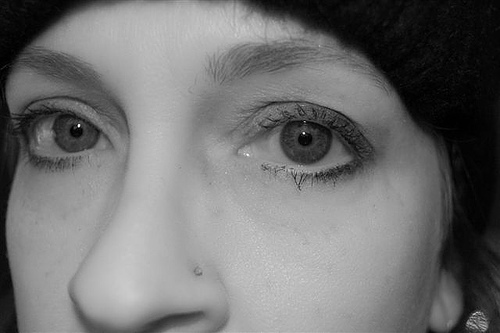
What you see there in my eyes is pain.  All the things I try to push away in order to do — this — day.  Yes, I was yelled at, raged at almost daily growing up when he wasn’t working or traveling for more than eighteen years. Oh, she was so sad — always sinking into the pretext of being sick so that she wouldn’t have to face the fact that he was yelling, rebuking, bullying.  Making his children shrink into a ball of tears and fear.  Stunted, unable to process the world around.  Yes, she drank, and drank, until a week before he died; she was burying herself in a bottle of Vodka.  Yes, he died, his brain slowly crumbling around him.  Yes, that melancholy that has followed me — sometimes chased me — through my life.  It comes in and intends to stay.  Until I rise up and scream,  NOoooooooo!  You are not welcome!  These are the demons that come and sometimes I can’t make them go away.  I just crawl up into a ball and let the waves of pain wash over me.

I did that.  But today these eyes, which have been trying to tell the world what he did and how it feels, today these eyes are saying it hurts, but I am strong.

I am not going to repeat history. 

I am going to be someone who can stop the rage, listen to my fears, process my pain, and I will NOT, above all, take it out on my beautiful husband and children.

These eyes are saying, I am strong.

A Poem: Shame Falls Heavily

Shame Falls Heavily

I first noticed them arrive
as the two women settled their kids and husbands in two rows
in front of us in the stands.
Then the men were gone.

I saw how they laughed playfully, sitting close.
One touching the back of her friend.  Whispering
to one another.  This was intimate familiar territory.
I thought it seemed to be an attraction
which was clearly more than friends.

Suddenly her husband appeared and she turned her back,
Completely forgetting the friend, to fall asleep
on his shoulder.
The game began.

After a long while the boy, her son, looked
back questioningly, eyebrows raised.
Then both children look again
at her and at the man. Not asking with words, but clearly wondering
what’s wrong?  They needed to know what’s going on.

He shrugs again. And then again, when they glance back later.
His shrug is slow and heavy
as if to say: he doesn’t know why she’s asleep.
But he knows.
I don’t know. Not yet.  At first, it seemed innocent, even to me.

The game was Hockey and I have to admit it held little interest.  So
my curiosity with this hauntingly familiar scene grew. I couldn’t help
Staring.  Wondering.  A nagging sense of foreboding as the woman slept on.
And the kids are cheering. Knowing
but not wanting to know.

Startled I see that she has thrown up into her hand.
All over herself, and him.  As he tries to comfort her,
and then to clean her up without anyone noticing she begins to weep.
He was so gentle as he whispered into her sticky hair
all the things I knew he didn’t believe.
It’s going to be alright.  HUSH… It will be okay.

Shame
Falls
Heavily
like a wool blanket
on her shoulders as she continues to weep
quietly into his shoulder.  Wiping her own mouth again and again.

The smell of alcohol and the stench of puke finally reaches me.  Then
without thinking I unwind my gray scarf from my neck to help.
Hesitantly at first. I thought
against it.  These thoughts almost made me sit back again, as
I re-twisted my scarf back around my neck.

What would I have wanted?
How do you love like He would in a moment like this?
So, unwinding quickly I tap softly on his shoulder to hand to him the gray rayon scarf. Wordless
for there are no words. He knows.

The moment s l o w s in time when he won’t let go of my hand.
The hockey game fades.
I don’t hear the screaming fans or feel the cold air in the stadium.
All I feel is his warm hand on mine.

And his panic.
He does not know what to do.
It flows into me, his fear, his sorrow because this isn’t the first time.
His tears, welling deeply inside.

As he presses down on my hand it all flowed into me.
In that second, a moment of passing so briefly, I know again
the shame which falls so heavily.
As I remember my own.

Finally, pulling my hand away, I sat
through that game as if I were that woman, again.
The children mine.  The friends and husband
all — unsure.   Afraid.  Watchful.  Not knowing what to do.

This morning, I am grateful for my sobriety.
And wonder, of all the thousands of people in the stands last night, why did this woman sit in front of me?
I saw what it was like to be the sober ones. And hope I never forget
the frightened doe-like eyes of her children.

I will add this to my frayed two and a half year old,
yellow, 3 x 5 card of reasons I am gratefully sober today.
Shame
Falls
Heavily
But I am no longer the Woman.

—————————————

Some of the things I have written about my alcoholism:

I am not Ashamed
The Slow Crawl Of Healing
What Can I Say About Two Years of Sobriety?
Choose Joy
For Everything There is A Season.
Eulogy to Life.
Letting Go.  Thoughts on Being An Alcoholic
ReThink Everything
My First AA Meeting
My Crooked Heart
It’s Lonely Here on the Wagon
The Place of Nowhere
A New Way to be Human
Eulogy to Life
Winter Comes
Splintered Truth
This Epic Grief
No Dignity
I Need a Filling
Addict

A Poem: No Vacancy

The summer I was eighteen

I wanted one thing — a boy named Tommy LaRue.
He was my first boyfriend.  My first kiss.
I learned three things from him.
What is a French kiss? To drink cheap Champagne. That I was expendable.
In those days, I knew nothing of myself.  How to be with people.
Life mystified me.  What was its purpose?
I had no aspirations.  I didn’t know what I was meant to do.
And that scared him.  My dad
who wanted more for me. More than
whatever it was that I wanted.  That I hadn’t figured out.

The summer that I was nineteen

After sleeping through my first year of university he told me

“You will go there.  You will do that.”
You will find more than whatever it was that you think you want.
I didn’t know that I had the power to say no.  Or the power

to think or want anything.  And so, I went.  I did
As I was told.
And slept

through two more years of university.  Literally.
Mostly.  Not. There.  Not really anywhere.

My junior year I was told

to choose.
“What is it that you want?” they said. “Why are you here?”
I want nothing.  I have no aspirations.  I have no
Hopes, dreams or desires.  Life mystifies me.

This coma that was my life became clear
Twenty years later.  It was a slow awakening.
Thawed by unconditional love, I found
Safety.  No one was telling me
Where to go.  What to do.  Who could have known, that I needed
S p a c e to figure it all out, whatever it is that I wanted.
For I did want
More.

Ever since I can remember, I have
spun words.  They were flying out of my mouth
Faster than I could think them.  These words, the flying kind,
Cut flesh.  They hurt the people I loved over the years.
And all because I was too afraid
To say anything to him.
And so
I stopped.  Speaking
in that manner.  I gave up
my voice. That was easier than saying
anything.

When he died it began.  The trance was over and it was a
Dreamy awakening.  A discovery.
Almost trembling I came to understand.  No longer
Could he tell me — anything.
And for a while, with no one telling
Me anything, I was lost.
And then though I was afraid
Of hurting, and afraid of his ghost that watches
And lingers even now. I began
to unearth my voice again. No longer
Is this a vacant place inside me.
I have dreams.
I have words.
And I use my words to heal.  Yes, I have found my purpose.
This moment, here. These words.
Now. There is no vacancy.

ALL MY OLD POETRY

I just realized that most of my older poems are not on my blog.  Rather than transport them, I will offer a  link here to more than fifty poems & photographs offered on my flickr site under the set “My Words.”  They can be found here.

What I wrote a few years ago about this group of work:

These poems are a reflection of my life’s journey which includes many things including faith or lack of it, love given and received, acceptance of myself and others, and those uncomfortable feelings toward people you rub up against in life. 

I have the utmost regard for my parents and so while acknowledging that they did their ‘best’ with what they were given, I can only hope that I somehow do ‘better’ for my children.

This journey is mine, I share it so that others who battle with self-loathing, doubt, depression, anger, even suicide can move to a place of acceptance and renewal.  As a person of faith, there is also an element of hope in the written word.  A declaration of the past as well as a statement of hope in the future.

A Poem: love in the shadows


.love in the shadows.

Originally uploaded by M e l o d y

Said it before, but I am thankful for my home which is a peaceful haven and for the love I experience there.

Love in The Shadows

What do you see
in the shadows?
What are you searching for?
I see you wanting;
hoping for more.
Can you hear the music,
the song lingering here?
Shelter, comfort, home;
fragrant with his scent and sound.
What is the color of
the shadows,
the songs,
the scent
of love?
Tranquility,
it has no color, sound,
or smell,
but it is abundant.

by Melody Hanson, 2007