{a midstream update on “ch-ch-ch-changing”} part 2 of “I Hate Being Fat”

Sometime in May I admitted to myself and “the world”  in a post that I hated being fat.

It’s now late June and I want you to know that I’ve been busy.  More importantly, I faced something about myself that I don’t like, I can even admit that I hate about myself, my weight.  I wrote about it, which was cathartic just in itself, and it was a kick in the pants for Tom and for me to do something! 

There’s something about our culture that has your average person (I am including myself here) convinced that we can’t do anything about our appearance.  And if you’re not already thin, or already beautiful, or already in shape, stay out of the fitness clubs.

I had myself so talked into a pathetic corner of apathy, that I thought I shouldn’t even be seen on the streets exercising because I was such a joke.

I had my head so full of excuses that I felt hopeless, and worthless, and hated the sight of myself.

I’m here to tell you that I started exercising!  I read a book and stopped eating wheat.  I no longer have acid reflux.  I have lost (since March) thirteen pounds. More importantly I decided that I want to be around when my grandchildren get here. (No, this is not an announcement.)

I get out there and walk or walk/jog with my Couch Potato to 5K phone app cheering me along.  I do it five or six times a week, and have now going into my third week.  More than anything I decided that it was possible to change.

Do you believe you can change things about yourself?  There comes a point in “middle age” when we must either give in and give up OR do something.  I don’t think very many people believe they can change.  The stories of successful exercise or weigh loss or even giving up something like alchohol are too dramatic, too flashy, too much turn-your-life-upside-down unbelievable.

But this is a story mid stream — to tell you that if you want to you can change anything!

In March of this year I was the heaviest I have ever been — I was 179 pounds fat.  I felt horrible.  In May I decided perhaps I could do something about it.  I’m 166 pounds now and I won’t tell you my goal because I don’t want to jinx myself.  I am changing habits.  Changing lifestyle.  Changing the way I look at myself.  I am changing my future — likely extending my life, certainly I have more energy and optimism and hope for the future.  There is a power that comes from doing.

But I just want you to know that if you decide to, you can do anything.  What I have learned (at least about myself) is that it is a lot like being an alcoholic, in this way…

All I need to think about is today.  

All I know that I can change is today.  

Will I choose to go and walk/jog in 90 degree heat today, because this is what I decided to do? Yes, I will.  Yes I did.

What will you choose?  What will you decide to change today?

{A Cautionary Tale of Sobriety}

When I first began this blog in 2008, it was (in many ways) a place to process my alcoholism and recent sobriety.  I felt very alone and thought, why the hell not?  One of the first things I wrote was a poem (of sorts) titled It’s Lonely Here on The Wagon.

That poem chronicled the lonely place of being an alcoholic and a Christian who had lost her faith.

At that time, I knew that I had to stop hanging out with my “drinking friends” and even had one tell me she couldn’t help me with my sobriety.  She had enough problems of her own.

I know she didn’t mean to reject me, but that’s what it felt like.

And I began to tell myself that my friends with whom I had sat around late at night smoking and laughing with, drinking to a buzz, then way past a buzz, didn’t like me anymore and that I was unlikable.  I told myself that the only reason they hung out with me was because I’d drink with them.  I convinced myself that they didn’t like me, sober Melody.  To be quite honest I don’t even have answers to speculation like that, but I know this.

In the light of day I was a manipulative bitch sometimes.  I was petty.  I could be petulant.  I constantly needed affirmation that they liked me.  I even did things to prove to them that I was “cool.” If it sounds like the emotional needs of a high school aged kid, it’s because that is what it was.

I was emotionally stunted and didn’t know how to be a good friend.  In fact, sometimes I don’t think I really know how to be one now.  Perhaps I’m a little better at boundaries. 

I tell myself that I’ve come a long way from those days of drunken insecurity, but something hit me just this week.

I pretty much live my life expecting pain

I expect rejection and so I keep people at arm’s length.  I assume others won’t like me and so I stay aloof thus proving I’m unlikeable.  I assume that I am uninteresting, so I don’t engage in conversation.  I believe that I’m incapable of deep intimacy and so I stay standoffish, even remote.  This is what I do.  Now that I see it, perhaps I can begin to change.  Why assume people are going to hurt you by rejecting you?

Today I have to go to a school picnic and see a few of those same friends that I pulled away from four years ago.  My head and heart are telling me that they rejected me, but I know it isn’t true.  I’m feeling afraid.  Later I have to go to a graduation and see more of those old friends.  I’m sick to my stomach, afraid.  My shyness, aloofness, insecurities are flaring and for just a moment I think that it would be easier if I could just have a drink.

Yes, four years in July I’ve been sober and those thoughts return just like that.  Even though I know it’s a lie, the weight of social, emotional, and historic pressures are great.

I won’t drink.  But I want to and that is a cautionary tale for me.

MELODY

This is a part of a series titled: A Different Kind of Real, where I just write what’s on my heart without a lot of self editing or worrying about what you’ll think.

Some of the things I have written about my alcoholism:

I am not Ashamed
The Slow Crawl Of Healing
What Can I Say About Two Years of Sobriety?
Choose Joy
For Everything There is A Season.
Eulogy to Life.
Letting Go.  Thoughts on Being An Alcoholic
ReThink Everything
My First AA Meeting
My Crooked Heart
It’s Lonely Here on the Wagon
The Place of Nowhere
A New Way to be Human
Eulogy to Life
Winter Comes
Splintered Truth
This Epic Grief
No Dignity
I Need a Filling
Addict

{To the Elders and leaders of X Church, fellow believers in Christ} #mutuality2012

I believe this letter to my church’s Elder Board could have been written to almost any Complementarian church’s elder board.

To the Elders and leaders of X Church, fellow believers in Christ:

If anyone is in Christ they are a new creation.  The old had passed away, behold, the new has come.  All this is from God, who through Christ reconciled us to himself and gave us the ministry of reconciliation.  2 Corinthians 5:17-18

I am writing today in response to the request for Elder submissions.  Understanding that your responsibilities as elders are to guide an enormous church made up of a diverse population, I want you to know that this letter is ten years in coming and has been written with respect for the authority of scripture and for your roles as leaders. Your responsibilities, I am certain, cause you some “fear and trembling” and I believe that you have a sincere desire to listen well to many people with unlimited perspectives.  I have utmost respect for “authority” both within the church and in life and I hope that you will consider these thoughts prayerfully, before God and one another, and with the full congregation of X, both men and women, in mind.  Young and old, educated and less knowledgeable, Conservative and liberal, Black, white, Asian, international and US citizens, we all make up the beautiful and complex church of X.  What a daunting task you have.

I am writing about the roles of women at X.  I have been in dialog with Pastor about this topic for years and always appreciate his frankness and perspective.  I respect the need to be aware of the climate in X, the Church at large, as well as within our culture.

As you know, many Christian denominations continue with the practice of male-authority.  And others are open to change.  Though a clear, Biblical viewpoint was preached recently about how men and women are to treat one another, I know there are many at X, perhaps some of you, who believe in the universal male-headship principle. Obviously if it were simple, things would have changed with cultural and societal changes.

But it is a complex thing to parse through scripture to find what is Core Truth and what is cultural truth, of a time.  There are dozens of perspectives on the place of and roles for women in the church.

I appreciate the women who do serve at X church, though support staff in the church is dominated by women and the leadership is dominated by men, which I find strange and a bit backward and tells me that things haven’t progressed as much as I would wish.  What speaks loudest is that there are no women on the teaching team.  And, though perhaps this is even more difficult to change, women are still not considered for the leadership of being an Elder (who lead, manage, govern) and Deacons (who serve, care, guide) are invisible and do what?  I don’t know.

In my conversations with pastor, it has been clear to me that some of you over the years (I realize you’re a revolving door of men) do feel empathetic to the changes in the Church at large.  Perhaps you have even studied this on your own?

The New Testament church thought that the Lord was coming in their day and therefore did not very courageously attempt to speak to the injustices of their time.  Paul backed away from it so much that he prefered to be single than complicate his life with a woman and family.

But today, more than 2,000 years later, it is quite clear that Christ is yet to come, and I find it imperative that believers in Christ individually and corporately, with the power and influence each has been given by our Lord, speak to the injustices that plague humanity — war, poverty and hunger, and sexism are just a few as well as prejudice, bigotry and racism.

I ask therefore: Do you believe that women must not teach Biblical doctrine?  Do you believe that women are unacceptable for Church governance or pastoral and preaching roles?  Because that  is the current example being set at x.  And I would press back saying, if women are not to be in teaching  and in authority over men, why are women encouraged to be missionaries and managers at x?  This inconsistency implies that women can have authority over men in certain circumstances, just not over men of their own race and in their own church.  This I do not understand and ask if you see the conflict?

I urge you to consider the message you are sending to young people in the church, men and women who are considering how they might serve God with their lives.  And this has rampant implications for the relationships between men and women, boys and girls, as they see this conflict of ideas.

Church historian Janette Hassey, in her book No Time for Silence, talks about the fact that American evangelicals before the turn of the century and after, advocated and practiced women in pastoral ministry.   My own grandmother, a missionary in the 1930s, was an evangelist and preacher in upstate New York, alongside my grandfather.  Together they were missionaries in Tibet before the war.  Returning home because of WWII, they continued their work here.  I don’t think my grandmother would have been encouraged to use that gift if she were at our church.  It is sad that the twentieth century took such steps backward for women in the church.

I would like to ask you, individually, if you prescribe to the concept of male headship – or not — as heard in the recent sermon?   Whether you think headship is a part of the created order or merely a necessity in wake of the Fall it is not good thing for women.  And perhaps you say, “So what?  The Bible says what it says. Live with it.” I would push back asking whether you knew that next to alcohol and drug abuse the most reliable predictor of wife battering is “zealous conservative religiosity?”   This is just an example of how this policy within the Church at large has hurt women.

As I said before, I believe one call for Christians is to resist chronic injustice – to speak out when it is seen.  I see women being subjugated in the church, being kept from being elders when their full gifting, experience and knowledge is toward leadership. I see no women being encouraged toward teaching, serious scholarship and study of theology even when God has given them an ability, a passion for and a call to scriptural truth and teaching.  I see women who outside of the church are being affirmed and are leading faithfully and well, within the Church not even being considered to serve with the full capacity of those God-given abilities.

It seems to me that the current perspective takes parts of scripture and holds to it as if it were a Universal or Core Truth, while rejecting many other parts of the Old Testament and New Testament, that are cultural rules and are obviously outdated.

I don’t think women’s subjugation is any part of the core Truth of scripture.

The Church has changed its stance on many important things in the last 2,000 years: like strict or flexible observing of the Sabbath, pacifism vs. a just war, Christian’s cultural involvement or separation from culture, but gender roles remains set in what has “always been” especially in denominations, especially in ours.

Change in something this important is difficult and tumultuous, I understand.  To be different than your denomination, to think for ourselves, to study Scripture openly looking at original text with a heart for all people — all this is messy and painful and even unfortunately divisive. It is much easier to ignore it until the culture and climate change so much that you don’t have to risk.  I get that.  But it breaks my heart.

I would agree that on gender roles, the Bible is less than clear.  Just like the NT church was ambiguous about slavery, but we never question that change on Biblical grounds.  It is obvious today, that slavery is an ugly and abhorrent part of the Old and New Testament times. And in the fifties it was believed in the church that women are better suited for parenting and that idea has been rejected over time ,seeing clearly that children need both parents involved in their upbringing.  There are many things that we reject, as the culture and as times change.  But though the Bible isn’t clear it isn’t silent either about gender in the church.

And Jesus was not silent, he was constantly affirming women.

As Mary Stewart Van Leeuwen so beautifully describes, it is more like an …

“… unfolding drama in which salvation is made available to more and more groups that were previously considered marginal.  Salvation and equality of access to its privileges and responsibilities, is not just for Jews, but for non-Jews;  not just for free persons, but for slaves; not just for men, but for women – and so on, in keeping with the principles of Paul found in Galatians 3:28.”

So, if the Bible is ambiguous about gender roles and headship, how can I be confident and so sure that my belief in changing the roles is sound?  For me it comes down to our hermeneutic.

Willard Swartley in Slavery, Sabbath, War and Women asks the following questions, which I most respectfully pose to you, asking you to consider, as it relates to the issue of Women in the Church:

  • How are the two Testaments related to each other?
  • How is the authority of Jesus related to all Scriptures?
  • What is the relationship between divine revelation and the culture in which the revelation is given and received?
  • Does Scripture mandate, regulate, or challenge certain practices such as those associated with slavery, war, and the subordination of women?
  • Does the Bible say only one thing on a given subject, or does it sometimes show differing, even contradictory, points of view?
  • What does it mean to take the Bible literally?  Is that a vice or a virtue?  Does “literal” signify the intended meaning of the author or a meaning that seems natural to us?
  • To what extend does an interpreter’s predetermined position, even ideology (such as patriarchy or feminism) affect the interpretive task?

I think we can all agree the Bible is the incarnate revelation but one should also be taking into serious consideration the audience, time and place to which each book is addressed. Would you not agree that the Bible tailors its message to real people in real, culturally diverse situations?  This is the strength of, the power found, in Biblical revelation.

According to Willard Swartley:

“Scriptural diversity is the natural result of the one true God’s graciously relating to humans, drawing humans into a relationship, inviting free response and full engagement … Biblical truth is concrete, shaped usually by specific contexts, needs and opportunities.  Interpretation should affirm and celebrate this feature of divine revelation, communicated through many different writers in different linguistic, cultural and political contexts.  The variety itself becomes the missionary’s textbook [for] the biblical text spoke God’s word in a variety of cultural, economic, political, and social settings.”

And then Mary Stewart Van Leeuwen whose book Gender & Grace has profoundly changed my perspective on men and women and the Gospel says this beautiful and profound statement:

“For the sake of the advancement of God’s kingdom in a given time and place, temporary compromise can and often must be made with the societal status quo.  … Therefore Scripture is accommodated to the cultural setting of its varying audience, constantly being augmented by a move toward the vision of God’s coming kingdom.  Indeed, Jesus’ elimination of the sexual double standard was so surprising to his disciples that they concluded it was safer not to marry at all! “

Van Leeuwen continues that “the basic impulse being the Fall – the wish to be independent of God – is no respecter of persons.  Feminists and patriarchalists are equally in need of redemption.”

Again, theologian Willard Swartley with a good test of the degree to which our ideologies warp our reading of Scripture.

“Our willingness to be changed by what we read, to let the Bible function as a “window” through which  we see beyond self-interested ideologies, and not a “mirror” which simply reflects back to us what we want it to show.  Biblical interpretation, if it is worthy to be so called, will challenge the ideology of the interpreter.  It can and will lead to change, because people do not come to the text thinking as God thinks, or even as the people of God thought in serving as agents of divine revelation.  Interpreters [must] listen to the text carefully enough not to like it.  [When they do so] it powerfully demonstrates that the text’s message has been heard and respected.”

This is challenging because I am full of self-interest when it comes to being a Christian woman — that is a tribe that I belong to and feel a responsibility to care for — not because I crave authority, but because I long to see women carrying out every gift from God in their lives, not just in the marketplace, but within the church!  I am hopeful that this will happen in my lifetime.

I must ask you, individually, whether God is challenging you to reconsider your thinking on women’s leadership, governance and teaching roles at X, and whether the time has come to face that the current roles are stifling more than half of the church to be heard fully and uniquely.

But even more important (to me) is that this stance just may be holding back the fullness of the Kingdom of God from being revealed in our generation.  And my heart weeps with that thought.

Gretchen Gaebelein Hull, in her book Equal to Serve sees Scripture as pointing toward equality and mutual submission between the sexes and I’ll leave you with this quote from her book:

“Today, like James and John, so many people pluck at Christ’s sleeve: dogmatists, traditionalist, egalitarians, feminists, liberationists, all sorts of activists.  They all say the equivalent of “Seat me nearest You, Lord; show those other people that my system is best.” As they pluck at Christ’s sleeve, thinking that places at His right and His left will bring them honor and power and worldly recognition, He looks at them – and at all of us – and still asks: “Can you drink my cup? Don’t you see that whoever stays nearest me must … go where I go, serve where I serve?  Don’t you see that, loving the world as I do, I must serve it to the uttermost?”

It may come down to this: Can you personally serve under a woman, at work or at Church, and why not?  Could you accept that your wife, sister, mother, friends have gifts that make her more visible, knowledgeable, or experienced than you?  Could you dare to be like Joseph, step-father of Jesus, playing a lesser role than Mary?  What prevents you from rethinking, studying anew these things?

Fear? Ambivalence?  Prejudice?

I am incessantly asking myself over the last ten years at X, would I put aside my perspective if the time isn’t right for this church?  Would I work for change in a patient and loving way, rather than sinking into anger or bitterness?  I do feel that as an active participant (not a member) at X Church I have done that, meanwhile praying for the timing, the hearts of the church members, that God’s revelation on women would come.  And asking what part I should or shouldn’t play in that.

I have participated in women’s ministry here and seen women teaching who do not have the confidence that they been given the authority to speak definitively about scripture.  This undermines their ability to open scripture and speak prophetically.   This saddens me.   I have seen many women serving in various roles and respect them and know that they are listened to, but I still am not hearing anyone speak to this central issue.

I don’t know why God has given me such a burden for this but I carry it. 

Over the years I have written and sought clarity about why this practice of male elders and teaching team continues?  And since I do not feel confident that the issue is being discussed fully, openly or seriously (being sidelined for many other important issues of the church) I send this to you, asking for you to consider it now.

Each of us must ask ourselves, male and female alike, are we living as an old person or a new creation?  In the flesh or in the Spirit?    And what are we being called to, as we serve together?

I hear God’s call as a voice for certain voiceless populations, including women in the Church. 

I am constantly clarifying, are you sure Lord?  And at times I have been unproductive, and not very Godly, allowing myself to be anxious or angry or even bitter.  I have experienced a lot of pain.

In these years, I have come to a certain amount of peace with simply speaking up from time to time, meanwhile to be in study and prayer.  And then to been in a place of seeking the rest of the time.  But as the spirit seems to speak (or as elder nominations come up) I ask God what I should do, again  — do this time.

So thank you for reading this and hopefully giving it serious consideration.  I have purposefully not tried to write a treatise for the Biblical interpretation of all the key and most controversial verses — I’m no biblical scholar and you have one on staff.  I would ask you to free him up to study this if he hasn’t already.  Listen to him.  Then give space and time for your own study and careful deliberation.

God will speak.  God has a plan.

With respect and gratitude for your sacrifice of service,

Melody Harrison Hanson

October 7, 2010

The major ideas that persuaded my thinking and inspired this are from Gender & Grace: Love, Work & Parenting in a Changing World by Mary Stewart Van Leeuwen, ©1990, IVP.  She did the scholarship, I just happen to agree with her.  Also, Call Me Blessed: The Emerging Christian Woman by Faith Martin.

Other things I have written on these topics search for Women in the Church or Feminism.  I have written a lot.

I have intentionally removed the name of my church, though it wouldn’t be hard to figure it out, because I think these issue are relevant to almost any Complementarian church.  

{A Miscarriage of a Life – a post Mother’s Day Lament}

Yesterday I told myself over and over — I have had a miscarriage of a life.

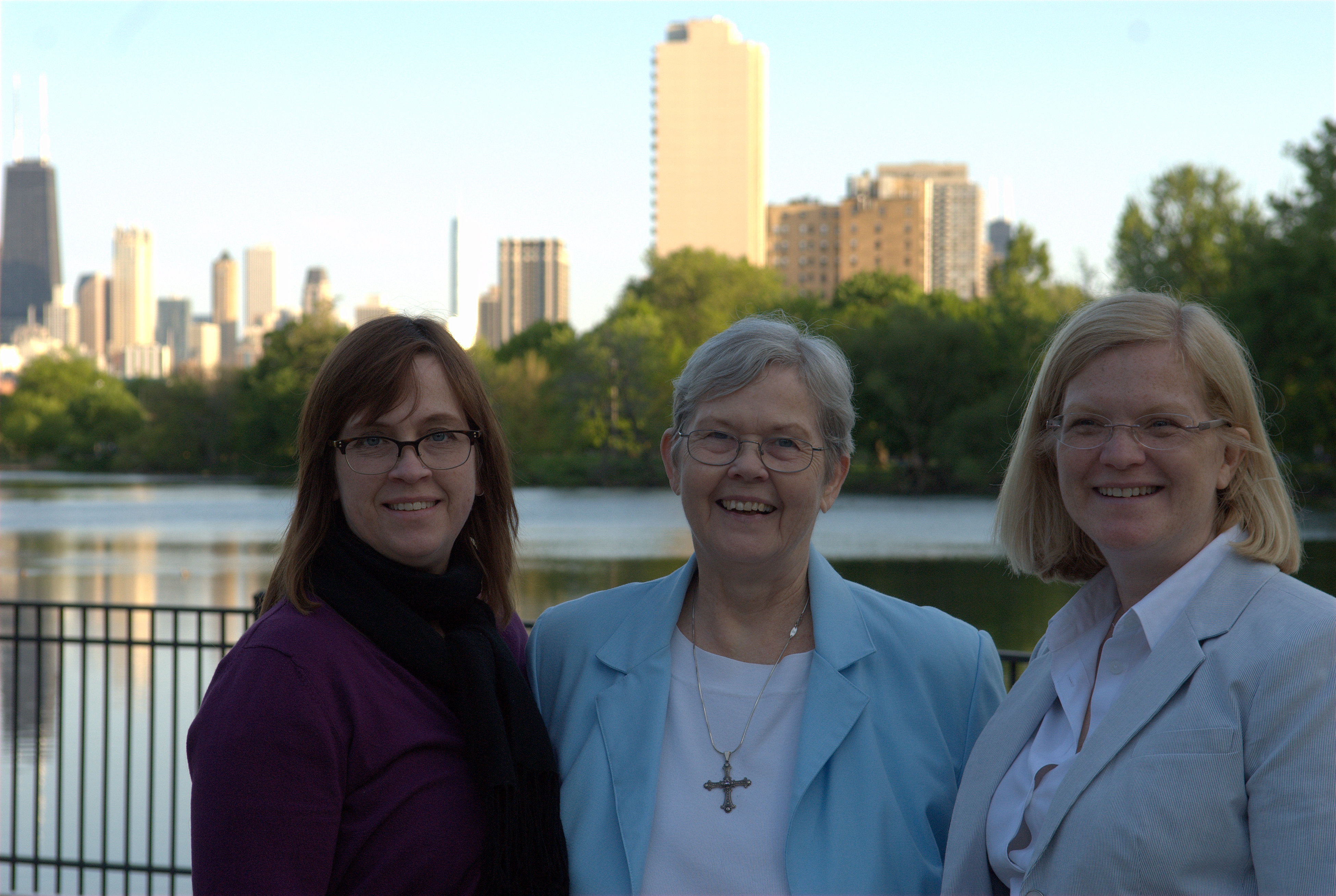
The day before, I spent all day celebrating my older sister as she received a doctorate of ministry in preaching from the Lutheran School of Theology at Chicago.  Yes, I was happy for her but I could not enjoy the day fully because I was so disappointed with my own life.

After the very long ceremony (those Lutherans know how to “party”) I asked her what was next on her list for world domination? It was a backhanded compliment, which had a risk of offending her, but luckily she was gracious. (I get snarky and sarcastic when I’m feeling bad about myself.)

These sisters of mine are capable of doing anything.

Harrison’s seem to have the brains and talent, ability to work extremely hard, a yearning for justice to prevail and the certainty that injustice is, in part, our life’s call, challenge and responsibility.  We are strong, capable, and powerful women. Some days I actually believe that about myself.

I have come to believe that much of the spiritual journey is one of being stripped of all that we would put our trust in, other than God.

Life is found in losing it for Christ’s sake.  The life that God has for each of us, if received–changes us.  There is not one sacred path for all.

My journey over the last twenty years has been a stripping, for I never knew Jesus, before.

I never knew I was beloved. I didn’t believe there was a purpose for my life outside of what I could accomplish, a life purpose that is all about Jesus.

Until my father died nine years ago, I was in many ways “asleep.”  Because of the severe damage to my psyche from his anger, I did not know myself.  I did not know the Trinity of God, Jesus and the Holy Spirit in any real way.

I did not know it, but I was bankrupt in spirit.

But even in that absence of belief, God planted questions, passions and strong desires inside me, a prompting that has never left me to know the Word of God and interpret it. I know that I am to receive that– and submit to the unique journey God has laid out, even when I cannot see clearly the road ahead.

Trusting is painful — the stripping away of sin, of selfishness and in many ways of aspects of my humanity, my character, that I thought were who I was.  But there is grace, protection, comfort, provision and shalom in submitting to the Holy One’s purposes.

It is the only safe place. And yet it hurts so much when I feel I do not understand clearly.

In my 20s and 30s I lived for my job, it was my identity and all that I knew.  Strangely, I believed it was all I was good at and I thought that I was choosing to walk away from that work, because the environment was unhealthy, but I see now that God led me away, took everything that made me feel good and strong and powerful.  I thought I knew.

I could have lost my marriage and family because of my addiction to alcohol.  I thought I knew, thought I was strong enough to beat it with will power, but the addiction beat me and I found that I was nothing without the Holy One.  Even if I gave up the drink, without the Holy One filling me, healing, and strengthening me I was nothing. I thought I knew.

I sat Sunday scrutinizing people who had given many years of their lives to learning, thinking, writing, believing, enough to sacrifice time with their own children and partners, to achieve this incredible goal of a masters or doctorate. Some were restrained, some were giddy, and many were just slightly stunned to survive it, it seemed to me as a bystander.

I was so incredibly jealous and sad for myself, even mad at myself.  Though the day wasn’t about me, inside my head everything was about me and my feelings of not exactly failure, but a strange bedfellow to it, a miscarriage of a life.   In that moment, how dearly I regretted leaving my career in my early thirties and staying at home with my kids. Deep down a part of me still believed that I would not have succumbed to alcoholism or depression in the end if I had continue to work fulltime.  I’d still have a great career, I’d be able to leverage it toward other work, and I would be respected by others.   Pretty much bullshit and lies, but I almost believed it again as I sat there fuming internally.

I said all that and more to my mother as we drove back home.  I don’t know if I really believed it.  I do know that who I am, the real me, the person I never knew until I had no job, suffered from major depression and became a drunk – that woman needs Jesus! She believes in the Creator in a way that she never did before she lost it all.

I remembered that my boss, while I was trying to decide about leaving InterVarsity told me to go have babies and come back in five years to continue my part of world domination.  Only, I never went back I was too busy having a breakdown and drinking myself stupid.  That’s what I mean by a miscarriage of a life.

I was debriefing the day with Tom, who is extremely smart and has an almost PhD from the University of Chicago.  As his head hit the pillow he exhaled, he said something like:

Higher degrees have their purpose, and there is a sense of personal achievement if it is important to you, but being a parent is three times harder than getting that PhD.

“Yeah,” I said, “but the world doesn’t esteem parents.  Parenting won’t get you a job.  Parenting won’t bring you any real regard or admiration from others.  Parenting is something everyone does.  (Not to mention you don’t get paid and the hours are terrible.)  It’s not enough.” 

My eyes filled with tears so many times on Sunday, I felt like I was choking most of the day.  I was happy for my sister, genuinely — for I know only in part the many sacrifices she and her loved ones have made for her to accomplish this incredible goal.  I know my father was doing a happy dance, wherever he is.  My mother was beaming.

I spent my mother’s day celebrating my sister in part because I believe in doing things even when they are hard.  I want my children to grow up knowing that doing the right thing isn’t always what’s easy, nor is it usually about you. That there will be many opportunities in life to choose yourself over others, but when given the chance to celebrate someone you love, you should take it.

All day I had moments of deep self-pity and self-loathing for my choices and beating myself up about the last fifteen years.  Hindsight is 20/20 and all, still this is what I have come to know.

I know I would be different and horrible person if I had continued on the path of a workaholic and constant striving for external approval. My character has been changed through these experiences.

Through the mistakes I have made I have found a true understanding of God’s mercy and grace in my life. I know that I am loved by Jesus – I didn’t know or believe it two decades ago.

Through the mistakes I have made I have found a daily dependence on God for my health – my mood, my purpose and meaning.

For even as humbling and hard as each day is and how much it feels like a sacrifice to not have a viable lauded career at this time, I’m on my knees ever more.

Most of what I am learning is yet to be understood or written I suppose.  Clearly, I am still broken, still too easily overcome by the wrong motives. I continue to be frustrated and discontented and I am frustrated with myself because of this.

In studying the book of Proverbs (because that is where we are in Eat This Book reading the entire Bible in a year at church) I am being drawn to Proverbs 31.  I look forward to learning what a 21st century feminist wife and mother, a homemaker, budding writer has to learn about being a Proverbs 31 woman.

I am open, and fearful. I am angry and aching inside, deep where no one understands me except God.

I know I should be grateful but everything about me is wired to work hard, to please other people, to get the acclaim of others, to be esteemed and admired; it is the entire human condition without God.

I pray for spiritual understanding and an ability to lay all that down — to trust and obey.

Deep down I know that as long as I keep longing for all the wrong things, I can’t grasp what is good, whether that is understanding of what I already have or whether it is receiving what God has for me next.  I cannot grasp it because I am still so filled with discontent.

I thought I knew.  There is very little that I do know.  But my story isn’t fully written.


I Never Wanted to be Like My Mother

I never wanted to be like my mother.

My mother stayed for more than 40 years in a marriage that broke her heart.  She admits now that she was afraid.

She married in the late fifties, when women couldn’t even have a bank account in their name.  She was a teacher and worked to put my father through college.  In the first year of their marriage, in a rage my father put her head through the wall.  He promised to never do it again.  And to my knowledge he kept that promise.  But  that was the beginning of being manipulated.  He threatened and he yelled.

The man could rage.

The smallest thing would set him off.

I never wanted to be like my mother, because all those years, I thought she was weak.  Weak for staying.

Or so I thought, for many years, until I became a mother.  And when that happened I began over time to see that she did it all for us. 

My mother is strong.  She stayed for us.  She was the buffer all those years between us and my father’s angry raging.  She took it more than we did. (And we took it a lot.)

And in later years as the weight of it became more than she could bear, she began to find comfort in the bottle.  I never wanted to be like my mother, but I became an alcoholic too.  I buried my fears for years in the numbing relief of alcohol.  As is often the case in a family with addiction, I carried it on.  And in the end I realized, I am very like my mother. I hide my pain even now, though I have been sober for almost five years.

I am strong and would do anything for my kids, just like my mother.

I never wanted to be like my mother, but I am.

I am strong, loyal and sober.

Happy Mother’s Day, 2012

Melody

I’ve written about my alcoholism here.

I’ve written about my Dad here

{Above all Love One Another: A confession on being an LGBTQ Ally & a Christian}

unless we’re all free, none of us are free.

Kathy Escobar  a pastor and writer, challenged me with these words on her blog this week:

“i’m a nut case for equality.  you hear me talking a lot about gender equality but that’s just because it’s a critical starting place.  when half of the population of the world is thought of as “less than”, we’re in serious trouble.  in a church that is supposed to be the free-est, most liberating place in town, we’re in even deeper trouble.  christians should be leading the way on equality in absolutely every area, yet we all know that on the whole, we are lagging behind, stuck in white privilege & imbalanced power & segregation and all kinds of things that are not reflective of the kingdom of God Jesus called us to create.

equality isn’t just about gender. it crosses into race, sexual orientation, socioeconomics, and any other ways we are divided that strip people’s dignity.

… what will change things is when we begin to vote with our feet (and in ballot boxes) and refuse to be part of churches & systems & groups that oppress.  Period.  they aren’t going to get our money or our time or absolutely-anything-anymore and i don’t care how good their music, teaching, or kids program is.”

I read these words and wanted to cry…

I felt very confused. Kathy says to simply rant and rage on Facebook is not accomplishing anything.  That hit me like a bulls-eye. What she is challenging Christians to do is hard. 

I’m with her in my heart and in theory, in my friendships, my daily practices, my Facebook statuses and as an ally.  But not with my feet, with my church membership.  Do I really need to leave my church? I love my church.

I was driving along listening to our brave President …

That beautiful speech about the fact that people ought to be able to get married, any two people in America, my heart  was gushing and pulsing with pleasure and pride and hope.

Then I remembered and wondered …

  • Do I speak freely about supporting the LGBTQ community because I don’t work for anyone except myself?
  • Two of my children have chosen against Christianity, because the church seems in their estimation to “hate LGBTQ people.”
  • My church, which is a beautiful, amazing, loving Jesus community, came out a few years ago that they believe the LGBTQ lifestyle was a sin.

I don’t know what to do about any of those things. I volunteer and advocate.  I love on my kids and try to dialogue with them.  I still attend my church.  I sat and wriggled in discomfort listening to that sermon (I have the link to it below) in person two years ago, and this morning as I listened to it again.

My heart is so heavy.  And at the same time light with the knowledge of what Jesus’ death on the cross means to me.  I have life, abundant life, because Jesus took my sins upon himself.  

I know this, I’m as sinful as anyone.

My kids say “Christians hate gays.”  My lesbian and gay friends say that most Christians act like they hate them.  My lesbian friend asks me if she would be welcome at my church?

Christians hate gays.

Christians hate gays.

Do Christians hate gays?

I don’t, but are my choices, my actions, my feet, making that clear? I don’t write that three times to be callous or uncaring, but to let it sink in what’s really going on in my daughter’s mind and heart. And my friends.  And your friends and family who may or may not have come out to you.

We attend a fairly middle of the road evangelical church.  

Though they’re not open to women being elders, they are open to women doing everything else, I think.  (Don’t ask me to defend that point, because I don’t want to.  They read Titus, I suppose overlooking “An elder must be blameless” because of course no one is in fact blameless.  And they see “husband of one wife” as a prescription for the job of Elder.)  I say this only to point out the fact that although “middle of the road evangelical” they are not totally conservative theologically.

Tangent! Rabbit trail.

Back to Christians hating “homosexuals.”

The fact is that sexual temptation happens to everyone, but the evangelical Church rejects anyone who admits to same sex temptations.  With the Gay Marriage Amendment and the President talking about the right of anyone to be married the traditional evangelicals are a bit up in arms.

My church did a sermon a few years ago on Romans 1:21-2:4. titled: What about the Gay and Lesbian Community? Chris Dolson, Senior Pastor, Part 4 of the Rotten Tomatoes series. (Watch or listen here.)

We all have opinions on the subject.

In fact, I have more questions than opinions.

Earlier this year, in youth group my daughter listened to a discussion on the topic of relationships and sex, and they never acknowledged that young people may be dealing with the questions of sexual orientation.   This upset her and made her feel angry and she hurt over the friends she knew in the group who are out, who are gay.

From the sermon, here’s what my pastor said, me paraphrasing:

The only sexual expression affirmed in the bible is between and man and a woman in marriage.  All the others are wrong. The choice is marriage or chastity because that is the “way God intended things to happen.  All others are prohibited. This is a traditional view of sexuality.”

And this is the position of my church.

In fact there are only a handful of verses in the Bible – on sexual sin.   Leviticus 18:22; Romans 6:26 and 27; 1 Corinthians 6:9-10 which mentions homosexuality along with all kinds of other sins (including drunkenness, which I have been regularly guilty of. More about my alcoholism.)

To my pastor it’s clear but to my kids and many others, this position is a club we beat up on LGBTQ people and condemn them as if Christians think gay and lesbians are sinful and we, “Christians” have no sin.

I am reading the Jesus Creed for Students by Scot McKnight . I know I’m not the intended demographic. I’m reading it because my child is rejecting my church and rejecting my faith traditions, and perhaps will even reject the Christian faith completely.  I want to offer her more.  I heard this book is excellent so I am reading it with that in mind.

And it challenges us all to the main thing of the Story of the Bible.

It’s true, won’t you agree, that sexual expression is not the focus of the Story of Jesus Christ and in fact Jesus never talked about sexual orientation or choices.   When asked what the most important commands (there were more than 600 commands in the Old Testament) Jesus said this:

Here O Israel:  The Lord our God, the Lord is One.
Love the Lord your God with all your heart, 

With all your soul,

With all your mind,

And with all your strength.

The Second is this: Love your neighbor as yourself. 

There is no commandment greater than these.  (From Mark 12:29-31)

And in the Gospel of Luke there is a slightly different version, Jesus lists four types of people who were blessed:  “The poor. The hungry. The weeping. The persecuted.”

I cannot think of a more persecuted community in America than the LGBTQ community.

“If sin was blue we’d all be colored with blue.  Our minds, our actions, we’re all messed up.“ — Chris Dolson, my pastor.

We’re all “covered in blue.”

And I come back to this from 1 Corinthians 13: The Way of Love (from The Message)

If I speak with human eloquence and angelic ecstasy but don’t love, I’m nothing but the creaking of a rusty gate. If I speak God’s Word with power, revealing all his mysteries and making everything plain as day, and if I have faith that says to a mountain, “Jump,” and it jumps, but I don’t love, I’m nothing. If I give everything I own to the poor and even go to the stake to be burned as a martyr, but I don’t love, I’ve gotten nowhere. So, no matter what I say, what I believe, and what I do, I’m bankrupt without love.

Love never gives up.
Love cares more for others than for self.
Love doesn’t want what it doesn’t have.
Love doesn’t strut,
Doesn’t have a swelled head,
Doesn’t force itself on others,
Isn’t always “me first,”
Doesn’t fly off the handle,
Doesn’t keep score of the sins of others,
Doesn’t revel when others grovel,
Takes pleasure in the flowering of truth,
Puts up with anything,
Trusts God always,
Always looks for the best,
Never looks back,
But keeps going to the end.

Love never dies. Inspired speech will be over some day; praying in tongues will end; understanding will reach its limit. We know only a portion of the truth, and what we say about God is always incomplete. But when the Complete arrives, our incompletes will be canceled.

When I was an infant at my mother’s breast, I gurgled and cooed like any infant. When I grew up, I left those infant ways for good.

We don’t yet see things clearly. We’re squinting in a fog, peering through a mist. But it won’t be long before the weather clears and the sun shines bright! We’ll see it all then, see it all as clearly as God sees us, knowing him directly just as he knows us!

But for right now, until that completeness, we have three things to do to lead us toward that consummation: Trust steadily in God, hope unswervingly, love extravagantly. And the best of the three is love.

There is much I do not know.  There is much that I do not understand.

But it could not be clearer that we are to love, love, and love. Above all love.

We should be known for our love.

Today, as I sit here, I am acknowledging that if sin were blue I’d be covered in blue.  And Jesus forgives me, and says to me, to us all — How do you love one another?  In real life.

“unless we’re all free, none of us are free.”

Galatians 5:13-15 says:  “for you have been called to live in freedom, my brothers and sisters. But don’t use your freedom to satisfy your sinful nature. Instead, use your freedom to serve one another in love. 

For the whole law can be summed up in this one command: “love your neighbor as yourself.” but if you are always biting and devouring one another, watch out! Beware of destroying one another.”

I don’t have all the answers — I am torn between certain things and the uncertain and unknowable.   But I do know this, we were told the greatest commandment of all was:

Love one another.

Love one another.

Love one another.

And if we don’t, shame on us.  Beware of destroying one another indeed.

Truthfully I am not much of an ally to the LGBTQ community.  For all my intentions, mostly I’m just a woman with a big lens and a heart.  Taking photographs with love is about all I do.  But it is what I do.   And I love it.

MELODY

These are just a sampling of some of the kind and generous, big-hearted beautiful folk I’ve been able to meet and phototograph over the years for Our Lives Magazine.

It is one thing to photograph people. It is another to make others care about them by revealing the core of their humanness. — Paul Strand, American Photographer

“Photography is truth.”- Jean-Luc Godard

What’s changing, so that I can be writing!

This is such a busy time for folks with kids.  We are living the last month or so of school and for whatever reason my kids seem to teeter on the brink of things this year academically, spiritually, emotionally — this has been a challenging and demanding year.  With summer looming, there will be any opportunities to stick our feet in the river and less time to write.

I am thinking about that tension.

I’m starting to work more seriously on writing projects. As I listened hard at the Festival of Faith & Writing  and looked at my writing life and habits, I realize that I need to cut back on some things before I can ever dream of space to write every day.  (I know I have a lot to tell you about that experience, the festival.  We’ve been back a week and there’s been no time!)

Projects that I’m working on:

I am working on a book review of the book Eating Animals by Jonathan Safran Foer for The Englewood Review of Books and hope to do more of those, both for Englewood and other publications.

I continue to write for Provoketive magazine:  This included a review of  the book Resignation of Eve by Jim Henderson, a piece titled The Accidental Stay-At-Home Mom and others, but by far the most popular essay was The Voice of the Feminine.  That content is not repeated here on my blog  so you will have to pop over to there to read it.  I hope you will.

I am working on a short series of articles on “The F word and the Church.” (Yeah, that F word: feminist.)

I am really excited to hear that I will have some poem in a book about fear titled Not Afraid to be published around August, 2012 by Civitas Press.  (This is the same press that published my essay on Depression in their book Not Alone which is available now. If you know someone who suffers from depression this book may help.  I have been told by many people that it has been a good, honest resource.  I also have many pieces on my blog about my personal trials with the black dog of depression.  They are collected here. )

What I want to change:

One thing that I find to be soul crushing and destructive for me is Facebook.  Being at-home with such great flexibility to my schedule  I see that I allow many things to interfere with the “work” of writing and with spiritual growth.  Facebook is such a time waster for me.  I’m inherently curious, nosy kind of person and the fact that I can vicariously follow along other’s lives is bad for me.  That’s where the soul crushing part comes in.   It’s like high school insecurity all over again.  So I’ve been tempted to quit completely.

Image by JJ Pacres on Flickr

But at the Festival of Faith & Writing I heard over and over that writers must have online presence and following.  We have to nurture that and  be able to “prove” our popularity to a publisher.   But the flip side of that is that it is just not good for me!

If I don’t have time

to think,

to be,

to write and

to allow the Holy One to mold and move me (not really in that order.)

So I’m backing off of social media  for a season — except here.  I’m really going to try to do this moderately.  When I got hooked on Farmville (of all things — proves I can get addicted to anything!) I had to quit cold turkey and I did.  I don’t want to do that with Facebook because I don’t like being an all or nothing person.  But I’m going to try to limit my time there.  And set some writing goals for the next few months.  I look forward to sharing those with you.

Another thing that I learned at the festival was that I need to hone the purpose of my blog.  Mine has multiple messages and intents.  I have been known to write about:

  1. family (dysfunctional and otherwise.)
  2. God and devotion, faith and (dis)belief
  3. women in the church, feminism as a Christian’s option
  4. various justice issues
  5. my alcoholism and addictions
  6. my church – Blackhawk Evangelical Church
  7. poetry on all these topics
  8. prose on all these topics

Is there anything in particular that you come here to read?  Where do you see my passions and strengths converging in helpful ways?  Would you add more of anything?

Grace & Peace. Melody

Today I Said No

Today I said no.

I said no to something that might have been sweet and good, something that I would enjoy and that would make me feel good about myself – helping other people.  It was something that was even noble.  Can I be honest and tell you that I need some things to do that make me feel good about myself?  The recent Stations of the Cross exhibit, which I was a part of, was profound for me in that it was a thing that I did, for me.

Today I said no.

No because there are other good things, needs, jobs for me to do.  And I have to be careful as an addict, to not feed that need to help others.

Things are going on in my family, screaming out to me, which need resolution and clarity and my time.  My children are of the age that they need my daily prayer, daily.  My attention, fully.  My love and affirmations, honestly.  This takes the kind of attention that I haven’t had for them as of yet.  My widowed mother living alone needs more of my attention, care and to be blunt she needs errands accomplished.  My sisters each deserve my love and attention in a way that I haven’t ever had the courage to give them.  My marriage isn’t perfect; it has holes that need patching even though, after eighteen years together, we know it’s for life.  We’re in the boat together but we’ve sprung a few leaks.  No one’s sinking but we deserve to give the time that a good marriage requires.

So, today I said no – no to something good.  So that I could say yes to being a mother, a sister, a daughter, a wife and more than anything I said yes to be a writer.

Today I said yes.

Family in Town (a poem about family, loss, addiction, and change)

Family in town and from out of town
sometimes means heavy remembering,
and just a little trying to forget though you are
no longer disappearing.
Into the bottle.

Family in town means many goings-on,
even when you’re sick and tired.  It means
running out of money. It means trying hard to make everyone
happy.  Trying hard to just be.

Happy.

Family in town
means someone drinking too much, and
everyone else acting like it’s not true.
Your triggers activated, but sticking to the
almost- four- years- sober- kind -of- truth.

Family in town means laughing, lots of gut busting laughter,
Eating too many desserts, and wondering if you’re
forgetting something important.

Family in town, you remember and forget.

People gone.  People here.

You don’t get to choose
Family in town.

I am human. Join me. (Thoughts on faith, confession and writing)

Part two of … this.  A response.

You know it’s funny.  Several people responded to what I wrote today with what I found to be a slightly odd, or at least a surprising response to me.  Okay, odd isn’t fair.  They expressed concern.   You need to know something. If I have gotten to the place of putting my thoughts down, I have lived it — bled it — known each word like a friend.  I am on the other side enjoying the lesson, learning and knowing I am beloved.  The things I write while true still, are not cloaked about me oppressively.  

You see, no matter how many times I have to learn it — like the Israelites who were incredibly short sighted, foolish and distrusting of God, over and over — I do know I am a beloved child.  I do. Don’t worry so about me.

I read an interview with Anne Lamott, a writer that I adore.  When asked about her writing about her faith (since she’s “pretty outspoken, eccentric artist—a quality we love and admire in her. How does she successfully reconcile the perhaps stereotypical connotations of ‘Christian’ in this polarized day and age—when Christian in the political sense often means an extreme conservative—with her clearly open-minded, open-hearted point of view and way of living.”)

Oh yeah, that.  I can relate.

She said:

“That’s a complicated question. A good question. You do the best you can. A certain percentage of self-identified Christians think I am doomed and just fucked beyond all imagining because I don’t believe the Bible is the literal word of God. I’m a progressive Christian. I’m more of a liberation theology person.

My religious life, my life as a recovering alcoholic, my life as a writer, and life as a public person are the center of my life along with Sam and Jackson [Sam’s son].   People are going to think what they think. It’s called “another thing I have no control over.”

And when asked about her writing process she confessed unabashedly, “Right now I have prepublication jitters, mental illness, and distraction.”

Here is what I think, we are all simply human.  And in writing about our “walk” with faith, some are more honest than others.  I try to be crystal clear, yes even hopelessly honest. That’s my style, my voice, my path.  Sure, I hope one day to write out of a place of certainty.  Just when I wish for that, then I know that I don’t really hope for that.

I carry the scars of my life, not proudly — as if — but I am not ashamed of them either. I am a child of a raging man, who was verbally abusive and controlling.  That makes me different than a lot of kids who grew up with unconditional love and certainty.  I am an alcoholic (in recovery.)  It is a part of my dna and I will write about it.  I’m a compulsive, addictive person — whether it be to Facebook, or Farmville, or television shows like Stargate, watching episode after episode for hours — and I will never have all the answers for why I am like that.  I will never know complete release from that this side of heaven.  That’s what I think.  That much is absolutely certain. But this won’t sink me, it will push me.  Humble me.  Help me to know how much I need God, and the community of believers. And what I must do is be a person that is committed to the spiritual disciplines of prayer and study, to the humble place of making callouses on my knees, and to surrendering myself to service of others.

Daily, hourly.  Sometimes moment by moment, this sweet surrender admission of my broken places.  That’s me.

Reading the incredible words today from Enuma Okoro who said in an essay on faith and the writing life, written to people who seek her wisdom, she said:

“Engaging in the craft of creative writing is where they feel most alive and the means by which they feel most passionate about witnessing to “the things about which [they] have been instructed” (Luke 1:4 NRSV).  … These men and women seek counsel on discerning how writing can be ministry and where they might turn for support and encouragement in understanding how faith and writing intersect…

and she said later:

“Take the leap of faith and trust in your gift to proclaim God’s word in new ways.” I hope I can grow into the sort of mentor who recognizes the writing gift and call in others and boldly and daringly says to them, “Write for the love and power of words. Write for the love of God.””

So, dear friends know this. When I write about the pain of being an artist in the church, or of being a feminist in an evangelical church or the f-word being a dirty word, or my struggles to totally surrender to God’s absolute love, I am simply telling you that I bleed.  I am human. Won’t you join me?

Logic & Imagination

Be kind for everyone you meet is fighting a huge battle. — Phylo of Alexandria

I am still processing time I spent today, alongside my mother and a lot of mostly grey haired women, at the Holy Wisdom monastery. And my ten-year old turns eleven tomorrow, so life will be a little full over the next twenty-four hours with ice-cream cake and video games,  rides here and there, and the flow of life as a mother of four.

While I mull on what I have learned, I thought you might enjoy seeing the list of the top ten articles on my blog this month.  A few are recent work, but I was surprised to see that several are oldies but goodies like What’s a Woman of Leisure?, On Parenting Deeply and Well, and the ebb and flow.

Title Views
Home page 400
If you Read Nothing Else from me. Read this. ((On healing)) 72
What’s a Woman of Leisure? (Not that you asked) 69
Can I “forget” that I’m a Woman while at Church? Forgetting and Forgiving 55
On Parenting Deeply and Well 46
Perfect Practice (A poem about Lent) 45
My Sobriety and My Sin 44
To Lent or not to Lent, that is the Question 42
the ebb and flow 39
Faith Transforms Me, Sometimes. 37
Uncluttered, Exposed and Present: Touching the Unknown (a poem) 36

It is an incredible honor to know that you all are reading and walking with me.

My Sobriety and My Sin

“… And lately I wonder if Christians aren’t the most miserable of addicts–and if the fact of our faith itself isn’t part of the reason.  After all, aren’t we supposed to be new creations in Christ, freed from the power of sin? Because we tend to think of addiction this way—strictly as a moral failing—we try to pull ourselves up by our spiritual bootstraps. We pray harder, repent more fervently, and fight temptation until we’re blue in the face.”  – Sober Boots, a blog by Heather Kopp

After reading Heather’s thoughts last night I read several of the comments from those who had extremely judgmental view of a person’s addiction recovery.

I was left with a hollow feeling inside.  I found myself saying that addiction is not a sin.  But then, thinking long and hard about it this morning, I realized that although I have never dealt with it there was an element of sin involved in my alcoholism.

I am always helped by talking to my husband Tom.  I sought his comfort in the question, “It wasn’t sin, right, that I became an alcoholic? It wasn’t sin, was it?  Is it?”  He’s one of the least judgmental people I know, so when Tom said “Yes, it is in part it was sin, you had a choice .  You cannot discount free will.” I had to listen.

(And then we launched into a wonderful conversation about James 3, our hierarchies of sin and the power of our tongue.  “With it we bless our Lord and Father, and with it we curse people who are made in the likeness of God. From the same mouth come blessing and cursing. My brothers these things ought not to be so.”  James 3, ESV)
How is it that I fell into addiction?

How is it that I am sober today?  My sobriety has taken inner strength of will and conviction. Was it God that has given me the strength to remain sober for three and a half years? 

How much of my sobriety was tangled up in my conversion path, my faith walk, the gentle work of the Holy Spirit?

In some ways living free of addiction is a form of conversion, as Alyce M. McKenzie says, a turnaround from bondage to a self-destructive behavior to freedom that comes when we commit ourselves to the power of God.

But honestly I don’t recall some grand transaction, or moment, whereby I asked God to help me become sober and whamo I was healed.  No, it was much, much slower.  It was through the conviction of the Holy Spirit and a final ultimatum-of-sorts made by my husband converging within twenty-four hours, that I made a choice to finally quit.

But the conviction had been building for some time – though choosing sobriety took years.

I was pretty sure I was addicted to alcohol when my sisters and I attended the family program at Hazeldon at the request of my mom.  It was there that I learned for the first time about  the illness of addiction, more importantly about the brain pathways of an addict, about codependency, about the hell we create for others by our words and sarcasm, about the strength sometimes to be found in Al Anon and Alcoholics Anonymous.  (**I say more about AA below)  After meeting with a doctor there, acknowledging my depression and how much and how often I was drinking, she said they could justifiably commit me to the residential program.  But I couldn’t do it — couldn’t accept the need to quit totally.  Didn’t believe it was that bad.  I went home and spent the next five years or so on a slow decline.  Not every day at that point.  Not drinking to black out, yet.  Not even really in that bad of shape, but an alcoholic for sure.

How many nights over the next few years did I go to sleep almost blacked out drunk.  Only just able to stumble to bed – falling into the protective  down covers, pounding head on the soft accepting pillows, heart aching with the pain of it all. Thinking – praying – crying out to God.

Making promises.  Promising that tomorrow would be different.  Promising myself that tomorrow I would not buy  any wine.  Tomorrow I would not drink myself to a disoriented, forgotten, insensible place.  Hopeful that tomorrow would be different, only to fall into the same habit, experiencing the same amnesia as I was purchasing more alcohol.

The psychologist and spiritual counselor Gerald May in his book called Addiction and Grace defines addiction as “any compulsive, habitual behavior that limits the freedom of human desire.”

I found myself, day after day, month after month, year after year, for more than five years being fairly certain that I was an addict and yet choosing the same path.  I thought I could be a social drinker.  I didn’t want to stop, not really, for a long time.   Wine and other alcohol was like a lover.  I look back now knowing it clearly, seeing it objectively that it was an idol, yes, more important than anything else.  Alcohol was my reason for living.  I gave it the space and place in my life much more important than my health, or the welfare of my family, or my commitment to God. So, yes, there is an element of choice.  And in that free choice it was a sin.

But sadly as Christians we have a hierarchy of sin – infidelity and addiction being at the top.  Why?  I suppose it doesn’t even matter ultimately.  They were my choices, though compelled by the illness in my brain and the broken state of my heart.   I made them.   I chose.

And where was God?  Well, I stopped seeking him.  I closed off from him the part of me that was an addict.  I cannot fully describe how I lived with myself spiritually in those years except to say that I was numb even while being wracked with guilt.  I was self-medicating.  I was depressed.  I felt hopeless.  I turned away from God. This is a poem I wrote at one point in my recovery, titled Days Without God.

she walked away from hope,
traveled the road of unkept promises.
and god was far away.

days without number

she ran down that road,
of fleeting pleasures
and god turned away
unable to see
unable to be with her.

though she can never deny going,
after a time, she turned
and walked back.
she was broken and bleeding.

the moment she turned back
she felt the presence
and then, god forgave.

For these choices I had to ask my husband’s forgiveness.  Someday I will do the same with my children when they are old enough to understand.  From the friends who lived beside me and saw the destruction of alcohol in my life, I covet their forgiveness.  Family members who saw and lived and wondered and were wounded by me, they too I need forgiveness and grace.

I live with the knowledge of my walking away from God.  I live with the knowledge that I did that every day, I chose it.  I cling to God now.  I relish his forgiveness and I acknowledge my sin.  His grace is enough.

To those accusers, the ones that throw out the accusation of “sin!” like Hawthorne’s Scarlet Letter, I say this. No matter who we are or what we have done, in Christ we are given a new life of repentance and dignity where there is no place for legalism and guilt.   This is a life of grace.   Only God knows our hearts.   He is there with us, if we cry out to him.  But recovery, that is a long difficult walk and by no means something that just happens by surrendering to God.  I know this.

But I also know that He walks it with us if we ask him.  Look at John 8, Jesus asking where are your accusers?  “Then neither do I condemn you,” Jesus declared. “Go now and leave your life of sin.”

Do I know how that transaction works, ultimately?  Not really, but it is for me now found  in the daily choice to be sober.  Did Jesus think she’d be free of sin them then on?  Nope, not likely and there was parts of her life she had to choose to walk away from.  Alcoholics must do this in order to recover.

I cannot cast stones at others, no matter their “sin.” Grace and peace is found in the knowledge that I am not judged either.

“… and I’m still learning how to hack and slash through this beautiful jungle of grace.”  Stephen

MH

** I do not work my sobriety with AA (Alcoholics Anonymous).  I don’t personally find AA all that helpful, though for a time I was greatly encouraged by attending a weekly meeting with women.  I walked into that room and experienced like I never have in my life a level of understanding, empathy and acceptance.  No condemnation.  We were all alcoholics and other forms of addicts.  No pointing of fingers.  In a way that the Church doesn’t seem to be able to live out — the idea that we’re all sinners together in this mess of a world.  All sinners.  All saints.  All walking the path together.  Why is it that (some) Christians are the most judgmental of all?

I longed for (and still sometimes do) church to be a safe place for me to go and find help with my recovery, but my church at least doesn’t offer anything for addicts.  Not sure why when they have divorce-care, and grief-care, and cancer-care among many other kids of “care.”  It does feel like they are strangely silent on this.  I was helped by an addiction specific counselor, fortunate enough to have it covered by insurance, and spent more than six months in weekly therapy working through many aspects of my addiction as well as learning about the disease’s power.