No, Not Seven.

“… forgive, from your heart.” Matthew 18:35

So often, when I think of my parents, I know that I need to forgive.

Truth be told I am afraid, even though I know that letting go of the past is the only way to move forward.  But I fear the unknown of living looking forward—a life of trusting, giving, loving, even hoping.  You see, most of the residual anger, I think, is simply a sense of disbelief that a mother and father could do that.

To say that we lived in constant fear is an unfair exaggeration.  But we were scared all the time (of my Father.)  What did Mother do, you may wonder?  What is she doing now?  My mother detached. And continues to be isolated and aloof from me eight years after my Father’s death. And though she “loved us very much” she let him rage on, and on. And he still has the power, even in death.

She let him rage on and became a passive perpetrator of his crimes.  And to a child growing up in his home, my Father was highly irrational, often cruel, hopelessly aggressive, and in a constant state of potential irritation; to the point that when I was in my early twenties and head over heals in love I found myself saying of the boy in question: “Treat me well. Or treat me poorly. I don’t care. Just be consistent.”

It is far too easy to wander from the point which is my inability to forgive. 

Perhaps it is because I cannot fully embrace the forgiveness I have received–just when I think that I do get it. Do I fully appreciate the mercy and grace in my life — there is no way that I can say I do — with lack of forgiveness in my heart.

I face my lack daily. But even amidst the doubt, questions and distrust (of God and people) I must remember that I am forgiven and because of that I want to know Jesus more. Jesus says, forgive as you have been forgiven.

In the movie Helen of Troy, Agamemnon the commander of the Greeks killed his own daughter to appease the gods.  My step-daughter who is agnostic and I were discussing sacrificing your life for another. Abraham was asked to sacrifice his child. Jesus.  Questioningly, she said, “Doesn’t it take away from what Jesus did that he knew he would end up in heaven with God?”  How revealing that statement is.

Would you give up your life for another even if you knew it would end well?  Would you forgive?  In the parable of the unmerciful servant in Mt 18, Jesus challenges this very thing that I am understanding about myself–my inability to forgive and give up my “rights,” the power of my anger toward my parents and Jesus says, “No, not seven times, but seventy times seven…” (Matthew 18)

Henri Nouwen reminds us that Jesus’ primary concern was obedience to his Father, to live constantly in his presence.  “Only then did it become clear to him what his task was in his relationships with people.” 

It is clear to me.  I need to seek to forgive.  I may not know how, but I know that I must move toward it by seeking the presence of God.

And a life of

trust, love and even hope will come.


My baby girl is hurting!

This is my beautiful daughter Emma. 

She’s upstairs right now–trying to sleep away a possible migraine and sinus infection that she has had for three weeks.  The doctor has just suggested another ten days of antibiotics, after five days of taking one antibiotic and ten days of another stronger one already.

Emma has had chronic sinusitis for at least four years.  She misses up to thirty days of school a year because of it and the very worst part is that she lives with nearly constant pain or pressure in her face and head.

Right now I feel like screaming.  Punching something (I did not punch the doctor as he is only trying to help.)  I am kicking and yelling internally because my baby girl is hurting!

Some would say that living with chronic pain tests your character, and well, I would agree.  I have watched friends who live with chronic pain and it has revealed even more so the incredible strength and beauty of their souls.  But when you are thirteen you don’t even know yet who you are and this seems a cruel test.

It is wrong to allow a child to live with so much pain.

But there is nothing to do.  Unless we go hardball with pain medications for the headaches in the short-term, which will undoubtedly cause her quality of life to suffer with all the side effects.  And so, she is resting quietly trying to make the headache dissipate so that she can return to a mission camp.  She is involved in a camp at our church, of service in the community.  Some forty teens and a dozen adults together for five days and nights.

She called me the first night, in pain.  “A 9.5.”  What she didn’t tell me is that she sat in the first aid office alone, crying the pain was so bad. When I picked her up today to go to the doctor, it had subsided a bit and the Ibuprofen was helping “a little.”

She wants to go back and I am hoping that she can, that she will choose to go despite the pain.

What do I need to learn from this powerless place of watching my baby suffer? 

As I analyze my response, I am suffering because of my daughter’s pain.  I feel many emotions.    Anger at the doctor for years of suffering without relief for Emma.  Weariness of the situation.  Regret and shame wondering if it has been our mistakes (with her diet, exercise and general health) that may have caused this or at the very least contributed to it.  And fear that we will not find out what is causing it and find a solution!

Do you care for someone who is in constant pain? How do you resolve all those conflicting emotions? How do you offer comfort, even relief? Or, are you in constant pain?  What things have others done that bring you comfort and relief?    What have others done that may not have been helpful?

Can I get a Witness?

I must confess.  I am not a witness. 

I have never understood those people who speak frankly and unreservedly about their relationship with God.  In fact, the only person I have ever met who did that with complete integrity was a friend I made in the last ten years.  She speaks out of her love for Jesus, with a passion and a need, a pure desire that makes me hungry for the same.  Whenever I am in her presence I want to know this Jesus she speaks about, know him more and more.

Jesus raised his eyes to heaven and said: ‘…eternal life is this: to know you, the only true God…’ (John 17)  

When I was a child I recall often being afraid that someone might ask me what I believe. 

I had not put it all together yet.  As a teen, I recollect, on more than one occasion lying in bed late at night after a youth event at church, rehearsing what I would say about my faith if I was ever asked.  I whispered the words out loud, under the covers, uncomfortable with the sound of my voice.  An extreme introvert, I was overly burdened with ideas and thoughts that I was afraid to express.  They remained jumbled up in my head.  And there, under the covers I became sweaty and slightly breathless, as I whispered my thoughts–my imaginings.  There was nothing that I could say with certainty. It was the beginning of conviction. 

In my twenties, I found that if you keep your mouth shut no one would know what you thought.  Genius, huh?

A quiet person is not going to be the one thought to be a fool.  And I am not a fool.

I rarely said what I thought.  I still had little idea what I believed.  I was going along.  It was in college that I discovered a passion for the words in the Bible.  In a rare moment of clarity and conviction–and vulnerability–I blurted out to my professor that I’d like to study the Bible!  I wanted to learn the original languages, so that I could read (for myself) the true meaning of these texts.  I finally knew what I wanted to do.  I had an intensity for it, which up until that time I hadn’t found for anything in college, or in life. I knew that what I wanted to do was to study the languages of the Bible.

My male professor, with a cruelty I now recognize said, “What would you do with it?”

What would I, as a woman, do with a special knowledge of scripture?  Um, right, the implication was clear.  Nothing.

I had no understanding of the possibilities.  I didn’t believe that I was capable of pushing back.  I didn’t know that I was allowed to disagree with him, because no-one had ever given me the example growing up in a conservative Christian sub-culture.  Women were taught it was good, even Godly, to submit. I did not know that I might have something unique to say.  So I stayed quiet. And for the next two decades more or less, I continued on that path, mute.

I was already tragically insecure.  Melancholy and hopelessness were things that I wrestled with and over time I came to believe that I had nothing to say.  Though I was good at thinking and writing, I got the message from my professor, and my parents, my youth pastor and others, that as a woman I had no message.  That is what I thought.  That is in the end what happened—that professor spoke a negative prophesy for my life.

I didn’t find my voice again until my forties. And coincidently, parallel to that, I began to discover my own belief.  Don’t they run hand in hand?  Parallel growth that only comes out of gaining personal power.  By beginning to believe in myself and knowing that I am, now, a person with something to say. I still love the word of God, the Bible, as much as I did when I first discovered it.  I want to lose myself in the real meaning of the original texts.  I want that for myself. I quickly become frustrated by others telling me what it means, mainly men making judgment calls about what the Bible says, and wanting me to take their word for it.  I cannot accept it.

I study, but I lack discipline.  I think, and then I doubt myself, my audacity, to think I might find some truth there that other scholars have not. And yet, the spark that was ignited many years ago still burns.  The legacy of that question rings as loudly after two decades as it did that day in college.

What would you do with it?

I will leave a different legacy for my daughter.  That is why, much to her embarrassment at times, I constantly point out to her the places in the Church and in our church where women still do not have a voice.  Where women are not able to be totally free in their passions, talents and callings.

I have told her what is possible!  That is it okay to push back.  That she is allowed to disagree–with me, with her Father, with her Youth Pastor, even her Pastor.

The evangelical Church is still sending women the message, submit. Wait.  In time, things will change. 

The Spirit will witness to the unconditional love of God that became available to us through Jesus. — Henri Nouwen

——————————————————————-

I highly recommend this article titled Women in Ministry: Between the Pulpit and the Kitchen from the Center for Women of Faith in Culture.

Catching Up

It has been a while, so I thought I’d simply catch you up on some goings on.

“God whispers to us in our pleasures, speaks to us in our conscience, but shouts in our pains: It is His megaphone to rouse a deaf world” –CS Lewis

Writing.

Much of the month of May, I was busy writing an essay about my experience with depression for possible acceptance to a book at Civitas Press.  Until I hear yay or nay, I cannot publish it here.  But I thought perhaps I’d include a paragraph or two to tantalize you.

Hope Heals

By Melody Harrison Hanson

“I will search for my lost ones who strayed away and I will bring them safely home again. I will bandage the injured and strengthen the weak…” (Ezekiel 34:16 – NLT)

This is the story of how I fell into the sinkhole of depression and climbed my way out again. My story began with pride and self-delusion and moved to healing and acceptance—forgiving myself for being less than I imagined. The path of brokenness took me to frightening, even diabolical places, but God found me in the pit of my depression, tenderly loving me as I accepted my raging need for him. Finally, in my forties, after a decade of turmoil, the crooked path led to hope and healing. Writing this, going back and lingering, has been harder than I expected. I offer it here because of what God has done in me.

When I quit my job to be a stay-at-home mom, I was unprepared for how unhappy I became. Forever seeing my life in terms of success or failure, I believed that I was failing. What kind of a mother doesn’t love being at home with her children? Over the years we shared long, sun-burnt summer days at the pool and sweaty bike rides but, even as we meandered through the zoo and the farmer’s market, I grew increasingly restless and miserable. If I was truthful, I had been frantic and dissatisfied at work. Leaving was more like running away under the ruse of caring for the kids. For years my job had buoyed me up on the raging ocean of my insecurities and fear of failure. Going home took away that life-preserver. I had never dealt with the need every human being has for purpose and significance. I had no where left to run!

I was at that time incapable of being happy at work or at home, battling the haunting, negative tape loops in my head repeating vicious lies.

I feel unimaginably grateful for so many things today.  Even if the essay doesn’t get published in the book, the exercise of going back was terrific—hard and good.

Photography.

I continue to relish taking photographs for Our Lives Magazine.  As I talked with a new acquaintance and took images of him, he spoke of wanting to be a bridge person between the Mormon community and LGBTQ friends.  That pretty much sums up why I continue with OL.  As a Christ-follower, I hope that we can know one another and treat one another with love and respect.  Darren is a photographer as well and he turned my own camera on me.  It reminded me of the feeling of always having a camera in your face (unpleasant) but I appreciated that he was able to capture a smile!  He said “You’re much nicer than your picture on the website implies.”  Thanks Darren!

“To love at all is to be vulnerable. Love anything, and your heart will certainly be wrung and possibly broken. If you want to make sure of keeping it intact, you must give your heart to no one, not even to an animal. Wrap it carefully round with hobbies and little luxuries; avoid all entanglements; lock it up safe in the casket or coffin of your selfishness. But in that casket- safe, dark, motionless, airless–it will change. It will not be broken; it will become unbreakable, impenetrable, irredeemable.” — CS Lewis

Family.

A field trip to Old World Wisconsin, was informative and fun!

6th graders have a Middle Ages unit.  Lucky for us, Grandma Hanson can sew and she was willing and so able!

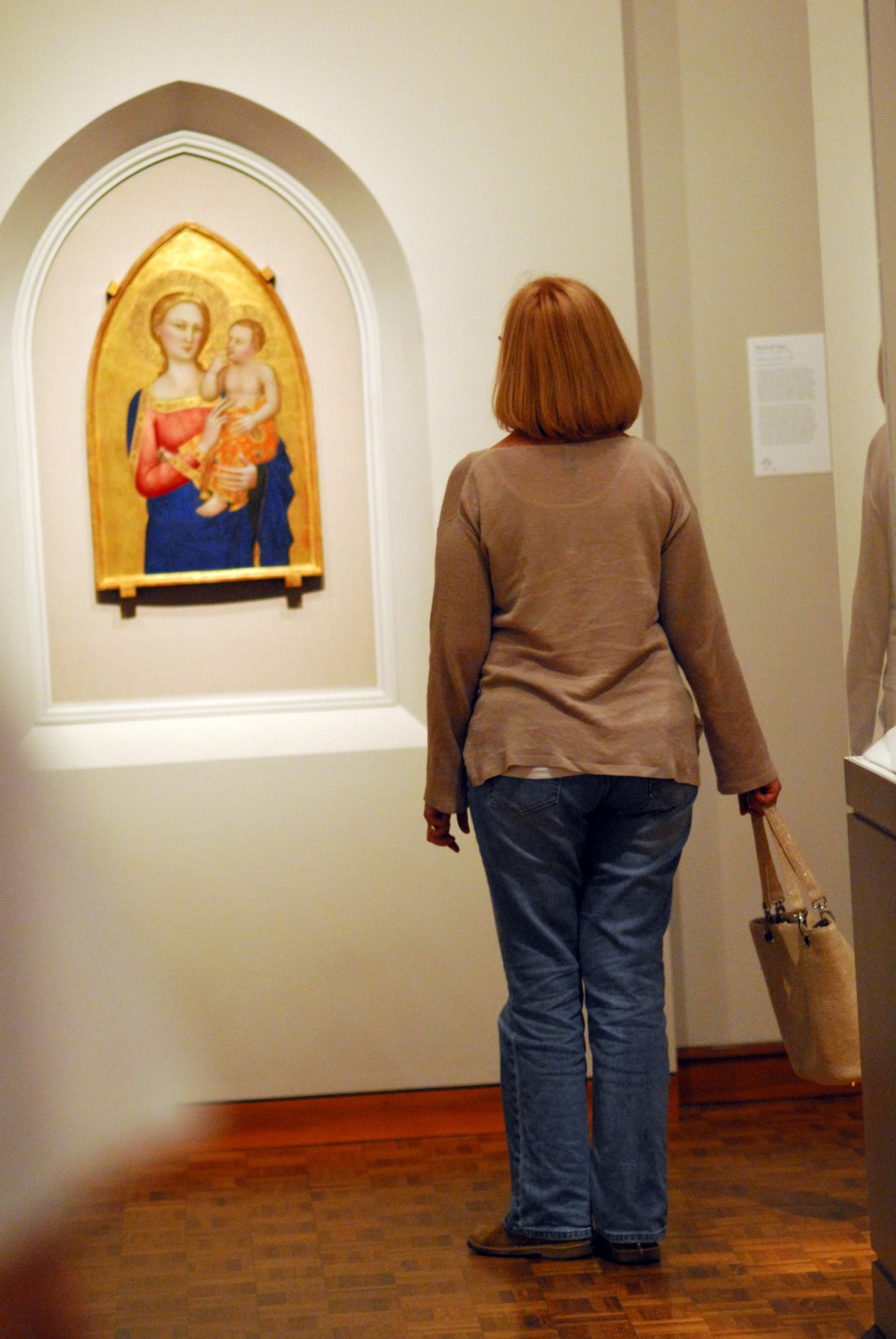
My sister and I went to the Milwaukee Art Museum the other day.

The pool is open!

Summer!

Summer officially starts for us in a week.  I will have one child in morning summer school, two middleschoolers in Young Shakespeare Player‘s rehearsing all summer for Romeo & Juliet which performs August 11-21.  And of course we have an aging college student in the house, whose laissez-faire attitude and bouncing emotions I find irritating, and draining.  But each child stretches me.  Each one, uniquely challenges my wisdom, sense of humor and grit.

The pool is open and it is finally warm!  I know we will spend long hours there, though I am no longer allowed to sun!  Squamous cell carcinoma requires me to cover up, lather up and basically consider the sun my enemy.  (Secretly, I still love the sun and being sun-kissed, hot and becoming brown and freckly.  As long as my sunscreen is strong, I do risk a little.)

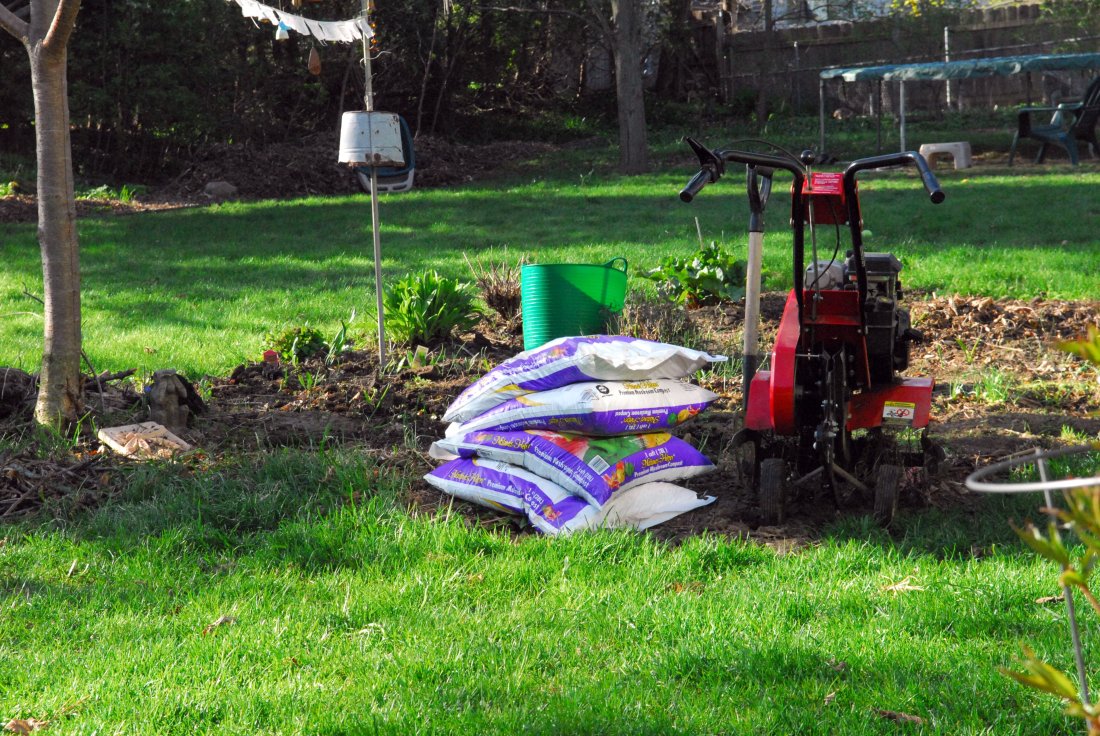
I am launching int o the big task of dividing perennials in my garden.   (Let me know if you want anything).  Not just Hosta and ferns, of which I have a plethora, but lots of other plants.  I’m rethinking the front of my yard.  Because of a neighboring Black Walnut tree I’m about to give in to the fact that nothing will grow happily and I will move a number of plants and put in something (I don’t know what is resistant to Black Walnut) to cover the ground.  I’m also going to plant an herb garden in the sunny blank patch in front.

Gardening and Thinking about Writing.

While I dig in the dirt, I’ve been thinking about whether I’ve got a book in me.  The essay was incredibly challenging, fun and a lot of work!  I can see now why it sometimes takes years to write a book.  I’ve boiled over for years about women in the evangelical church, and wonder…   Is there a need for a book to challenge the current situation in the local church?  What do women need to hear?  What do men need to hear? What hasn’t been said?  What needs to be said differently?

The friend that helped me edit my essay says the full story, a memoir, could/should be told, of my fall into the sinkhole of depression.  Coming from being a workaholic and the brokenness of my dysfunctional childhood and how the Lord found me in the pit of depression and for the first time I experienced grace and peace, hope.  Perhaps there is a book there?  I have found, as I tell my story, that many people suffer from depression and feel isolated and alone.

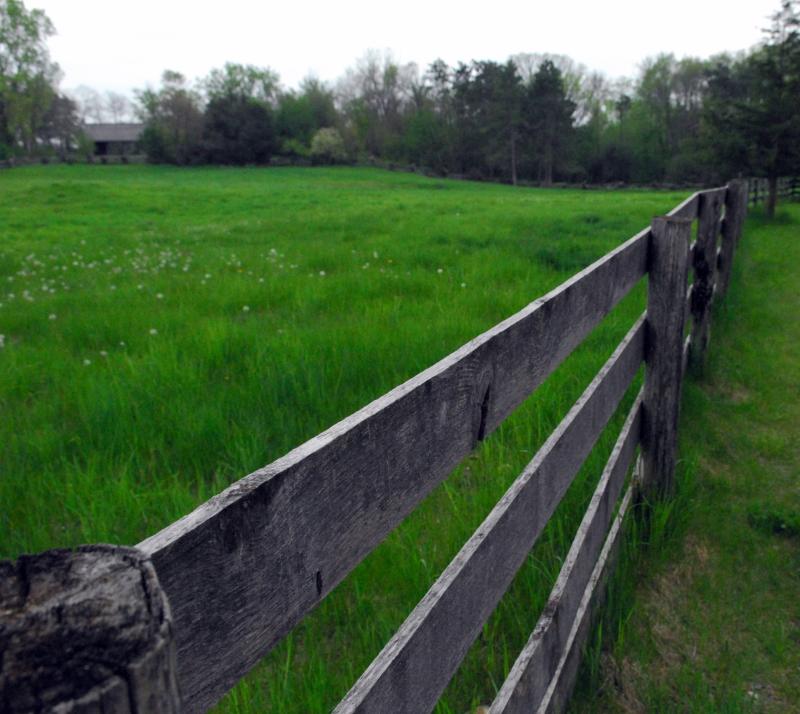
Some images of spring in Wisconsin.

“I asked God for strength that I might achieve. I was made weak that I might learn humbly to obey.

I asked for health that I might do greater things. I was given infirmity that I might do better things.

I asked for riches that I might be happy. I was given poverty that I might be wise.

I asked for power that I might have the praise of men. I was given weakness that I might feel the need of God.

I asked for all things that I might enjoy life. I was given life that I might enjoy all things. I got nothing that I asked for, but everything I hoped for.

Almost despite myself, my unspoken prayers were answered. I am, among all women, most richly blessed.” (author unknown)

I don’t know about you but I am reveling in my blessings.  And because I have to work at it  it is sweeter.  I am so grateful.

gratitude

Though I haven’t read her book One Thousand Gifts, I do read Ann Voskamp’s blog.   She so poignantly questions our incapacity to be amazed and grateful.

“Why do I spend so much time struggling to see it?  Do I need to see the world, visit the exquisite, before I face eternity? Or isn’t it here? Can’t I find it here? Isn’t it here? The wonder? Why do I spend so much of my living hours struggling to see it?”


I so relate to that sentiment.  For me it is a struggle to be positive and grateful; to see the wonder in my life here and now.  And so much that I have is wondrous!

Last week in a group we attend we were asked to express some things that we are grateful for and I was absolutely mute.

I felt so ashamed of myself, but I just couldn’t come up with anything.  I was stuck in a limbo.   I have many blessings and things to feel thankful for but

I
just
sat there.

I was

unable (or unwilling) to express them.  Unwilling to open my mouth.  It all seemed too risky somehow.

I felt a fragile sense that if I opened up my mouth I have no idea what might happen.  What if it wasn’t words of gratitude that came out?

I don’t know about you but sometimes I am just stuck in my head — too heart and head heavy
to let go and allow myself the space —

to b r e a t h e.  Deeply.  (Do it right now.  In and out.  It feels incredible.)

Why is it so difficult to allow my pulse to slow down and feel

(even just a little)

grateful.

“God turns you from one feeling to another and teaches you by means of opposites, so that you will have two wings to fly – not one.”  — Rumi

Don’t you think that is true?  From hatred to love.  From dissatisfaction to peace.  From fear or anxiety to hope and trust.

I want to fly!   Some days, I do.

b r e a t h e.  Deeply.  (Do it right now.  In and out.  It feels incredible.)

Angry in the Cereal Aisle

US sweetener consumption, 1966-2004. It is app...
Image via Wikipedia

I got really angry in the cereals aisle today.  I just stood there wanting to scream!!!

To me it epitomized one of the things I find so difficult about being a parent — choosing healthy food!

What is the point of cereal really — which is just a candy or dessert — between the high fructose corn syrup or just plain sugar? It represents everything my children want that I should not buy for them because it is bad.

I think I could go down the whole aisle and not find one healthy cereal.  And the one I might find, costs a small fortune.

How can our culture be so misguided?  How can eating healthy be so expensive and counter-cultural? 

We do our best, okay not quite -our -best.  There is always room for improvement, but we do try to eat well.

But my twelve-year-old cannot run the mile in the prescribed amount of time.  He says he’s fat.  He’s not thin, that’s for sure.  He’s not in organized sports any more. You get to a point where you need skill in a sport to keep going or enough enthusiasm to not care how you perform.  Those converged in about 4th grade.

I am flummoxed.  What do you feed your children for breakfast?  (Names and brands please.)

I Dare you.

Osama bin Laden is dead; New York celebrates a...
Image by Dan Nguyen @ New York City via Flickr

Why not love if you have the option between that and hate?  Why does hate come so easily?  Why judge? Or condemn?  Why is it that Christians so often are known for how they judge others?

Jesus said blessed are the peacemakers.

But we don’t bring peace.  We rejoice in someone’s suffering.  Bin Laden is dead!

We wish for more for us which means less for them, who ever they are.

We can only think of our own needs.  We groan about the price of gas and our grocery bill, when others have to take public transport and go to bed hungry.  Often living with fear and financial insecurity.  Have no home.  Have nothing.

Why can’t we love more tenderly?  I dare you.  I dare you to love today.  Be a peacemaker. Hold your tongue.

The world is waiting for us to love, in Jesus’ name.

The ultimate weakness of violence is that it is a descending spiral, begetting the very thing it seeks to destroy. Instead of diminishing evil, it multiplies it. Through violence you may murder the liar, but you cannot murder the lie, nor establish the truth. Through violence you murder the hater, but you do not murder hate.  In fact, violence merely increases hate….Returning violence for violence multiples violence,
adding deeper darkness to a night already devoid of stars. Darkness cannot drive out darkness; only light can do that. Hate cannot drive out hate; only love can do that.

MARTIN LUTHER KING, JR., Where Do We Go from Here: Chaos or Community?

Just love.

Why not?

I dare you.

finding the dead on facebook

So I got to thinking the other day, how I wish I could find my dad on Facebook or some other social media outlet.   An odd, really weird thought I’ll admit, since he died years ago of brain cancer.   Before the cancer stole his mind, he was a complex and interesting person.  Sometimes he could be one of the kindest people you could know.  He knew how to encourage and loved to compliment a person, telling you what he liked about you.

But when the rage came over him, somehow he ‘forgot’ he loved you and that he wanted the best for you, and he’d yell, chide and berate.  Castigate.  Criticize.  Condemn.  It is difficult to explain how it happened — starting from nowhere and becoming a living hell — if you didn’t experience it.  He could and would utterly demoralize a person.

Still, he was my father.  And, I miss him.   I think?  As I think I possibly do actually miss him the old fear returns.  The dull panicky stomach ache.

My life is so much better without him.  And I wonder if all my siblings feel that way?

So, I am not so naïve as to believe that we shouldn’t have any difficult people in our lives.  I know that my response to my father makes me the person I am today. They shape and form us.  But pain is pain.  And I was particularly shattered by my father’s treatment.  Perhaps it was my temperament and sensitivities.  Again, a conversation I’d like to have some day with my siblings is who we are and who we might have been as it relates to him.

Do you have someone in your life that you love, but you know that you would be better off without them in your life?  (Not necessarily dead, of course.)


the ebb and flow

Those words, ebb and flow, gifted to me by a friend offer a hint of relief as they innocently imply a constant fluctuation.  She is alluding to the in and out movement of ocean tides —  a perfect metaphor for the dark moods that come over me.  A decline and increase.  It is true the dark moods come less and less for me as the years pass by.

I hate this day. 

I hate the day or two after a I write something like yesterday.  (That was a major dumping — discharge — purge.)  Though the writing is therapeutic for me on one level, in the sharing of it publicly I am left sitting here alone in my study anxiously worrying that people will think I am a narcissistic, egregiously self-absorbed person.  Which I am.  Didn’t I just say I want to be my own God?

But the ebb and flow metaphor only barely works because the moon pulls the tides.  The tides do not control themselves.  The tides are daily, predictable, constant.  Are my moods predictable? No.  Are they known for their patterns?  To some extent, yes. Ironically, as time passes I forget how dismal this mood genuinely is; it is utterly insufferable.  God forbid this thing was foreseen!

I had forgotten how bad it feels to slip into the murky place of in-between.  I go through the motions.  Though some are too difficult, already. I have random thoughts.  Do not kill the dog.  Cannot make the lunches.  I find myself wearing PJs for half the day only because I can’t bear to choose what to wear.  I can lean down and pick up book after book from the library bag that has spilled over on the floor.  I must bring order so that “they”, the ones I love, don’t have to be afraid.  Won’t start to worry.  Don’t worry about me I want to say.  I resolve not to be anyone’s extra concern.  The weight of the day is enough for most people.  I sit and listen to my son tell me about aliens and zombies in the book he’s reading.  It’s noise.  Even though I want to care, because he cares.  I can’t get up and make lunches (the task at hand) even though I know I need to make myself engage.  I try to pretend the cement is not in my veins.

How’d it happen, this time? 

How could I possibly have let this happen? I know.  I think.  I am absolutely dejected about the future and my lack of purpose and even perhaps my inability to accept the purpose put before me.  I am afraid of what others think of me, unless I find a high-powered job or pursue a degree that will puff up my sense of self and be something esteemed by others.  I am afraid to enjoy the garden, photography, writing or family! 

Should I write the book about my spiritual and psychological journey of healing?  Much of it is written here.  And I have more than fifty poems.  I also have a book of photography waiting for printing.  I am frozen and disgusted by my self-pity.  And terrified that once again I find myself anxious about the little things (which intellectually I know I can handle.) And even more so, I am wondering if I have the book in me.  If these experiences would be worthy to put on the printed page to help others.

For today, all I have is my excuses.  My brain, clouded over by this mood, aches.  And all I can do today is resolve to get a little exercise, to not isolate, and I shake my fist at the ebb and flow wondering aloud to the One who controls the moon and her tides.  What do you want from me?

Melt Down

I am my secrets.  They make me human.  And yet, if I don’t trust you enough to share them, I will die of my shame.  I need you to know my despair.

I need to tell you that today my heart is aching. I need you to believe that my masks are not all lies.  You do know me, because I always tell you the truth.  About my despondence — my anguish that comes too easily.  I need to tell you about the internal corruption that sits with me night and day mocking me.  And that I sit with my secrets wondering where are the friends to reassure me that everything will be okay?

Where is God to say that his Truth is all that I need?

Damn you, fear. Damn you pain that sits lodged inside me.  I am choking on it right now.  I thought for a minute I kicked this habit of despair.

I don’t doubt the fact of knowing you God.  I am certain that you are there. Knowing you love even me.  The tears I cannot cry, you wipe away.  No misunderstanding there.  But what I have come to understand is that some days — it makes no difference at all.  I hurt anyway.  Your song, God, offers no comfort today.  The music at times so poignant.  Nothing about that seems to matter, when I know you don’t care what I do with my life.  Universal truths don’t matter, today, as I sit here thinking about what I now know.   What I think I want.  Sitting here smothered by the heavy weight of my self doubt.  Begging you to help me understand what is happening .

Damn you, fear. Damn you pain that sits lodged inside me.  I am choking on it right now. I thought I kicked this habit of despair.

Why do I have to feel my life is so important?  Why can’t I surrender to simply living each day. Loving. Others. Quietly.  Unknown to the world.  Anonymous. Why can’t I just do it.  Instead I sit here under the black cloud of the sinkhole and my need stares back at me in the mirror.

I. want. to. be. s.o.m.e.b.o.d.y.  I want to be important.  I know what I can do.  I know my own potential.

But that is what I thought you took from me — God — in my Exodus years.  I know you took my heartache and salvaged my soul.  Gave me forgiveness and in the sojourn to hell and back you promised to take this hideous ingratitude, ambition and greed.  The need for accolades and esteem.  That part of me that I loathe, that wants so badly to earn my worth.  That thinks I can prove something, anything.  Those ghosts of ambition crowd out all that you have taught me through my affliction.  Face it.

I want to be immortal.  I always want more than you.

It should be enough that you love me.   The knowledge that somehow you are rebuilding the frame of this crooked broken heart, that aches and thinks it is something, anything without you.  My secrets remain.  The fact that some days I don’t want to serve you.  I want to be my own deliverance.  I want to be God.  As if I could.

Damn you, fear. Damn you pain that sits lodged inside me.  I am choking on it right now.

This is me melting down.

Men have been talking about men for so long, they don’t even realize it.

I recently wrote about my frustration and confusion with the Church and particularly my church.  It seems to me the Church is ignoring the stories of women in the Bible, and historically as artists and theologians, and in the Church worldwide.

Now I don’t have history or theological degrees, but it doesn’t take those to know instinctively that women have been actively participating in the work of the church since its inception.  I was so frustrated I created a survey (you can still vote) asking my contacts who are the female spiritual leaders, thinkers, and theologians that inspire you most?  The results are here.  The results were interesting.

So I was inspired, encouraged and compelled by the recent post of Scot McKnight on his website Jesus Creed asking:

  • What are you doing to make sure women are part of the story of your church? of the Bible? of church history?

  • Do you talk about the women in the Bible?

  • Do your folks know the women of the church?

  • Which women have you mentioned in your teaching or your preaching?

These are fantastic questions and exactly what I was getting at by my rant.  The church could be teaching about men and women.  I have never heard of Katherine Bushnell or Alice Paul or Macrina.  I could not even place them on a historical time line.  Could you?  And then there are the many women in the Bible that are never mentioned in church.  Paul’s coworker’s Timothy and Barnabas we know, and yet his coworker Thecla is never mentioned.

Jenny Dunham, recently in Arise Magazine, compellingly stated something so obvious it is shocking:  “To learn of men without their woman counterparts is an incomplete view of human history.”  She goes on to ask:

“What would happen to the gender divide if we were taught history in a holistic manner—that is in a way that includes both women and men?  Can you imagine how difficult it would be to devalue females if we more frequently celebrated their brave, unstoppable, and tireless leadership throughout history?  Without knowing the history of these remarkable women we would see only men taking action and moving the tides of our world.”  

It is too easy to presume that women have no place in the church, have no history, have no stories when we do not hear them told!!!  We perhaps think that women are incapable of “making history” because they are not celebrated (or rarely even mentioned) in the history of the Church.

I’ve recently been reading How I Changed My Mind about Women in Leadership: Compelling Stories from Prominent Evangelicals.  It is just okay.  To be honest I didn’t finish it, perhaps some day.  There are so many other books on my bedside stand that I want to read more.  But it was fascinating to read some observations, again by Scot McNight from his blog:

“Themes about what precipitated change…:

  1. The influence of a strong, gifted woman in one’s life.
  2. The impression of the stories of those who changed their minds on this very issue.
  3. A more careful reexamining of the whole of Scripture in light of its historical, cultural and broader theological context.
  4. The experience of working side-by-side with gifted, dedicated, and called women leaders, teachers, and preachers.
  5. The realization that there is a view where head, heart, and Scripture can come together and honestly confront the difficulties of applying a restrictive position consistently.”

“Women tell their stories and their stories show some common themes too:

  1. They were shadows of males.
  2. They were “submissive” in order to attract a husband.
  3. They functioned as a supplement to make males complete.
  4. They became depressed and struggled over rejection of their callings and gifts of the Spirit.
  5. They received encouragement from respected evangelical males who wanted their gifts and callings to find full expression and for them to be completely themselves.”

The stories about women are important.  The questions are important.  The history is important.  But change won’t come quickly. 

Men have been talking about men for so long, they don’t even realize it.  They read and study fellow men.  They listen to fellow men.  They quote  men.  No, change won’t come quickly.  I was recently asked how can we make baby steps toward change, in response to my writing  We are Half the Church.  Well, obviously I don’t want to only make baby steps because it’s too frustrating!!  But most days I can admit that we will likely not see change in the evangelical church in the next decade.  So, here’s to baby steps  … Cheers.

Small Choices.  Big Impact.

Be thinking constantly about utilizing women and minorities.  I think pastors and staff need to be aware of how their seemingly small choices are making big noise. Their lack of determined action is effectively stating more than their words.

In the case of my church, they don’t say much about women and you won’t find anything on the website under beliefs or core values, but women can’t become elders and there are no women on the teaching team. But I know there are many folk there (I have met them) who do believe in Biblical equality (Of course there is a good portion that don’t.)  But the leadership’s actions tell me they aren’t willing to make institutional change any time soon.  The change they are bringing is more covert.  And some of it highly admirable if very slow.  One thing they do is hire by merit giving women some jobs in leadership.  Yes, this is good.  Fair.  Legal.  Slow.

When I worked at IV we worked hard to find capable, talented, exceptional leaders who were women and minorities.  We worked tirelessly, seeking input from those communities that do not traditionally have a voice in a culture dominated by whites and males, but who clearly knew of talent that didn’t have the mainline white or male exposure.  Our conferences and events fairly representing women and minorities in leadership and teaching.  That’s because the organization decided it was important and Biblical.  I don’t know what they do today in their programming.  With leadership change comes changes in priorities.

I observe culture.  And what I see is discouraging.  Look at Christian conference speaker lineups and Christian book authors and Christian songs played on the radio for example.  Optimistically, nine out of ten are white or males.  This has to change.

Yes, it takes work to find, empower, train up, mentor and listen to people that are different than you, but the kingdom of God is reflected and I believe God is honored and pleased by the effort.  And it is a delicate balance between finding the right person and mentoring people into places of teaching, authority and leadership.  It’s an art not a science.

On one level it is simple.  In the planning and implementation of worship and teaching on a given Sunday in the local church, always ask how you can better utilize women and minorities on the platform in whatever way you can.  That alone would be a huge step forward.

An example: This Sunday,  at my church there were four short monologues or sketches done by the two main teaching pastors, Chris and Tim.  Two of them could have been performed by women.  This would have taken more work and time planning ahead. And you have less control when you “give up” some of that power. Or, in the same service scriptures were read through out. Others can reach scripture it just requires setting it up ahead of time.  Again, the delicate balance of capability vs ongoing mentoring is significant.

Another “simple” idea. 

If you are truly hiring by merit and have the value of actively seeking women and minorities to apply, the next step is to put in the job description for all NEW HIRES of senior staff that they must be able to teach — either have teaching experience or are capable of/willing to learning.  Then give them opportunities and/or train them in teaching. Yes, this rules out capable people.  But it also begins to change the expectation over time that this is a part of leadership.  And it will diversify the teaching team which can only be good.

Even as I write this I am overcome by my sense of apathy and discouragement and lack of faith that the evangelical Church will ever change.  When this happens I know I it is time to stop thinking, and reading, and writing, and to go sit with my heavenly Father.  To be reminded of who he is and what is important to him.  Our God is a lover of justice and mercy.  He said, more than anything, what is important to him is:

  • That we love one another as he loved us.
  • That we build one another up.
  • That we bring order to this crazy messed up world.

This isn’t about feminism or diversity, which are hot and misunderstood words in the Christian sub-culture today.  This is about justice which is God’s priority.  This is about restoring what God intended in the beginning when he created us all to be so different.  God’s order doesn’t look like ours. 

“I cannot begin to imagine how much good a holistic teaching would be in bringing reconciliation and healing to God’s kingdom. This is not only the case for women; people of all ethnicities and social classes should enjoy equal recognition in history with white males.” —  Jenny Dunham

Scripture says, “There is neither Jew nor Greek, there is neither slave nor free man, there is neither male nor female; for you are all one in Christ Jesus.” Galatians 3.28,  NASB (©1995)

Baby step no. 1.  Remember the other half of the church on a given Sunday.  Empower them.  Tell their stories.  Celebrate the whole church, not just the less than half that are male.

Men, stop talking about yourselves.

——————————————————————————–

I should say that my article We are Half the Church was in some way inspired by the book Half the Church, by Carolyn Custis James.  Although I am reading it, thus far I don’t have a big take away but I was struck hard by the title.  We are more than half the church.  Yes, we are.  And it is about time we were more vocal.

Half the Church
Recapturing God’s Global Vision for Women

Women comprise at least half the world and usually more than half the church. But so often Christian teaching for women either fails to move beyond a discussion of roles. This shuts a lot of women out from contributing to God’s kingdom as they were designed to do. Furthermore, the plight of women in the Majority World demands a Christian response, a holistic embrace of all that God calls women and men to be in his world.

In Half the Church, James presents an inspiring vision of God’s plan for women that avoids assuming for them a particular social location or family situation. She unpacks three transformative themes the Bible presents that invest the lives of every woman and girl with cosmic significance that nothing can destroy. These new images of what can be in Christ come with a blazing call for them to join their brothers in advancing God’s gracious kingdom on earth.

Carolyn Custis James

Open Window [a poem]

These are the days I walk with leaden feet.
I am heavy with the memory of you.
And I wonder.  Am I free?
These were your last days in April.
For me, each feels more than twenty-four hours long.
In the cold nights of April I lay awake remembering
losing you.
I hear the car wheels spin and splash in the icy rain.
I am over thinking the past, again.
And again, heavily blanketed by my disgust
and a sadness I cannot explain.
A sadness I do not understand.
We knew you were dying, though you would not acknowledge it.
Your thoughts once sharp, were flat and strange to me.
Your words once so clear and resolute were fading from us.
Your eyes became vacant, as your smile was fleeting and confused.
I knew we were losing you.
We lost you long before the rainy nights of April came. 
But you wouldn’t let us say goodbye.
I woke on Easter morning feeling the weight of memory and the sounds of the night.
I lay as still as I could, not wanting the day to come.
I sensed the rain was gone.
I heard the bird’s joyous song.  The sun appears.
As I lay there thinking, I knew suddenly with the morning
that freedom comes in looking back and then,
in looking forward out the open window.
Freedom comes.
Yes, I am free
as I allow hope and expectation into my heart.
Freedom is found in the cool morning breeze
of resurrection.

———————