{Do I see, hear, or know the least of these? Do I know Jesus? (and an apology to white men)}

For several days I’ve been trying to figure something out. Why did it hurt so much?

I like to ask questions and throw things out on Facebook, sometimes (many times) that I don’t even think through carefully. I’m something of a rabble-rouser. I sometimes even take pride in it, thinking it’s my “special gift” to provoke others.

Why did it hurt each time I read her words?  And I did read them, over and over, again and again.  I thought about it all weekend.  Even becoming grumpy, bothered, then deeply troubled as my stomach lurched and tears sprang to my eyes, after days there was still, so much pain. And I have come to know what this means — linger here.  Deeply, scrupulously sit with this, discover what it is.

I am mouthy, petulant and troublesome, even stupid at times, on Facebook. This is what I said:

“I’ve long wondered why it doesn’t occur to white men that they are so privileged, but as Julie Clawson says if you don’t get that you are a part of the problem. It’s not tokenism rather catching up to the world, where women and non-white are your equals and simply want the opportunities to represent themselves.  In a WHITE and in a MALE dominated culture.” 

Okay (in retrospect) that was arrogant and whiny. (Perhaps I really do need to give up Facebook.  It feeds all the wrong parts of me.)

Then my old  and dear friend, she challenged me. I quote the entire conversation because it matters to me.  Here is exactly what she said (Emphasis is mine):

I wonder Mel if in the logic of what you are saying in your statement whether it cannot be applied to anyone who has any privilege in any part of the world. And I do mean that literally within the logic of your statement. It is known as systemic sin and it can be applied in other ways…I wonder why people who earn over $20,000 a year, or I wonder why persons who were able to go to college, or I wonder why people who have running water in their homes and carry through the logic. I think you are able to speak in these ways because you are part of a white and economically dominant culture so then you are in a similar situation to the people you are accusing.

I am not saying therefore change cannot be brought about. I am saying we all live in power dominated systems. It is what Scripture means when it talks about principalities and powers, and we ALL have our blind spots where we don’t see our privilege and we don’t see our power orientation and we don’t see that we don’t see. I do see that the Gospel calls us to a different way – of being the servant in love. I find it fascinating that Jesus was among an oppressed people, the memory of about 2000 Jews having been hung on crosses at one time within the living memory of people alive at Jesus time,

the fact that the centurions came out at Passover in huge numbers because Rome knew what Passover celebrated,

the fact that Jesus told them don’t just walk one mile, walk two…what is that about…it is about

the fact that by law a centurion could require you to carry all his gear for a certain length of his journey,

the fact that Paul didn’t free the slaves but gave alternate teaching…

So even those who do get it who have a household of over $20,000 a year, or a University/college education, or have water running through pipes to their homes are still part of systemic inequality how often do YOU, do I not get it when we eat an ice cream when that money could have gone to digging wells etcetera….

I am not saying stop seeking to bring about change but let’s recognize we white women are parts of a fallen world too…

And then ask ourselves what concretely does it mean to be a servant in love to those whose lives we can impact concretely … Why does Jesus define His kingdom in the manner he separates the sheep from the goats…

Me: So, what then? Certainly yes, white women are born into a world of privilege and opportunity and we too should look for ways to give up our power. I suppose I just assumed this was understood.

She said: But why do you assume it was understood, when you constantly are commenting about white men…

Me: I never/rarely say “white” men, but it must be implied. Your “constantly” gives me pause perhaps I just talk too much.  I don’t mean “white” when I talk about men. We all have our lens through which we process obviously.

And that was the line that cut so deep …

when you constantly are commenting about white men…” 

You see I don’t want to be known for that, for constantly commenting and complaining about white men.  Even if I do feel a challenge to speak on issues of women in the church, as I do, I do not want to be known for that.  That feels wrong.

That is wrong. 

To my friends who I have offended or verbally accosted, white men mostly I ask you to forgive me if you can.  

[Friends, I hope you will bear with me, I think you will be glad that you read to the end.]

And not having read about the sheep and the goats and not remembering the story at all (apologies to all my Sunday School teachers) today, it’s still bothering, even nagging at me. So I read the account from Matthew 25:31-46 of the Sheep and the Goats (again emphasis mine):

 “When the Son of Man comes in his glory, and all the angels with him, he will sit on his glorious throne. All the nations will be gathered before him, and he will separate the people one from another as a shepherd separates the sheep from the goats. He will put the sheep on his right and the goats on his left.

“Then the King will say to those on his right, ‘Come, you who are blessed by my Father; take your inheritance, the kingdom prepared for you since the creation of the world. For I was hungry and you gave me something to eat, I was thirsty and you gave me something to drink, I was a stranger and you invited me in, I needed clothes and you clothed me, I was sick and you looked after me, I was in prison and you came to visit me.’

“Then the righteous will answer him, ‘Lord, when did we see you hungry and feed you, or thirsty and give you something to drink?  When did we see you a stranger and invite you in, or needing clothes and clothe you? When did we see you sick or in prison and go to visit you?’

“The King will reply, ‘Truly I tell you, whatever you did for one of the least of these brothers and sisters of mine, you did for me.’

“Then he will say to those on his left, ‘Depart from me, you who are cursed, into the eternal fireprepared for the devil and his angels. For I was hungry and you gave me nothing to eat, I was thirsty and you gave me nothing to drink, I was a stranger and you did not invite me in, I needed clothes and you did not clothe me, I was sick and in prison and you did not look after me.’

 “They also will answer, ‘Lord, when did we see you hungry or thirsty or a stranger or needing clothes or sick or in prison, and did not help you?’

“He will reply, ‘Truly I tell you, whatever you did not do for one of the least of these, you did not do for me.’

“Then they will go away to eternal punishment, but the righteous to eternal life. ”

Whatever you did for the least of these …

I have so much it’s sick.  I am rich.  I am white.  I am educated and privileged.  I have every opportunity and I have every responsibility to see and to do something. 

And most days, other than that, if I am not going to do that I think I just need to shut up. Yes, I write.  And I may have “things to say.” But I was struck to my core, shattered, stunned with the conviction that this is the core message so many of us (me, I am missing) are missing.

Do I see, do I hear, do I know the least of these? Do I know Jesus?

Thanks to a dear friend, who loved me enough to challenge me, I may never (I hope) be the same.  This is one of those serendipitous and life altering moments.  I have a choice — to see Jesus, to invite Jesus in, to clothe Jesus, to care for and heal Jesus.  I have a choice to know him.

The question remains what that looks like with my hands and feet.  I remain open for that.

I am so grateful.

{A Miscarriage of a Life – a post Mother’s Day Lament}

Yesterday I told myself over and over — I have had a miscarriage of a life.

The day before, I spent all day celebrating my older sister as she received a doctorate of ministry in preaching from the Lutheran School of Theology at Chicago.  Yes, I was happy for her but I could not enjoy the day fully because I was so disappointed with my own life.

After the very long ceremony (those Lutherans know how to “party”) I asked her what was next on her list for world domination? It was a backhanded compliment, which had a risk of offending her, but luckily she was gracious. (I get snarky and sarcastic when I’m feeling bad about myself.)

These sisters of mine are capable of doing anything.

Harrison’s seem to have the brains and talent, ability to work extremely hard, a yearning for justice to prevail and the certainty that injustice is, in part, our life’s call, challenge and responsibility.  We are strong, capable, and powerful women. Some days I actually believe that about myself.

I have come to believe that much of the spiritual journey is one of being stripped of all that we would put our trust in, other than God.

Life is found in losing it for Christ’s sake.  The life that God has for each of us, if received–changes us.  There is not one sacred path for all.

My journey over the last twenty years has been a stripping, for I never knew Jesus, before.

I never knew I was beloved. I didn’t believe there was a purpose for my life outside of what I could accomplish, a life purpose that is all about Jesus.

Until my father died nine years ago, I was in many ways “asleep.”  Because of the severe damage to my psyche from his anger, I did not know myself.  I did not know the Trinity of God, Jesus and the Holy Spirit in any real way.

I did not know it, but I was bankrupt in spirit.

But even in that absence of belief, God planted questions, passions and strong desires inside me, a prompting that has never left me to know the Word of God and interpret it. I know that I am to receive that– and submit to the unique journey God has laid out, even when I cannot see clearly the road ahead.

Trusting is painful — the stripping away of sin, of selfishness and in many ways of aspects of my humanity, my character, that I thought were who I was.  But there is grace, protection, comfort, provision and shalom in submitting to the Holy One’s purposes.

It is the only safe place. And yet it hurts so much when I feel I do not understand clearly.

In my 20s and 30s I lived for my job, it was my identity and all that I knew.  Strangely, I believed it was all I was good at and I thought that I was choosing to walk away from that work, because the environment was unhealthy, but I see now that God led me away, took everything that made me feel good and strong and powerful.  I thought I knew.

I could have lost my marriage and family because of my addiction to alcohol.  I thought I knew, thought I was strong enough to beat it with will power, but the addiction beat me and I found that I was nothing without the Holy One.  Even if I gave up the drink, without the Holy One filling me, healing, and strengthening me I was nothing. I thought I knew.

I sat Sunday scrutinizing people who had given many years of their lives to learning, thinking, writing, believing, enough to sacrifice time with their own children and partners, to achieve this incredible goal of a masters or doctorate. Some were restrained, some were giddy, and many were just slightly stunned to survive it, it seemed to me as a bystander.

I was so incredibly jealous and sad for myself, even mad at myself.  Though the day wasn’t about me, inside my head everything was about me and my feelings of not exactly failure, but a strange bedfellow to it, a miscarriage of a life.   In that moment, how dearly I regretted leaving my career in my early thirties and staying at home with my kids. Deep down a part of me still believed that I would not have succumbed to alcoholism or depression in the end if I had continue to work fulltime.  I’d still have a great career, I’d be able to leverage it toward other work, and I would be respected by others.   Pretty much bullshit and lies, but I almost believed it again as I sat there fuming internally.

I said all that and more to my mother as we drove back home.  I don’t know if I really believed it.  I do know that who I am, the real me, the person I never knew until I had no job, suffered from major depression and became a drunk – that woman needs Jesus! She believes in the Creator in a way that she never did before she lost it all.

I remembered that my boss, while I was trying to decide about leaving InterVarsity told me to go have babies and come back in five years to continue my part of world domination.  Only, I never went back I was too busy having a breakdown and drinking myself stupid.  That’s what I mean by a miscarriage of a life.

I was debriefing the day with Tom, who is extremely smart and has an almost PhD from the University of Chicago.  As his head hit the pillow he exhaled, he said something like:

Higher degrees have their purpose, and there is a sense of personal achievement if it is important to you, but being a parent is three times harder than getting that PhD.

“Yeah,” I said, “but the world doesn’t esteem parents.  Parenting won’t get you a job.  Parenting won’t bring you any real regard or admiration from others.  Parenting is something everyone does.  (Not to mention you don’t get paid and the hours are terrible.)  It’s not enough.” 

My eyes filled with tears so many times on Sunday, I felt like I was choking most of the day.  I was happy for my sister, genuinely — for I know only in part the many sacrifices she and her loved ones have made for her to accomplish this incredible goal.  I know my father was doing a happy dance, wherever he is.  My mother was beaming.

I spent my mother’s day celebrating my sister in part because I believe in doing things even when they are hard.  I want my children to grow up knowing that doing the right thing isn’t always what’s easy, nor is it usually about you. That there will be many opportunities in life to choose yourself over others, but when given the chance to celebrate someone you love, you should take it.

All day I had moments of deep self-pity and self-loathing for my choices and beating myself up about the last fifteen years.  Hindsight is 20/20 and all, still this is what I have come to know.

I know I would be different and horrible person if I had continued on the path of a workaholic and constant striving for external approval. My character has been changed through these experiences.

Through the mistakes I have made I have found a true understanding of God’s mercy and grace in my life. I know that I am loved by Jesus – I didn’t know or believe it two decades ago.

Through the mistakes I have made I have found a daily dependence on God for my health – my mood, my purpose and meaning.

For even as humbling and hard as each day is and how much it feels like a sacrifice to not have a viable lauded career at this time, I’m on my knees ever more.

Most of what I am learning is yet to be understood or written I suppose.  Clearly, I am still broken, still too easily overcome by the wrong motives. I continue to be frustrated and discontented and I am frustrated with myself because of this.

In studying the book of Proverbs (because that is where we are in Eat This Book reading the entire Bible in a year at church) I am being drawn to Proverbs 31.  I look forward to learning what a 21st century feminist wife and mother, a homemaker, budding writer has to learn about being a Proverbs 31 woman.

I am open, and fearful. I am angry and aching inside, deep where no one understands me except God.

I know I should be grateful but everything about me is wired to work hard, to please other people, to get the acclaim of others, to be esteemed and admired; it is the entire human condition without God.

I pray for spiritual understanding and an ability to lay all that down — to trust and obey.

Deep down I know that as long as I keep longing for all the wrong things, I can’t grasp what is good, whether that is understanding of what I already have or whether it is receiving what God has for me next.  I cannot grasp it because I am still so filled with discontent.

I thought I knew.  There is very little that I do know.  But my story isn’t fully written.


When our Traditions and Tired Beliefs are Calcified into Orthodoxy (Brief Thoughts On Women)


Yesterday as I was sitting across from one of the people I respect most in the world when my life changed forever. 

You see I have had many long years of being in pain about being a woman in the church, though I am on a path of healing. Yes, this story does have a happy-ish ending.

Okay happy isn’t quite right but I feel hopeful in the knowledge that we have not seen the end of Our Story.

Being a woman in the evangelical Church can be painful.  Being a natural questioner is too.  

More than a decade ago, I began to question the roles of women in the evangelical church and this has brought me a lot of personal pain.  The process of learning what was True – scriptural, cultural, and relevant for us today, was slow and difficult because no one really wanted to talk to me about it or help all that much, as I questioned my pastor, and the elders, and pursued it with others.

Little did I know that in some cases it was because others didn’t really know what they thought.

This is a part of what makes this issue so slippery.  I pushed, sought clarification, and ask for perspectives and read a lot of books! The process of the last ten years has been uncomfortable, isolating and even at times agonizing.

I learned recently that I have even scored a “reputation.”

Not as I would hope of being a thinking, theological person – because I have asked the biblical basis for these things and sought truth. That I would take as a backhanded compliment.

And not as I might wish for being a questioner –because I do have many questions and never saw that as liability as a person of faith.

Rather, I have been called the f-word, yeah that f-word – Feminist. And even more malevolent, an “Angry Feminist.”

Actually, the angry part is true. Once I am able to step back from my defensive, hurt posture, I’ll confess that I have been angry.  I have carried around inside me, close to my heart, an oozing, pussy, and infected spiritual sore and this has been  very bad for my soul.  I even picked incessantly at it.  I have been wounded, offended, bitter and angry and worst of all to me is this.

I have felt unheard.

Sitting there across from my beautiful, big-hearted and loving, Bible cherishing, Jesus following, Holy Spirit filled, Bible Church attending friend, she uttered the most unbelievable words.  And she repeated them when I seemed to just look at her bug-eyed, in shock.

“You are not alone.  You are not the only one wondering what’s true,” she whispered to me.

She asked me this simple question:

 “What did Jesus say about women?”

Well, nothing that I am aware of and I will double-check because she asked. But I am not aware of anything prescriptive that Jesus said about women.

Jesus saw women,

Jesus spoke to women,

Jesus healed women,

Jesus taught women,

Jesus was financially supported by women,

Jesus loved women,

Jesus listened to women?

Jesus was persuaded to change his mind by a woman.

All in a culture and time when women were unseen and unheard, unworthy, unquestioningly invisible.

So I ask you friends.  What did Jesus say about women? And what parts of Scripture bring you hope as you consider the place of women in the church today?

I’ve had a healing of that sore that I allowed to fester for more than a decade.  That incredible story is here.

And I have a renewed challenge by my friend, someone who I never thought would ask about the injustices toward women in the Church.  Because of her, I now dream of somehow bringing a riptide of change into the middle of this vast ocean of tradition and tired beliefs which have been calcified into orthodoxy.

These days, most days, I feel hope about the place of women in the Church. Other days it feels foolish and the lack of certainty is soul crushing.

On the days that I maintain my weak hold on Jesus, I do believe change will come.  And hearing the questions coming from this dear friend meant everything.

I am resolved to begin again to study and write on this topic — I gave it up for a good long while.  The angry feminist in me has become resolved and certain of Jesus and his love for me and all women.  Something shifted in my mind and heart , in my soul as I sat listening to my friend.

I am not alone.  I am not the only one asking.  I am not the only woman looking for answers.  We will find the Truth together.  We have not seen the end of Our Story.

Melody

Other things I have written on these subjects.
//

Why Stay in the Church? (Here’s Why I thank God for Mine.) UPDATED

God has many that the church does not have, and the church has many that God does not have.  ~ Augustine


Even though it is totally embarrassing to be labeled an “evangelical” Christian today, mostly because of the politicization of organized religion and because there are so many crazies on the religious right.  (I know.  I’m not helping by saying that.)

But seriously, it’s plain  mortifying to be considered “evangelical” most days especially if you turn on cable television whether it’s MSNBC or Fox “news.”

Still I have been attending mine for more than ten years and have good reasons to stay at my evangelical church.

Sojourners Magazine does a good job of describing the type of evangelical Christian that I consider myself to be.  I care about racial and social justice, the environment, human rights, having a consistent life ethic and trying to be a peacemaker.  I do not always succeed.

The truth is there is no perfect church.

But I think there is an ignorance and arrogance to think that  you do not need a church home.

I’ve already written once at least, that I can remember, about what I love about my church.  It’s here, titled I Like My Church.  They Don’t Tell Me What to Think.  But Rachel Held Evans the author of Evolving in Monkeytown  is discussing why she left the church and why she has returned.  In  a response to this, I replied. I’ve expanded it here.

Why I stay in church?

These are not in any order but how they toppled out of my brain.


  1. A significant reason that I stay at my church (even though it has grown into a mega-church since we’ve been there) is because they don’t take sides on political issues.  They teach what the Bible says and they intentionally stay away from hot “issues.”  This shows great maturity and wisdom, in my opinion.
  2. I also stay at my church because although they are more conservative on women than I would like, they love and accept me as I am. (If you are regular reader of my blog, you know that I can be a sometimes ranting, sometimes angry and frustrated, and sometimes hurt feminist, a misfit in the evangelical church.)  I stay because I believe as I grow into God’s grace, I may be heard since the message isn’t mine, but the truth of Jesus.  I stay because although the “church govt. structures (being a part of a denomination)” haven’t caught up with their beliefs, what they are practicing is an affirmation of women fully using their gifts and abilities and serving out of those God given gifts, almost.
  3. I stay because there are people in my church that are spiritually alive and actively living out their faith, who love Jesus and express that through loving one another, in order to reach our community.  I see it every day.  It is beautiful.  It’s radical.  It is only from God.
  4.  I stay because of the community that I have found within a smaller group which buoys my faith, prays for one another, serves our community together, confesses sin and accepts one another quite unconditionally.
  5.  I stay because they have a solid biblical hermeneutic, one that I can believe in.  They don’t read the Bible literally, thank God!
  6. They encourage questions and regularly say that there are varied perspectives and interpretations.  Amen!
  7. Their position on science, faith and creation which fits under number five, but is important enough to me to be it’s own reason. (I’ve listed some links to talks below.)
  8. I stay because through the study of scripture, through learning in community, through developing a life of devotion I am being transformed.  I am not the same person.


Everything I write about the spiritual life here on my blog, and I do all the time, it is because of what I am learning, how I am being challenged to grow and develop, because of these things.

This is why, I regularly thank God for my church even though there is no perfect church including mine.  Why are you at your church? Or why not?


Call Me Crazy, But I Talk to Jesus too (Thoughts on being a Christian Woman in the 21st Century)

Call me crazy, but I talk to Jesus too.
And so, I can say that I don’t need you to liberate me.
Jesus already did that.
No, I don’t need a church to say what I can and cannot do,
I’m already free.

Call me crazy but I don’t believe in a Jesus that oppresses you or me.
You see, I’ll repeat it in case you didn’t understand, we are already free.

Yes, I’m going there.
Call me crazy but I don’t worship a male God.  Sexuality just cannot matter
to Yahweh — who is the creator of the universe – who formed the stars and galaxies, and all kinds of life.
I believe in a God who isn’t male or female, he is everything.
God is spirit.
God is breath.
God is here.
God is everywhere.
God is everything good.
God came before us and will be here after us.

That I am a woman is nothing to him.
And here’s something else I believe.

God doesn’t love you because you’re a man.
He sure doesn’t love you more than me.
For a long time I thought he might.
But then, crazy me I talked to Jesus too, and then. I read the Bible for myself.  I learned
yes, God loves me
for I am made in his image and by that he doesn’t mean male.

Because Yahweh, our creator God, isn’t male or female.
Don’t you get it?
We are already liberated and free.
I even think, if Jesus returned today he might not come as a male, no not today. I’m just saying,
he might not.  Why does that scare you?

But as the Son of God it’s true.  Jesus came in human form, two thousand years ago
and

way

back

then,

even though Jesus came to liberate us all,
even though God allowed a woman the great honor of being the first witness to the Resurrection,
still, way back then …

Women had nothing.
Women were chattel.
Women were owned.
Women were property.

Call me crazy, but I am not that two-thousand-year-old-oppressed-and-dependent-kind-of-woman,
I’m free.
I just need to learn live like it.

If you look.  If you really care to open the eyes of your soul and read the Bible, then you will see.

No, I don’t believe in a God who oppresses anyone, least of all me.
I talk to Jesus and he told me

I’m already free.

MHH

Inspired by and written as a part of the Synchroblog March theme, All About Eve.  As a part of Women’s History month,

Women’s rights have been all over the news recently, from bills in Congress and state representative bodies to crass “jokes” by national broadcasters. The idea that women are or should be equal to men has become a polarizing topic of discussion on the national stage. So we thought Synchroblog might jump right in. Anything concerning women in general, women and the church, balancing women’s rights with religious freedoms, the differences between men and women … these are all good topics for blog posts. There is one caveat, we are asking that the Synchroblog be a voice of moderation and temperance. You may have strong beliefs on this subject and that is good. Giving voice those beliefs in a spirit of cooperation and bridge-building is also good. We would like these posts to step in that direction.  Here are a couple of great examples of moderate writing on women’s issues to prime your writing … An Apology From Limbaugh, But The Damage Is Done by Denny Burke.  And now…on the other side (critique of extreme complementarianism) by Roger E. Olsen

I invite you to read these other synchroblog posts.

(I haven’t read them all yet.  Passing them along in the spirit of the project):

Marta Layton The War on Terror and the War on Women

Kathy Escobar replacing the “f” word with the “d” word (no, not one of those ones!)

Tammy Carter Pat Summitt: Changing the Game & Changing the World

Wendy McCaig Letting Junia Fly: Releasing the Called

Words Half Heard Lenten Submission: Rethinking Hupotassō

Jeremy Myers Women Must Lead the Church

KW Leslie Churches and Women

 Michelle Morr Krabill – Why I Love Being a Woman

Jeanette Altes – On Being Female

Melody Hanson – Call Me Crazy, But I Talk To Jesus Too

Glenn Hager – Walked Into A Bar

Steve Hayes – St. Christina of Persi

Leah Sophia – March Syncroblog-All About Eve

Liz Dyer – The Problem Is Not That I See Sexism Everywhere…

Sonja Andrews – International Women’s Day

Sonnie Swenston-Forbes – The Women

Christine Sine – It All Begins With Love

K.W. Leslie – Undoing the Subordination of Women

Carie Good – The Math of Mr. Cardinal

Dan Brennan – Ten Women I Want To Honor 

Not to Speak is to Speak, Vol 4

“One’s task is not to turn the world upside down, but to do what is necessary at the given place and with a due consideration of reality.” Dietrich Bonhoeffer

I love so much to watch TED videos.  If you aren’t familiar with them I think you must take some time to check them out.

“Let the groans of the prisoners come before you; according to your great power preserve those doomed to die.”  – Psalm 79:11

This video features Bryan Stevenson of the Equal Justice Initiative who is fighting poverty and challenging racial discrimination in the criminal justice system in America.  Stevenson shares about the power of identity as well as justice, poverty, racism and more.

In American today,13-year-old children can die in prison and they can spend their entire life in prison without parole. Did you know that we are the only country in the world that does that?  Some ask, do people deserve to die for crimes? The other way of thinking about it is to ask: do we deserve to kill?  For every nine people executed on death row, one has been exonerated as in they were Innocent.  The system is broken.

We think it’s not our problem.  But this is an issue of life.  Yes, I am pro-life, pro-human life and basic dignity.  We must have a vision of compassion and justice.  We must care about these difficult things; about the suffering, abuse, marginalization and degradation of the poor.

“We have a system of justice in that treats you much better if you’re rich and guilty than if you’re poor and innocent. Wealth, not culpability, shapes outcomes.”  

Please take the next 20 mins to view this film.  This should have serious implications especially for Christians.

And from the NYT Black Students Face More Harsh Discipline, Data Shows, by Tamar Lewin.

Overall, African-American students were three and a half times more likely to be suspended or expelled than their white peers.

You must read The Top 10 Most Startling Facts About People of Color and Criminal Justice in the United States.

This is a Look at the racial disparities inherent in our nation’s criminal-justice system from the Center for American Progress.

“Eliminating the racial disparities inherent to our nation’s criminal-justice policies and practices must be at the heart of a renewed, refocused, and reenergized movement for racial justice in America.”

Then, there was this.  Feminism’s final frontier? Religion.

An in the Washington Post, By .

“The battle of the sexes, waged this election season with fulsome fury in the public space, is being fought in a much more painful, private sphere as well. In churches (and synagogues and mosques) across the land, women are still treated as second-class citizens. And because women of faith are increasingly breadwinners, single moms and heads of households, that diminished status is beginning to rankle.  There are churches in America in which women aren’t allowed to speak out loud unless they get permission from a man first. There are churches (many of them) in which women aren’t permitted to preach from the pulpit. There are churches in America where a 13-year-old boy has more authority than his mother.

“At church I had to hide my thoughts, questions and life choices,” says Susan, a woman who works as a therapist in Seattle and, after a lifetime of following Jesus, left Christianity. “I didn’t think I could do anything by myself, because as a Christian woman I’d learned that I needed a man to get places.”

Susan’s story was published in January by a small Christian publishing house in the book “The Resignation of Eve.” In its pages, the author, an evangelical minister named Jim Henderson, argues that unless the male leaders of conservative Christian churches do some serious soul-searching — pronto — the women who have always sustained those churches with their time, sweat and cash will leave. In droves. And they won’t come back. Their children, traditionally brought to church by their mothers, will thus join the growing numbers of Americans who call themselves “un-churched.”  

Read the rest of the article here.

I reviewed Jim Henderson’s book here.

And lastly, an incredible article by Spectra Speaks about how important it is to tell our stories, especially those people who’s voices are silenced more often in the culture.

The challenge is to women especially to Write Yourself into History.

An excerpt:

And if positive-thinking doesn’t work for you, here are some other factors to consider:

  • Women are less likely to run for office in part because they don’t feel “qualified enough”
  • “Mommy Blogging” has gotten the attention of a $750 million blog marketing industry; companies want to know what moms—not “experts”—think before they spend a dime developing new products
  • The It Gets Better campaign—videos created by regular people—has dramatically increased awareness of issues facing LGBT youth
  • There are too many men who really shouldn’t be talking (Rush Limbaugh and David Bahati come to mind) writing and saying all kinds of things, and even worse influencing millions of people with their biased point of view—shouldn’t we at least join them?

See, the problem with women not telling their stories isn’t just an issue of “balance” (i.e. we need men and women’s voices in equal measure), but an issue of “influence.” 

I’ll leave you with a prayer from Oremus.

O God, make speed to save us;
O Lord, make haste to help us.
Religion that is pure and undefiled
before God, the Father, is this:
to care for orphans and widows in their distress,
and to keep oneself
unstained by the world. Let us worship God.

Glory to you, O Champion of all Loves,
who for our sake endured the cross,
encountered the enemy and tasted death.
Glory be to you, O King of all kings,
who for our salvation
wrestled with principalities and powers,
subdued the forces of hell
and won the greatest of all victories.
To you be all praise, all glory and all love;
now and for ever. Amen.

“Silence in the face of evil is itself evil: God will not hold us guiltless. Not to speak is to speak. Not to act is to act.”    Dietrich Bonhoeffer

When It Hurts to be called out by God’s Spirit

This now has a part two.  It is found here.

I’ve been uneasy and perturbed.  I am a Slow Learner.  I know that an edgy, even grumpy unsettled spirit inside me usually means that there’s business to attend to and something to be learned.  I am  drawn down into a Place of Reckoning.  I am learning in the place of Love where God begins to change and shape me into Someone Other Than Me.

It usually requires time. And when finally my ego shrinks down to a normal size, I am ready to start.  This time I shakily verbalized it to Tom.

Bless him, my Tom has my rhythms down.  He knows when I need an ear, when I want (need or don’t need) advice, and the instances that I must simply talk (out loud.)  Introverts will know what I mean.  We introverts talk all the time, right?  It is just in our heads, which is sometimes unproductive, unhelpful or unclear.

Gideon was the most unlikely of people to lead the people of Israel and perhaps ironically, his name means “Destroyer,” “Mighty warrior,” or “Feller (of trees).”  His story read in chapters 6 to 8 of the Book of Judges in the Hebrew Bible was not one of a giant faith, in my opinion. Really his faith was immature; he was often testing and always questioning God’s power, before he would act.  He had a “do this for me and I will do x for you” attitude.

That’s me.  I suppose what most convicted me by thinking about Gideon’s story is the obvious ways that I’ve flailed about, unsure and doubting myself every step of the way over the last few years. I have made some messes and done some stupid shit.  Recently (the last two years especially) I’ve been angry and unsatisfied, especially wanting “clarity about my career.”  I have asked for it, even demanding it. [As if God cares, really what I do.  Okay, he cares some but ultimately, this is only measured against who I am and how I treat others. How do I love?  Do I serve the needs of those who are powerless among us? ]

How very ungrateful I have been.

My heart lurches.  I know ingratitude when it sneers at me.

Fact is the Strong Independent Me believes deeply that women should have a job. (Everyone should have a “job” men and women, young people, old people …  I fundamentally believe in the idea that everyone should contribute to the community, everyone is obligated to this.)

It is especially important to me that women have careers and “represent.”   Do you know what I mean?  I live with a lot of guilt, even shame that I don’t have a career right now. Or even simply a job.  Just a job. Any job.

And this is how it goes in my head. Beyond the value to the community, a job earns “Respect.”  Respect would make me feel validated and valuable and valued.  A job where I go to a different place (than my home) and do “things.”  If I am most honest, things that will build me up and help others recognize my value.  Then bring home a paycheck for all the same reasons.

I’m a writer.

I know with certainty that I would write even if I never got paid or published because I have been a writer for as long as I can remember and it is who I am. The same goes for my photography — I live and breathe the pulse of life through a lens.  I put word by word, ideas together as an offering.

But as I toil in relative obscurity, Ego Me leaps out saying that this won’t do.  Who cares if you are an essayist or poet, who cares if you are writing here on this blog if no one knows and applauds? Bingo! That’s the crux.  Validate me world!  Say what you think of me please.

A friend got mad at something I said.  Mad because I said that art is useless.  I know that is not true.  And I don’t even believe it, but the voices in my head tell me otherwise.

That’s crazy, and besides, in God’s framing of things it shouldn’t matter.  I have to know my value is legit no matter what I do. 

And I have (to learn) to believe that creating art is not useless.

And so for now at least, I will write.

And what I felt most convicted about from the sermon this week was my infantile attitude and my lack of gratitude for this life that I have.  Shame on me.   My anxiety comes out of this place.  My fear comes directly from that spigot, gushing, flowing, spilling all over me in ugly incomprehensible ways.

Gideon tested God on more than one occasion.  He never complained, but he didn’t believe.

Do you flail about in an infantile way demanding that God meet all your needs as if you deserve to be happy, fulfilled and useful? 

Have you learned the slow path to contentment and spiritual maturity that involves a way of relaxing into Him, both by trusting and by stepping out into an unknown future looming ahead?

May it be so.

P.S.  As I mentioned, this has a part two.  It is found here.

Can I “forget” that I’m a Woman while at Church? Forgetting and Forgiving

NOT MY IMAGE

NOT MY IMAGE

For a long time, I’ve been angry; allowing myself to root about, sullied by my feelings–ashamed. And oh, so hurt.  Hurt by my church not taking a brave, outward stand on women in leadership.

Then, over the last few months God has taken me on a journey, though it began many years ago.  The Holy One has helped me to “forget” that I’m a woman at church.  Turning off my “feminist radar” so that I can fully receive from scriptures and teaching.  And not be caught up all the time in the women’s issue.  This has been good.  I am being healed in many respects. For me personally, I have to let it go.  Forget about it. Forgive.

I read with a feminist lens and this especially true when reading the Bible.  Because of my precarious journey of self-understanding, as I have grown in my knowledge of being a feminist Christian woman, I needed to know and learn the stories of the women in the Bible.  When reading the OT with Eat This Book, I found myself overly conscious – hyper aware of every time a woman is mentioned or our story ignored.  As you can imagine, this was causing me no end of frustration and anger (being a bad tourist in a culture foreign to me, I suppose) when the Old Testament is so definitely a patriarchal, androcentric collection.

I ask how women pull out the truth for ourselves, when we are reading the OT, when many verses in scripture have an interpretation and very likely the translators came to it with bias and agendas.   I had to let go of that. Let it go free for now.

I am learning to read the  Bible  for the big story, the meta-narrative at least for now. Fly high over these books, look for major themes.  Not sweat the details, for now.

Our church is strongly recommending the ESV study Bible.  I have resisted purchasing the ESV.  I learned  recently that there were no women on the team of contributors, the oversight committee and the review scholars.  This strikes me as a significant backward choice.   I must admit to feeling dismayed. Both the English Standard Version (ESV) and the New Living Translation (NLT) which I love reading, down-play the ministries and roles of New Testament women in their translations and show a bias about women and leadership.  This doesn’t discount all the rich, important amazing scholarship.  But it sullied it, for me, that no women biblical scholars were included.

I bring the NRSV to church when I want to know quickly, which verses apply to me as a human being. (Of course I know they all do, but it’s still irksome to have to think about it, when a verse says Man and Men and it means human or people.  It so limits the joy of opening scripture to have to think about it and I find that extra step of thinking takes away from my ability to hear the sermon for all its full meaning.  I do wish that teachers if they are aware of when a version is particularly biased in the translation of particular verses, could/would point it out.  But that’s a pipe dream for now, perhaps, at least for this church.  Forget about it. Forgive.

I was gently reminded by a new friend on Facebook that our dialogue about women can become ghettoized (which I’ll confess I don’t totally understand what she means) but I do understand that we need to be laden with grace in all we say. And in particular where there is pain involved,  it seems all the more significant, even profoundly so to to find within ourselves the strength to be gracious and even pray for those that we disagree with.

As I grow, I am often convicted by the truth that my tone and heart are so often not like that. And I am reminded to “Learn to write your hurts in the sand and to carve your benefits in stone.”

It is a unique dance too, when you (may) feel called to be a bridge person, (may) be called to challenge injustice of all kinds.  This doesn’t mean that we can do it with a tone of bitterness and condemnation, rather we should be at peace and speak with genuine grace and love.

Let it fly free.  Yes, oddly and quite gratefully, I am learning to “forget” that I’m a woman while at Church. For now.  

MH

I highly recommend the blog of Margaret Mowczko, a NT scholar.  Her writings have greatly influenced me, even for this blog post.  Her blog New Life has a rich set of articles, but I particularly point to her articles on Gender Equality Issues.  This is the one on Bible Translations, that I referenced above.

I have not read it, but a friend recently recommended Mark Strauss’ book, “Distorting Scripture? The Challenge of Bible Translation and Gender Accuracy” (InterVarsity, 1998).  His book argues for gender neutral translations.

I know that this idea of “forgetting” I’m a woman will really bother strict feminists.  Sorry about that.  It’s just something that is working for me, for right now.  I will never truly forget.  It’s more like a word picture of an idea that I’m embracing for right now.

On Doubt & Growing up in the Church of (women) “Shouldn’t. Wouldn’t. Couldn’t.”

My daughter pushes me.  She demands.  Before coffee and time to wake up in the morning, she throws out at me like spittle in my face a withering challenge. She says, about my faith, my beliefs, something like ….

You follow some concocted foolishness, if only to comfort yourself, to be a part of something, to be less alone, to feel consoled by the idea you won’t spend eternity in hell.

Ouch.  She’s fourteen.  I listen.  And take another sip of coffee.  Silently wishing that I was more awake.  Wishing that I had time to go to seminary and get back to her.  Hoping that I can remain calm.  And mostly, I am hoping that I am lucid.  Does she not know this is not my best time of day?  Of course she does.  I am not freaking ready for this!?!

And what sort of religion would sentence people to hell?” she continues.  I’m thinking “Where in the hell is she learning her ideas about hell?”

Yes, that’s the sort of girl we’re raising. 

Questioning.  Doubting.  Testing and pushing.  And I love it, even as it scares me and I long for more preparation.  No, I don’t fear my own doubt, because I have known the One who gives me peace beyond my comprehension.

But I fear her doubts.

She has a wonderful, active intelligence.  How to answer the questions rattling about in her brain— which she throws out with such vivid scorn.  How to answer, when it closely echoes the shadows of my heart and mind?  One might think this would make it easier, but it isn’t because I don’t fear my own doubt I pursue it. I have even grown comfortable with it, mostly.

But her doubts loom bulky and cumbersome, large in the room.  I feel them physically as she lurches toward her future.  Away from me.  Yes I feel her doubt pulling her away from me. This is what I must trust, that the One I know will make himself known to her and to each of them, my children.  I only possess them for a short season, if at all.  I once thought they were “mine” like a precious possession to be held on to tightly.  Now I know I don’t. I can’t keep them for my own.

The day she came squealing into the world, so strong and perfect I should have known then that she was not mine.  In the early months I was uncomfortable letting someone else take her from me, to hold her tight against their own chest in church.  I fought letting her infant body be pulled away from mine.  She was my first and the toughest, impossible, to let go of—I thought that I couldn’t do it.  I began to trust others just a little.  Our nanny.  A nursery caregiver.  Kindergarten teacher, first grade, second and up, over the years.  And now she is learning from pastors at church and from leaders in youth group that are young and barely out of school themselves.  And she learns from her friends.  How much she is learning from equally fallible, impressionable friends

I am reminded again, I can’t possess her.    

I look at her speaking this morning, so sure of herself, and  I think “I would hold you in my arms forever, if possible, so enormous is my love for you.”

A mother’s love and possession of her children is irrational.  At first I trusted no one.

And she always resisted me.

She struggles, fights me.  Argues about whether I like her outfits even when I say I do, she says I don’t; her hair, the shape of her nose which I think is quite perfect. But no, she is angry even as she tells me how very wrong I am.  “My nose is not perfect” she wants me to know. And I marvel at the thought.  To me, you are.

Perfection.

This is what I want to tell her.  

You have always questioned.  You were impatient, always.  I couldn’t teach you fast enough — the alphabet, or to read.  All of this could not be conquered quickly enough for you, in the midst of other babies coming along.  Just fourteen short months after you a brother, and he was physically large but quiet, careful and followed you everywhere; happily occupied by his admiration and awe of you.  My job and its demands getting me home at night exhausted, and there you were, already reading, even before I had the time to teach you.  You are ahead of me in so many ways.  At forty-five, I am just barely allowing myself to ask the hard questions, the ones that our faith community wouldn’t allow when I was growing up, somehow my doubt might mean that all of it isn’t true. 

I am only just learning to accept my own questions, to seek the answers out myself.  Yes, I learn from you my girl.

Your mother isn’t sure.  I doubt myself all the time  because I was told long ago in bible class in college (a Christian college) not to question.  As the Bible was opened for me in class, and I began to learn as never before, my heart fluttered and sped up with the dawning, comprehension that I could know the actual Greek words for myself.  I wouldn’t have to take anyone’s word for it.  Just. Like. Anyone. I could study and know for myself.  But when I sought this knowledge out, my professor asked “what would you do with it?” as if, I shouldn’t, wouldn’t, couldn’t learn for myself.  There would be no purpose.

Indeed, what purpose would it have served?

Yes that’s the lie I bought into, that I fight against (almost) every day as a woman in the Church, that we shouldn’t, wouldn’t, couldn’t, learn and teach for ourselves.  It is a lie, but one that is so strong.   I beat it back.  It returns uninvited.  Reading the words in Blue Parakeet, I am once again liberated.  It’s a constant liberation required, when you are raised in the Church of women “shouldn’t, wouldn’t, couldn’t.”   Scot McKnight liberated me again when he asked of scripture’s Story “What Did Women Do?”

What did women do I want to know?  We aren’t even to be allowed the stories in Bible of what women have done.  These stories of women have been silenced, ignored, overlooked and (not always with bad motives but still) they are missing!   As I have come into my own understanding of these things I have had to accept that to take a stand on this is threatening and provocative, and I am immediately perceived to be “liberal” and suspect, as if I don’t respect the Bible which I do, oh so very much from that moment in college when I had the profound thought “I can know this for myself. “ Oh what a sweet relief it was to read that even McKnight found it challenging to defend these things himself.

I am an evangelical, today anyway and I am only learning that I have read the Bible wrong.   I am learning to read the Bible as Story, even while “many of the traditionalists read the bible as a law book and a puzzle.  Traditionalists read the Bible about women in church ministries through tradition instead of reading the Bible with tradition.” (McKnight, the Blue Parakeet)

It is no small thing (to me) and I have spoken of this before.  My pastors never mention female theologians or even woman scholar’s writings about theology and the Bible.  I want my daughter to know that Christian women are thinking, can be academic, even scholarly, that we are wise and thoughtful.  Yes women.

And yet she doesn’t see that in the Church of  (women) “Shouldn’t. Wouldn’t. Couldn’t.”

What would it be like to grow up never hearing the old bible stories of what women did and are doing like Miriam, Deborah, and Huldah? To be a grown woman before you learn that these amazing legendary women spoke for God; they led the nation alongside men.  They sanctioned scripture and they guided nations.  What is it like to grow up never hearing from the knowledge and wisdom of women?   As my precious daughter shares her questions and doubt, I wake up and I listen, take it in.  I hope and pray.  She is strong and her soul and mind are powerful already.  Yes, I accept her doubts.  I know Doubt like a close friend, even if mine has different origins, nuanced by my upbringing and by mistreatment in my life by few strong men who abused.  I’m not afraid of my own doubt and I don’t want to be afraid of hers.  The Church needs girls like her who soon will grow into strong, articulate challenging women.  Her influence somewhere someday will be strong.  Perhaps even in the Church, if she stays long enough.  Are they ready her?  Or will they remain the Church of shouldn’t, wouldn’t, couldn’t?

Is that what you want to tell her?

We live in a culture that doubts everything as a matter of principle. In such an environment, how can even faith be immune to doubt? Can I really trust in the gospel? Does God really love me? Can I really be of any use to God? We are taught to doubt but commanded to believe. Somehow we think that admitting to doubt is tantamount to insulting God. But doubt is not a sign of spiritual weakness–rather it’s an indication of spiritual growing pains. — Doubting,  Alister E. McGrath

I guess we are both having growing pains –this slowly waking, grown woman, and this young girl .  Is the Church ready for us?  Will they echo that women couldn’t, wouldn’t, shouldn’t?  Or will they tell us, yes, you can.

———————

These musings are like a journal and are not perfect.  As always, I hope you will extend me grace as I write to figure out what I think.

What is lost when the Church echoes with the sound of women’s silence?

Polski: Andronik, Atanazjusz i Junia (po prawe...
Image via Wikipedia

What is lost when the church echoes with the sound of women’s silence?

In many respects I am too strident– because of my lack of “role”, my current joblessness lacks authority, lack of higher degrees, perhaps this is why I find myself speaking out more often, and more loudly.   I have finally accepted that one cannot command respect at church or anywhere.  It must be earned.  And I have not earned the respect of the leaders in my church and so I have no real voice there. But this being true does not negate the veracity of what I have to say.  Because it is that which isn’t heard, which needs to be heard.  “Not to speak is to speak.”

And even more so, from within the Church needs to hear the sounds of women’s silence.

In “the Church” what I hear all too frequently is the voices of men.  I see the male faces on the platform, on the bookcovers that are recommended, and in the Christian magazines, blogs and conferences.  Women are relegated to their own blogs or their own tracks in the Church and at events, yes that are “For Women.”  The reason I have such a problem with these things “for Women” is that although women may be talking to each other, are our ideas being heard? 

When women are unrepresented at “the table” or underrepresented then it goes without saying that half the church, or more than that statistically, are silenced.  

What is lost when the church echoes with the sound of women’s silence?

When I learned recently that Junia was a woman I felt angry, filled with a level of fury that shook me to the core.  And then a degree of apathy came over me.  You see, I have always believed and worried that the voices of women were stifled in scripture.  For most of my life, I chose “forgiving possible human error” because this was the “inspired Word of God.”  But in actuality, we are talking about a misrepresentation of the truth.  This is a way of looking at scripture that doesn’t allow for any understanding of the characters that are missing from the biblical story because they are never directly mentioned, given voice, or described or simply rewritten as in the case of Junia.

Is it important to ask what other stories are squelched by the translators or simply quieted by the culture in which the stories were written? I think so.  Scholars are needed to investigate the tensions between the story of scripture and characters large and small, depending on emphasis.  The conversations in the church are continuously around all of the well-known biblical characters most of whom are male.  Others are only briefly mentioned and this simply reinforces the silence.

The sounds of women’s silence run deep.
Let us attune our ears to the sounds of women’s silence,
to attend and listen to what is not said,
what has never been said,
what is only now beginning to be said.
Let this silence cry aloud in our ears,
let it resound and reverberate inside our heads,
let it deafen our whole being with a colossal roar.
This silence is eloquent, articulate of women’s pain and women’s lives.
It is compelling, hypnotic, fearful, overwhelming.
It speaks louder than words.
It utters volumes of speech.
It drowns out all other language.
Where are the women in our history, in our heritage?
Where are the stories of our women heroes, mystics, leaders and teachers?
Who will guide the footsteps of our daughters?
Born today into a deafening silence about their ancestors, about themselves?

So many women’s voices have been lost in the pages of history,
erased and blotted out and passed over in silence

by the rulers of patriarchy, the makers of culture.
So few have survived in the pages,
and their stories have so often been ignored,
trivialized, marginalized, distorted.  (Praying Like a Woman, Nicola Slee)

What is louder in the Church today than the sound of women’s silence?

There was a woman, who spoke from a place of no authority.  She brought the only resources she had which were not many.  She came boldly to Jesus.  She broke open and poured out oil, a blessing, over Jesus.

Jesus was at Bethany, a guest of Simon the Leper. While he was eating dinner, a woman came up carrying a bottle of very expensive perfume. Opening the bottle, she poured it on his head. Some of the guests became furious at the waste, in their indignation over her actions. But Jesus said, “Let her alone. Why are you giving her a hard time? She has just done something wonderfully significant for me. She did what she could when she could—she pre-anointed my body for burial. And you can be sure that wherever in the whole world the Message is preached, what she just did is going to be talked about admiringly.”  (Mark 14:3-9)

Are we talking about this woman that risked all her personal resources, public ridicule and the possibility of being rejected by Jesus, by Simon, by her community?  Still she came and anointed Jesus. Are we talking about her courage, and faith and importance?

Oh, that we would have the courage of this woman.  She stepped out of all of the comforts of her culture and Jesus affirmed her for it!

So I end with where I began.  I don’t have the affirmation of my church, I am not really listened to I know.  I am known for my view or position, possibly in a tiny way for being strident about my views on women.  But I need to let that go and simply listen for the ways and places in which I do have a voice.  And speak to those that are listening.

Amen.

Advice for Women in Ministry

Blessed, Is She? [Re-imagining Christian Feminism]

NOT MY IMAGE

Blessed is she who has believed that what the Lord has said to her will be accomplished! Luke 1:45 NIV
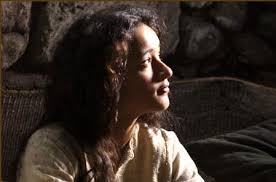
Mary learned that she was to be mother of Jesus when she was only a child herself. And all of the social implications had the potential to ruin her life.  I am sure, as she was being told by the angel that this was her destiny — doubt, disbelief, and dismay all ran through her. And yet what did she say in response?  Not, “Yes, but…”  Not, “Oh no!”  Not, “Do you have any idea what this will do to my life, for that matter my reputation?!”

She did not question it or seek clarification.  She said only, “Yes.  Blessed is she who has believed that what the Lord has said will be accomplished.”  She believed.

Two thousand years later the Church is made uneasy by conversations about the role of women.  Today, if they could change it, I wonder who “the Church” would choose to be the first to know of the Savior’s coming?  Who would the Church choose to be caretaker of the babe?  

When Rachel Held Evans said recently on her blog, that she doesn’t really know what a feminist is, I was mildly surprised though I think she was kidding, kind of.  The truth is that in the Church we don’t talk about being a Christian feminist.  The words are laden with ancient history and pain, not blessing.  With the climate surrounding even the idea of feminism in the Church, it begs the question:  What do you mean when you say you are a Christian feminist?

I did not think of myself as a feminist for a very long time. Slowly I have gained confidence in my understanding of what I mean when I call myself a feminist, but my path of discovery has been bumpy. For years I did not really know what to call myself.  But it became clear that I needed some way to make it unequivocal what I believed.  If I was going to stay in my evangelical church, I had to figure out how live with myself and learn to defend my view that God meant women to fully use our gifts and talents in the Church. I needed language that was clear.

For years I asked everyone else to tell me what they believed. I wrote many letters to my pastor asking for his thoughts, ideas, book recommendations, and for suggestions of people to talk to.  My thoughts developed in a fractured way and I had a fearful and insecure tone.  Always being put off, I became concerned that I needed to adjust my attitude.  I “worked on my attitude” because I was being sent the clear message that I was wrong. I continued to study, but I just could not let go of the fact that there were no female teachers at my church and that eldership was restricted to men.  Coming out of a Presbyterian background this was a step backward in my mind.  I had been an elder at my last church.  Every time the elder nomination process started the pain — the wound was scratched open.

When I asked why there were no women teachers I was told that teachers will rise organically.  To me this was short sided and underestimated how important it is for anyone, but especially women, to be celebrated, mentored, cheered, invested and believed in with whatever gifts they have.  Women and girls are less likely to put themselves forward and rarely self-promote. And, when the church doesn’t have models of women teaching and there is thousands of years of church history one is going up “against” it is a rare person who is able to stand up say “I have a gift!”

When I wrote my elders (all men) and received a lengthy letter in reply, they said they really do agree with me.  But I needed to know how difficult it is to change things and it hasn’t been looked at in more than two decades.  I was told that the likely controversy that would arise out of changing this was more than they were prepared to address at this time.  Clearly they are afraid to talk about the issue of women, fearing it is too divisive. Did you catch that, they actually agreed that it was time that women were teachers and elders but it’s “too hard to change.”  What kind of a message is that sending?  That women and girls are not important.   

This apathy and fear will produce a whole new generation of ignorance and is another reason why we must talk and write about it.   It is gravely sad for me, as I raise my children in the church that so many men and women have no idea that there is any theological debate about the role of women in the church.  The these things are up for debate.  That there is more than one biblical perspective.  My own daughter looks at the status quo and listens to me and shrugs saying “Mom, why are you always on about women’s rights?”  Even with her own mother trying to teach her differently she thinks what she sees and experiences is the way it is supposed to be.

Leaving is not the answer.  My friends outside the evangelical church tradition just shake their heads at me asking: “Why are you still there? Come over here where you will be valued and appreciated.”   While it is true that most people at my church just don’t want to think about it and it would be easier to just leave, I don’t for two reasons.  Firstly, yes I am a feminist, but I am a Christ follower first and when my feminism rises above that in my life then I believe it is an idol for me.  Secondly, I continue to be spiritually challenged. This issue does not totally hamper my ability to learn and receive from my church. So I remain, believing that perhaps I am supposed to be there.

But there is no getting around people’s strange ideas about feminists.

Here are some of the generalizations I run in to:

  • Feminists all hate men and are angry!

That is just not true.  Let me give you an example of how hard it is.

We are studying attributes of God at church.  Commenting in a small group made up of ten to fifteen men and women that we meet with weekly, about my perceptions of God as Father, I tried to talk about the fact that my perceptions are skewed and harmed by my relationship to an angry and abusive human father.  As I stumbled over my words, trying to be as clear as possible (I really hate thinking out loud and find it challenging) and trying not offend anyone, the men in the room seemed to physically recoil, as if I was saying that I hate men.  “Do I want the men to all leave?” one of them joked.   I found myself saying “No, of course not. I don’t hate men.  I don’t, obviously, hate my husband for being a man.  I just don’t find it helpful that God is characterized as father/male when my experience with my father was so difficult.” 

I think it is absurd the pretzels we have to twist ourselves into trying to explain ourselves sometimes, because people think of all the negative generalizations about feminists.   But that is because of the lack of women willing to speak out about their experiences. And the current climate surrounding the role of women in the Church makes it hard for women who label themselves as feminists in the Church.

  •  Feminists are offended by any song or creed with male pronouns.  

I have been there. When I was first on this journey everything hurt, male pronouns especially.   Gratefully I have come to a place where male pronouns in ancient hymns no longer offend me but I do notice them, every time.  I find it unfortunate that we have to be distracted by this while worshiping God.  I don’t choose to be offended, I just notice it.

And scripture readings still give me a twinge – though I know (because I also read the inclusive translations) which of the verses are strictly and only written to men and which (most) are referring to people.

I do that extra work because it is meaningful, and crucial to me. 

  • Feminists are just out for power.

Questioning the Church’s ancient rules isn’t about power.  These are things that need to be questioned.

Based on a recent e-book written by Scot McKnight, I have concluded even more strongly that my desire to know scripture for myself is important.   “Sometimes it takes extra energy to get a silenced voice back.” Scot McKnight wrote in is riveting essay Junia is Not Alone.  “There is no evidence … in ancient manuscripts or translations” that Junia was a man.  “The church got into a rut and rode it out.”  A rut is kind way put it — more like a stinky hell-hole in my opinion, if a woman was completely cut out of the story in scripture and most people in the church don’t know. 

What else are they interpreting or changing?  We have an obligation to study if for ourselves.  The reality is that the Church needs women’s  voices.   It is wrong that our children growing up in the church not learning of the many incredible women in the Bible.  They are growing up to watch, and listen, and see all that isn’t there.  And yet it is there and no one told us.

Together we can re-imagine Christian Feminism.

  • Men and women, use your platform and speak!

Things are changing.  There are many and varied platforms for people to educate themselves if they choose to.  The internet has opened up the world for us.  Gratefully, one can jump on FB or twitter and instantly feel connected to others.  Blogs are another incredible resource for connecting with intelligent and inspiring women and men willing to engage in these important topics.

As society has changed and women’s opportunities have expanded, as women have gained responsibility and influence (and dare I say power) in the marketplace, sadly the Church remains static and seems to have a narrow view of women’s potential.  For a thousand years, the belief was held that women were not included with men as image bearers of God.  Though the church has mostly abandoned that idea, they have not abandoned the authority structures that perpetuate the subjugation of women.

An important part of my development as a feminist, and my spiritual maturation, was forgiving the ancient church fathers and the current ones (though this is harder for me) for this divisive and ugly interpretations of scripture that damage and harm women.  I had to take my pain to God for “allowing” these practices to exist, ones that limit, stifle and repress women in the church.

Blessed is she who has believed that what the Lord has said to her will be accomplished! – Luke 1:45

Rachel Held Evans, who I mentioned above, is a firecracker commentator on the current climate for women in the church.  She recently posted 13 Things that Make Me a Lousy Feminist.  What I like about Rachel is that she is courageous and willing to use her platform.  She stirs the pot, but her blog has respectful conversations.  Her tone is winsome and she laces her thoughts with humor, forcing us to think about our own inconsistencies.  And she receives some crap from people, but she is learning to put her opinions out there humbly and then listen to others.  That is a quality of a Godly leader.  I read with her list and reflected on what it means to me to be a Christian feminist.

These are (some of) the things I wish others understood about being a Christian Feminist.

Being a feminist is complex and is as different for every person just as is being male or female.  It cannot be summed up easily.

For me at least it means that women should have equal opportunities at home, at church, and in their professional lives.

Christian feminism is to me is the crazy belief that women and men are both created in God’s image and that each deserves a life of freedom and opportunity inside or outside the Church.  When the church’s systems keep that from happening we should speak up and challenge them with grace and aplomb knowing this may take years, even decades, to bring change.  It will certainly take patience, prayer, and perseverance.  It will take a loving yet persistent voice.  It will require us to build relationships with and trust and respect from the leadership structures. That too takes time.  I have not achieved this yet in my church and I have been there for ten years.  But I remain hopeful.

  • We all have a role to play.  We are all necessary.  We all have a voice. We must take every opportunity that we can to share a positive, healthy perspective of feminism.  Women and men have a job ahead of us to change the opinions of others who do not understand what it means to be feminists, who are Christians.
  • Being a feminist is a mindset and worldview.  Anyone can be a feminist – men and women.
  • There are feminists who are decidedly feminine and those people actually might have more access and a voice in the Church than the stereotypical hard-core militant feminists.  (While I am no princess, I sometimes wear makeup and I shave my legs, these things are not the antitheses to being a feminist.)
  • While one can be a feminist and personally opposed to abortion, taking away a woman’s right to choose is an inherently anti-feminist position.  I know that is controversial, but I would push back and say that human rights and dignity should be heralded at the beginning and end of life, each are a life and the position of many in the Church on death row executions is equally murder in my estimation.
  • Making sexist comments against men, in favor of women, is un-feminist and only enforces gender stereotypes.
  • We must respect others choices. There is nothing wrong with the choice of being a stay-at-home mom and the male in a relationship be the breadwinner.  That is what we have chosen right now and it came with a high price for me.  But those that choose this admittedly very traditional lifestyle must also respect those with both spouses working outside the home or those that choose to have the man staying at-home and a woman being the breadwinner.  These are all options that are good and different for each family.
  • Work in any area of life should be based on talent, skill and passions as well as spiritual gifting.  This goes for everything from cleaning the house and mowing the lawn at home, to leading and managing teams, to teaching or ministering to others.    That said; don’t give any woman a job or a role, because you need a token woman. Do it because she is good at it.  Always work hard to find the best person for the job but know that in order to reconcile the injustice of institutional sexism and racism, work even harder to be sure that women and minorities are represented.   Like someone said “we’re all trying to be successful within a hierarchy of privilege.”
  • I took my husband’s name, but only because I was tired of having my father’s name.  Women should be able to choose their name without feeling slammed from both ends by their choice.  I want my own name but there isn’t a way to achieve that currently and I don’t have a solution for it other than make up or choose a new name.

These are just a few of the ways that I have felt misunderstood as a Christian feminist.  What have you run into?

It’s hard to talk about injustice anywhere, but especially in the Church, without others developing a posture of fear and defensiveness and even condemnation.  I would simply ask that the next time a woman raises an issue or talks about their experiences as a woman in the church, try to remember a few things.

  1. They may be in pain.
  2. They may not have worked out exactly where they stand.
  3. They may not have a full biblical worldview developed.
  4. They may not be able to defend their position.
  5. They may just want to be heard, understood, and loved.

Let’s respect one another’s differences, ask questions, and be open to change.

Our Lord came into the world in the womb of a young girl.  This teenage child was entrusted with the care and development of God himself, in the form of a babe.  She was told “You are blessed” and she believed she was!  Her faith was huge.  Her role was incredibly important.  The church today seems so caught up in what women and girls can’t do.  Let’s enlarge our faith and ask what can we do?  What are we being called to?

Another blogger that I love to read recently said this:

“It’s always befuddled me that people could think of women’s standing in the church as some sort of unimportant secondary issue, something to be held loosely and regarded coolly. Do we not realize that this has a significant personal impact on more than half the church?  Do we not acknowledge that the limits we do or do not place on women impact ministry efforts, evangelism and world missions? Do we not consider the implications this has for women’s understanding of their standing before God?   (Not to mention men’s understanding of a woman’s standing before God–and before them.  Ideas have consequences, and the consequences of subjugation tend to be ugly, like the thistles growing up in the field, hindering the work God has for us to do in the world.)”  — Jenny Rae Armstrong

I believe it is imperative that all believers in Christ (individually and corporately with whatever power and influence each has been given) learn to speak about the injustices that plague humanity — war, poverty and hunger, and sexism and other forms of prejudice, bigotry and racism.  And the next time someone wants to talk about women in the Church how refreshing it would be if we were open, embracing and full of love.  

Ask yourself, “Blessed, is she?”

“Blessed is she who has believed that what the Lord has said to her will be accomplished!”  Luke 1:45 NIV

We can no longer take their word for it. [A response to Scot McKnight’s Junia essay]

“Greet Andronicus and Junia, my kinsmen and my fellow prisoners, who are outstanding among the apostles, who also were in Christ before me.”–Paul writing in Romans 16:7

This is life affirming and beautiful, I thought, as I read  for the first time in my life (and after having grown up in the church) that Junia, the apostle in the New Testament, was actually a woman.  She was “outstanding among apostles.”

The lack of women in leadership in the church is a tragedy. The Church needs our voices. As I try to advocate for how difficult it is to be a woman in the Church and not have our stories told more easily and readily.  I talk about how wrong it is to have our children growing up in the church without being taught about the many incredible women in the Bible.

Our children, and women are growing up to watch, and listen, and see all that isn’t there.  

And yet it is there and no one told us.

“Sometimes it takes extra energy to get a silenced voice back.” Scot McKnight wrote in is riveting essay Junia is Not Alone.  “There is no evidence  …  in ancient manuscripts or translations” that Junia was a man.  “The church got into a rut and rode it out.”

A rut is kind way put it — more like a stinky hell-hole in my opinion!

When I was young woman studying for the first time in university, I was expected to take a bible class at my Christian liberal arts college.  For the first time in my life, I learned the fact that scripture was translated from other languages.  I didn’t know that.  (Perhaps I wasn’t paying attention.)

As I reflected on this, my passion to really understand scripture grew!  I wanted to study these texts for myself!  As I began I noticed there’s a lot left to one’s interpretation.  I began to wonder why I should just  blindly trust or believe someone else’s interpretation or opinion?  The longer I studied the more conscious I became.   I saw that my bible professors were all male, the bible translators were male,the  authors we were reading were male, and pastors are male.

Hey wait a second?!  I started looking around the church and realized everyone in authority is male. It’s a slow waking up sometimes to justice and truth, especially when you are questioning what you have always been told and injustice as you begin to see it.

Although unsettled, I didn’t really develop an understanding of the priesthood of believers and what equality in Christ means until I was in my late thirties.  My bible professor had actually discouraged me from further language study saying “What will you do with it?”  And it has been a strange and painful path, because I now know differently.  I have found people who are writing about egalitarian ideas and I do not feel so crazy or alone.

Actually often I feel very crazy and very alone which I suppose is why Scot’s essay struck me between the eyeballs.  Junia is not alone.  I am not alone.

I go back to my evangelical free church where women never preach.  And women can’t be elders. And they won’t really say publicly what they believe about women — too controversial and divisive.  And my church is open-minded.  They care about women and work to have women on the platform singing and playing instruments.  They do not restrict women from serving on committees and women definitely outnumber men in participation in the church I was told.  There are even a few women pastors who manage program areas although they cannot be ordained.  So why should I have a problem?

What is my problem?

It’s clear to me that my pastor’s (who I love and respect) don’t read books by women, don’t study commentary by women, nor have trusted advisors who are women (except their wives, which is cool if they actually respect them and the women speak up for these things), nor do they appear to have major influences on them who are women.  How do I know?  They never quote women, or suggest books by women.  And I think this matters.

Reading about Marie Dentière for the first time I felt angry for her and I often feel like her, as McKnight described “her tone was preachy, her mood was argumentative, her hermeneutic was clearly liberationist, her biblical knowledge vast…”

Screech.  Halt!  No my biblical knowledge isn’t vast.   I had never even heard that Junia was a woman, rather that she may have been but it was unlikely.  I could not tell you the stories of almost any of women listed below.  I am a simple person.

I believe in Galatians 3:28  – – that it liberates women to use the gifts God gave us!  God gave me this gift of putting words together compellingly, compassionately, and sometimes even clearly.  When Scot McKnight asks these questions I want to shout AMEN!

“Why the silence on the stories of women?

Why are men and women so obsessed with studying

the subordination of women?

Who says translations are not political documents?”

Halle-fricken-lujah Scot!  That’s what I’ve been thinking and saying all along, even with my ignorance and lack of theological study and lack of penis.

I am challenged by what he says.  Women need to study for themselves.

We need read the Bible for ourselves.  This almost sounds  silly to write because in the 21st century it is so obvious — duh, read it for yourself!  But it is not so in the church!   I am challenged to look up every single woman in scripture, now with several translations open, and a suspicious mind (already had that) to see what those women actually did.  What was their role?  How did God gift them?  If scholars and translators have been able to turn a woman into a man just because they said so, what else might they possibly have done?

These are a few of the women I jotted down from Scot’s article… Many of which I have never heard talked about or have just briefly referenced in Church.

Huldah famous prophet that helped provoke israel’s revival 2 kings 22; Miriam the prophetic national music director; Esther the dancing queen; Phoebe the benefactor of Paul’s missions probably the first to read Romans aloud in public. The first to defend and commentate on Romans. (Scot asks “Why the silence of woman commentators on Romans?”; Priscilla the teacher of Apollos; Rebekah mother of Jacob; Ruth; Esther; Mary mother of Jesus; Phoebe was a Deacon, not “deacon”; Shulamite woman in song of songs; the Proverbs 31 woman; Deborah;  and finally Junia  (married to Andronicus) was “outstanding among the apostles.” Romans 16:7

McNight says that all early translations of the New Testament translated Junia as a woman. From Tyndale to the last quarter of the 19th century, Junia was a woman. Then Luther played an important part in turning her into a man.

“Look at Junia in several translations:

  • NIV 2011: Junia was woman, but apostles unclear about their opinion of her. “Outstanding among the apostles.”
  • ESV: Junia may be man.  May be messenger.
  • CEB: prominent among the apostles.
  • NRSV and Holman Christian Standard Bible:  MIX the options.”

(Noted from Junia is A Woman by Scot McKnight)

Peter the Apostle said: “In the last days our sons and daughters will prophesy.”  And he said, “Even on my servants both men and women I will pour my spirit.”

My conclusions:

  1. Always look at more than one translation for any and all references of women in the bible.
  2. Never blindly trust what you are told about interpretations.
  3. Study it for yourself!  If we don’t we have no one to blame but ourselves.
  4. And personally, God gave me this gift of putting words together compellingly, compassionately, and sometimes even clearly.  I need to write about women.

Yes, it is sad that we have to do this for ourselves but if not me or you, then whom?  It is clear that we can no longer take their word for it.  Also, it is redemptive and life affirming.  Just as this essay by McKnight was significant for me, so will the other stories of women in scripture be on the future church!  It will be a call, a challenge, a cry for the girls and women and men who do not know the truth.

It is our challenge, our obligation, our honor to tell these stories.

May it be so!

————-

Scot McKnight is a recognized authority on the New Testament, early Christianity, and the historical Jesus. He is the Karl A. Olsson Professor in Religious Studies at North Park University (Chicago, Illinois).