I cannot believe how insidious envy is. As we are in a time of learning about the power of our possessions in our life this is particularly clear to us, to me. We are learning what’s most important and who our money ultimately serves.
As you list out how you spend it is startling to see your priorities. Sad. Even embarrassing at times. Self serving much?
Okay not always. There are admittedly many good things that our money is applied toward — ongoing, frequent requests at church to help those with less, extra scholarship money for public school field trips for the kids that can’t afford, the bonus $5 at the grocery store for whatever cause they are raising money for or the extra bag of food for the shelters. Public Radio. Our church. World Vision child. Compassion International child. There are lots of ways to give in our culture and it feels pretty good.
But still. I envy.
Envy is something innocuous. Invisible. Like a vapor. Of the heart. And the mind. Originating in the soul.
I read an email vacation message yesterday that said: “Someplace warmer.” Envy. I am not there, that someplace warmer.
“Beautiful jacket” I tell my friend. Envy. Mine is from St. Vincent’s is already pilling. And it is not even close to being “this season.”
Vacations. Nicer cars. Newer stuff. Season tickets to whatever.
Things. Activities.
Envy. Envy. Envy.
It’s a constant pull. And, possibly because we’re older and are beginning to make wiser choices apparently so they tell us, our children “suffer” for our wisdom.
We put 15% of our budget into retirement. We haven’t been on a vacation with our kids for three years (since we stopped using our credit cards frankly.) We limit Christmas presents and birthday presents. We no longer (I no longer) shop for entertainment. We haven’t bought furniture in years, though ours is “trashed” by our cats and kids. I have a nice car (Tom’s belongs to work) and still, I look at the car I wanted, seeing it everywhere, wishing I had the sun roof, leather seats, V6 engine, and a GPS. Yes, two years after I bought my beautiful almost new Honda Accord I still wish I had upgraded it to to have those features. Will I ever be content? That is envy. That is it right there in its ugliness.
The insidious cancer of the discontented my pastor called it.
And yet, reading in 1 Corinthians 13 in the New Testament this morning it says (the Mel paraphrase):
Won’t you just do love, it is what is most important. Those “spiritual” things that you act like are so important — they’re not. Devoid of love, they are nothing.
Even more important than faith and hope, love is what I want you to do. Because to love the people in your life is to be patient and kind in your responses to them. Not irritable. If you are loving you are glad when truth wins, whatever that might be. Love never gives up or loses faith. It is always full of hope, and can endure every circumstance.
Love is not JEALOUS. It doesn’t boast. Don’t worry about what others think of you or about what makes you look good!
It is the opposite of self-glorification. It is humble. Love does not demand its own way rudely. Love does not keep a record (even in your head) of being wronged. Love is not happy at injustice.
Love is your highest goal.
Not all that stuff? No. I haven’t achieved that. Thankfully Jesus also said in 2 Corinthians 12:9
“My grace** is enough. My power perfected when you admit you are weak.”
Thankfully I don’t actually do. He does it in me. And he is perfecting me more every day as I wake up to his priorities. His focus. His purpose for us all.
———-
** If you don’t know what GRACE is, you should look it up. It’s pretty amazing. And it is what Jesus gave us as a gift.
I don’t know why that is so important, except that it is — blue — today. And I would have missed it, if I hadn’t looked up.
There are so many days when I don’t. Because it usually looks like this.
How often do we miss out on the amazing beauty in our life because we just don’t look up?
“What if we believed in the deep places, the darkest recesses, that God always provides — and not barely, but abundantly? Wouldn’t we always be at peace — no matter what? What if thanks in all things actually could be easy — because we believe that God always gives us the thing we exactly need? What if gratitude was as natural as breathing, because we knew in our bones that the air we breathe is grace? (… A Holy Experience)”
We are having an ongoing discussion in our house about “Needs vs. Wants.”
Do we need cable? Do I need books of my own or will the library suffice? Does my daughter need rain boots or want them? Why won’t snow boots work in the rain? Do we need Ezekiel 4:9 Organic Sprouted Whole Grain bread or just want it? Are we desperate for fizzy water (what we call mineral water in our house) or can we live without? Does the cat need a new collar when her old one works perfectly well? My daughter is concerned that she (the cat) got her feelings hurt because she received the dead cat’s collar. Hm … Does Tom need seven or eight guitars, even if they are a knock off brands from China? But you see what I mean? And that’s just scratching the surface.
“Your Father knows the things you have need of before you ask Him” (Matt. 6:8).
“My God shall supply all your needs, according to His riches in glory by Christ Jesus” (Phil 4:19).
I think we have many different motivations for making change in our lives. It is smart or prudent or loving or generous or “the adult” thing to do. I’m thinking of money and resources now, all the stuff of life. To begin to make those choices because it is all God’s anyway, well, that’s a whole other league of maturity. Dang, why is it so hard?
What I’m talking about here is complicated.
Our motivations. Why do we think we need all this stuff? Cable. Books. Rain boots. Gourmet food. Stuff for the animals. More than one of anything? Yes, I have money on the brain.
But it is more than that. It’s about being discontent on a deep, cellular level. My pastor called it a cancer and I think it really is.
If you have spent time overseas or simply in a different less abundant and materialistic culture you likely were floored by how great that was. For me, a summer pared down to a forty pound backpack was still more than my Russian students had. I seriously never wanted to come back to America. I felt for the first time an incredible freedom from caring about the things that are so important in America.
I believe. I believe that God will care for me all my life.
Not that good things will always happen to me or that bad things won’t. Rather that in the midst of life and its icky messes God is here and he loves me. I’ve never had the courage to read the book of Job all the way through because I’ve always thought that if I read it God will think I’m ready to live it.
I have never felt persecuted. Even in the midst of my father’s illness and mother’s illness going on at the same time. Even with major depression not receding no matter how much effort and work I spent on it. Even needing medication and finding out I was pregnant. And then losing the baby. Losing my father. Helping my mother get into recovery. Already struggling with my own addictions. Even in the midst of all that — which I found myself recounting to a friend the other day — I believed. Deep down I believed God would care for me.
I’m reading, slowly as it applies, The Women’s Bible Commentary. (see desc. below) As I was reading about the Psalms I read this:
“Those who speak with complete candor in the presence of God, those who articulate their doubts and their pain as well as their trust in God are all included among the faithful in the Psalms. Women who have been taught (like children) to be “seen and not heard” in relation to faith and religion should notice that the very act of putting anger, impatience, and frustration into words often enables the speakers in the Psalms to come to a renewed sense of assurance in God’s continuing care. The confessional stance of the Psalmists (their willingness to articulate feelings of anger and pain as well as joy in the presence of God, their refusal to submit passively to oppressive circumstances, and their confidence in God’s concern for their needs) has had and continues to have a significant influence in shaping the theology, the piety and the lives of many women.”
This has been my experience. I think this is why during all of that which I listed above the one thing I was able to do was cry out to God. Many times by writing but also with friends, and in prayer or through reading Bible, especially the Psalms. My bitterness toward my parents manifested in depression, low self-esteem, alcoholism … My poetry is so real because it came from that core.
When I first wrote it was God cleansing and healing me. A secondary result has been how my words have helped others — perhaps jog a mind or heart to circumstances between themselves and God. That was an unexpected delight.
Do you believe God will care for you, abundantly?
If you aren’t sure cry out to him. He listens. He is good and he is our Shepherd. (John 10) This section of scripture describes the most incredibly loving relationship between Jesus and people. He calls his sheep by name. The sheep know his voice. Jesus is the gate for the sheep. Whoever enters by Jesus will be saved and will come in and go out and will find pasture. The thief comes to steal kill and destroy. “But I came that they may have life and have it abundantly!”
Write thy blessed name, o Lord, upon my heart, there to remain so indelibly engraved, that no prosperity, no adversity shall ever move me from thy love. Be thou to me a strong tower of defense, a comforter in tribulation, a deliverer in distress, a very present help and a guide to heaven through the many temptations and dangers of this life.
— Thomas a Kempis
I want to be content. I want it to be true of me. All I need is my pasture. And the Good Shepherd calling me by name.
Be well, Melody
I highly recommend The Women’s Bible Commentary if you preach or teach, especially if you’re male. It will give you a perspective that you cannot possibly have since you are not a woman.
From the back of The Women’s Bible Commentary — an outstanding groups of women scholars introduced and summarized each book of the Bible and commented on those sections of each book that have particular relevance to women, focusing on female characters, symbols, life situations such as marriage and family, the legal status of women, and religious principles that affect relationships between women and men. (It also has a huge bibliography!)
“I went to the woods because I wished to live deliberately, to front only the essential facts of life, and see if I could not learn what it had to teach, and not, when I came to die, discover that I had not lived.”
— Henry David Thoreau
For many years now Tom and I have felt like we’re playing the Game of the American Dream.
Although it looks perfectly delightful on the outside, the conspicuous consumption of our lives keeps us awake at night. It’s no secret that we must make pretty good money, since I don’t have to work but we’re not even very careful with our money. We know we are lucky to have a such a good income and we have our retirement funds, and because of his business we’re insured up to our eye balls. But at the same time have no short-term savings and live month-to-month. And we’ve gotten ourselves in trouble a few times wanting a vacation or bedroom furniture or to build out a studio and putting it on credit because we don’t save for those eventualities.
I shop compulsively — like I do so many things — with more than twenty years of bad spending choices and not living deliberately. I confess to my own addictive spending habits which have taken years to reform and I must say I am not fully there. It has been an area where I have had a two-fisted grip on that “need” to have things and this is something God has slowly wrestled away from me one finger at a time.
In 2008 we decided enough was enough and with the help of a family member stopped spending on credit (for good we hope) by getting a personal loan to end the endless high interest chase of debt. And we are paying that off at low-interest over several years. So far, as it comes to credit, we are reformed.
But we are continuously asking how do we live more deliberately?
We have begun to ask each other hard questions about cultural expectations, the influence of media on our world view and our children’s minds and souls, asking what is “life-giving, important, and meaningful?” and how should that change the way we spend our money. A recent series at church on Generosity (aptly titled Let’s Get Fiscal) has also had interesting timing for us. And right in the midst of this sermon series and our personal discussion and prayer about fiscal irresponsibility and generosity we had someone in our life that really needs our financial help. We have to face that we don’t have money on hand to help. Because of our financial irresponsibility we cannot help someone that we love and whom we want to help. That hurts and convicts and fits right in to what God’s doing. The timing is striking and as we have sought to listen to God, because he is clearly speaking to us. The sermon series told us startlingly that 3.6 billion people in the world live on $2 or less a day. (Passing the Plate, by Smith, Emerson and Snell) And I heard recently on NPR that more than half of the Egyptians now protesting for a better life live on $2 a day.
As Jesus was starting out on his way to Jerusalem, a man came running up to him, knelt down, and asked, “Good Teacher, what must I do to inherit eternal life?” “Why do you call me good?” Jesus asked. “Only God is truly good. But to answer your question, you know the commandments: ‘You must not murder. You must not commit adultery. You must not steal. You must not testify falsely. You must not cheat anyone. Honor your father and mother.’e” “Teacher,” the man replied, “I’ve obeyed all these commandments since I was young.” Looking at the man, Jesus felt genuine love for him. “There is still one thing you haven’t done,” he told him. “Go and sell all your possessions and give the money to the poor, and you will have treasure in heaven. Then come, follow me.” At this the man’s face fell, and he went away sad, for he had many possessions. Jesus looked around and said to his disciples, “How hard it is for the rich to enter the Kingdom of God!”This amazed them. But Jesus said again, “Dear children, it is very hardf to enter the Kingdom of God. In fact, it is easier for a camel to go through the eye of a needle than for a rich person to enter the Kingdom of God!” The disciples were astounded. “Then who in the world can be saved?” they asked. Jesus looked at them intently and said, “Humanly speaking, it is impossible. But not with God. Everything is possible with God.” Then Peter began to speak up. “We’ve given up everything to follow you,” he said. “Yes,” Jesus replied, “and I assure you that everyone who has given up house or brothers or sisters or mother or father or children or property, for my sake and for the Good News, will receive now in return a hundred times as many houses, brothers, sisters, mothers, children, and property—along with persecution. And in the world to come that person will have eternal life. But many who are the greatest now will be least important then, and those who seem least important now will be the greatest then.g” (Mark 10, New Living Translation)
Now more than ever, we are thinking about living intentionally and thinking it through carefully. What we do and how we do it impacts, or should, how we spend, how generous we are, how we are able to make choices deliberately and carefully. A recently blog entry by Rachel Held Evans talked about our purpose and essential living in this way:
“It seems to me that there are all of these voices telling me that I need certain things—privacy, boundaries, a 3-bedroom house, a two-car garage, clean neighbors, cool friends, fashionable clothes, TV, junk food, exercise equipment, a plan, a religion, a career, certainty, approval, stacks and stacks of books, and lotion that gives my skin a healthy-looking glow. Rarely do I stop, take stock of how I spend my money and my time, and ask myself—Do I really need this? Is this really essential? What is its purpose?
The ambitions we have will become the stories we live. If you want to know what a person’s story is about, just ask them what they want. If we don’t want anything, we are living boring stories, and if we want a Roomba vacuüm cleaner, we are living stupid stories. If it won’t work in a story, it won’t work in life.
Why do I write about this? I believe it is a defining sin — conspicuous consumption and the love of money. It is a lack of contentment — my pastor calls it a “cancer of discontentment.” He also reminded us of the prayer of Agur in Proverbs 30. It says:
Surely I am more stupid than any man, And I do not have the understanding of a man. Neither have I learned wisdom, Nor do I have the knowledge of the Holy One. Who has ascended into heaven and descended? Who has gathered the wind in His fists? Who has wrapped the waters in His garment? Who has established all the ends of the earth? What is His name or His son’s name? Surely you know! Every word of God is tested; He is a shield to those who take refuge in Him. Do not add to His words Or He will reprove you, and you will be proved a liar.
Two things I asked of You, Do not refuse me before I die: Keep deception and lies far from me, Give me neither poverty nor riches; Feed me with the food that is my portion, That I not be full and deny You and say, “Who is the LORD?” Or that I not be in want and steal, And profane the name of my God.
Tom and I begin a journey tonight, taking a Financial Peace University by Dave Ramsey. I don’t know where it will lead. I don’t know what God is doing. But I invite you to follow along, because surely, I believe, we are not alone. I am tired of this heavy and oppressive way of life.
Are you too suffocating from the weight of the “American Dream?” Are you burdened by consumption without knowing what to do about it?
I invite you to follow along and see what we learn.
I’ve thought a lot recently about the last decade.
How quickly it evaporated. If you mark your life by major transitions a big one was in 2001 when I quit full-time work at InterVarsity. In the years since I have grown up — as in separated from my parents emotionally and allowed myself to grow up, mature, and even move ahead of where they were at my age. It was harder than you think. I have also fallen in love with Jesus, as never before and accepted the Grace offered to me freely. I pray for better understanding! I have begun to ponder life’s greatest purposes for people and more specifically me. And, I have found an emotional equilibrium of sorts — became a drunk & got sober. All this in a decade. Phew!
I can’t help but wonder — What will the next decade hold?
Sunday, we heard teaching on agape which is a different kind of love than the other three: eros, storge and philios. Agape is completely motivated in one direction.
I struggle with love. Not loving others, that comes easily for me. Even the kind that goes only in one direction. And I want to be the sort of person that doesn’t need to have something in return. But the example I grew up with made it difficult for me to believe others really love me. I’m afraid that my parent’s example was always doubting others’ love and rarely trusting anyone.
I didn’t learn that people can be counted on. My family legacy is one of anger and record keeping. I am breaking that cycle but I still don’t really believe that I am lovable. My Doc says if I would just “find confidence within myself” I wouldn’t need him any more. “The root of all my problems” is my lack of confidence. (Of course he also tells me not to take the things he says out of context, which I have completely done here.)
But I do think — have thought for some time — that if people (if I) could learn to love others in this way — agape — we (I) would be ultimately content. And happy.
Where I get into trouble is my need. What do you DO WITH THE NEED?
I do honestly help others simply out of a wish to be helpful. These pears I dutifully checked for ripeness daily for three weeks for my neighbors, not out of a desire for anything but just to be helpful as they traveled. Stuff like that comes easily. But often, I know I am longing for people to love me. I am not motivated by it but it is there and can’t be ignored. Or maybe I’m just a nice person. Perhaps it doesn’t really matter that our motives are pure? If you believe 1 Corinthians then I think it does.
On the other hand, if I expect nothing in return because I don’t feel lovable that is not agape either. That’s something I don’t have a name for but my prayer is to stop that!
I want to become a person who is fully living out agape. Mother Theresa was someone whose life exemplified agape. Henri Nouwen. Many others. How do we become more like them in their loving others? I guess I’m gonna have to read C.S. Lewis’ Four Loves. If this agape is something that is really important, as important as it seems to be, then I need to understand it more fully.
Just thinking.
If this got you thinking, my church is doing a series on all of this and you can watch or listen online. Or, you’re welcome to come along with me some time. I can’t promise that they have all the answers but they do make you think. And obviously I don’t either but the journey is fun!
Be well,
Melody
Intense love does not measure, it just gives. — Mother Teresa
God has shown me twice this week, by marking time in my past, to show me how I have changed. When this happened I was blown away by how much God loves me, something I have long struggled to believe. And that in and of itself is so sweet. So good. I just sat in the moment, feeling precious. God loves me enough to show me the changes, the progress, the healing that has come.
When I fell into my first major depression in 02, I didn’t really know what was happening to me. At first I just sat absorbing the fact that I couldn’t think, or sleep, or make decisions, or read; I couldn’t do anything. It was strange. Foggy. A bit like being in slow motion. A ten-hour day at home with three small children didn’t feel like a day at all. It felt like a flash, because I wasn’t really conscious. I had no words to describe what was happening to me. Depression took everything.
Lost My Way
After five weeks stranded in this place, I finally told Tom that something strange was going on. And then my friend Carol, then at some point I told my parents. I remember sitting on my back porch talking on the phone to my father who had called. Of course he said he would cancel all his plans and come straight away if I needed him. He was good in an emergency. But I declined his offer knowing it wouldn’t be that pleasant nor likely to be helpful. And I don’t remember much about that conversation except saying “Dad, I just want to be happy. I can’t remember the last time I felt happy.”
Looking back today, from the perspective finally of joy and contentment, I have to admit that I never believed I deserved happiness. It wasn’t something on the conscious level or anything I thought about very clearly. But at a deep, foundational level I couldn’t remember happiness. And didn’t believe I deserved it. I would reach out for it sometimes. Usually that resulted in hurt because I did it in such needy or aggressive way. And more than how others treated me, my thinking about myself was so bad, so low; I had a deep hatred for myself.
I can only guess that this was caused by being yelled at so often and so unexpectedly as a child, young adult and adult. You knew it might come at some point, but you could never guess why he was mad or what you might have done. My father was unpredictable in his rages. Berating. Pushing. Demanding that you admit wrongdoing. Keeping at you, over and over again verbally — until you concede to him, whatever it was. The subject didn’t matter. You must apologize. You must ask for forgiveness, absolutely. Looking back, he was Psychotic.
And so, inside I slowly disappeared. Life was numbing and I was without opinion. Without question I began to do whatever he expected of me. And that too reinforces your own loathing. I was a classic under achiever, my one way of getting his goat.
Every once in a while over the years, the last time happened in the late ’90s, I would meet someone who seemed to see right through the walls and ask me “Why are you in so much pain?” It was if I was translucent and they could peer into my heart and soul in a way that I couldn’t even do any more. I just looked at this person who didn’t even know me, with shock and disbelief at what they saw. I felt exposed and yet I had revealed nothing. They felt the pain I had stopped feeling. It was horrible. And yet, looking back it was so important. Again, one of those markers God gives me to see how far I have come.
I worked for my father for many years. My reasons (I see now) were to receive his affirmation. And it worked, though I worked too much and became a workaholic. I worked unreasonable hours, had no boundaries between work and my life, and I had hardly any personal life until I met Tom. Even then, I really had trouble getting home for dinner, worked through lunches, lived and breathed work. I worked 150% and knew that I couldn’t fail, which was what I was sure was going to happen if I stopped striving, because it was my father’s reputation and his good will toward me that were hanging in the balance. His love?
It wasn’t until I had my third baby in five years and quit that life to be at home that it all came crashing down around me. Thank God it did. I say that because it began a nine-year process of finding myself , FINDING LIFE — Oh, the mistakes I had to make in order for that to happen. But hey, I was doing the sped up version of adolescent rebellion I guess. Growing, learning, expanding, reaching, feeling. Finally feeling. And it felt terrible, and good at the same time.
Nine long years. And in those years I found
Photography.
Writing poetry and thought put into words in general.
A study of the Bible and the power of prayer with faithful believing women.
I developed opinions, thoughts and ideas that originate with me!
I found gardening and theology.
I have been slowly overcoming of anxiety – mostly social anxiety which I get so badly even still. I really do hate that.
I have found joy. I’m actually glad to be alive.
I have found love from humans and cats,
And more important than any of this I have found that Jesus loves me. No really, he does and I never believed it. After the phone conversation with my father he sent me a postcard in a frame that said “You are the One Jesus Loves.” I was so uncomfortable with it that I buried it in a sock drawer for years. Long past when he died. I really couldn’t fathom it. Sunday, right before church, I found the post-it that he included on it which said: “And your father loves you too. Love, Dad. 7/02” (Yes, in the strange third person.)
I don’t want to die anymore.
I started smoking in that time, which was a slow suicide and last year I quit smoking.
I starting drinking, socially at first, and then heavily and began to abuse it. And I quit drinking over a period of three or four l o n g years. When I started to think about quitting, I thought I would never have any fun again. I actually thought that. No fun, ever again. I had no idea what true contentment and joy, even happiness was until I quit drinking, accepted my powerlessness against it, and faced the shit I had been so cleverly (or not so cleverly really) been avoiding.
When I was depressed I thought I would never be happy. When I overdosed, a small part of me must have wanted to live because I woke up and told Tom what I had done and I lived. But only a tiny piece of me still wanted life, mostly I still hated myself.
But it has been the process of becoming ME that has made it possible to consider forgiving my father and mother. I know I am a strong person. As I begin to want more from life, I can accept and voice what happened to me. Yes, my father had to die for me to have the courage.
This near decade long process made it possible for forgiveness. And it isn’t a short or easy road. Truly, it has taken all those years.
My first honest words expressed about my dad were in a poem called “Good Dad. Bad Dad.” It felt so risky, so bold at the time. After reading it again after all these years, I think I’ll post it here:
Good Dad. Bad Dad.
I shed no tears today
for the warrior who has fallen.
Taken down by Cancer's sword.
My heart is full of memories,
good and bad.
Good Dad. Bad Dad.
Constant worry.
Constant change.
Who could have foreseen
the Cancer overtaking his mind;
that became my liberation
in five short months.
The danger --
of loving too much;
needing tenderness,
and all the things Daddy's are supposed to be.
PAIN. FEAR.
Emotions jangling around me
like some kind of white noise;
pushing their way into my conscious thoughts.
Invaders, threatening to undo
the weak hold I've found on a Good Life.
So many memories
good and bad,
bad and good.
Who was he?  Why was he MY dad?
MY tormentor.
MY warrior;
Finally broken,
beaten by the cancer
that was to become my friend.
Betrayal,
these thoughts which plague me.
Broken;
the unspoken promise
to keep our secrets to the end.
How do I remember?
How do I stay true and honest,
when the Truth causes an ache
too strong to feel,
to face,
to bear.
Good Dad. Bad Dad.
Who was he in the end?
A demon? A saint?
Now simply a Muse --
remembered, but no longer feared.
Thought of
in furtive,
anxious moments.
Good Dad. Bad Dad.
Who is he to me now?
A man driven to despair
Living a chaotic, frantic life.
Not the Good Life I choose,
Not the legacy I will repeat.
Good Girl. Bad Girl.
Who will I listen to?
Who will I believe?
I am the woman I choose to become
today,
tomorrow.
These are the Good Days
that I can change.
Yesterday is Dead.
Burned in the funeral pyre.
Vapors
Mist
Dust settling around me.
Good Girl. Bad Girl.
Good.
Bad.
Good.
by Melody Hanson, 2004
So how does it work, to forgive a tormentor, an oppressor, an abuser? Does it mean taking someone’s anger and rebuke over and over again? I’ll never know if I could have stood up to my father? I have never met someone who did and stayed in relationship with him. That’s daunting.
Forgiving is “the opposite of ignoring and excusing. It is moving toward the offense.” And that’s been my path. Naming the pain. Drawing attention to it in my writing. My father’s anger and rages were ugly and dangerous and as a child I was constantly afraid of him. With some amount of distance – his death – and my personal work, I’ve worked to let go of it. But there will never be restoration and reconciliation because he has gone.
On the other hand, I’ve also experiences anger toward my mom over the years for her lack of action, defense of us and for shutting down. She also disappeared into health problems, depression, and eventually alcohol. But we, two fragile and broken people are working on a long healing process and I try every day to trust her and not expect or need her to change.
My pastor said recently about forgiveness: “Let go, open your heart, move toward the pain. Recognize the person’s humanity, their broken heart and sense of failure.” I can do that with my mom.
For the longest time I couldn’t have said that my pain and hurt belonged to my father. I had a blessedly complex relationship with him. I longed for his approval while at the same time had much hurt, anger and resentment for his controlling behaviors. I learned to be exceptionally passive aggressive and sarcastic because that was, I thought, the only safe way that I could express myself.
“Safe” is so ironic. I don’t remember ever feeling safe growing up. I was anxious, afraid, tense, doubtful, insecure, wracked with shame, self-loathing, and fear. Fear of the ambiguity of my home growing up — I actually said to a boyfriend “Treat me well or treat me badly. I don’t care. Just be consistent.” I longed for it.
But grace, coming from God in the life of Jesus and the sacrifice done for me — that’s changed everything!!! He takes the most broken and restores. Better put, he heals.
He makes like new but different, strong; his touch, attention, and gaze are profound. I will never be the same.
I have a new life. I have a life. I have started living. I have hope. I have joy. I may not ever feel loved by my human father …but I’m going to be okay. I don’t expect the way forward to be simple because as I grow God continues to ask things of me that are difficult.
Will you obey? Will you choose my path? Will you give such and such up? Will you forgive? Will you seek me? Will you be disciplined to know my words, the Word? Will you exercise because you know it helps your mood, and eat right? Will you pray? Will you have a generous heart? Will you sacrifice your desires for mine?
“Everyone says that forgiveness is a lovely idea until they have something to forgive.” – CS Lewis
Forgiveness of grave acts of injustice can feel like an abstract concept to those who have not experienced those acts. ( — PRISM magazine)
Sometimes I write, telling parts of my story, in order take what is anything but abstract for me and try to make it clear to others – to help my fellow journeymen (and women.)
My pastor said yesterday … that anger and the need to retaliate when someone has hurt you is “normal“; as normal as the reflexes a doctor checks when she taps on our knees during a check-up. Normal.
I hate that word. I don’t understand the use of it. It is a bit reckless to say anything is normal these days when people have such diverse experiences. But think I understand what he was trying to say — that a wish for vindication when you have been hurt is a healthy response. But even that doesn’t sound quite right. How about a human response?
But what response should one have to being hurt or abused or rebuked or shamed or yelled at? To retaliate? No, I think he means a human response to lighter stuff like being gossiped against is to strike back. Because when I think about my childhood, I think the healthy response is to shrink. One will cower. One learns to hide, to disappear, to not be the object of that person’s attention. Perhaps this response is not “normal” but it sure was “reflexive” for me. That’s why it is hard to hear that “wanting revenge is normal” if that is indeed what he meant.
Then, as I look back, I see that THERE HAVE BEEN TIMES when I wanted a sort of revenge with my father and mother.
I have carried fear of my father for as long as I can remember and an anger at my mom for not protecting us. And a kind of fury. I used to have rage dreams and on the really rare occasion I will have them still. But they are thankfully now years in-between.
The powerlessness that comes from having a father who never admitted he was wrong creates that anger and sense of worthlessness.
It is not worth trying to explain yourself.
It is not worth needing your own opinion.
It is not worth expending energy because nothing really matters. Nothing
really matters at all.
I am so glad I am past that.
It’s just too bad he had to died for me to come to this place. I carry a huge feeling of loss that I never knew a sweetness in my relationship with my dad. I loved him out of fear and a wish to please him. I know he loved me. But he just – couldn’t – help himself?
It is true he couldn’t help himself. I wish he could have let God help him.
I miss him now, as I ponder what could have been. He really was a dear man, loved by so many around the world who were his friends and never knew the secret rage inside him. I’m glad that many people didn’t know – in a way – because Dad accomplished many good things. Helped many people. Was loved by many.
God why did you take him so young? Sixty-two? I hope
it wasn’t simply
so I could live.
No, I don’t think God works like that.
It was simply a convergence of events coming together to give him cancer and take him home. And my ability to heal, to forgive, well I have to believe that I might have come to it even if my dad was still here. Perhaps it would have taken longer, but it would have come.
I have forgiven my father and then I think of my mother, who still has a story to tell. I don’t know if anyone would believe her, but she has so much in her life story that could be helpful to others. Surely we can’t be the only ones in this situation, caught between a person who does good things and has their secrets. A Christian leader who means well but whose home life isn’t right at all. But that, is her story. Perhaps one day I can help her tell it.
IN THE END what needs to be said is this.
Forgiveness is what each Christ follower is asked to do in response to the forgiveness Jesus extends to us. It is not easy. It can take a long time. It often depends on the emotional health of the person doing the forgiving. It always depends on all the factors surrounding the situation and each person has to sort that out, often with the help of a pastor or a counselor.
I have been in therapy of one sort or another, off and on, for almost twenty years! Wow, that’s crazy sounding but it’s true.
Pulling back the layers of pain,
the years of stagnation and lack of healthy growth as a human being,
the crazy mixed up ideas,
the strange perspectives and opinions picked up over the years.
The times of resisting and not being willing to obey God.
And finally coming to a point that one decides for themselves what to do — without the guilt or coercion of others, but in complete obedience.
It’s messy. It’s damn difficult.
But it is so sweet, when finally healing, forgiveness and the mercy of Jesus at the cross come down on you.
And you begin anew… and your story continues…
Where does rage come from?
I do not know and I have pondered my father’s strange rage for many years. I cannot pretend to have answers and obviously I cannot ask him. But I have a friend who works with incest survivors. She has a very special ministry. My father always said that he was sexually abused as a child, by a minister in his church. I never believed him. But I asked my friend about this and she said: “When a person admits to this as an adult, they are telling the truth. They have no reason to lie.”
No reason to lie. She also said very often anger like that comes from abuse in the past.
I don’t know if it is true but I cannot ignore this:
In Forgiveness: following Jesus into radical loving Paula Huston says: “Regarding the tender souls of children, Jesus says in a passage that can be read as referring either to young human beings or to “baby” Christians: ‘Things that cause people to sin will inevitably occur. It would be better for him if a millstone were put around his neck and he be thrown into the sea than for him to cause one of these little ones to sin.‘ (Luke 17:1-3) The roots of our adult sin patterns are often to be found in the still-gaping wounds of childhood.”
So my father was hurt as a child. And I was crushed by his pain and hurt, as he took it out in the form of rage and anger.
At some point we are each responsible to work through our experiences and get to a point of healing.
Again, from Huston,
“Then, and only then (after the process to be sure) we can see the other person as “a human being, no matter how degraded, a fellow soul made in the image and likeness of the God we adore.” (added by me)
God causes his sun to fall on both the good and the evil, and his rain to fall on both the righteous and unrighteous. (Phooey, I can’t remember the reference.)
The longer we shut up our heart against the one that has hurt us the closer we come
to losing our own heart,
our humanity,
even our life.
And for some even our minds.
These things happened to me in the form of depression, alcoholism, and self-loathing.
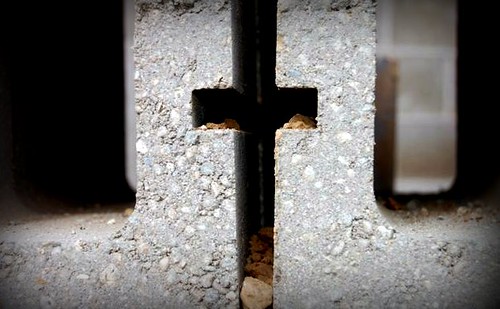
And so, for today, I just want you, the reader, to know that there is hope. It is found in Jesus at the cross if you will spend some time there. Lay those things down; the heavy burden of pain — close your eyes and picture** putting it at Jesus’ feet. Give it to God. Release it when you are ready and be ready for miracles.
MHH
** Some people have a hard time picturing things in their mind’s eye. If that is true for you I would urge you to watch the movie THE MISSION. That movie will give you a picture of your pain and lack of forgiveness as those heavy pieces of armor that the priest dragged up a water fall as penance. Whenever I begin to forget what my bitterness and anger, lack of forgiveness are doing to me, I can see in my mind’s eye that sack of armor. No one can live that way. No one should live that way. No one needs to live that way.













 Logic & Imagination