Why I am Afraid to Read the (entire) Bible

Here’s the honest and mortifying truth.

I have never read the entire Bible, whole.  I have studied various books at length, sometimes on my own but more often with a group of others.  But I have never opened the whole of the great book of God’s WORD, Old and New Testaments, and soaked it in as a grand story.  Of course, any “sheep” knows, don’t they, that the Bible wasn’t written to us but for us.  The Bible is not a handbook of do’s and don’ts, but rather a beautiful story which we can carefully apply to our lives.  And if we fear what it says, if we are unwilling to challenge and question it, we deserve to be ignorant fools (like I have been.)

I have never put my full attention, put my full brain, toward the Bible.  I have been afraid of reading the entire thing and these are my reasons.

I am afraid of my own ignorance.  I don’t know what I don’t know.  If I don’t know then I can continue stumbling in the darkness.  At least it is a familiar place, my ignorance.  Sounds dumb when you actually write it down.  But how many of us do this in the Church?  Far too many.

I am afraid of what the Bible actually says.  For too long I have simply listened to others and accepted what the “experts” say about spiritual things without really challenging any of it.

I am a frequently boiling pot, kept simmering by the cool head of Tom, my husband.1 He often keeps me from boiling over.  It seems that he will be doing this a lot as we began reading the entire Bible in one year – a challenge from our church they are calling: Eat This Book.

So I would add another point to my list of reasons that I have never the read the Bible in its entirety.

I am afraid of how I will respond to the Bible as a woman.  We all have a worldviews and as such, we read the Bible differently. I respond as a woman.  How can I not?  And that is different from my pastors (both male) and my husband, and most of the commentary I am reading.  As a woman I have different questions.  I am afraid of what  to do with those.  How do I sort out how much of my response needs to be talked about, questioned, and challenged?

On the other hand there is a lot that excites me about finally reading the entire Bible.

I look forward to diving in.  Already Genesis has perplexed me, made me extremely angry, and left me with more questions than answers when I look at it story by story.  I want to be able to see the big picture — to soar over the parts that jump out to me as problematic and see God and hear God, asking him what he wants me to focus on.   I look forward to how this Grand Story changes my life. 

Just last week, my pastor was preaching on Gen 1-3.  He was explaining a very important idea about how we look at scripture overall, which I mentioned already, that the Bible is not written to us but for us and that much of it is metaphor and poetry.

But then he highlighted the verses about man and woman becoming one.  Now I’ll acknowledge that it is beautiful, the whole picture of marriage.  But I actually thought it would have been more important (coming from my worldview, as a woman) or at least more valuable to women, if he had taught about how we are both, male and female created in God’s image.  To emphasize and thus explain what the Hebrew word ezer  (helper) actually means. These verses being misunderstood have diminished and hurt women.  He thought the other verses were more important.  We disagreed nicely by email.

I have to admit that how we interacted mattered a great deal to me and I’m learning that this is more important to me than me being right.   I shared my thoughts with him and he heard me.  I felt heard.  And this is a form of giving someone respect.

And so I would add another point to my list of reasons why I haven’t read the Bible it it’s entirely.

I am afraid of the disagreements among Christians.  I hate the way that Christians wrangle with one another over the baggage that goes into “being theological.”  Are you on the Left or are you on the Right?  Are you conservative or liberal?  Are you a feminist?  Egalitarian or a Complementaran?  A new Creationist or …. ?  I don’t even know all the camps of disagreement and I don’t want to.

I just want to read the Bible and get a little help along the way.

If you haven’t  yet, I’d encourage you to read The Blue Parakeet by Scot McKnight, which will help you rethink how you read the Bible.  Other resources I am finding helpful are the NIV Compact Bible Commentary and the Women’s Bible Commentary.  

The important truth is that I cannot allow my fear of my own ignorance, my fear of this faith tradition that I have followed my whole life, or my fear of disagreement keep me from the next step in my faith journey.

Being that I can be hot-headed, I just might say or do something stupid along the way.  And I would hate that but I cannot allow it to keep me silent.

A friend said to me  this week:  “I am praying that Jesus would guide you as you study His word.   May we always be in search for bringing glory to Him!”  Amen!  I suspect that I will be sharing more of this as I go along.

I wonder, have you read the entire Bible and if not, ask yourself what are you afraid of?    If we seek to follow Christ we are to live in the Bible today and every day.   The question is how?  Let us join together in our KNOWLEDGE not our ignorance.  Let us be SEEKERS together.  

Wouldn’t it be wonderful if Christians were known for their knowledge, agreeableness and love?

“Blessed Lord, who caused all Holy Scriptures to be written for our learning: Grant me so to hear them, read, mark, learn, and inwardly digest them, that I may embrace and ever hold fast the blessed hope of everlasting life, which you have given us in our Savior Jesus Christ, who lives and reign with you and the Holy Spirit, one God, for ever and ever.  Amen”  But when he, the Spirit of truth, comes, he will guide you into all the truth.

Jesus, according to John 16:13

Melody

 ————————————————————————————————–

1 Tom and I have an egalitarian or mutually submissive marriage. And I was challenged by Rachel Held Evans (she does this a lot) this week .  She asked the question of whether more people need to talk about the ways of egalitarian marriages, to give others an idea of what it’s like.  I never talk about mine.  It’s precious to me and I’d not want to ugly it by my bumbling attempts to describe it.  But I’ll be thinking about that and try to weave things into my blog as appropriate.

2 Blackhawk’s pastors have given us a challenge.  “By reading the Bible every day, our hope is that we’ll become a people who are shaped by the Scriptures – people who are marked by love, joy, peace, patience, kindness, goodness, faithfulness, gentleness and self-control.”  And they are taking it a step further by providing mini videos and teaching tools.  It’s quite good.   I am grateful to attend a church that doesn’t spoon feed, that helps the “sheep” figure some of these things out for ourselves, but also provide solid ways to learn.

The things to look for in reading Genesis are:

  1. The main plotline in the book: God’s desire to bless humanity consistently meets human stubbornness and sin, keeping a record of the words for “bless, blessing” as you read: God wants to pass on a blessing, but humans constantly thwart that blessing.
  2. Genesis 12, 15, 17 and the covenant with Abraham are the key to understanding the entire Bible: God is going to rescue the world from sin and corruption and restore blessing through his promises to Abraham.  The rest of the biblical story will focus on God’s relationship with Israel, because these are the people who bear the promise for the whole world.  Keep track of how the promises to Abraham keep getting repeated and passed on to the next generation and God works out his plan.
  3. Find your story in the characters: All of the characters in Genesis struggle with God, and we are meant to find our story in theirs: the characters wrestle with their own sin and failure, doubt and faith, selfishness and generosity as they try to follow God.  Use each character’s experience (for example, Adam and Eve’s temptation, Abraham’s struggle with doubt, Jacob’s journey from selfishness to trust in God) to find parallels with your own journey with God.
  4. God’s faithfulness: notice how many times God rescues people, or stays committed to blessing humanity. Allow Genesis to reshape your ideas of what it means for God to be faithful to you.


3 “Helper”- ezer.  Gen 2:18   According to R. David Freedman, the Hebrew word used to describe woman’s help (ezer) arises from two Hebrew roots that mean “to rescue, to save,” and “to be strong” (Archaeology Review (9 [1983]: 56–58). Ezer is found twenty-one times in the Old Testament. Of these references, fourteen are used for God and four for military rescue. Psalm 121:1–2 is an example of ezer used for God’s rescue of Israel: “I lift up my eyes to the mountains—where does my help come from? My help comes from the Lord, the Maker of heaven and earth.”

he wipes my spilling tears [a poem]

Trying to write my story

is sometimes like cutting back flesh, recently pink and scarred

to find the plain cold truth.

I want to heal and so I wonder if this is wise.  This rending,

backward into ancient despair

to find the open rot inside.  It is a kind of hell.

But I go there.

I climb into that putrid place with

the fresh hope of Jesus.

Tonight, he wiped my spilling tears,

crawled around inside my wounds, and

held my thumping, aching heart

while it was tender and sore.

He took that pain.  Jesus was here

inside my story, so full

of sorrow and regret.

Foul, bitter, wretched I know that

I still am.  Quietly, he’s saying

let me rewrite the end.

Something New [a poem]

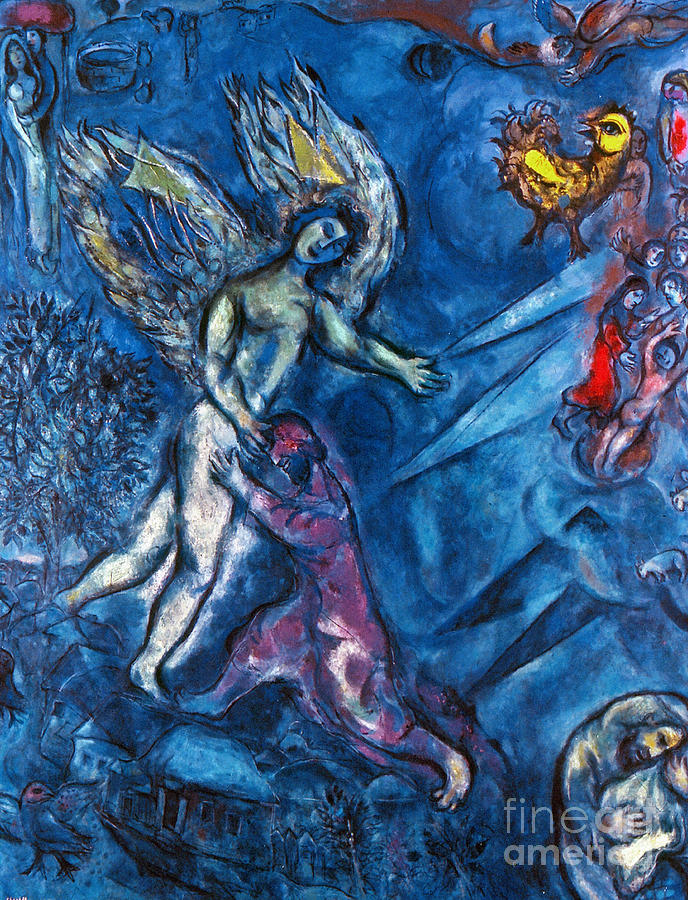
Jacob Wrestles

Often, I wrestle with God.

I am

a doubter.  I regret my own suspicions and fears

and I am also strangely grateful.

Yes, I am glad.

For to wrestle is honest.

And I have seen that as I face my darkest hours, as twilight turns

to morning and I am awake, still.

As I am fighting and the agony of depression and anxiety seem to overwhelm.

God is my comforter.  Even as I

fight, I know his consolation and that all this comes, unsurprisingly.

All this is for me.

Somehow I know that it is through the dog of depression jumping at my heels

and the albatross  of fear

heavy on my shoulders, and the arrows of anxiety stabbing at my chest,

I know that God is God,

and I am simply and solely,

wholly and fully, unabashedly

beloved.  Oh, I may plead

with God to bless me, but I understand its slow coming.  And my slow

learning that even here, now, today I am blessed.

I may walk through life

with this sorrow, the scars that are constant and deep, so deep

for I have been wounded.  I cry out

begging God to prove himself to me.  Does he mean for my life

to mean — anything?

Can I trust you, God?

Can I count on you for whatever the future holds?

Trust you that my life matters?

I know

these encounters in the dark, the isolation and despair of depression

change me.  Deep within, through my abrasions and soul pain,

God is making

something new.

I bear the mark of my pain, scars.  Perhaps I always will.

But I am also

something else. Therein is promise.  And hope.

I am something redeemed.  So even while I stumble, shattered

I am being made strong – perhaps even useful, resolute

and yes, somehow my life is something good.

I believe

when God made me he was pleased.

And nothing I can do, have done, will do

changes that.

Deep within

my abrasions and soul pain, God is making

something new.

Empty and Waiting

I must apologize in advance for this essay.  I could delete it, I almost did.  Perhaps I still shall. 

———————————————————————————————————————

I stopped dreaming.  I realized this as I sat in church yesterday.

It’s hard to feel hopeful when you no longer dream.  What you conceived for your life is not this, when you look around and hate who you have become.

[It takes me a long time to learn things.   I am hard-headed. ]

Perhaps, it is too much to ask?  I just wanted to be significant.  I imagined that I would do something amazing with my life — all those years of working on Urbana conventions, I felt I was doing something important.  Now what?

Is this it? I am a mother and not that good at it, seemingly always failing my children, a wife which I will never write about, a terrible homemaker, yes I mean lazy and bad at it, an infrequent friend and missing sister, ungrateful daughter who just feels forgotten, a hobbyist-at-best photographer and a sometimes I put words together on the page and call myself a writer  … Even this blog is simply an exercise in navel gazing.  And here I go again.

My fight with my maker is almost daily – my depression or remission, anxiety seems constant, recovery from alcoholism, battling with the isolation, feeling only loneliness.

I know that I am foremost an ingrate.  I don’t need reminders.  I have so much!  Four beautiful children, a home and husband and all I can think is, …  I thought I would be something, more.  I put these words here  for what?

I feel empty. I feel useless.   What purpose does my life serve?  Yes, I am looking for evidence of good, any good that I do, and hope.

God is faithful to his promises.  What are they, his promises?  What has God promised?

I’ve already lost whatever I heard in the sermon yesterday. 

He said “God’s results will look different than what we dream or imagine, what we prescribe for ourselves.  The book of Isaiah is filled with a promise that wasn’t fulfilled for 700 years.  God is not predictable but he is faithful. “

I am filled with longing — sick with it.  Perhaps this too is the waiting of Advent.

At times, we wait just for hope. We know we are ungrateful.  We know we are useless to Him.  He doesn’t need us.

We are simply empty and waiting.  

“In this harsh world, draw your breath in pain to tell my story.” — Hamlet

“Why The Silence?” Forgive me the Cynicism … (on Women in the Church)

I don’t know about you, but when I first read this it shocked and appalled me.

During the times of Jesus, the religious leaders prayed at least three times a day and always thanked God for three specific things:

  • Thank God that I am a Jew and not a Gentile.
  • Thank God that I am free and not a slave.
  • Thank God that I am a man and NOT a woman.

In the Babylonian Talmud, a Rabbi still says that one is obliged to recite the following three berakhot daily: “Who has made me a Jew”, “who has not made me a woman”, “who has not made me an ignoramus.”

Ouch!  I’ll bet a lot of men in seminary today secretly thank God they are not a woman or an ignoramus, that is if they think of women at all.

I love pastor Eugene Cho’s reflection thanking God he is a man (tongue in cheek kind of) saying:

“There’s great privilege and power in simply being a man. This is why I contend that the treatment of women is the oldest injustice in human history. We can talk equality and equity all day long and while we can acknowledge how far we’ve come, we still clearly live – even in 2011 – where there’s great advantage in simply being a man.”

This is why the message of Jesus is so powerful.

The apostle Paul in Galatians 3:28 subverted the dominant worldview by saying in the Kingdom of God, “There is neither Jew nor Gentile, neither slave nor free, nor is there male and female, for you are all one in Christ Jesus.”  Powerful, meaningful words to me of the way God intended things and what he promises to restore in us all.  And yet, I easily become discouraged about the state of things.

I needed prudence yesterday when within the same hour I read two very different posts.

One was this post by a pastor saying that women should not read scripture in church.  Apparently, according to this writer, women are not to read scripture out loud in public. WOW.   I post it just to give perspective to some of my more progressive and enlightened friends about why I always seem concerned with women in the church.  It’s sexist crap  and I found myself  wishing a Bible scholar like Scot McKnight, or Sharon Hodde Miller, or Mary Elizabeth Fisher would please take him on.  I wrote him asking where he got the idea that only MEN should be the ones to do public reading of scripture.  It was is a sincere question as a Christ follower who loves scripture passionately, because I have never seen anything there that prescribes such an action.  He promised to write on it soon.

And then I saw this ebook by one of those wonderful people by Scot McKnight, titled Junia is Not Alone. You must pick it up.  You must read it.  He encourages more women to study, research and speak out on “women in the ancient world, about women in the early church, and women in church history … many whose stories are untold.” Amen!

Amazon says:

It tells the story of Junia, a female apostle honored by Paul in his Letter to the Romans—and then silenced and forgotten for most of church history. But Junia’s tragedy is not hers alone. She’s joined by fellow women in the Bible whose stories of bold leadership have been overlooked. She’s in the company of visionary women of God throughout the centuries whose names we’ve forgotten, whose stories go untold, and whose witness we neglect to celebrate.  But Junia is also joined by women today—women who are no longer silent and who are experiencing a re-voicing as they respond to God’s call to lead us into all truth.

Scot says:

Moving toward my second decade of teaching college students, more than half of whom grow up in a church, of this I am certain: churches don’t talk about the women of the Bible. Of Mary mother of Jesus they have heard, and even then not all of what they have heard is accurate. But of the other woman saints of the Bible, including Miriam, the prophetic national music director, or Esther, the dancing queen, or Phoebe, the benefactor of Paul’s missions, or Priscilla, the teacher, they’ve heard almost nothing.

Why the silence?

Why do we consider the mother/wife of Proverbs 31 an ideal female image but shush the language of the romantic Shulammite woman of the Song of Songs? Why are we so obsessed with studying the “subordination” of women to men but not a woman like Deborah, who subordinated men and enemies? Why do we believe that we are called to live out Pentecost’s vision of Spirit-shaped life but ignore what Peter predicted would happen? That “(i)n the last days… your sons and daughters will prophesy…” and that “(e)ven on my servants, both men and women, I will pour out my Spirit.”

You can buy the ebook for $2.99.

Sometimes God answers your prayers in strange ways.

Not a direct response obviously, but rather this was an encouragement to me.  Women are quite literally being silenced in the church by men like Tim Challies and Piper who talks about women’s submission even with in abusive marriages.  And movements like Mark Driscoll’s Mars Hill Church and his crazy notions about men and women.

In my article, The Voice of The Feminine I said:

I’ve been thinking about the lack of presence and example of women in the Church.  That Sunday* at my church in particular, women were simply spectators, the audience, the bystanders, the recipients and beneficiaries.

And the more I thought I could not remember the last time one of the teaching pastors suggested a book they were reading written by a woman.  Women are never quoted in my church.  Female theologians or scholars are never referenced or even mentioned, probably because the pastors don’t read them.  I can’t remember the last time, if ever, a pastor in my church has suggested or referred to or quoted a female theologian, religious author, or historian.  Am I the only one that notices these things?

The entire thing makes me very sad.  And so tired.  I am tired of the male dominated culture on the platform, as authors, as experts, as theologians, as speakers at conferences and in the Church at large. Considering women are half the church (some would say more) I do not buy the argument that there aren’t capable women to select from, though I’ve been told that very thing.  “The women haven’t risen up who have the gift of teaching.”

Risen up?   To be honest, one would think in a service-by-gifts based church there must not be any qualified gifted female teachers.   I attend an EFCA church of 5,000. You do the math.

*this is not always true!

But there are wonderful people who are articulating a different reality.  And I am most grateful to them. Perhaps in the coming weeks I will try to highlight more of them.

I worry at times that I think about this topic too much.  My overwhelming focus when it comes to thinking about injustice is the place of women in the church, their identity before God and whether they are using those talents for the purposes of the Kingdom.  I care about whether women, my daughters, who are made in God’s image too, know that they are indeed made to be that way.  I think about it all the time.  How much is too much?

Theologian Willard Swartley talks about the degree to which our ideologies warp our reading of Scripture.

 “Our willingness to be changed by what we read, to let the Bible function as a “window” through which  we see beyond self-interested ideologies, and not a “mirror” which simply reflects back to us what we want it to show.  Biblical interpretation, if it is worthy to be so called, will challenge the ideology of the interpreter.  It can and will lead to change, because people do not come to the text thinking as God thinks, or even as the people of God thought in serving as agents of divine revelation.  Interpreters [must] listen to the text carefully enough not to like it.  [When they do so] it powerfully demonstrates that the text’s message has been heard and respected.”

This is challenging because I am full of self-interest when it comes to being a Christian woman.  I am a proud woman and this is my tribe which I feel a responsibility to care for, not because I crave authority, but because I long to see every women and girl carrying out every gift from God in their lives, not just in the marketplace, but within the church!  I am hopeful that this will happen in my lifetime.

Much of the church is stifling more than half of the church  and our “interpretations” are silencing many incredible women.  My heart weeps with that thought.

MHH

Other things I have written on the subject:

There is more, just search for WOMEN in the categories.

Strongest in the Broken Places: A Tale of Domestic Abuse

Watching this video I was a child again.

It validated experiences I had growing up.  It made me sad.  I grieve watching it for beyond my own experiences, as I know three women who are living right now in this sort of marriage.

  • One is married to an elder in my church.  (Actually, he was an elder at the time that she talked to me.  We were in a Bible study together.)  He had anger and control issues, perpetrated in the name of “biblical submission.”
  • Another friend stays in an habitually abusive marriage out of love and commitment to her husband saying “Would you leave your husband if he had cancer?  Then how could you leave if he has a mental illness?”  I’m not saying that she should leave her marriage, but I grieve that she is so alone!   And I am ill equipped to help, though I listen.
  • Another friend asks for prayer for friends whose marriage that is in trouble saying he “may be abusive” but likely she “may be making it all up.”

You never know when someone is a perpetrator of rage and control.  I can tell you with assurance that is the most unlikely person.

I grew up in a home where my father was in ministry and was a generous, gracious loving God-fearing man.  To this day when I write openly about my experiences growing up (here and here and here  and here and here and here and here and here and here and here and I only stop because the list is endless.  He’s one of the reasons I started my blog.)

Here is the best example of what it felt like growing up.

To this day I have people who say to me “I knew your father…” implying that somehow perhaps I didn’t, though I lived in his home for nearly two decades and worked for him for many years.   They imply by their statement that my experience and my mother’s and my sister’s didn’t happen.  The man in this video could have been my father — except Dad had a lot more personality!

The video below is one of the best that I have ever seen that talked about raging in a home as a domestic violence.  It made me feel “less alone” when it comes to domestic violence which is not always physical!  It was not physical in my home, except one time when my parents were first married my father put my mother’s head through a wall.  This was before I was born, but he put it in his book and that is how I heard about it.  Even though he wrote about his anger he was unable to change.  And it became the Achilles heal for him over and over again, hurting people around him.  It was a significant factor in my spiritual life and my perceptions of God.

It is real and destructive and is painful for me to this day.  I so wish that my father could have found this kind of help and felt it was safe to “come out” the way the brave heroes in this video have.  I so wish the church was better equipped to help women who do suffer in this way and could create a context where it is safe to speak out.  And I wish the church helped men who know they have a problem but don’t know how to get help.

“Statistics show that victims of domestic violence most often go to churches for help. Unfortunately, churches are often ill-equipped and not helpful. This clip tells the story of one couple’s search for help and also offers some advice for creating an environment conducive for recovery.”

Please watch.  If the video doesn’t work you will have to follow the link prior.

This is a hard post for me to write.  By even talking about this others could be at risk and yet that is the great irony.

In your Highs and your Lows, God is satisfied

Many, many times after I write, I think I’m too emotional in my writing.  I woke up this morning thinking only of regret.  Too out there (sometimes.)  Too vulnerable (definitely.)  Too emotional and effusive.  It is not always easy for me to put myself so far out there.

I got to thinking of the Psalms and how much they reach me because of their free, outpouring or flowing emotions toward God not unlike what I often do.   And  I was thinking more specifically King David after reading something written by an internet friend.

David was such a mess, at times such a coward and a failure, definitely a letch, but at other times very brave and strong.  What he did well was lament and cry out to God!

I just get embarrassed at myself at times. And disappointed that I can’t just “be happy” like so many of my friends, who have crazy joy in the simplest of things. I have written before that I regret not being happy.  And others I see who model a raucous family life, full of delight and fun.  (I secretly want to be adopted in.)  Or even those that know their place is “home” whether that is their own or with their children, because it is so satisfyingly good to be together.

I have such longing for normalcy, but I don’t think it will ever come nor do I know how to create it, most days I’m stumbling around in the dark unsure how to be an adult child much less a Mother.  I believe at times might find a kind of peace and contentment, but I doubt I’ll ever find true joy.  King David’s life, reflected in scripture shows his highs and lows. 

I hope God is honored or at least pleased by our highs and lows.  If our faith is deep and genuine, I think we are strong even in our weakness; in our days hounded by our pain and in the days when it is enough just to hold on and to be thankful.

But godliness with contentment is great gain. For we brought nothing into the world, and we can take nothing out of it.  — 1 Timothy 6:6-7 (NIV)

In this season of Advent, of active waiting, I hope that you find, in your high and your low moments, that God is satisfied with you for simply being you.  He knows you — made you — loves you and is deeply pleased with you.  No, you are not perfect.  May you learn this advent season how much our God just wants you to be — to ABIDE with him which means progressively to “await,” “remain,” “lodge,” “sojourn,” “dwell,” “continue,” “endure” with Him.

And of course I am preaching to myself.

The Thanksgiving Miracle

Being with my family is always something complex – rich and stark at the same time.  My people are full of ancient pain.  Mostly we have learned to carry on, but I the least of all.  For some reason I live stuck.

“I’m sorry you’ve been sad” she said kindly, as I fingered my sweaty water glass.  Standing there, more comfortable in the place just outside the kitchen, where Serbian is being spoken which I do not understand, than in the living room where I will be expected to be something.  I know not what, except that I cannot do it today.   And so I stand there listening to the beautiful Slavic sounds, watching the cooking.  Bread is baking.  Gravy slowly bubbles.

The sun peeks in through the window where a cacophony of herbs is growing, so unlikely in this stark Midwestern winter.  But this kitchen is a place of miracles.  I finger the sage, basil, mint, “Such a wonder, herbs growing.” I had whispered more to myself than anyone.  My brother-in-law looks as me curiously, perhaps he is wondering at my wondering.

“It is not sadness” I quip sometime later.  I immediately regret my correction if it is harsh or sounds mean when really I am only bone tired. I apologize, contrite, in the same breath. And this is the miracle moment I can only see looking back.  It is an instant. A simple choice.  She persists.

And doesn’t walk away as we have done to one another a thousand, even a hundred thousand times.  We, my broken family, are quick to quit on each other in moments like this.  Too afraid of the conflict, of anxiety, of misunderstanding.  Of harsh even mean words, for which I am often guilty.  We become weary of the simple effort of inquiry, wary of the risk and the liar tells us “It’s not worth it” the pushing through, the desire to understand, to heal; to change the ancient rules of misunderstanding.  Persisting, she asks “What is it?”  That moment is unbelievable to me and I know she really wants to know.

“Fractured.” The first word burst out of me for I was ready, longing for the question and I find myself wanting her to know.  “Anxious.  Fearful.  Lacking hope.” The words tumble.  Slowly at first, I persist through my shame.  And she listens to me in those miraculous moments after our mother left choosing football alone over Us. We know where we stand.  I don’t judge my mother.  I feel her rejection sharp.

But as my sister stands there and listens, I talk about the deepest kind of despair. “From ancient wounds,” she asks? And I stare at her in wonderment.  Has she read my blog or poetry, echoing words I have scribbled there?  Or has she read my heart, my mind?  She has never spoken to me of the words I put down there, a selfish scribbling down of the story of my shattered heart that I put on my blog lacking the courage to speak them in real life.

Feeling a little bit more known I stammer out the words, finally.  I talk of this family we are a part of and how we don’t know how to be together.  How I long for more.  And it makes me so sad. And yet my husband has a theory that ultimately we all “do what we really want.”  If you want more connection do something about it, is the implication.  But we both know, my sister and I, that it is not so simple for us, having started from a place of broken with no capacity to build something good.  I share that I really long to know her, know my brother-in-law, be a part of their lives.   I share this place of hurt.  Where I become stuck.  These triggers to my depression, of fearing rejection that hasn’t actually happened.

Then I begin to speak of our Father, long dead and it is clear he is inside my head.  “I cannot remember him kind” I sputter as tears begin to flow, the second miracle or third after the questions and the herbs, for I am the woman who cannot cry.  I long to, but my frozen heart, cemented to its pain has been shut solidly closed.  It may have been a decade since tears have flowed.  And I stand there in the kitchen of miracles and weep ancient tears.  And speak of the terror in my heart and head as I hear my father’s rage.  “I am stuck there with him, terrifying and terrorizing me.”  And she comforts me with her presence.  And her tenacious probing attention.  I shudder with the pain of speaking my genuine admiration for her achievements, of living.  She has somehow been able to live.  “The boxes we were put in as toddlers,” she says.  This is a revelation, since we two girls were babes our father has said she was smart and I was somehow something other.  Though he wasn’t particular as he raged about grades.  But for some reason I was the recipient of his anxiety, disappointment and fear.  That is when she voices their anxiety.

She speaks of a class she took on Anxiety and how it spreads in organizations and families and what a revelation that was to her!  The anxiety of our parents was a constant presence and fueled his anger, her sadness and all the sickness in our home growing up.  Even today, every word my mother expresses is laden with fear of rejection, misunderstanding.   I wonder what she really thinks, feels but I will never know.  And I know that I cannot talk to her about any of this, my ancient wounds, because she is too fragile.  The threat all these years has been that she will fall apart.

Every time you feel in God’s creatures something pleasing and attractive, do not let your attention be arrested by them alone, but passing them by, transfer your thought to God and say: ‘O my God.  If thy creations are so full of beauty, delight and joy, how infinitely more full of beauty, delight and joy art Thou Thyself, Creator of all? — Nicodemus of the Holy Mountain

We stay a long while, and laugh, and talk and simply be.  We leave more connected.  I am overwhelmed by the miracle.  This tale is supernatural in that it happened.  It is not the tears or the ancient pain spoken out loud though they are incredible.  This is about the persistence of My Sister who gave a thanksgiving miracle to me. Yes in that I can say, thanks be to God.

He did this.  She did this.  We did this.

And what remains is hope.

Lord, make me an instrument

vocatus atque non vocatus, deus aderit. — these words of Erasmus, translate to say:

Bidden or unbidden, God is present.

I think it is important to remember, beauty in the bleak days.

“Prayer is sitting in the silence until it silences us, choosing gratitude until we are grateful, praising God until we ourselves are a constant act of praise.” — Richard Rohr

Lord, make me an instrument of your peace;

where there is hatred, let me sow love;
where there is injury, pardon:
where there is doubt, faith;
where there is despair, hope
where there is darkness, light
and where there is sadness, joy

O Divine Master,
grant that I may not so much seek to be consoled, as to console;
to be understood, as to understand;
to be loved, as to love;
for it is in giving that we receive,
it is in pardoning that we are pardoned,
and it is in dying that we are born to Eternal Life.
— St. Francis of Assisi (1182 – 1226)

So often, it is too easy to get caught up in ourselves.  “Lord, make me an instrument…” Don’t we all just want to be useful, usable?  I know, when I am caught up in my own darkness that I am, or at least I feel, useless.

While life’s dark maze I tread,
And griefs around me spread,
Be thou my guide;
Bid darkness turn to day,
Wipe sorrow’s tears away,
Nor let me ever stray
From thee aside.

— A hymn My Faith Looks Up to Thee by Ray Palmer.

I believe that I shall see the goodness of the Lord in the land of the living.
Wait for the Lord; be strong, and let your heart take courage; wait for the Lord! –– Psalm 26

I will extol you, O Lord, for you have drawn me up, and did not let my foes rejoice over me.
O Lord my God, I cried to you for help, and you have healed me.
O Lord, you brought up my soul from Sheol, restored me to life from among those gone down to the Pit.
Sing praises to the Lord, O you his faithful ones, and give thanks to his holy name.
For his anger is but for a moment; his favour is for a lifetime.
Weeping may linger for the night, but joy comes with the morning.
As for me, I said in my prosperity, ‘I shall never be moved.’
By your favour, O Lord, you had established me as a strong mountain;
you hid your face; I was dismayed.
To you, O Lord, I cried, and to the Lord I made supplication:
‘What profit is there in my death, if I go down to the Pit?
Will the dust praise you? Will it tell of your faithfulness?
Hear, O Lord, and be gracious to me! O Lord, be my helper!’
You have turned my mourning into dancing;
you have taken off my sackcloth and clothed me with joy,
so that my soul may praise you and not be silent.
O Lord my God, I will give thanks to you for ever. — Psalm 30

In you, O Lord, I seek refuge; do not let me ever be put to shame; in your righteousness deliver me.
Incline your ear to me; rescue me speedily. Be a rock of refuge for me, a strong fortress to save me.

You are indeed my rock and my fortress; for your name’s sake lead me and guide me, take me out of the net that is hidden for me, for you are my refuge. Into your hand I commit my spirit;  you have redeemed me, O Lord, faithful God. 

You hate those who pay regard to worthless idols, but I trust in the Lord.
I will exult and rejoice in your steadfast love, because you have seen my affliction;
you have taken heed of my adversities, and have not delivered me into the hand of the enemy;
you have set my feet in a broad place. 

Be gracious to me, O Lord, for I am in distress; my eye wastes away from grief, my soul and body also.  
For my life is spent with sorrow,  and my years with sighing; my strength fails because of my misery, and my bones waste away. 

I have become like a broken vessel.  But I trust in you, O Lord; I say, ‘You are my God.’  My times are in your hand;  Blessed be the Lord, for he has wondrously shown his steadfast love to me.

Be strong, and let your heart take courageall you who wait for the Lord. — Psalm 31

———–

I covet your prayers friends. All I can say is that I know this is an illness.  I also know that it is spiritual attack.  More important, I know that I am beloved.  I will take courage and wait for the Lord.

What God can possibly expect from a broken-down, brokenhearted, mess like you?

Grace is that kick-start value that breaks through the dullness of one’s self-loathing, recrimination or dysfunction, granting love and favor without the expectation of a return. Experiencing it from God is transformational, offering it to someone else is revolutionary. — Saltshaker 

In some ways, I wonder if my frequent lingering in the pain of the past —  the constant remembering — is a slap in the face to God, to the forgiveness and grace that I have received.

I live with that shame.  I live with the question if God is the healer why can’t I heal, finally, once and for all?  

That question rings out loudly today as I look back over my week of falling into depression, again.  I know that I have some control over it, though not sure how much.  I know that.  I wonder to myself if by slipping down there again, I betray my Lord?  Am I denying him?  “They claim to know God, but by their actions they deny him. They are detestable, disobedient and unfit for doing anything good.”

I have always believed that my honesty and truthfulness was my only hope out of the wickedness of a childhood full of fear, self-hatred and pain.   Now I am uncertain.    Perhaps I am doing this in my own strength and I am not really healed? Does my frequent lingering only pick the scab off of a wound that deserves to heal?  I want the Lord’s healing.  I want my life to be proof of God being real.

I whisper a prayer from Jeremiah:  “I know Lord, that our lives are not our own.  We are not able to plan our own course.  So correct me, Lord, but please be gentle. Do not correct me in anger, for I would die.”  

Correction first, healing second.

Really?  This might be it.  The connection I’ve been searching for.  As I open up to God’s correction, then healing may come?  I see it in the words of Julian of Norwich in Revelations of Divine Love:

“See that I am God.
See that I am in everything.
See that I do everything.
See that I have never stopped ordering my works, or ever shall, eternally.
See that I lead everything onto the conclusion ordained for it before time began, by the same power, wisdom and love with which I made it.
How can anything be amiss?”

What?

Before time began, this too the Lord knew …

He knew of an angry father.

He knew of a reclusive, fearful cold mother.

He knew of four frightened daughters, full of secrets.

He knew me, full of self-loathing, before time began.

This too, He knew?  He never stopped ordering his works, or ever shall.

How – can – this – be?

What do I do with this knowledge that before time began He knew my pain?

He knew and He knows.  He knows my heart, what it feels like to fear your own daddy and wonder what you did wrong?  He knows what it is to crave a comforting, hug from mamma, a hug of safety.  He knows what horror tastes like, in salty tears streaming down, as you’re berated, over and over, for some failing; that as he yells, you are not even sure that he remembers what failing of yours set him off.  He is so caught up in his righteous raging.  All you know in that moment is the shame and loathing and fear.  You want to escape it, him, home.  If this is love… then there is no safe place.

And over the years you hide inside yourself, eyes wide to the world, cringing.  Expecting life to hurt.   Not knowing whom to trust, if anyone.  Even in that fear, remembered some thirty years ago, you stumble over the question of what God can possibly expect from a broken-down, brokenhearted, mess like you?  But he knew this pain too?

“God only desires that our soul cling to him with all of its strength, in particular that it clings to his goodness.  For of all the things our minds can think about God, it is thinking upon his goodness that pleases him most and brings the most profit to our souls.”  (Julian of Norwich.)

Really?

Cling to the truth that God is good.  Even in the midst of past horrors, pain. Scabs on your heart, thick scarring.  Disbelief.  Knowing, or at least fearing that people will always let you down. Your hurt billows out with the fear from the echoes from a daddy’s rage.

I will cling to His goodness as if it is a prayer, whispered, lifted to the heavens with a tiny billow of faith. 

A prayer of gratitude for his goodness is all he asks.  Not my perfection.  Not any deed or accomplishment.  Not even a big, humongous faith.

Simply cling to his goodness.

See that I lead everything on to the conclusion ordained for it before time began, by the same power, wisdom and love with which I made it.

He made life, with power wisdom and love?

Amen.  May it be so for me and you.

Shall I Dance for You? (A poem)

The sun came out today and I felt its warmth creep into my soul.  It would appear

that I am on the mend.  Believing,

That is the tricky thing.  Knowing and accepting are strange bedfellows.

Where did it come from I wonder — this self-loathing?

Was I born this way?

Or is it the result of rubbing against broken people?

Am I shattered and wrecked – lost beyond repair?  Or, hopeful.  Yes.

Where do we find safety, deep rest except by trusting in the Son.

All my striving and this need to prove, outperform, and achieve isn’t the Gospel.

I have soaked in the lies of culture — an ethos of discontent– so deeply into my pores that I no longer believe?

Where do we find safety, deep rest except by trusting in the Son.

Am I respectable, admired, or lovable without doing?

Shall I dance for you so that you will love me, finally?

It is never enough.

So today, I will lie here in the sunshine and soak in the sun.

On (Not) Writing

Image by JJ Pacres on Flickr

I’ve slipped back over here to my blog because I’m having trouble writing.  You could say I’m s t u c k —  mired in self-doubt.

Gluey, icky burdensome thoughts are inside my head as I go through my days — has it been a whole week  — of NOT WRITING.

How can this be, after all this time?  I’m heavy with disappointment in myself.

I even have the excuse of carpel tunnel (I had to look that up to spell it.) My right hand isn’t working correctly, aches all the way up my arm, goes numb, even typing out each l e t t e r hurts just a little.  Sometimes a lot.

I have read, reread, rewritten my poems.  Because nothing new is coming.

In that valley is where Mary Magdalene comes looking for them, at a milepost way deep in the shadows. Their journey back toward apostleship, toward being the church, begins in grief.  It was Mary Magdalene, striding into the valley of the shadow of death to knock, once more, on a door and proclaim the good news: “I have seen the Lord” — the Lord who will not let the grave claim you who are trembling inside the prison of grief or depression. Grief is one more place on the journey from baptism to the new Jerusalem. Let the one who poured the waters of promise on your head so long ago — let that one sanctify your grief and turn it into ministry. He has been doing that since the days of Abraham and Sarah. Since the days of Peter, who denied he had ever known Jesus of Nazareth.  That is the good news of the gospel. Thanks be to God. Amen. —Edgar Moore

There is something in these words that is for me.  That winding path I traveled over the last ten years holds grief and glory.  That is where the story will begin, if I can find it.

Melody

Close the door. Write with no one looking over your shoulder. Don’t try to figure out what other people want to hear from you; figure out what you have to say. It’s the one and only thing you have to offer – Barbara Kingsolver