Black History: Commonly known facts? or are they.

Do you ever find yourself thinking we live in a post racial America?  There are some that say this.  Or that black people act white.

There are a lot of things that we all take for granted as being commonly known facts.

A friend sent  this YouTube video, which is mostly entertaining but also makes one think about the generalizations we have about black people.

This Week in Blackness’ host Elon James White wrote a few #BlackFacts in a Twitter Discussion and decided to share it  and in honor of Black History Month I’m sharing it here.

It’s worth the time (3.50) and your respect.

I feel a-swirl. I want to walk on the edge!

Silence frees us from the need to control others … A frantic stream of words flows from us in an attempt to straighten others out. We want so desperately for them to agree with us, to see things our way. We evaluate people, judge people, condemn people. We devour people with our words. Silence is one of the deepest Disciplines of the Spirit simply because it puts the stopper on that.

Richard Foster, from his book Freedom of Simplicity

Listening.

This is something that I have had to make an effort toward in my life.  I say too much, usually.  I am overly instructive with my children.  I am extremely enthusiastic with my friends.  I have too much going on in my head and it comes out in a frenetic pace both on Facebook and here.  I feel like I’m constantly “throwing up” all over every one.

Hearing.

I have such trouble hearing God.  I get impulses.  I get emotional responses.  I feel.  I emote.  I become afraid.  I become inspired.  But do I ever really hear God?  I believe what I do matters to God.  And then I don’t, believe.  I am a devout doubter.

I read his word.  When I am connected to the word, I have no doubts.  He absolutely speaks.  God is active.

I read blogs and articles, and follow the news.   My heart surges and leaps and responds.

Children in Haiti.  * Rape victims in Rwanda. * HIV * Girls in Afghanistan. * Forgiveness.  * Child rearing.  * Writing.  Photography.  *America.  Other. * Poverty.  Wealth. * visual Anthropology. * Educated.  Un.  *Racism.  * Sexism. *Immigration.  *Refugees.  *Aid work. * Adoption.

Primal scream! I feel a swirl.  I am schizophrenic, or at least I feel it.

“Let your heart guide you. It whispers softly, so listen closely.”

Purpose and calling.

I read an article in the New York Times about a woman who heard about the plight of Congolese women on an Opera.  She was so moved that she turned her life upside down to help.  She lost her business, fiancé, and home.  She lives to help these people.

Don’t get me wrong, I don’t want to follow that path — losing family and love and home.

Listen.

Oh, don’t get me wrong I believe as long as I am listening my heart will be breaking for others.   But I long for just want the one thing.  The one thing to live my life for.  The one thing to learn about. The one thing to go back to school to study.

I’m 43 for God’s sake.

I have half my life to live and I want to live it with purpose.

With some sense of destiny and knowledge that God called.

I fear that I do not know how to listen.  Pray with me that I would be listening.

I would Live with intention.

I want to Walk to the edge. I want to live on the edge.

Listen hard. Continue to practice wellness and contentment.

I just want to know…

Homecoming

Molly came to lunch on Sunday with some big news.

She wants to go back to school

to study theater and costume design.

She’s moving home to save money.  In August.

This is a good thing.

How quickly the years pass. In 1992 Tom was recently separated and I was just back from a summer in Russia.

Molly was the sweetest child and full of joy.  I was always amazed by the joy inside her.  She was an only child.  Her parents were separated.  She lived with her single dad.  But when Tom and I decided to get married she was thrilled.  She clearly wanted two parents who were married to each other.   Her “real” mom was around but not regularly at that point.

Over the years Molly’s gentle spirit and joy served her well.  It wasn’t until middle school that things really got tough for her. I was an insecure step-mom, fragile, controlling, and a perfectionist.  Some day perhaps I’ll write about those years.

But today it is worth noting that we have a great relationship.  I love her dearly and the idea of her moving back home after being on her own for almost four years is great!

In Haitian Kreyol “tout moun se moun” Means Every Person is a Person

Many people look at Haiti and despair. Some say that we have hungry and uninsured in America and that the people of Haiti need to somehow help themselves. Others though, like Dr. Paul Farmer, co-Founder of Partners in Health and United Nations Deputy Special Envoy for Haiti, have worked in Haiti for years.  Paul Farmer has reason to doubt and yet he seems to have hope.

He recently testified to the U.S. Senate Foreign Relations Committee.  The full testimony is here. (Emphasis is mine.)

Beyond hope, he has experience and wisdom and a history in Haiti and that is why I think he is worth listening to and potentially supporting with your financial dollars.

“They say that aid is wasted, that there is no hope for this country.  And indeed there are reasons to be cautious.

I would answer them with the positive experience of building Haitian-led programs in the Central Plateau and Artibonite Valley regions that have createdfive thousand jobs for people who would otherwise have no steady work. I advance this model not because it is associated with our efforts, but because job creation is the surest way to speed up the cash flow that is essential now. It is also the fastest way to make amends for our past actions towards Haiti, which have not always been honorable.  In other words, if we focus the reconstruction efforts appropriately, we can achieve long-term benefits for Haiti. The UNDP is helping to organize programs of this kind, which should be supported and extended around the country.Putting Haitians back to work and offering them the dignity that comes with having a job and its basic protections is exactly what brought our country out of the Great Depression.

Last night I read a New York Times article about the babies being born amidst the tragedy of Haiti.  My heart broke to hear of these mothers giving birth and having nowhere to go, no food or shelter.  Can you imagine?  Having done that three times myself I can tell you that it would be terrifying.

One, nineteen year old woman four days after giving birth was eating her first meal — a can of beans.  Another living in a sheet tent with her 12-year-old and eight year old and few days old infant.  Despondent as she lived outside the rubble of her home, because she does not want other’s charity.  Her husband is dead.  She has three children and nothing to feed them.  No way of providing for them.

“The street where I live, it’s so dirty; there isn’t enough food or water,” Ms. Antoine said. “I’m scared to bring a baby into this awful situation.”

The article said, ” roughly 7,000 who will give birth in the next month” of the 63,000 that were pregnant when the earth quake struck Haiti two weeks ago.

Back to Paul Farmer’s presentation:

“Despite $402 million pledged to support the Haitian government’s Economic Recovery Program in April of last year, when the country was trying to recover from a series of natural disasters resulting in a 15% reduction of GDP, it is estimated that a mere $61 million have been disbursed.

“In the Office of the Special Envoy, we have been tracking the disbursement of pledges, and as of yesterday we estimate that 85% of the pledges made last year remain undisbursed. Many of us worry that, if what’s past is prologue, Haitians themselves will be blamed for this torpor.

So here is our chance: if even half of the pledges made in Montreal or other such meetings are linked tightly to local job creation, it is possible to imagine a Haiti building back better with fewer of the social tensions that inevitably arise as half a million homeless people are integrated into new communities.

Haiti needs and deserves a Marshall Plan—not the “containment” aspects of that policy, unless we are explicit about containing the ill effects of poverty, but the social-justice elements. But we need to be honest about the differences between post-war Europe and Haiti in 2010. Part of the problem, I’ve argued, is the way in which aid is delivered now as compared to in 1946—well before the term “beltway bandits” was coined.

  • We need a reconstruction fund that is large, managed transparently, creates jobs for Haitians, and grows the Haitian economy.
  • We need a reconstruction plan that uses a pro-poor, rights-based approach far different from the charity and failed development approaches that have marred interactions between Haiti and much of the rest of the world for the better part of two centuries.

Our country can be a big part of this effort.  Debt relief is important, but only the beginning. As you consider donating to Haiti relief, remember that any group looking to do this work must share the goals of the Haitian people which are shared by Partners in Health as well.

They need:

  1. access to quality health care, and
  2. social and economic rights, reflected, for example, in job creation,
  3. local business development,
  4. watershed protection (and alternatives to charcoal for cooking), and
  5. gender equity.

Considering all these goals together orients our strategic choices. For example, cash transfers to women, who hold the purse strings in Haiti and are arbiters of household spending, will have significant impact. This is a chance to learn and move forward and build on lessons learned in adversity—to build hurricane-resistant houses with good ventilation to improve air quality from stove smoke; to build communities around clean water sources; to reforest the terrain to protect from erosion and to nurture the fertility of the land for this predominantly agricultural country. It is the chance to create shelter, grow the local economy and incomes, and invest in improved health. This will do much to decrease the risk of another calamity, and to decrease the vulnerability of the poor—especially as we face the second wave of problems, including epidemic disease born of the earthquake

“tout moun se moun” – every person is a person

Won’t you help an organization that has experience in the country.   There are goofy groups popping up that seem to be exploiting the situation in Haiti.  Don’t be fooled into thinking they are helping.   And look, I know we all want to help.  I want to scoop up those moms and babies and take care of them.  Offer them shelter and food.  I want to hold that starving 18 month old in the hospital in Haiti, comfort him with physical contact and food.  (He has since died.)  I would do anything, offering up my blood, sweat and tears if it would help.

But we must be reasonable — adults — logical and informed.  They don’t need our frickin’ shoes.  Or blankets.  Or old clothes.  They don’t even need us to go, no matter how much we want to help.

This website, Good Intentions Are Not Enough, provides a list of ideas of ways that you can truly help if you are so compelled.

Or you could just send money.

There are a number of online tools available for evaluating charities and making donations to a broader range of NGOs, including CharityNavigator.org and NetworkForGood.org.

Be well friends.

Haiti: History of a Shaken Country | Laurent Dubois | Big Think

It is always good to know a nation’s history — From Haiti Historian and Professor at Duke University.

From the 18th-century slave revolution to 2010’s horrific earthquake, Haiti has experienced endless volatility. How is its historical legacy worsening the current crisis?

Watch the seven minute interview via Haiti: History of a Shaken Country | Laurent Dubois | Big Think.

I’m fat. You’re fat. The first lady is not fat. Hey what’s up with that!?

According to the Mayo Clinic I am overweight.  (Thank you very much.)  And I have a sneaking suspicion that my kids are not doing so well either.  But it turns out most parents do not even realize that their children are over weight.  Even our First Lady, Michelle Obama, was caught off guard by a recent pediatrician’s warning.

12.5 million children in America are overweight.

By now we all know obesity is having an excessive amount of body fat.  (check)  Especially around the waist.  (check) And  you know that doctors use a formula based on your height and weight — called the body mass index (BMI) — to determine if you are obese.  Find yours here.  Almost one-third of kids are at least overweight; about 17 percent are obese.

At his most recent checkup, our pediatrician measured one of our kid’s height and weight.  She talked with us about her concern over his BMI.  He has grown out a bit more than up over the last year.  But she seemed reticent to say anything that was too harsh though his weight is on the high side for his height.  I agree that we don’t want to mess with kids’ perceptions of themselves.  They are at very vulnerable age.

Even the First Lady’s girls got a warning recently.  The interesting thing I thought was that within just a few months she made some small changes that got her daughters back on track.  This is the kind of thing you or I can do.

  • No more weekday TV. (Oops)
  • More attention to portion sizes. (Okay)
  • Low-fat milk.  (Check)
  • Water bottles in the lunch boxes. (Rather  than milk or chocolate milk which comes in school lunches?)
  • Grapes on the breakfast table. (Fine)
  • Apple slices at lunch. (Don’t they go brown?)
  • Colorful vegetables on the dinner table. (I’m in agreement in theory.)

And then I got to thinking — this isn’t just about my kids. Or even the First kids.  All of whom eat organic apples, have their own garden and can visit the farmer’s market.  And they have plenty of opportunity to eat three healthy meals a day.

What about inner city kids?  What about low income kids?  What about kids who eat two meals at school.  Or the kids whose parents have to work three jobs and are not around as much to cook for them?

What about kids who do not have a grocery store in their neighborhood?  Last week, the First Lady addressed the U.S. Conference of Mayors about cities creating healthier citizens because obesity is a particular problem in some minority communities without easy access to supermarkets, much less farmers markets.

I knew the grocery store over on Verona road had closed down a few years ago (turns out it is more like eight, and that was the third that closed down in that area.)  So I started hunting for information or articles online about that area of Madison, the Verona Road/Allied Drive area of town.

One of the things that Mrs. Obama wants to see happen is increasing access to healthy foods. She says parents tell her they want to feed their kids fresh produce but it is difficult “if you don’t live anywhere near a place that sells fresh produce.”  She also wants to make good food cheaper.  (Ahem, pardon my skepticism on that one.)

In Madison, the poor do not always have access to healthy food?  That should be a headline.

Last year, the Wisconsin State Journal reported that Cub Foods was closing its store on Verona Road.  It’s a compelling story:

As snow fell around her Monday, Melissa Orr set off on the five-block walk from her home on Madison’s Allied Drive to the Cub Foods store where she shops two or three times a week.  She does not own a car, so the store, 4716 Verona Road, is her only option for grocery shopping unless she takes a bus. At the store, Orr learned it will close by mid March, leaving her and many other residents of one of the city’s poorest neighborhoods without a supermarket within walking distance.   … Ryan Estrella, a Dane County social worker based on Allied Drive, said numerous residents lack vehicles and that the store’s closing will be a hardship. Many neighborhood families are headed by single parents, so taking a bus is a major undertaking when children and bags of groceries are figured in. In the future when people need only a few staples such as milk and baby formula, they will probably end up at a gas station, where costs add up quickly, he said.  “I think this will be devastating to the neighborhood,” Estrella said.

As of writing there still isn’t a grocery store near the Allied Drive neighborhood.  I’ve sent a few emails around trying to find out what the plans are for 2010.

Working together, we can ensure our children’s health—and their future.  But this goes for all children.


Haiti – a learning curve indeed.

I’m running a fever and have body aches.  I’m fairly grumpy at this point because I just don’t do sick.  When I was working full-time my modus operandi was pop some pills and get on with it.  But that’s changed over the years.  Being at-home I can’t ignore how I feel, there is not enough to distract me.  So, I feel my pain.  And especially since I’m trying to listen to my body (after this experience).

Anyway, one of the things I do when I am healthy or sick, is read – blogs, articles, anything and everything.  I got to thinking how much amazing stuff I find online and I could let others know about it.

ON HAITI, hopefully soon NGOs are going to get food to the folk in Haiti.

First, one blog I read, from an NGO worker who is not in Haiti said this today:

In the next day or two, non-governmental organizations expect to begin mass food distributions to earthquake survivors in Haiti. They’re planning to do this in conjunction with military support- specifically, the US Marines and the United Nations Mission in Haiti (MINUSTAH).

It’s taken more than two weeks to organize. I’ve explained some of these reasons elsewhere. In short, the logistics of trying to organize food distributions to hundreds of thousands of people simultaneously is an immense undertaking. As well as importing and moving that amount of food (food is heavy stuff), there’s the matter of locating and organizing distribution sites, coordinating dozens of agencies, working through broken infrastructure, communicating the details to the residents of Port-au-Prince, and trying to define the relationship between the military and aid agencies.

I thought his explanation for why things are so damned complicated in Haiti and what the NGOs and the government are doing, are not doing and why was brilliant.  So many in the media are asking questions and criticizing.  This person explained.  It may not be what we want to hear but I feel it was forthright and honest.  And since he’s not on the ground there he doesn’t need to feel defensive.

Secondly, I have found MFAN, Modernizing Modern Assistance Network.

MFAN is a reform coalition composed of international development and foreign policy practitioners, policy advocates and experts, concerned citizens and private sector organizations.  MFAN’s goal is to help build a safer, more prosperous world by strengthening the United States’ ability to alleviate extreme poverty, create opportunities for growth, and secure human dignity in developing countries.

Fantastic!  I’m  totally with them and when they provided a list of articles I realized that many of them I had already read in the last week.  These give you a sense of the discussions going on in and around Haiti about the aid that is and isn’t getting there, how things are organized (or not) and folks criticisms and affirmations.

From MFAN’s website:

Since almost the moment that a devastating earthquake struck Haiti nearly three weeks ago, high-level world leaders, development experts (including MFAN Principals), and others have published pieces with opinions on what went wrong with development in Haiti and what we can do to make things right.

One common feature of the commentary, with the exception of a few pieces (Atwood and Birdsall come to mind), is the fact that they call for a new development approach in Haiti without mentioning that a transformative debate is happening at all levels of government about how to make overall U.S. development and foreign assistance efforts more effective and accountable.  In spite of this omission, the pieces touch on important themes of foreign assistance reform that MFAN has been aggressively advocating for more than a year, and which are now being discussed as part of the White House’s Presidential Study Directive on Development Policy, the State Department’s Quadrennial Diplomacy and Development Review, and Congress’ anticipated efforts to revise the Foreign Assistance Act of 1961.

I hope you will read some of them.  I hope they are as interesting and informative to you as I found them.  I hope you will start talking about the reform that has already been in the works.  Here’s the list of articles again.

Sorry for a less than passionate post.  I am — very much so  — deeply interested.

Just under the weather.

Stay healthy yourself!

Hope for Haiti

I thoroughly enjoyed watching a Hope For Haiti Now fundraiser the other night.  This collaboration between Jay-Z, Rihanna, and Bono jumped out at me.  I loved it because it was innovative, interesting and original.  Am I being redundant?  I loved it.

Taylor Swift was also incredible.

Just don’t want to forget Haiti.  I heard a report on NPR today that some people STILL have only received water as “aid.”  I do not want to criticize people on the ground doing good work.

Rwanda. Haiti. A photographer’s work.

Of the many things that one could do with their photography, this would be my dream. Telling stories that need telling. This photographer is incredibly talented, and tells his stories so well. I discovered him checking who the photographers were on the doctors without borders website report from Haiti. (I think.)

Jonothan Torgovnik is in Haiti right now. Be well, sir, be well. Tell the story that needs to be told.

Intended Consequences by Jonathan Torgovnik

An estimated 20,000 children were born from rapes committed during the 1994 genocide in Rwanda. Intended Consequences chronicles the lives of these women. Their narratives are embodied in portrait photographs, interviews and oral reflections about the daily challenges they face today. See the project at http://mediastorm.org/0024.htm

. I found the photographer’s reflections to be incredibly powerful.

Anger cannot fully describe my emotions.

Folly is what occurred.  (But no dentists were hurt I promise.)

After preparing myself and Jacob all day for the extraction of three of his teeth ….

… took 1/2 day off school.
… talked about it dozens of times, about bravery and necessity and consequences.
… bought bribe toy, comfort stuffed animal, and bribe milkshake.
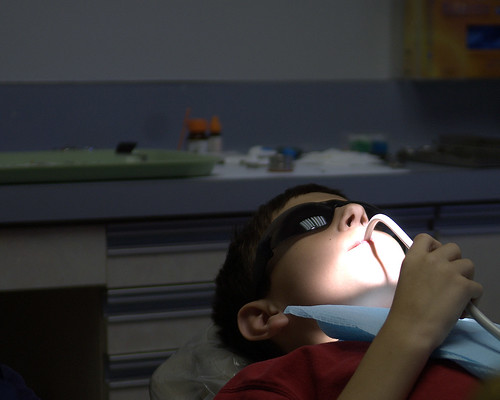
… spent almost an hour numbing his mouth with the dentist poking him up to 20 times with his long needle of Novocaine, ten of which he actually felt.

… finally,  a small amount of kicking (more like writhing),  screaming (at times blood curdling I will admit) and lots of tears, holding his mouth saying “Don’t pull my teeth!” …

the damned dentist says:

“We don’t have to pull them today.”

“YES WE DO!” I say! It just burst out of me.

“Are you f***ing kidding me?” did not come out until I was in the car later.

But once this was out, my already traumatized eight year old son was very willing to put off for another day what he did not want to do anyway.

I reaffirmed that he would still have to have the teeth pulled, that he would have to repeat everything that happened in the last hour, and he would NOT get the toy in the trunk of my car.

But once the option was on the table, no matter my protest, there was no cajoling, no amount of pushing, (mild) threatening, frustration, anger, disappointment, or fury was going to change his little freaked out mind.

“I can recommend an Oral Surgeon, who has the capability to make him more comfortable ( a dentist’s euphemism for “knock him out cold”) so that these teeth can be pulled.”

Fine. Give me the referral. We start anew on Monday morning at 8:00am where we will have a Consult for pulling the teeth.  Then schedule a teeth pulling, where they likely give him a shot that knocks him out and he won’t remember anything.

I have no more words. But for those of you who have followed this saga here, and here, if I was not convinced before I am now we will be changing dentists.

Here’s what I think he should have done.  Pulled Mom out in the hall to discuss the options.  Let mom decide or at least have a say in whether the child is offered a reprieve.  Am I wrong?

What’s another word for angry? irritated, miffed, annoyed?

I’m in a bad mood.  It could be because I’ve had a headache for 36+ hours but actually this mood has been building for a while.

I feel stuck. I’m looking back over my life.  Being a missionary kid, born overseas, multi-cultural upbringing, being a Christ-follower a long time, tons of biblical study, college degree, worked for a mission agency, worked for Urbana student missions convention, summers overseas, the gift of mercy that breaks my heart over and over combined with an iron will, good people skills, a gift for writing, being articulate and passionate, with cross-cultural skills and training, ten years of management experience, being innovative, creative, willing not to mention a decent if not good , truly willing to live anywhere in the world… and I am

an unemployed homemaker.  And that isn’t what makes me mad, per say.  Because these ten years that I have spent caring for my family and getting well have been absolutely necessary.  God took me by the lapels and said some fairly harsh things. What I needed.  I guess I had such a sheltered childhood and adolescent years that I needed to make some mistakes and pretty much fall bald-facedly forward – splat – in my humanity and stink.  And that makes me grateful not mad.

What makes me mad is reading about people who get to serve, now in Haiti.  In Afghanistan.  In Iraq. Russia.  Kiev.  Turkey.  Anywhere.

I then I read this a few minutes ago, on one of the blogs I follow.  She’s going to Haiti and she’s “not quite sure about it.”

There will be dead bodies, and she’s really busy already, never slept anywhere but her bed and a hotel,“and my sense of smell is really overactive so there’s no way I could possibly handle what Haiti must smell like” You have to take those malaria pills that make your stomach hurt and what if there’s another earthquake while you’re there? What if you get shot at? You won’t have your choice of firm or soft pillows and it very well will smell like the rotting stench of death. You might be sleeping in a tent on the ground.” We all get to be a part of that story – whether it’s by donating money or supplies or by taking a couple of Valium and getting on a plane.

Excuse me?  That’s not even cute and definitely not funny.  I think she meant well, but I resent her attitude.  I can’t help but think why her?  It’s so damned unfair. She’s clearly not even prepared.

And then I begin to be angry at myself.  I resent all my mistakes and weaknesses that made my being here in Madison the story of my life.  Two times I started to answer that voice in my head that said go.

I was training as a Red Cross volunteer when Katrina happened, but I was too soon out of the hospital with depression and suffering from chronic bronchitis.  They encouraged me to not go because the place was full of mold.  Subsequently I learned a lot of things about the Red Cross that concerned me with them as an organization.   I did not continue my training.

I want to be trained in Emergency Relief, just not with the Red Cross.  Am I too picky?  Would I be there in Haiti right now if I had continued on with that organization.  They make it easy for the average person to pursue relief work.

October of last year (2008) I applied and was accepted for a Master’s Photography Class set in Cambodia.  For the first time in years I felt a quickening in my heart and anticipation for the future!  Long story short, it cost too much money which we didn’t have going into a recession.  Door slam.  Dream over.  I know now, beyond looking forward to learning about photojournalism I was looking forward to the smells, the people, the food, the danger, the excitement (I hope that’s okay to admit) of being in another culture.

I am angry at myself.  I am angry at this woman.  I am angry about my past, my mistakes and weaknesses and fear. I’m a messy person but I know that those lessons have made me the person that I am today.  And tho the journey of walking with God is more learning that truly being “ready” in my heart I’m ready Lord – for anywhere – sleeping in a tent – serving – helping – whatever is next. And I know that the whole journey of who I am, where my life started in the jungles of Papua New Guinea to being (potentially) a third generation missionary, to being an artist and writer and photographer — it is all full of purpose and a journey of consequence.  My life story was no accident.

All I can do right now — today —  is relent for now, keep learning and studying,  and do what is in front of me; serve locally and hope against all hope that some day God will send me.

Be well, even when you’re angry.

Melody

I feel dread, but I am strong

Right?  I’m strong! I’ve been a mother for almost twenty years.

I have dreaded this day for about three months – as long as I have known that the dentists want to extract three teeth from my youngest — My baby.  He’s terrified and so I am calm and reassuring.

“You will feel nothing” I keep saying.  And Tom repeats as well.  Which I am not certain is true because the last time I had teeth pulled I was in high school.   I remember drooling blood as I walked out of the doctor’s office.  That’s about it.

Why do I feel so afraid?  So unprepared?  Because parenting 101 says with everything in your arsenal, you protect your children.  That’s the gut impulse.  That’s what intuition says to do.  And from the beginning, when Emma was born I felt inside me this Mama Lion; powerful enough to hurt someone else if they hurt my child — from first day jitters in kindergarten, to all the testing we’ve done for his learning challenges, hours of extra tutoring,  advocating at school — day after day protecting my baby from the world and getting him what he needs.

I just read that the Mother Lion Defense has actually been used in court where it seeks to justify mother ‘s violent reactions taken to protect her children. Often admitted and successful.  (Good to know.)

I don’t know why I’m thinking in such extremes today, but Jacob has been through so much.  He’s had eight cavities fixed this year. No one prepares you for days like this.

I will bring my weeping, struggling child into the dentist as he begs me to not let them do it.  Worst case scenario I have to carry him in and hold him down.  The pit in my stomach will remain. At that point I have no idea if this is the right thing to do.

I am trusting the experts (first and second opinions given) that he ‘needs’ this.

Jacob is trusting me that I would never let anyone hurt him.

And I feel like crying.