{“Advice” to Friends Getting Hitched: Things I’ve Learned Along the Way}

I don’t like to give people advice, but here are a few things that I have learned along the way, working on year nineteen of sharing life with Tom.

Life is a process of becoming who you really are.  This is amazing,  and sharing it with another person is an incredible honor and joy.

Joining two lives in marriage is hard work The best thing about our marriage, I think, is that we have active, respectful, honest and loving communication. Keep talking!  Tell each other the truth in love. Say I’m sorry.  Be able to say I was wrong.

Forever is an amazing concept. If you believe that there is no “out,” then you can and will work through anything with God’s help. And don’t be afraid or too proud to ask for help from others.

Pray for each other. Affirm each other.  Say what you like about one another out loud, because it matters.

Know that you cannot change the other person, so accept them unconditionally. 

Know that you should never stop growing and changing yourself—spiritually, physically, and emotionally. You have been given a partner that is right for you but not perfect.  You’re going to annoy the hell out of each other!  And you will sharpen one another, becoming better people, if you are willing to continually grow.

Respect one another’s family of origin, but hold it loosely and do not be imprisoned by it.  You can make any family culture that you choose. You are not bound by the family you came from but you will bring all of that into your marriage.  This too must be valued and understood.

Keep your own interests, friends, avocations and vocation.  Your differences will make life more interesting. You don’t have to like or even enjoy everything that the other one does, but be willing to try new things together.  Anyone can change (their interests and what they enjoy doing!)

Cook together. Clean together. Divide chores by abilities and interests not by conventional gender rules.

Children will not solve any problems. 

Live within your means.  And do not go into debt to have vacations, toys, or anything physical except eventually a house. Take the Dave Ramsey course and stick with it!!!! Living within your means could be the most important thing you do together as a couple.

Experience God’s community with people further along in life, so that you can observe and learn as well as receive love and encouragement.

Remember the power of scripture to breathe hope, peace and healing into your lives.  

Always be patient and kind (in words and actions), not jealous.

Don’t be too proud to admit you are wrong.

Don’t rudely demand your own way.

If you are irritable, figure out why.

Don’t keep track of the wrongs, yours or theirs.

Celebrate and be happy when truth wins out.

Never give up on each other.

Never lose faith in one another.

Always be hopeful about your relationship.

May your love endure through every circumstance.

 {1 Corinthians 13:4-6 paraphrased by me.}

Like I said, advice is just words—there are no easy answers.  Every marriage is different, the challenges and joys that you will face will be as unique as the two of you.

Pray often. Stay in community.

With all my love,

MELODY

July 30, 2012

{A [Love] letter to the little girl still inside me}

This post was written as a part of the SheLoves synchroblog: A Love Letter to my Body.

(A “synchroblog” simply means people writing simultaneously on the same topic.)

Dearest Child, I wish you knew when you were still young and free that the world isn’t out to get you — in fact, the world doesn’t care much about you at all. This knowledge would have been your sweet, honeyed redemption.

What you needed saving from child is my hate. For as long as I can remember, yes that’s how long, I have detested you.  

A daily incantation.

Eyes that don’t work, pale freckled, dimpled skin that burns all too quickly in the sun, unruly hair. And soon enough came along your body plump and frumpy, then shapely hips, eventually budding breasts. But the worst was …

your lips shriveled, withered from disuse because fear gripped you, self-loathing frothed up, a bitter gaseous belief that you are hideous and unlovely.  You believed that you don’t deserve love.  You were told not to speak without first finding perfection.  And you feared, if you spoke you would voice out loud your own dread and the hatred that boiled within.

No, I couldn’t tame you, no matter how much I tried.  I couldn’t stop

the thoughts that sprouted in your head, pouring out of your mouth, only to be told to shut up often, with a languid intensity SHUT YOUR MOUTH you sassy, impetuous, cheeky little girl.

Darling, it’s not your fault that no one taught you tenderness or the sweetness of grace. So, every day since then, I have looked in the mirror and thought you are hideous and enormous, you take up too much space, because Mamma, she lived that lie too and so we always knew it was true.

YOU TAKE UP TOO MUCH SPACE IN THE ROOM.

So I tried to make you small; have small thoughts, be the smallest in the room.

JUST LIKE MAMMA.

For she always hated

most of all,

herself,

so how could you ever hope to be all right? She was always trying to be small too.

She tried diets, fasts and near starvation; then binging, secrets and humiliation. Constant shame and mortification, your body became repulsive and massive, wrong.

Shrink it.  Starve it.  Loathe it.

JUST LIKE MAMMA.

And what of love?  Or grace?

Do you believe they are real? Believe that this body of ours is fearfully and wonderfully made by a perfect creator God. Perhaps we are exactly what he intended?

And if you find absolution or even tolerance, what then?

At forty-five, bone weary and sick, tired of hating you, I woke up. And understood finally, my persecutor, my father,

is

long

dead.

And if he is dead, why don’t you live?

Open your heart? Open your mouth?

So I took a long hard look at you and knew, if I hated you, dear girl, I hate myself.

But I can do something about this.

I am strong and getting stronger. I am in control of these pudgy arms and legs, all inherited. Did you hear me dearest, we are strong! Do I love you? I don’t know. Not just yet, but I can wake up knowingly.

I’m beginning to believe that we are worth saving. 

I open my mouth, my brain; my heart is quaking in unsteady disbelief that these thoughts of mine are worth hearing.  I wake up more each day, dreaming

word upon word, I scribble them down.

And I run.  Just months ago I woke up and knew  I can run.  And so that is what I do!  And as my body shrinks down, my mouth opens wide, with a shout.  I want you to know, I know you! I see you!

You are powerful my sweet young self – you are worthwhile.  You are understood and acceptable, yes, you are loved.

Your mind, your heart, this

mouth deserves to be opened wide. So scream, howl and roar, take up some space!  Because even if the world doesn’t care about you, I do.  And that is what matters

for now.

Your eyes were made to see a hurting, broken world. Your heart feels pain because it is alive. Your mind and mouth were made for voicing something.  And you will do it, in time and well. Your body was made for loving and being loved, so let some love in. You are fearfully and wonderfully, even perfectly made.

You are loved, by me.

This post was written as a part of the first ever SheLoves synchroblog: A Love Letter to my Body. (A “synchroblog” simply means we are writing simultaneously on the same topic.)  You can read others by going here.

{Enough, Continued …}

Part One of processing the book Enough is here.

I read the book “Enough” by Will Davis Jr and wrote my review.  I kinda thought that would be the end of it.  Lesson learned – my More Than Enough, my Plenty, my Abundance can be or IS someone else’s Enough. Such a neat  idea in theory, but what that means in a daily way didn’t fully sink in – not at all.

That book is messing with me!

I read in Enough” that we are to be giving our ten percent to the church, but in reality for us we’re giving about five percent to our church and about one percent to other organizations.

I cannot stop thinking about that principle that is all over scripture.  What will it mean this month to give ten percent off the top, at the beginning before we pay our bills, and sort out how to live afterwards? These are things that we don’t really want to think about or do.

I woke up this morning thinking about this again, that we’re instructed in scripture to give ten percent and we’re to trust God to provide for our daily manna.

That means honestly taking a look at how we spend our money, where does it all go in a month? Many times for us it is frittered away on more video games, and frozen yoghurt, and iced coffees for the kids; on the conveniences of modern life, like dry cleaning and lawn care and mobile phones and eating out a few times.  For me, on buying books and not requesting them from the library.

What does it mean to take a cold hard look at our monthly spending and at the beginning give to God off of the top and then sort out the rest?

The first thing I remember from the book is that Davis suggested we look about our home for all the things we haven’t used or worn in the last year.  That job, to clear our home of these things so that they might possible become someone else’s Enough, is the task for this week. (Even though, I REALLY DON’T WANT TO DO IT! I’m so lazy.)  We’re going to photograph all the things we don’t need and use, things that are just taking up space in our basement and garage, and give them away.  The task just as it stands is a daunting one and today with the sun shining and a long  empty day looming ahead, what I really want to do is hang out by the lake or something, anything but go through our stuff.  But I think this act of obedience is the thing that needs to be accomplished, today.

Davis spoke of slowing down, listening and being open to God speaking

Yesterday, I found out someone I know is sending their kid to a Shakespeare away camp.  (It feels like everyone sends their kids to summer camp away, except us.) And another person is sending their kids to Grandma and Grandpa for the duration of the summer.  When I heard that I felt envy and anger that we haven’t take our kids on a vacation in several years; although it is out of an act of obedience, where we decided we would never again live on credit.  That was a baby step of financially growing up, that we took a few years ago.  This means we don’t travel if we don’t have the cash the bank.  Yes, I wish to be able to take the kids to visit Grandma and Grandpa, that but for now this is not possible.  We have a child in college and we have many other obligations.

As I woke this morning I was angry and to be honest kind of thought I was mad at God.  Then I realized that we’re just being smart.  We save for retirement, we live within our means, we give (like I said not ten percent yet) and we try to respond to needs as they come before us.  Right now there is no margin for vacations.

It’s not God that is to blame for an unsustainable American Dream.

And if I feel angry that we don’t have Enough to go on a vacation with our kids this summer, I should focus that emotion toward clearing out of the house our More Than Enough so that others can be blessed.

MELODY

A part of the Patheos Book Club on the book “ENOUGH: Finding More By Living with Less” by Will Davis Jr.

{I am a Hoarder: A Confession}

I clutch at my stuff, even my money, as if it were mine. I live as if I cannot imagine losing it and yet fearful that I will.  

For many years I have wrestled with God’s promises about money, wishing to be more faithful but living as if I must take care of myself. I realized these things reading the book “Enough” by Will Davis Jr. over the fourth of July week.  And that I have an easy life, even what some would call a life of abundance not because I am overly spiritual, devoted or even worthy of this wealth, rather that I was born into a white, middle class family, in the United States of America. (I wrote about that in A 4th of July Ode to Power & Privilege.)

This begs the question of what I do with all that I have?  And pushing that self-knowledge further, how do I trust God to provide if I think that all that I have has been acquired by my privilege and is preserved by my hoarding?  And most importantly, can I continue to live in this way?

I suppose a part of accepting the idea of ENOUGH is acknowledging that I am a spiritual hoarder.  It’s an attitude, a heart issue, and a matter of trusting God (or not.)

The American Dream is the antitheses of ENOUGH.

The idea of having enough is unsatisfactory, perceived as weak and yet that is the challenge of this simple little book.  It asks, as followers of Christ how do we live counter to the American dream of providing “the very best of everything” for our children — home, education, trips, clothes, electronics, all this is striving after something empty.   And if we do continue to live in this way aren’t we living just like everyone else?  What is distinctive about being a follower of Christ, what should be, when it comes to our possessions and money?

Jesus promises that if we live to bless others we will find joy and hope. Davis suggests that our money isn’t ours, we’re entrusted to manage it, and if we look at our abundance as enough then we can be generous with our excess. Jesus taught, as does all of scripture, that we are to help the poor, widows and orphans. Why do my eyes glaze over when I read these words found hundreds of times in scripture?  I live like I believe that I don’t have enough to be more generous than I already am.

Reality check.

It seems to me, no matter how much money we make, we never have enough by the end of the month.  The more we make the more we spend.  The more we spend the less we have.  We’re caught in this trap of the deceitfulness of wealth, the idea that we always need more and the lie that we’d give more away if we only made more!  Although we pay our debts and other obligations, we save for retirement, we provide for our children, we give to the church and to missions, at the end of the month I am always left worrying about the next month’s debts, obligations,  and needs, … it is an endless cycle of stress and lack of trusting God. 

I wonder why Jesus prayed “give us this day our daily bread?” And why the Israelites only received Manna for the day with no left overs, no saving, no hoarding, why? And John said in 1 John 2:15-17 that “you cannot love the world and God at the same time.”

This book, Enough, poked holes in any fragile peace I have made with our money.  It shone the light of Jesus’ words through all my fragile lies, saying what you have is actually enough.  And if you trust God for today, you will find you have excess.

Your excess is a possible solution to someone else problem.  

My more than enough just might be someone else’s enough?! 

And living with more than enough, makes me believe that somehow that I acquired it, that I’m entitled to it, gives me a false sense of security in it, it distracts me, makes me hungry for more (Ecclesiastes 5:10), and makes me unappreciative of what I already have.  Somehow I did something to get all this.

Davis challenges us to see that if we see that we have enough, even more than enough, then we can ask how we can bless others.  This requires acknowledgment first, then slowing down, listening to God, asking what to do with all this abundance, praying for courage and wisdom and trusting that God is good.  God will always give us enough.

Jesus talked about the perils of wealth, not that it is wicked to be wealthy but that it is dangerous and difficult to sustain our faith and devotion.  Davis argues that we develop a false sense of security and entitlement, a stinginess, even a busyness with maintaining our stuff, which is alluring but dangerous.

As I read the words of scripture with new eyes, asking “what is enough?” I realized that not only do I have more than enough, but I am a hoarder in my heart of hearts.

This hit home the other day in a simple way.  I saw our neighbor’s daughter out on my trampoline, on the 107 degree day, with a friend. They had dragged a sprinkler over and were enjoying jumping in the cool air and water and I was angry.  I wanted her off my trampoline! As I examined my silly response, with this new lens of enough, I realized with a start that I was hoarding.  I cannot express exactly why it bothered me so much, because we’ve told her she’s welcome to use it.  I had this visceral MINE response and I realized in that moment that this is how I look at all my stuff. Protect at all costs as if it belongs to me.

  • A person that knows she has more than enough of everything would have been delighted that her trampoline was being enjoyed and her lawn watered at the same time.
  • A person that knows she has enough doesn’t need to buy things for entertainment or security or out of boredom.
  • A person that knows she has enough gives ten percent to the church at the beginning of the month and trusts, then lives carefully, even frugally knowing that all she has isn’t hers at all.
  • She looks for ways to be generous with her things, time and energy.
  • A person that knows she has more than enough trusts that is she has enough for today, to eat and wear, and that God will give for tomorrow.

This he has promised. This is the life of one who has enough, even more than enough, and knows it!

I challenge you to read this book with open hands and heart.  Be ready for many simple, practical ideas and scriptural proofs that all of us have more than enough.  The question is how will we respond?  Do we trust God to give us enough?  Do we hoard our things and our money as if we have to take care of ourselves?   Or can we accept that we have MORE THAN ENOUGH for the very reason that we might be someone else’s ENOUGH?

This little book is a fast read but if you take it in, if you scour scripture for the truth it contains, you will find that your heart is struck with its conviction.  I pray it is so.

“Therefore I tell you, do not worry about your life, what you will eat or drink; or about your body, what you will wear. Is not life more important than food, and the body more important than clothes? Look at the birds of the air; they do not sow or reap or store away in barns, and yet your heavenly Father feeds them. Are you not much more valuable than they?

Who of you by worrying can add a single hour to his life? And why do you worry about clothes? See how the lilies of the field grow. They do not labor or spin. Yet I tell you that not even Solomon in all his splendor was dressed like one of these. If that is how God clothes the grass of the field, which is here today and tomorrow is thrown into the fire, will He not much more clothe you, O you of little faith? So do not worry, saying, `What shall we eat?’ or `What shall we drink?’ or `What shall we wear?’ 

For the pagans run after all these things, and your heavenly Father knows that you need them. But seek first His kingdom and His righteousness, and all these things will be given to you as well. Therefore do not worry about tomorrow, for tomorrow will worry about itself. Each day has enough trouble of its own.”

A part of the Patheos Book Club on the book “ENOUGH: Finding More By Living with Less” by Will Davis Jr.

It doesn’t end there.  Enough, Continued.

{On Staying in My Wonderful, yet Complementarian Church}

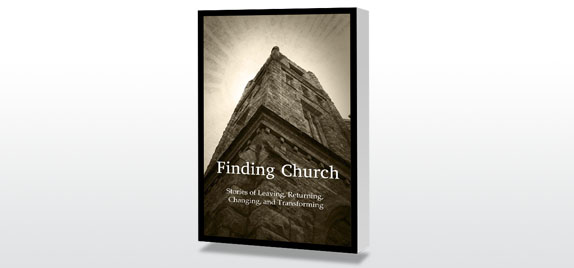
I’m pleased and immensely honored to have an essay included in the upcoming book, Finding Church, a Civitas Press community project.

This particular essay was difficult to write as it addresses the choice to stay at our wonderful and yet Complementarian church. Suffice it to say that I sweated blood, shed tears and lost sleep writing this one.

The estimated publishing date November 2012. I will let you know how to order it as we get closer.

{To the Elders and leaders of X Church, fellow believers in Christ} #mutuality2012

I believe this letter to my church’s Elder Board could have been written to almost any Complementarian church’s elder board.

To the Elders and leaders of X Church, fellow believers in Christ:

If anyone is in Christ they are a new creation.  The old had passed away, behold, the new has come.  All this is from God, who through Christ reconciled us to himself and gave us the ministry of reconciliation.  2 Corinthians 5:17-18

I am writing today in response to the request for Elder submissions.  Understanding that your responsibilities as elders are to guide an enormous church made up of a diverse population, I want you to know that this letter is ten years in coming and has been written with respect for the authority of scripture and for your roles as leaders. Your responsibilities, I am certain, cause you some “fear and trembling” and I believe that you have a sincere desire to listen well to many people with unlimited perspectives.  I have utmost respect for “authority” both within the church and in life and I hope that you will consider these thoughts prayerfully, before God and one another, and with the full congregation of X, both men and women, in mind.  Young and old, educated and less knowledgeable, Conservative and liberal, Black, white, Asian, international and US citizens, we all make up the beautiful and complex church of X.  What a daunting task you have.

I am writing about the roles of women at X.  I have been in dialog with Pastor about this topic for years and always appreciate his frankness and perspective.  I respect the need to be aware of the climate in X, the Church at large, as well as within our culture.

As you know, many Christian denominations continue with the practice of male-authority.  And others are open to change.  Though a clear, Biblical viewpoint was preached recently about how men and women are to treat one another, I know there are many at X, perhaps some of you, who believe in the universal male-headship principle. Obviously if it were simple, things would have changed with cultural and societal changes.

But it is a complex thing to parse through scripture to find what is Core Truth and what is cultural truth, of a time.  There are dozens of perspectives on the place of and roles for women in the church.

I appreciate the women who do serve at X church, though support staff in the church is dominated by women and the leadership is dominated by men, which I find strange and a bit backward and tells me that things haven’t progressed as much as I would wish.  What speaks loudest is that there are no women on the teaching team.  And, though perhaps this is even more difficult to change, women are still not considered for the leadership of being an Elder (who lead, manage, govern) and Deacons (who serve, care, guide) are invisible and do what?  I don’t know.

In my conversations with pastor, it has been clear to me that some of you over the years (I realize you’re a revolving door of men) do feel empathetic to the changes in the Church at large.  Perhaps you have even studied this on your own?

The New Testament church thought that the Lord was coming in their day and therefore did not very courageously attempt to speak to the injustices of their time.  Paul backed away from it so much that he prefered to be single than complicate his life with a woman and family.

But today, more than 2,000 years later, it is quite clear that Christ is yet to come, and I find it imperative that believers in Christ individually and corporately, with the power and influence each has been given by our Lord, speak to the injustices that plague humanity — war, poverty and hunger, and sexism are just a few as well as prejudice, bigotry and racism.

I ask therefore: Do you believe that women must not teach Biblical doctrine?  Do you believe that women are unacceptable for Church governance or pastoral and preaching roles?  Because that  is the current example being set at x.  And I would press back saying, if women are not to be in teaching  and in authority over men, why are women encouraged to be missionaries and managers at x?  This inconsistency implies that women can have authority over men in certain circumstances, just not over men of their own race and in their own church.  This I do not understand and ask if you see the conflict?

I urge you to consider the message you are sending to young people in the church, men and women who are considering how they might serve God with their lives.  And this has rampant implications for the relationships between men and women, boys and girls, as they see this conflict of ideas.

Church historian Janette Hassey, in her book No Time for Silence, talks about the fact that American evangelicals before the turn of the century and after, advocated and practiced women in pastoral ministry.   My own grandmother, a missionary in the 1930s, was an evangelist and preacher in upstate New York, alongside my grandfather.  Together they were missionaries in Tibet before the war.  Returning home because of WWII, they continued their work here.  I don’t think my grandmother would have been encouraged to use that gift if she were at our church.  It is sad that the twentieth century took such steps backward for women in the church.

I would like to ask you, individually, if you prescribe to the concept of male headship – or not — as heard in the recent sermon?   Whether you think headship is a part of the created order or merely a necessity in wake of the Fall it is not good thing for women.  And perhaps you say, “So what?  The Bible says what it says. Live with it.” I would push back asking whether you knew that next to alcohol and drug abuse the most reliable predictor of wife battering is “zealous conservative religiosity?”   This is just an example of how this policy within the Church at large has hurt women.

As I said before, I believe one call for Christians is to resist chronic injustice – to speak out when it is seen.  I see women being subjugated in the church, being kept from being elders when their full gifting, experience and knowledge is toward leadership. I see no women being encouraged toward teaching, serious scholarship and study of theology even when God has given them an ability, a passion for and a call to scriptural truth and teaching.  I see women who outside of the church are being affirmed and are leading faithfully and well, within the Church not even being considered to serve with the full capacity of those God-given abilities.

It seems to me that the current perspective takes parts of scripture and holds to it as if it were a Universal or Core Truth, while rejecting many other parts of the Old Testament and New Testament, that are cultural rules and are obviously outdated.

I don’t think women’s subjugation is any part of the core Truth of scripture.

The Church has changed its stance on many important things in the last 2,000 years: like strict or flexible observing of the Sabbath, pacifism vs. a just war, Christian’s cultural involvement or separation from culture, but gender roles remains set in what has “always been” especially in denominations, especially in ours.

Change in something this important is difficult and tumultuous, I understand.  To be different than your denomination, to think for ourselves, to study Scripture openly looking at original text with a heart for all people — all this is messy and painful and even unfortunately divisive. It is much easier to ignore it until the culture and climate change so much that you don’t have to risk.  I get that.  But it breaks my heart.

I would agree that on gender roles, the Bible is less than clear.  Just like the NT church was ambiguous about slavery, but we never question that change on Biblical grounds.  It is obvious today, that slavery is an ugly and abhorrent part of the Old and New Testament times. And in the fifties it was believed in the church that women are better suited for parenting and that idea has been rejected over time ,seeing clearly that children need both parents involved in their upbringing.  There are many things that we reject, as the culture and as times change.  But though the Bible isn’t clear it isn’t silent either about gender in the church.

And Jesus was not silent, he was constantly affirming women.

As Mary Stewart Van Leeuwen so beautifully describes, it is more like an …

“… unfolding drama in which salvation is made available to more and more groups that were previously considered marginal.  Salvation and equality of access to its privileges and responsibilities, is not just for Jews, but for non-Jews;  not just for free persons, but for slaves; not just for men, but for women – and so on, in keeping with the principles of Paul found in Galatians 3:28.”

So, if the Bible is ambiguous about gender roles and headship, how can I be confident and so sure that my belief in changing the roles is sound?  For me it comes down to our hermeneutic.

Willard Swartley in Slavery, Sabbath, War and Women asks the following questions, which I most respectfully pose to you, asking you to consider, as it relates to the issue of Women in the Church:

  • How are the two Testaments related to each other?
  • How is the authority of Jesus related to all Scriptures?
  • What is the relationship between divine revelation and the culture in which the revelation is given and received?
  • Does Scripture mandate, regulate, or challenge certain practices such as those associated with slavery, war, and the subordination of women?
  • Does the Bible say only one thing on a given subject, or does it sometimes show differing, even contradictory, points of view?
  • What does it mean to take the Bible literally?  Is that a vice or a virtue?  Does “literal” signify the intended meaning of the author or a meaning that seems natural to us?
  • To what extend does an interpreter’s predetermined position, even ideology (such as patriarchy or feminism) affect the interpretive task?

I think we can all agree the Bible is the incarnate revelation but one should also be taking into serious consideration the audience, time and place to which each book is addressed. Would you not agree that the Bible tailors its message to real people in real, culturally diverse situations?  This is the strength of, the power found, in Biblical revelation.

According to Willard Swartley:

“Scriptural diversity is the natural result of the one true God’s graciously relating to humans, drawing humans into a relationship, inviting free response and full engagement … Biblical truth is concrete, shaped usually by specific contexts, needs and opportunities.  Interpretation should affirm and celebrate this feature of divine revelation, communicated through many different writers in different linguistic, cultural and political contexts.  The variety itself becomes the missionary’s textbook [for] the biblical text spoke God’s word in a variety of cultural, economic, political, and social settings.”

And then Mary Stewart Van Leeuwen whose book Gender & Grace has profoundly changed my perspective on men and women and the Gospel says this beautiful and profound statement:

“For the sake of the advancement of God’s kingdom in a given time and place, temporary compromise can and often must be made with the societal status quo.  … Therefore Scripture is accommodated to the cultural setting of its varying audience, constantly being augmented by a move toward the vision of God’s coming kingdom.  Indeed, Jesus’ elimination of the sexual double standard was so surprising to his disciples that they concluded it was safer not to marry at all! “

Van Leeuwen continues that “the basic impulse being the Fall – the wish to be independent of God – is no respecter of persons.  Feminists and patriarchalists are equally in need of redemption.”

Again, theologian Willard Swartley with a good test of the degree to which our ideologies warp our reading of Scripture.

“Our willingness to be changed by what we read, to let the Bible function as a “window” through which  we see beyond self-interested ideologies, and not a “mirror” which simply reflects back to us what we want it to show.  Biblical interpretation, if it is worthy to be so called, will challenge the ideology of the interpreter.  It can and will lead to change, because people do not come to the text thinking as God thinks, or even as the people of God thought in serving as agents of divine revelation.  Interpreters [must] listen to the text carefully enough not to like it.  [When they do so] it powerfully demonstrates that the text’s message has been heard and respected.”

This is challenging because I am full of self-interest when it comes to being a Christian woman — that is a tribe that I belong to and feel a responsibility to care for — not because I crave authority, but because I long to see women carrying out every gift from God in their lives, not just in the marketplace, but within the church!  I am hopeful that this will happen in my lifetime.

I must ask you, individually, whether God is challenging you to reconsider your thinking on women’s leadership, governance and teaching roles at X, and whether the time has come to face that the current roles are stifling more than half of the church to be heard fully and uniquely.

But even more important (to me) is that this stance just may be holding back the fullness of the Kingdom of God from being revealed in our generation.  And my heart weeps with that thought.

Gretchen Gaebelein Hull, in her book Equal to Serve sees Scripture as pointing toward equality and mutual submission between the sexes and I’ll leave you with this quote from her book:

“Today, like James and John, so many people pluck at Christ’s sleeve: dogmatists, traditionalist, egalitarians, feminists, liberationists, all sorts of activists.  They all say the equivalent of “Seat me nearest You, Lord; show those other people that my system is best.” As they pluck at Christ’s sleeve, thinking that places at His right and His left will bring them honor and power and worldly recognition, He looks at them – and at all of us – and still asks: “Can you drink my cup? Don’t you see that whoever stays nearest me must … go where I go, serve where I serve?  Don’t you see that, loving the world as I do, I must serve it to the uttermost?”

It may come down to this: Can you personally serve under a woman, at work or at Church, and why not?  Could you accept that your wife, sister, mother, friends have gifts that make her more visible, knowledgeable, or experienced than you?  Could you dare to be like Joseph, step-father of Jesus, playing a lesser role than Mary?  What prevents you from rethinking, studying anew these things?

Fear? Ambivalence?  Prejudice?

I am incessantly asking myself over the last ten years at X, would I put aside my perspective if the time isn’t right for this church?  Would I work for change in a patient and loving way, rather than sinking into anger or bitterness?  I do feel that as an active participant (not a member) at X Church I have done that, meanwhile praying for the timing, the hearts of the church members, that God’s revelation on women would come.  And asking what part I should or shouldn’t play in that.

I have participated in women’s ministry here and seen women teaching who do not have the confidence that they been given the authority to speak definitively about scripture.  This undermines their ability to open scripture and speak prophetically.   This saddens me.   I have seen many women serving in various roles and respect them and know that they are listened to, but I still am not hearing anyone speak to this central issue.

I don’t know why God has given me such a burden for this but I carry it. 

Over the years I have written and sought clarity about why this practice of male elders and teaching team continues?  And since I do not feel confident that the issue is being discussed fully, openly or seriously (being sidelined for many other important issues of the church) I send this to you, asking for you to consider it now.

Each of us must ask ourselves, male and female alike, are we living as an old person or a new creation?  In the flesh or in the Spirit?    And what are we being called to, as we serve together?

I hear God’s call as a voice for certain voiceless populations, including women in the Church. 

I am constantly clarifying, are you sure Lord?  And at times I have been unproductive, and not very Godly, allowing myself to be anxious or angry or even bitter.  I have experienced a lot of pain.

In these years, I have come to a certain amount of peace with simply speaking up from time to time, meanwhile to be in study and prayer.  And then to been in a place of seeking the rest of the time.  But as the spirit seems to speak (or as elder nominations come up) I ask God what I should do, again  — do this time.

So thank you for reading this and hopefully giving it serious consideration.  I have purposefully not tried to write a treatise for the Biblical interpretation of all the key and most controversial verses — I’m no biblical scholar and you have one on staff.  I would ask you to free him up to study this if he hasn’t already.  Listen to him.  Then give space and time for your own study and careful deliberation.

God will speak.  God has a plan.

With respect and gratitude for your sacrifice of service,

Melody Harrison Hanson

October 7, 2010

The major ideas that persuaded my thinking and inspired this are from Gender & Grace: Love, Work & Parenting in a Changing World by Mary Stewart Van Leeuwen, ©1990, IVP.  She did the scholarship, I just happen to agree with her.  Also, Call Me Blessed: The Emerging Christian Woman by Faith Martin.

Other things I have written on these topics search for Women in the Church or Feminism.  I have written a lot.

I have intentionally removed the name of my church, though it wouldn’t be hard to figure it out, because I think these issue are relevant to almost any Complementarian church.