Ordinary Time [a poem]

Mine is an ordinary life
and it has taken me all my life to accept that idea.
I thought, dreamily
I was made for Big Things.  Contrary, it seems.
I live ordinary days and ordinary nights.
I’m a simple person really, but something inside me
is constantly seeking more.
That means, I am never satisfied.
That means, I am always questioning.
That means, I am rarely happy.

Mine is an ordinary life, and I am new to accepting ordinary time.    I crave
comfort, satisfaction, answers and joy.   I long for
peace.  I know ultimately that I am an ordinary person,
set on this glorious planet Earth.
I live ordinary days and ordinary nights.

Jesus came that we might have life, abundantly. 
How should that change me?  It changes everything.
He is a  big God, I am a small, ordinary soul.
Get that straight — yes, therein lies joy.

Faith Transforms Me, Sometimes.

My motto these days is to do the next thing — what’s straight ahead of me.  In life, in faith, in parenting.

The next home task, the next creative project, the next scriptural study challenge — I choose to do this because I don’t know what else to do.  So I do the next thing.  I say yes to requests and a chance to help those in my immediate life.  I want to be useful.  This is tale about something l learned while trying to be helpful to a friend and be a good mom.

I should know to welcome an imminent challenge  when I write about parenting.  And I should also know by now that when I get intentional about any aspect of life, experiences come up that cause my “great” ideas to suddenly seem anemic held up to the light of day, real life.

One of my kids came home today particularly ornery.

Nothing I said was good enough. Or correct. Or useful.  Finally when I had had enough I stormed off angry saying: “I don’t know why I bother to say anything around here.” (I know who’s the kid, right?) The more I thought about it, the madder I got.  I was steaming, white hot mad and before I knew it, even slamming doors.

Fuming I went downstairs to fold their laundry.  I decided if that’s the way she wants it fine.  What if I simply refused to talk to her anymore? …. for a while, for a good long while.  I’m thinking, yeah, I will pass information along via her brothers.  That way I could make my point (which was that she doesn’t listen to my sage advice) and still get things accomplished.

Before long she came creeping downstairs.  Still seething in my plans for my “cold-war” campaign, even though I knew that my plan would never work.  Beyond the plain immaturity of the idea, it just wasn’t kind.  And if anything, I try to always be kind.

“I’m sorry I don’t believe in Jesus” she says inaudibly. “Not right now.”

“What?” I asked breaking my short-lived resolve.  In this moment, when a child says something like that, at least a thousand thoughts run chaotically through your head within the space of milliseconds. You’re dizzy from the swirl of emotion.  Still, in these kinds of parenting moments, my main thought is stay calm.

I remind myself: Do not say anything you cannot take back!   You cannot let on that you’re freaking out … no!  It is not like the whole world is sinking.

How she even knows what she accepts as true is decidedly up for consideration.  She is just a child. Stay calm.

She came home saying she didn’t want to go to church anymore.  What was the point? Then, as well as now in this moment, I mostly listened.  I said something vaguely like: “We just want you to continue going, so that you know what you’re choosing.”

I’m kicking myself.  The last time we had this conversation I totally choked.  Later, as I was telling Tom it was all so clear to him what he would have said.  And with hindsight it was clearer to me as well.  I should have been ready for this one, but instead of that I’m hyperventilating inside about MY BABY is rejecting my faith!  (Perhaps only mothers know what I’m talking about here.)  Yes, I’ve talked about this before, but I just can’t believe that at fourteen she’s already rejecting the Church, and by that I mean big C church.  “I already know everything I need to know” she had said.  And I think that was somewhere in the vicinity of when I stormed out of the room earlier.

“I’m sorry that I don’t believe in Jesus” she repeats.  “Not right now.” And I looked her square in the eyes. And shrugged.  Obviously I’m no Billy Graham.  There will be no coercing from me.  No broad explanations or great appeals for faith.  I know that I understood less than nothing about spiritual things when I was her age, not really.  I really couldn’t grasp the concept of substitutionary atonement at all. If someone had tried to convince me of it, I would have written them off completely.

I believe that one comes to an understanding of the truth of scriptures slowly, and a huge part of that is seeing others whose lives are utterly transformed by Jesus Christ.  This is one reason I had so much trouble with my personal faith for more than two decades—I didn’t see people around me transformed.  (Blame the Methodists and Presbyterians?)

So, I looked her straight in the eye. And shrugged, as I turned back to folding.

Later, I decided that I wanted her to come with me as I delivered soup to some sick friends.   This is it!  (I’m thinking I’m pretty brilliant.)  She will see the feet of faith—the good deed, out of my love of my friends that makes me want to do kind things for others.  This is it!

So with her  mumbling loudly and her iPod blaring, with great drama and complaining, she got into my car as I put the Tupperware of soup on the floor between her feet.

After several questionings about why she had to come, we arrive.  I reached toward her. She reached to hand me the soup, grabbing the handles of a grocery bag – and bam!  Soup splattered everywhere.  “Fuck! ” (Yes, that’s an exact quote)I yell: ” How could this have happened?!!”  I fumed loudly glancing up at the house.  Stomping around the end of the car, I see that there is soup top to bottom in my beautiful (if dirty) Honda—with a large portion of the soup on the floor, irretrievable.  It was a colossal mess!

Again, we find me furious.

Ironically what I had intended to be an example of my benevolence turned into me a fuming and cussing, even accusing her, in my mortification!

Then a light bulb went off. 

This isn’t about the “good deed” or about the soup spilling all over my car and daughter.  And though I was tempted to blame her for the spill, it wasn’t even her fault.

This is about how  I choose to handle it, right now.  This is about me being transformed by Jesus.

Self-conscious about the half empty Tupperware, dripping with soup, I sheepishly rang the doorbell and delivered my soup.  Then I went to the car and calmly drove home.  At home, after collecting my thoughts, I told her “You don’t need to feel badly about this because it wasn’t your fault!”  If anything, I should have warned her that it might be messy or risky to pick up.

So we cleaned up the car together, which was a lot like cleaning up vomit we both agreed, only it smelled really yummy.  It was good soup.  And we had another little disagreement.  This time about whether “Drinking until you vomit” was the same as just social drinking.  (Do I know a thing or two about that?) Still, she walked away from me into the house, sheeshing me about acting like an expert and saying that I was “wrong that I didn’t trust her ideas.”  And I, once again, I was left alone fuming and wondering.

Now if she can just make the connection.  If only I can too, more often be transformed.

Yes, faith transforms me, sometimes.

MH

But we all, with unveiled face, beholding as in a mirror the glory of the Lord, are being transformed into the same image from glory to glory, just as by the Spirit of the Lord. 2 Cor 3:18

If you Read Nothing Else from me. Read this. ((On healing))

English: The healing of the paralytic : wall p...
Image via Wikipedia

So much to read, so little time. I know that.  If you read nothing else from me in a long while, I hope you’ll read this post.  It will not be long. (500+ words, a record.)

I have been writing (and living) out of a place of brokenness for so long that my story has become cliché and not honest – not dishonest exactly, but lacking the truth of my healing ….  A fractured painful childhood, a tenuous if bullheaded short-lived career, accidental stay-at-home motherhood, and loss, depression and loneliness, even alcoholism.  (And the biggest monster under my bed: being a feminist woman in the evangelical church.)

And now, this season that I cannot label because I am still living it.

Perhaps a place of abundance and healing, if only I would open my eyes and see. 

When you are in pain, you tie experiences together to find truth and your story all too easily becomes stuck.  I know this.  Today.  Living the life of Jesus is one of constant transformation.  Renewal.  Healing.

It is time to live into that healing. 

Be the truth that I have experienced.  Stop being “the abused child.” Stop being the frantic workaholic archetype striving for meaning in my work and looking for personal value in everything others do and say about me.

Stop living so empty.

Allow the One who fills, to fill me up overflowing.

Will I continue to talk about injustice?  You’re damn straight!  But I want to do it differently, do it with hope, and grace and peace.

With every part of me, I have wanted to be useful and in my cavernous need to be important I have invalidated myself.  My story.   For that I seek forgiveness and will endeavor to live out of Jesus’ fullness!

Mine is a story of healing and of transformation.  Not because of anything I have done but out of the grace of God and by receiving love from my husband , my children, and from my community of believers.

But by holding on…

to my anger about my upbringing,

to my disappointment with being born woman into a man’s world,

and to my fear that if “allowed to fly” I will flounder, fall, and I will fail.  Well,

I have allowed fear to rule and this is the day that it stops.

I want to live like I believe that the One who began a good work in me is faithful to complete it!

I am going to step toward trust.

Trust the words that I wrote today in the poem Nothing and Everything.

The Holy One accepts you for everything you are today and sees who you are becoming. For this Creator God made you, even chose you and is the architect of your life. The Holy One heals, because we sure need a healing.  Especially when confronted by the hideous ogre of our envy and pride. The Holy One guides and has a plan.“Even for me?” I cry, in the shadowy, nocturnal hours of fear, anger, twisted truths, ignorance, self-delusion and distrust?“YES, even you” whispers The Holy One.

I am going to step toward a life of abundance.  Even for me, my soul quakes?  Yes, even you.

MELODY

P.S.  I am so grateful for my husband.  And for the community of believers that I am a part of – it is a community of grace and abundance.   And I am grateful for my online community which is becoming a rich source of love and support.

On Doubt & Growing up in the Church of (women) “Shouldn’t. Wouldn’t. Couldn’t.”

My daughter pushes me.  She demands.  Before coffee and time to wake up in the morning, she throws out at me like spittle in my face a withering challenge. She says, about my faith, my beliefs, something like ….

You follow some concocted foolishness, if only to comfort yourself, to be a part of something, to be less alone, to feel consoled by the idea you won’t spend eternity in hell.

Ouch.  She’s fourteen.  I listen.  And take another sip of coffee.  Silently wishing that I was more awake.  Wishing that I had time to go to seminary and get back to her.  Hoping that I can remain calm.  And mostly, I am hoping that I am lucid.  Does she not know this is not my best time of day?  Of course she does.  I am not freaking ready for this!?!

And what sort of religion would sentence people to hell?” she continues.  I’m thinking “Where in the hell is she learning her ideas about hell?”

Yes, that’s the sort of girl we’re raising. 

Questioning.  Doubting.  Testing and pushing.  And I love it, even as it scares me and I long for more preparation.  No, I don’t fear my own doubt, because I have known the One who gives me peace beyond my comprehension.

But I fear her doubts.

She has a wonderful, active intelligence.  How to answer the questions rattling about in her brain— which she throws out with such vivid scorn.  How to answer, when it closely echoes the shadows of my heart and mind?  One might think this would make it easier, but it isn’t because I don’t fear my own doubt I pursue it. I have even grown comfortable with it, mostly.

But her doubts loom bulky and cumbersome, large in the room.  I feel them physically as she lurches toward her future.  Away from me.  Yes I feel her doubt pulling her away from me. This is what I must trust, that the One I know will make himself known to her and to each of them, my children.  I only possess them for a short season, if at all.  I once thought they were “mine” like a precious possession to be held on to tightly.  Now I know I don’t. I can’t keep them for my own.

The day she came squealing into the world, so strong and perfect I should have known then that she was not mine.  In the early months I was uncomfortable letting someone else take her from me, to hold her tight against their own chest in church.  I fought letting her infant body be pulled away from mine.  She was my first and the toughest, impossible, to let go of—I thought that I couldn’t do it.  I began to trust others just a little.  Our nanny.  A nursery caregiver.  Kindergarten teacher, first grade, second and up, over the years.  And now she is learning from pastors at church and from leaders in youth group that are young and barely out of school themselves.  And she learns from her friends.  How much she is learning from equally fallible, impressionable friends

I am reminded again, I can’t possess her.    

I look at her speaking this morning, so sure of herself, and  I think “I would hold you in my arms forever, if possible, so enormous is my love for you.”

A mother’s love and possession of her children is irrational.  At first I trusted no one.

And she always resisted me.

She struggles, fights me.  Argues about whether I like her outfits even when I say I do, she says I don’t; her hair, the shape of her nose which I think is quite perfect. But no, she is angry even as she tells me how very wrong I am.  “My nose is not perfect” she wants me to know. And I marvel at the thought.  To me, you are.

Perfection.

This is what I want to tell her.  

You have always questioned.  You were impatient, always.  I couldn’t teach you fast enough — the alphabet, or to read.  All of this could not be conquered quickly enough for you, in the midst of other babies coming along.  Just fourteen short months after you a brother, and he was physically large but quiet, careful and followed you everywhere; happily occupied by his admiration and awe of you.  My job and its demands getting me home at night exhausted, and there you were, already reading, even before I had the time to teach you.  You are ahead of me in so many ways.  At forty-five, I am just barely allowing myself to ask the hard questions, the ones that our faith community wouldn’t allow when I was growing up, somehow my doubt might mean that all of it isn’t true. 

I am only just learning to accept my own questions, to seek the answers out myself.  Yes, I learn from you my girl.

Your mother isn’t sure.  I doubt myself all the time  because I was told long ago in bible class in college (a Christian college) not to question.  As the Bible was opened for me in class, and I began to learn as never before, my heart fluttered and sped up with the dawning, comprehension that I could know the actual Greek words for myself.  I wouldn’t have to take anyone’s word for it.  Just. Like. Anyone. I could study and know for myself.  But when I sought this knowledge out, my professor asked “what would you do with it?” as if, I shouldn’t, wouldn’t, couldn’t learn for myself.  There would be no purpose.

Indeed, what purpose would it have served?

Yes that’s the lie I bought into, that I fight against (almost) every day as a woman in the Church, that we shouldn’t, wouldn’t, couldn’t, learn and teach for ourselves.  It is a lie, but one that is so strong.   I beat it back.  It returns uninvited.  Reading the words in Blue Parakeet, I am once again liberated.  It’s a constant liberation required, when you are raised in the Church of women “shouldn’t, wouldn’t, couldn’t.”   Scot McKnight liberated me again when he asked of scripture’s Story “What Did Women Do?”

What did women do I want to know?  We aren’t even to be allowed the stories in Bible of what women have done.  These stories of women have been silenced, ignored, overlooked and (not always with bad motives but still) they are missing!   As I have come into my own understanding of these things I have had to accept that to take a stand on this is threatening and provocative, and I am immediately perceived to be “liberal” and suspect, as if I don’t respect the Bible which I do, oh so very much from that moment in college when I had the profound thought “I can know this for myself. “ Oh what a sweet relief it was to read that even McKnight found it challenging to defend these things himself.

I am an evangelical, today anyway and I am only learning that I have read the Bible wrong.   I am learning to read the Bible as Story, even while “many of the traditionalists read the bible as a law book and a puzzle.  Traditionalists read the Bible about women in church ministries through tradition instead of reading the Bible with tradition.” (McKnight, the Blue Parakeet)

It is no small thing (to me) and I have spoken of this before.  My pastors never mention female theologians or even woman scholar’s writings about theology and the Bible.  I want my daughter to know that Christian women are thinking, can be academic, even scholarly, that we are wise and thoughtful.  Yes women.

And yet she doesn’t see that in the Church of  (women) “Shouldn’t. Wouldn’t. Couldn’t.”

What would it be like to grow up never hearing the old bible stories of what women did and are doing like Miriam, Deborah, and Huldah? To be a grown woman before you learn that these amazing legendary women spoke for God; they led the nation alongside men.  They sanctioned scripture and they guided nations.  What is it like to grow up never hearing from the knowledge and wisdom of women?   As my precious daughter shares her questions and doubt, I wake up and I listen, take it in.  I hope and pray.  She is strong and her soul and mind are powerful already.  Yes, I accept her doubts.  I know Doubt like a close friend, even if mine has different origins, nuanced by my upbringing and by mistreatment in my life by few strong men who abused.  I’m not afraid of my own doubt and I don’t want to be afraid of hers.  The Church needs girls like her who soon will grow into strong, articulate challenging women.  Her influence somewhere someday will be strong.  Perhaps even in the Church, if she stays long enough.  Are they ready her?  Or will they remain the Church of shouldn’t, wouldn’t, couldn’t?

Is that what you want to tell her?

We live in a culture that doubts everything as a matter of principle. In such an environment, how can even faith be immune to doubt? Can I really trust in the gospel? Does God really love me? Can I really be of any use to God? We are taught to doubt but commanded to believe. Somehow we think that admitting to doubt is tantamount to insulting God. But doubt is not a sign of spiritual weakness–rather it’s an indication of spiritual growing pains. — Doubting,  Alister E. McGrath

I guess we are both having growing pains –this slowly waking, grown woman, and this young girl .  Is the Church ready for us?  Will they echo that women couldn’t, wouldn’t, shouldn’t?  Or will they tell us, yes, you can.

———————

These musings are like a journal and are not perfect.  As always, I hope you will extend me grace as I write to figure out what I think.

Imagine my Surprise. I read the Bible “Wrong.”

I never knew  that there was a right or wrong way of reading the Bible.  

I have always thought, naively I will now acknowledge, that all that mattered was how one responded to what they read in the Bible.  Nope, I’ve been all wrong.  I don’t know where I learned this idea either.  I’ve absorbed a way of looking at the Scriptures that I never questioned.

“It’s how I was raised.”  

What do I mean? Fundamentalists and conservative evangelicals (and I was taught to believe this but no longer) have a view of the Bible that it’s perfect, as in ” inerrant and infallible” by which they mean, it’s a divine product and its authority comes in “that God literally wrote it” by whispering his intents to people who then wrote it down (like God’s holy scribes).  And unless it clearly was metaphor, most every word was literally the truth, word for word from God.  These people also believe that the Bible is basically all God wants us to know in communicating his will to us, which precludes the work of the Holy Spirit and prayer, among other things.  They believe the Bible has everything we need and is totally relevant to the Christian life today.  That it is simple and plain, obvious; meaning if you just read it you’ll “just get it.”  There’s a morsel of goodness in that idea that anyone can read the Bible.  Unfortunately, even though anyone can read it isn’t simple!  What about the fact that it was written in languages we do not read or speak (most of us) and in a culture and time that we know nothing about. And the last, most heinous thing that simplistic reading of the Bible brings is the idea that one can pick and pull verses out of the context, not believing context is that important.  They read the Bible seeking blessings and affirmations for life.

Guilty. Guilty.  Guilty.

I do believe, and it is important to affirm, as Temper Longman says in How to Read Genesisthat the Bible is:

“… grounded in the ultimate divine authorship of the whole.  Thus in spite of a variety of styles, genres, themes and motifs, it is important to ask how the parts fit into the whole.”

And that is what I have known.  I guess one can make the Bible say pretty much whatever you want it to if you work at it.  People do it all the time!  I’m forty-five years old, been reading the Bible for myself since high school, and in many ways this is how I have always understood things.

That is what makes thinking about it in a new way so frightening.

I have to admit that I’m learning.

That fact should not be embarrassing, but it is.  People don’t like to admit very often that they don’t know something.  We all like  to come off as experts, if not experts than knowledgeable, if not knowledgeable then at least well-informed.  (

(Sigh)).  It’s hard to admit when you’re wrong, uninformed, even lacking knowledge.  It is hard to admit but I believe if I’m willing to do that then perhaps others will become open to considering the same.

Do I dare even talk about this topic of reading the Bible?  I am by no means an expert but I’ve read some things recently. I am armed and dangerous but I’ll list my sources so that you can do your own homework.  (And you always should.)

Here’s what I’ve learned.

The Bible is a piece of literature.

It is a book made up of books.  It is a big story of God and the world.  It is made up of stories and poems that tell us about God.  It is also a series of smaller stories.   It is, like any other book you read, written within a genre and knowing the type of genre you are reading helps you know how you are supposed to read it; whether it is poetry, myths, parables, history, legends or a combination.  And like other literature you study you should know a little of the customs and culture of the time it was written.

“The truth of the matter is that the proper interpretation of any piece of literature, and in particular a text as ancient and important as the Bible, deserves our careful reflection.” — T. Longman.

Hermeneutics is just a technical name for interpretation or “how you read.”

There is a way to read the Bible for what it is not just for what we’d like it to say.  And as we learn to interpret the Bible — as literature, within a genre, written in a time and place, a culture, with a certain purpose, we are less likely to be “Biblical Literalists.”  Just because you find verses that supports your view doesn’t mean you’ve probed fully the biblical view.

How we read the Bible has become very divisive among Christians and has been a contributing factor in the “culture wars.”  Biblical literalists fear the “culture slide or culture creep” and tightly hold a grip on the Church and on their ideas; that a few texts yanked out of any context or culture, are prescriptive of how to “do church” for all time. This keeps churches from changing, in ways that may seem obvious to those of us (women and men) being raised with a different way of looking at Scriptures – raised to think, study and apply scripture for ourselves.

I do believe that the Bible guides us and has everything to say to us in the twenty-first century, it can and should guide us, it changes our ideas about our moral and intellectual life, it forms how we think and behave, how we treat others, and transforms us and shapes who we are becoming …

But …

It’s all about how you read and interpret the Bible. 

I think there may be many people in the Church today who were raised to be biblical literalists. I was.  I no longer believe this is correct in fact I know now that it is wrong.  But I don’t exactly know what I do think, yet.  That’s why I’m “developing my biblical hermeneutic.”

I’m learning that there are some that believe there are lots of parts of the bible that you cannot take literally, either as historical fact or direct will of God.

I agree with Tom Wright when he says that the authority of God is embodied in Jesus himself, not in the literal words of the Bible.  (Loosely quoted.)

Of course how you read and interpret is subject to the wisdom and biases of humans.

Everyone comes at the Bible with a “world view.” We are all guilty of cherry picking verses to be factual and literal truth or determining that something is cultural.   Everyone does it.

Take 1 Timothy for instance.

“Women should dress themselves modestly and decently in suitable clothing, not with hair braided, or with gold, pearl, or expensive clothes, but with good works, as is proper for women who profess reverence for God.  Let a woman learn in silence with full submission. I permit no woman to teach or to have authority over a man; she is to keep silent. For Adam was formed first, then Eve; and Adam was not deceived, but the woman was deceived and became the transgressor.  Yet she will be saved through childbearing, provided they continue in faith and love and holiness, with modesty.”

If you read it literally, women are not permitted to teach or have authority over men but also they are not to braid their hair or wear pearls or gold or expensive clothes.   Also women are responsible for the origin of sin in the world.  The “good news” is that we can be saved by bearing children.  If you interpret it literally these are God’s instructions/restrictions for behavior and roles of women.  Some churches choose to prohibit women’s leadership in churches because they use this verse to “prove” that God doesn’t approve.  But they happily ignore the rest of the verses as cultural.

That’s cherry-picking. 

But if you look as the Bible as being written by a person in a particular time and culture, if you know the historical cultural setting they were writing in then you see that this is how one man in the early Christian church saw things.

When you read it with context, looking at the contrast between this and other texts in the New Testament, if we recognize or listen to more than one voice speaking about the role of women we can seek to discern which voice to honor.  In the New Testament there are examples of women apostles and teachers, women financing the ministry, women sitting at Jesus’ feet learning from him with the other disciples, a woman being the first to speak to Jesus after his Resurrection.  These stories all empower of women in the early church.  You can see this if you don’t restrict your reading to Timothy’s set of verses, which are very restrictive.

Listen to more than one voice. 

Look for themes and overarching ideas.  I believe one must recognize more than just one voice in trying to figure out anything in the Bible.  And it takes discernment and wisdom and doing your homework in trying to figure out which voices to honor.  I look at how Jesus treated women when it comes to this topic.  I do not look at the verses about early church as prescriptive of how we should run our churches today.  But that’s just me.   But as you can see, a lot is at stake in how we read and understand the Bible.

Everyone wants to read the bible for today – for guidance and wisdom for today’s problems, for today’s trials, for this moment.  The problem inherent in that is that without doing the hard work of asking the questions of the context and placement in history, we endanger our ability to hear God.   I am greatly encouraged with the knowledge that there are essential ideas from God that are clear and reinforced many places in scripture.  Those broad strokes from God are the things that guide us — point us to God and deepen our relationship with the trinity.

Those are my thoughts offered humbly because like I said, I am no expert and I am likely much too opinionated.

On the topic of unlearning and learning How to Read the Bible Again:

  1. The Blue Parakeet: Rethinking How You Read the Bible by Scot McKnight.  He’s a professor at North Park Seminary.  He also has a blog Jesus Creed which is for me critical reading.
  2. Scripture and the Authority of God: How to Read the Bible Today by NT Wright.

And to add to my list of commentary suggestions (from why I’m Afraid to Read the Bible):

  1. New Testament Commentary for Everyone, by Tom Wright.  They could be in the “For dummies”series.  But not really, for everyone is a nicer way to put it.  These are really good.  They go through books of the bible and explain the background and what it’s saying.  I really like them.  Straightforward, not dumbing it down too much, just enough to make easy.  Not everyone has time to do a lot of study.  These are really informative and interesting.  And short.

Melody

Developing a Habit of Abundance

I am sometimes wrecked by my unbelief.  “Lord I believe.  Help my unbelief.” scripture says Mark 9:24.  I am coming to see.

Must I always put on habits?  It seems that I must choose daily, sometimes moment to moment.  I have to wear my belief like an new sweater or twist the rubber band on my wrist  to remind myself of what I want, what I know, what I need.  I am so full of need, so empty.

Like the havoc of the wind, I am wrecked by my unbelief.  The slang definition of the word wrecked is to be drunk or intoxicated.  I have always gotten high on all the wrong things – shopping, my own panic, books and other “things”, easily addicted even to the lack in my core, in my soul.  I am even hooked on my own sadness. In this I know what I need.  As I come to depend on all these highs that I choose for myself – my inner core isn’t worthy of my own trust.

Have I always been a vessel in ruin?  Shipwrecked.  Does that mean that I cannot be trusted?  That is what some believe and say that 1 Peter 3:7 means : that women cannot trust themselves. That man cannot trust woman who are the weaker vessel. What does that mean?  Others say that “Both Peter and Paul wrote about mutual, reciprocal submission in Christian relationships.”  If I believe I cannot be trusted, I’ll never learn to trust myself.  I’ll never trust anyone.  Can I then learn to trust God?

Growing up in the narcissistic family that I did, it is no wonder I do not trust myself.  Everyone in my family fluttered around one person, my father.  We existed to ensure his happiness and help him succeed at all costs.  The costs were many.  The price was high.   All my life I was told what to do by him.  I learned to always seek my father’s approval.  He was my universe.  What do you become when your “god” is cruel, selfish and destructive?  You cower.  You play the supporting role.  Never learn how to live your own.  Did he really become my god?  I don’t believe that is what he really wanted.  How did it happen?

I’ve been physically “free” of my father for eight years.  I am only learning how to breathe on my own.  Jesus is reshaping my view of the world and myself.  I am starting to see that I may be wrecked, like a ship cast to pieces against the shore and torn to pieces, but I did not create the storm.  And I am slowly being healed by the Jesus who healed, he healed women as much as men.  He empowers me.  He trusts me.  He is teaching me.

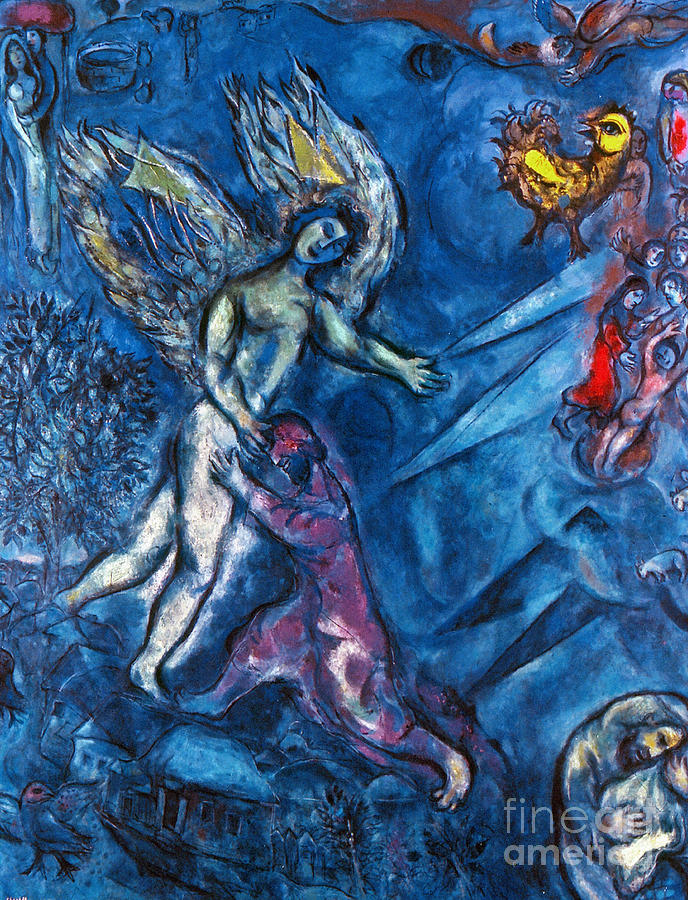
I have been fighting him, Jesus, and God, the Father.  As I fight, I am wounded like Jacob who wrestled with God and I am afraid.

I am afraid of my life.  I have been fighting and demanding.

I read and wonder if it is true:

“The Lord has to break us down at the strongest place of ourselves before he can have his own way of blessing with us. “ (James H. McConkey, Life Talks)

As I have healed, I have slowly demanded a purpose for myself, a big dream, a significant place to contribute, and God has been quiet.  At least it seems to be so.

“This is the work (service) that God asks of you: that you believe in the one whom he has sent. ”  That means cling to Jesus, trust Jesus, rely on Jesus, and have faith in Jesus.

“God created the world out of nothing.  As long as we are nothing, He can make something out of us.” [Martin Luther]

Really?

I cannot lose this ever present need and instead of making me feel strong, it shames me.  I feel my lack of belief, my frequent anger and pain, absence of joy or gratitude; I feel powerfully this emaciated, hollow life.  Is this what I am known for?  I pray not.  I pray that I can surrender, even now.  Even today give up every part of me, the resilient and the faint fragments , to him.

I tell myself I do not fear my own flaws.  But I fear that it will be used against me to prove that women are weak.   I fear my own power too.

Jesus says, “Lay it all down.”   Let it all go again.  As I am developing the habit of abundance, I doubt that have never responded like Mary did.  “Let this happen,” she said, when told that she would mother the king of kings (Luke 1:38)

Whatever it is, “this life” for I do not know what it is yet.  For I cannot even imagine.   I am learning to respond.

Let this happen.

Melody

P.S. I am inspired by reading Ann Voskamp’s One Thousand Gifts.

Why I am Afraid to Read the (entire) Bible

Here’s the honest and mortifying truth.

I have never read the entire Bible, whole.  I have studied various books at length, sometimes on my own but more often with a group of others.  But I have never opened the whole of the great book of God’s WORD, Old and New Testaments, and soaked it in as a grand story.  Of course, any “sheep” knows, don’t they, that the Bible wasn’t written to us but for us.  The Bible is not a handbook of do’s and don’ts, but rather a beautiful story which we can carefully apply to our lives.  And if we fear what it says, if we are unwilling to challenge and question it, we deserve to be ignorant fools (like I have been.)

I have never put my full attention, put my full brain, toward the Bible.  I have been afraid of reading the entire thing and these are my reasons.

I am afraid of my own ignorance.  I don’t know what I don’t know.  If I don’t know then I can continue stumbling in the darkness.  At least it is a familiar place, my ignorance.  Sounds dumb when you actually write it down.  But how many of us do this in the Church?  Far too many.

I am afraid of what the Bible actually says.  For too long I have simply listened to others and accepted what the “experts” say about spiritual things without really challenging any of it.

I am a frequently boiling pot, kept simmering by the cool head of Tom, my husband.1 He often keeps me from boiling over.  It seems that he will be doing this a lot as we began reading the entire Bible in one year – a challenge from our church they are calling: Eat This Book.

So I would add another point to my list of reasons that I have never the read the Bible in its entirety.

I am afraid of how I will respond to the Bible as a woman.  We all have a worldviews and as such, we read the Bible differently. I respond as a woman.  How can I not?  And that is different from my pastors (both male) and my husband, and most of the commentary I am reading.  As a woman I have different questions.  I am afraid of what  to do with those.  How do I sort out how much of my response needs to be talked about, questioned, and challenged?

On the other hand there is a lot that excites me about finally reading the entire Bible.

I look forward to diving in.  Already Genesis has perplexed me, made me extremely angry, and left me with more questions than answers when I look at it story by story.  I want to be able to see the big picture — to soar over the parts that jump out to me as problematic and see God and hear God, asking him what he wants me to focus on.   I look forward to how this Grand Story changes my life. 

Just last week, my pastor was preaching on Gen 1-3.  He was explaining a very important idea about how we look at scripture overall, which I mentioned already, that the Bible is not written to us but for us and that much of it is metaphor and poetry.

But then he highlighted the verses about man and woman becoming one.  Now I’ll acknowledge that it is beautiful, the whole picture of marriage.  But I actually thought it would have been more important (coming from my worldview, as a woman) or at least more valuable to women, if he had taught about how we are both, male and female created in God’s image.  To emphasize and thus explain what the Hebrew word ezer  (helper) actually means. These verses being misunderstood have diminished and hurt women.  He thought the other verses were more important.  We disagreed nicely by email.

I have to admit that how we interacted mattered a great deal to me and I’m learning that this is more important to me than me being right.   I shared my thoughts with him and he heard me.  I felt heard.  And this is a form of giving someone respect.

And so I would add another point to my list of reasons why I haven’t read the Bible it it’s entirely.

I am afraid of the disagreements among Christians.  I hate the way that Christians wrangle with one another over the baggage that goes into “being theological.”  Are you on the Left or are you on the Right?  Are you conservative or liberal?  Are you a feminist?  Egalitarian or a Complementaran?  A new Creationist or …. ?  I don’t even know all the camps of disagreement and I don’t want to.

I just want to read the Bible and get a little help along the way.

If you haven’t  yet, I’d encourage you to read The Blue Parakeet by Scot McKnight, which will help you rethink how you read the Bible.  Other resources I am finding helpful are the NIV Compact Bible Commentary and the Women’s Bible Commentary.  

The important truth is that I cannot allow my fear of my own ignorance, my fear of this faith tradition that I have followed my whole life, or my fear of disagreement keep me from the next step in my faith journey.

Being that I can be hot-headed, I just might say or do something stupid along the way.  And I would hate that but I cannot allow it to keep me silent.

A friend said to me  this week:  “I am praying that Jesus would guide you as you study His word.   May we always be in search for bringing glory to Him!”  Amen!  I suspect that I will be sharing more of this as I go along.

I wonder, have you read the entire Bible and if not, ask yourself what are you afraid of?    If we seek to follow Christ we are to live in the Bible today and every day.   The question is how?  Let us join together in our KNOWLEDGE not our ignorance.  Let us be SEEKERS together.  

Wouldn’t it be wonderful if Christians were known for their knowledge, agreeableness and love?

“Blessed Lord, who caused all Holy Scriptures to be written for our learning: Grant me so to hear them, read, mark, learn, and inwardly digest them, that I may embrace and ever hold fast the blessed hope of everlasting life, which you have given us in our Savior Jesus Christ, who lives and reign with you and the Holy Spirit, one God, for ever and ever.  Amen”  But when he, the Spirit of truth, comes, he will guide you into all the truth.

Jesus, according to John 16:13

Melody

 ————————————————————————————————–

1 Tom and I have an egalitarian or mutually submissive marriage. And I was challenged by Rachel Held Evans (she does this a lot) this week .  She asked the question of whether more people need to talk about the ways of egalitarian marriages, to give others an idea of what it’s like.  I never talk about mine.  It’s precious to me and I’d not want to ugly it by my bumbling attempts to describe it.  But I’ll be thinking about that and try to weave things into my blog as appropriate.

2 Blackhawk’s pastors have given us a challenge.  “By reading the Bible every day, our hope is that we’ll become a people who are shaped by the Scriptures – people who are marked by love, joy, peace, patience, kindness, goodness, faithfulness, gentleness and self-control.”  And they are taking it a step further by providing mini videos and teaching tools.  It’s quite good.   I am grateful to attend a church that doesn’t spoon feed, that helps the “sheep” figure some of these things out for ourselves, but also provide solid ways to learn.

The things to look for in reading Genesis are:

  1. The main plotline in the book: God’s desire to bless humanity consistently meets human stubbornness and sin, keeping a record of the words for “bless, blessing” as you read: God wants to pass on a blessing, but humans constantly thwart that blessing.
  2. Genesis 12, 15, 17 and the covenant with Abraham are the key to understanding the entire Bible: God is going to rescue the world from sin and corruption and restore blessing through his promises to Abraham.  The rest of the biblical story will focus on God’s relationship with Israel, because these are the people who bear the promise for the whole world.  Keep track of how the promises to Abraham keep getting repeated and passed on to the next generation and God works out his plan.
  3. Find your story in the characters: All of the characters in Genesis struggle with God, and we are meant to find our story in theirs: the characters wrestle with their own sin and failure, doubt and faith, selfishness and generosity as they try to follow God.  Use each character’s experience (for example, Adam and Eve’s temptation, Abraham’s struggle with doubt, Jacob’s journey from selfishness to trust in God) to find parallels with your own journey with God.
  4. God’s faithfulness: notice how many times God rescues people, or stays committed to blessing humanity. Allow Genesis to reshape your ideas of what it means for God to be faithful to you.


3 “Helper”- ezer.  Gen 2:18   According to R. David Freedman, the Hebrew word used to describe woman’s help (ezer) arises from two Hebrew roots that mean “to rescue, to save,” and “to be strong” (Archaeology Review (9 [1983]: 56–58). Ezer is found twenty-one times in the Old Testament. Of these references, fourteen are used for God and four for military rescue. Psalm 121:1–2 is an example of ezer used for God’s rescue of Israel: “I lift up my eyes to the mountains—where does my help come from? My help comes from the Lord, the Maker of heaven and earth.”


Why do you Love me? [Advent Reflection]

That was the question, an aching appeal, a cry of  a sad heart.

Children can be so difficult, argumentative and surly.

They question everything.

They take up space and create messes.

 Interrupt.  They wreck things that once were beautiful.

 Children don’t deserve our love.

Do they?

Why do I love you, I answered?  Because you are my child.  You were a gift to me and I think you are perfect.  Nothing you ever do will change that because you are mine.  My lovely child.  It’s unconditional.  Do you know what that means?  That you can’t earn it.  And you can’t lose it.  I love you.

And still, a little later, she returns.  She wants the reassurance.  The reasons that I love her because she feels so utterly unworthy.

Sounds familiar.

I am often asking God why do you love me?  What can I do to earn or deserve your love?

And God says …

Why do I love you?  Because you are my child.  You were a gift to me and I think you are perfect.  Nothing you ever do will change that because you are mine.  My lovely child, beloved.  It’s unconditional.  Do you know what that means?  That you can’t earn it and you can’t lose it.

I love you.

That’s why we celebrate the birth of Jesus because of what he did for you and me.

Something New [a poem]

Jacob Wrestles

Often, I wrestle with God.

I am

a doubter.  I regret my own suspicions and fears

and I am also strangely grateful.

Yes, I am glad.

For to wrestle is honest.

And I have seen that as I face my darkest hours, as twilight turns

to morning and I am awake, still.

As I am fighting and the agony of depression and anxiety seem to overwhelm.

God is my comforter.  Even as I

fight, I know his consolation and that all this comes, unsurprisingly.

All this is for me.

Somehow I know that it is through the dog of depression jumping at my heels

and the albatross  of fear

heavy on my shoulders, and the arrows of anxiety stabbing at my chest,

I know that God is God,

and I am simply and solely,

wholly and fully, unabashedly

beloved.  Oh, I may plead

with God to bless me, but I understand its slow coming.  And my slow

learning that even here, now, today I am blessed.

I may walk through life

with this sorrow, the scars that are constant and deep, so deep

for I have been wounded.  I cry out

begging God to prove himself to me.  Does he mean for my life

to mean — anything?

Can I trust you, God?

Can I count on you for whatever the future holds?

Trust you that my life matters?

I know

these encounters in the dark, the isolation and despair of depression

change me.  Deep within, through my abrasions and soul pain,

God is making

something new.

I bear the mark of my pain, scars.  Perhaps I always will.

But I am also

something else. Therein is promise.  And hope.

I am something redeemed.  So even while I stumble, shattered

I am being made strong – perhaps even useful, resolute

and yes, somehow my life is something good.

I believe

when God made me he was pleased.

And nothing I can do, have done, will do

changes that.

Deep within

my abrasions and soul pain, God is making

something new.

(I am) Under Construction: I Believe in the God who keeps time and has a long view that I cannot comprehend

daughter & dad

I am grieving my father’s absence today.

I miss him terribly. (This is true, even while it is also true that I was afraid of him all my life.)  He was my father and I loved him.  He was wise and could be gentle and kind.

Yesterday while reflecting on where I have come from, I realized that my perceptions of what I see as my “successful” years are a direct result of my Dad’s view of the world and his active presence in my life.

The way he viewed one’s personal value was that it comes directly from one’s significant contribution to the world, the “great” things you would do for God. 

This has messed me up.

I went to work for my Dad soon after college.  I wanted to be near him, to come to know the man who others seemed to revere so highly.  As a child, I missed out on a lot of time with my father because of he was constantly working and frequently traveled.  I thought that this was a way to be close to him.

Those years working for him at InterVarsity and on Urbana conventions were full, busy and challenging.  I learned a lot of good things:  the value of being a hard worker, of doing things excellently, of receiving correction, of trying things even when not an expert (basically taking risks!), and the value of pursing your passions.

I also learned some things about myself — one is good, that I loved hard work.

But I also came to believe that work could fill the empty spaces in my soul – places of loneliness, need for relevance and love, and the insidious fear of being a failure.

All of my life it was those people who served others, who worked hard, who accomplished many things, who were pioneers in their ideas and accomplishments, who challenged the status quo, who took risks, who “made a difference” – those were the people admired by my father! 

And that is what I learned to do and believe mattered most.

Growing up the things that were okay to sacrifice were family, friendship, and knowing and accountable relationships.   I even saw that it was okay to not live up to the great character qualities aspired to in Scripture, if you meant well or asked forgiveness afterward.  Growing up in a missionary family it was made clear to us that you should be willing to work for less, less money as missionaries and nothing in terms of payment for my mother, who worked for the mission but received no monetary compensation.  And we learned that God would always provide.  We lacked for nothing materially growing up.

Dad was driven to do many “important things” and I admired him for this, even as I missed having a daddy in my life.   It is only as an adult that I accepted the power and impact of being driven on one’s priorities, relationships and family for the worse.

When I left work to be at-home, I had become my father — driven, passionate, crazy busy and “weary from well-doing,” as well as lonely and constantly fearing failure.  No matter what I accomplished, I was unsatisfied and rarely felt good about it or myself.   It just made sense to leave, if I was that unhappy at work.  We had three children in diapers and a budding teenager, my stepdaughter, at home. When I quit I was a mess and didn’t know it!

I am now grateful to have learned, after more than ten years at-home, that there is more to life than what you do but even now, even yesterday the devilish ideas return saying that I am nothing without what I am doing, and it better be something significant!  Accomplishments are heady things and degrees boost the ego, but they do not offer one the solid, sweet confidence that comes from knowing who you are in the Lord – beloved, fully known and loved.  I thought that my father would love me more if I was able to do more!  He had spent his whole life driven by this need as well.

This was what I knew “You are loved, more lovable, when you are doing important things.”

It was in November, 02, that I got the call that my dad was sick – he’d been having what they thought were TIAs, losing the ability to speak in mid sentence.  Through some connections, my parents always had connections, Dad got in quickly to see a brain specialist who made the diagnosis of cancer.  It was tumors in his brain.

The first of December found us in Colorado, with brain surgery on.  I didn’t know it at the time, but this would be the only time, in the months that he was sick, that Dad would allow a conversation about his possible death.  He could sometimes be a pragmatic man.  Going into surgery held risks and a conversation needed to occur with his children just in case something went wrong.  

I wish I had known that this was the only time he would allow such a conversation.  I still have so many questions, things that remain unspoken, proper goodbyes, … 

But that was his way … He lived absolutes and when he came out of surgery alive, he believed that God would heal him and more importantly that he would return to work.  “God still had plans for him, things Dad was to do.  It was unacceptable, lacking faith to be quite honest, to talk of his possible death.”

And so he and I went to tea.  It was a conversation that changed my life.  For the first time, I knew I could say whatever needed saying.  I was admittedly terrified!  He could be volatile and capricious.  And later, in a conversation with my sister he proved how much so.  This was partly due to the tumors changing him but he was erratic and mean many times over the years, which made it hard to trust in the benevolent moments.

At great personal risk, I told my father how his actions throughout my life had hurt me — his anger, his raging, his criticism, his absence had injured me. And this was his reply.  Yes, regret and he sought my immediate forgiveness.  (It was a transaction for him, forgiveness.  One asks.  One receives.  End of story.)

But he also said something that struck me as strange , a non sequitur, which I have reflected on many times since. It was new information.  He said, “I didn’t know how to be a parent.  I felt incompetent.  But I was good at doing work …  accomplished, affirmed and admired. And so that’s what I did, I worked. “

Yes, I felt that growing up.  Both that being a parent was not his priority though I didn’t know why.  And that what you do was a way to feel good about yourself.  And I also did that for many years and when work became untenable, even the accomplishments weren’t enough, would not fill the hole in my heart and made me feel like there was continuously more I need to do.  Have.  Accomplish.  Take on.  Achieve.   And so I quit.

I was unprepared for the full stop! Of all of a sudden, not being significant in the world’s eyes.  And what I had done in the past was irrelevant.  

And it wasn’t that being a parent was too hard but rather that I didn’t believe in its value.  In many ways still don’t.  I mean intellectually I do know the value of parenting, but I cannot seem to convince my heart and soul.

This is the root of my discomfort with being at home.  My depression came on very soon after.   I wasn’t happy but not because of being at-home, or being a mother, or even because I no longer had “a job” to make me feel important or worthwhile.

I had never been that happy.  I was only now coming to a place of acknowledging that reality.

I had a very good friend and mentor years ago, Pete Hammond, that wrote this wisdom:

“Being a sinner means having the terrible ability to misuse every good thing!  That ability to misuse includes relationships, possessions, passions and pleasures, citizenship privileges and rights, freedoms, work and jobs, family, etc.  Thanks be to God that Christ offered to help us break this terrible pattern on the cross.” – Pete Hammond, Re:Learning Family.

The good news is that though I am broken and lost, I have hope.  Paul progressed in his transformation, he said,

“Christ died for our sins … I am the least of all the apostles, unfit to be called an apostle. … But, by the grace of God, I am what I am, and this grace toward me has not been in vain.”

“I know that nothing good dwells within me… Wretched man that I am!  Who will rescue me?… Thanks be to God through Jesus Christ our Lord.

“I, too, had reason for confidence in the flesh (religion, ethnicity, family, profession, temperament, citizenship) … but I have come to regard these as loss… and regard them as rubbish… I want to know Christ.” 

“Christ Jesus came into the world to save sinners – of whom I am the greatest.  For that reason I received mercy…making me an example … To God be the glory for ever and ever!”

Transformation seems to take time.  I have to trust in God who keeps time and has a long view that I cannot know, comprehend, but I can believe in.  Looking at Paul, he was also growing in his understanding of himself from being a dangerous pre-Christian to becoming a mature and humble leader.  Paul changed.  In his life, I find hope!   He was being changed, he was “under construction” and when he said “Be imitators of me, as I am of Christ”(In 1 Cor. 4:16, 11:11 and Phil 3:17, 4:9) I understand what he meant!  Not that he was perfect, but that Christ was still transforming him.

I long for a day when I will have arrived to full maturity and not have days like yesterday when I sink into depression.

I pray for the fruit of love, joy, peace, patience, kindness, generosity, faithfulness, gentleness and self-control in life.

For serenity and healing, I pray.  And I believe that Christ is still transforming me.

Amen.

Empty and Waiting

I must apologize in advance for this essay.  I could delete it, I almost did.  Perhaps I still shall. 

———————————————————————————————————————

I stopped dreaming.  I realized this as I sat in church yesterday.

It’s hard to feel hopeful when you no longer dream.  What you conceived for your life is not this, when you look around and hate who you have become.

[It takes me a long time to learn things.   I am hard-headed. ]

Perhaps, it is too much to ask?  I just wanted to be significant.  I imagined that I would do something amazing with my life — all those years of working on Urbana conventions, I felt I was doing something important.  Now what?

Is this it? I am a mother and not that good at it, seemingly always failing my children, a wife which I will never write about, a terrible homemaker, yes I mean lazy and bad at it, an infrequent friend and missing sister, ungrateful daughter who just feels forgotten, a hobbyist-at-best photographer and a sometimes I put words together on the page and call myself a writer  … Even this blog is simply an exercise in navel gazing.  And here I go again.

My fight with my maker is almost daily – my depression or remission, anxiety seems constant, recovery from alcoholism, battling with the isolation, feeling only loneliness.

I know that I am foremost an ingrate.  I don’t need reminders.  I have so much!  Four beautiful children, a home and husband and all I can think is, …  I thought I would be something, more.  I put these words here  for what?

I feel empty. I feel useless.   What purpose does my life serve?  Yes, I am looking for evidence of good, any good that I do, and hope.

God is faithful to his promises.  What are they, his promises?  What has God promised?

I’ve already lost whatever I heard in the sermon yesterday. 

He said “God’s results will look different than what we dream or imagine, what we prescribe for ourselves.  The book of Isaiah is filled with a promise that wasn’t fulfilled for 700 years.  God is not predictable but he is faithful. “

I am filled with longing — sick with it.  Perhaps this too is the waiting of Advent.

At times, we wait just for hope. We know we are ungrateful.  We know we are useless to Him.  He doesn’t need us.

We are simply empty and waiting.  

“In this harsh world, draw your breath in pain to tell my story.” — Hamlet

I am a Reformed Control Freak (Advent Musings)

I am a reformed control freak.  By reformed I suppose I mean that I know I am, was, can be a controlling person who wants things just so. Christmas is a perfect example of what really gets my ire up.  OK, once again I’m showing what a wreck I am.  Yesterday I found myself at the hardware store ready to purchase lights for the house.  Yes, outside lights.  Just that is progress for me, twenty years it took.  Colored lights and all the glitter and s*** that we’re supposed to buy for this holiday, and Halloween, and all the other supposed “Hallmark Holy Days” — Well I rebel.

Yes, I have been told that I am “no fun” when it comes to decorations at holidays of any kind.  I don’t do ghosts in the trees at Halloween.  I don’t do little plastic hearts on the windows on Valentine’s day.  And I’ve felt sort of righteous in my snootiness.

Most especially at Christmas.    From the year I had my first tree we had our first tree, I have tried to control it.  My need for control being off the charts I would allow no colored lights, only clear ones.  No home-made ornaments, only accepting matching ones with a theme on my tree.

((Sigh)).  I am reformed because we do have home made ornaments.  And this year, after eighteen years of marriage, I have decided that it would be “festive” and “fun” to have lights on the house outside for all the world to see in their glorious tackiness   I mean isn’t really all about the kids?  And their imaginations?

And this didn’t help.  Driving home the other night, I heard my ten-year old son counting out loud.  When asked, he said, he was counting the number of people on our street that had “Christmas spirit.”

I knew this was the year.  I was going to get some spirit, let go and lighten up and have a little fun.  Who cares if the house is garish if it makes kids happy? Screw Martha Stewart.  And so I found myself at the hardware store putting down the lovely-green-genuine-pine-wreath-that-matches-my-house, for the front door.  And buying a bright red, bow that lights up.  And colored lights. (Picture forthcoming.)  Yes, I am a reformed control freak.

This isn’t about me.  This year for Christmas I’m giving everyone a decidedly much better time.

Isn’t everyone controlling at Christmas, with expectations ramped up to 110% for perfection!?

In all honesty Christmas never lives up to expectations because it isn’t about us and whatever experiences we can conjure up.

It’s about a babe born to a girl, quite unexpectedly and miraculously, who grew up to give his life up for me. And you.