Parenting by Free Fall

I don’t think about my father very often — any more. After he died, there was a time when my relationship with him clouded everything I did, or thought, or believed.  Before he died, I had no real understanding of how much he made me who I am.  He and my mother.  Every choice I made, sadly was in some way a reaction to his control over my mind and my heart.  I don’t think he meant to have that kind of power over me, nor would he have wanted it.  But it happened that way because I was so afraid of him.  I so wanted his approval.  And longed for more from him and my mother.

I talk a lot about the mind and heart in my writing because though two different organs they are connected psychologically to  — what makes us  — human.  I believe they make us who we are and it is through our choices (by making up our mind) that we grow into different people (transforming our heart.)

It’s strange to think back. I had no idea how unwell my parents were — as a child I thought they were just being parents.  Thought all parents were like mind.  I had no notion that there was a good or bad way to be a parent.  Nor could I conceive that I might one day stand in some sort of judgment over them and I am still very uncomfortable being perceived that way.

[I feel when I write about my mom and dad, I have to give this caveat every time:  I know my parents did the best they could with what they had.  I figured that out through lots of therapy.  I do accept it now.]

Listening to a radio interview yesterday of Anne Sexton’s daughter, Linda Gray Sexton, I was struck once again by how very dysfunctional my home life was growing up.  If you don’t know, Anne Sexton was a poet, known for her confessional verse who won a Pulitzer Prize for her poetry in 1967, a year after I was born.   She suffered through out her life with clinical depression and after many attempts,  killed herself when she was 45 and her daughter Linda was 21.

While I listened to Linda talk about her relationship with her mother as a love/hate and like/dislike, oh how much I related as it is unpleasantly close to what I experience today with my mother.

I love my mother dearly, but I can’t figure out a very good way to be with her. I want to be in her life. And I try, sometimes.  And at other times not very hard at all.  I know that I must be a better daughter.  And that she is a widow.  And I have all that weight on my shoulders which I want to live up to.  But often we hardly see one another and she lives ten minutes away.

Certain things she does hurts me, over and over again.  And no matter how much I have learned to not take it personally it is hard not to do so.  For example, it is not personal that she does not show up to things that are important to me because she got sick or is not “up to” it or is genuinely in some physical pain.  She’s done that my whole life and it feels personal!  But it’s not.  I think she just shuts down sometimes.  I believe it is because of my father’s treatment all those years — her brain blitzes out and she just can’t “do” life.  It comes and goes.  Sometimes she’s all over me.  And then she’s gone.

I simply want to escape the pain of not being able to understand my parents and how they treat me.

For Linda, growing up it was taboo for her to talk about her mother’s suicide attempts.  For us it was forbidden to talk about my father’s rage, my mother’s illnesses, and later the drinking.  There were so many secrets.  I wrote about that in a poem to my sisters titled A Sacred Contract and that’s what it was.

Linda Sexton said how much her mother’s depression and suicide attempts hurt her.  I’ll say it.  These are the things that broke my heart early on in life and God is beginning to repair. My father’s rages.  My mother’s obvious misery.  My father’s belittling and constant picking at her and us.  My mother’s frequent sinking into illness to “get away” from him.  My father’s work and frequent travel with subsequent fatigue.  My mother’s constant “support” and appalling attempts to build him up when he was in one of his Funks of insecurity and fear of failure. I think because if he fell apart the whole thing — our lives — would fall apart also. At least that was the threat.  That was the fear.  That tsunami was constantly just off the coast for years.

Relationships with parents are difficult and complicated.  On the one hand we know how we are so like our parents in their dysfunction and we castigate ourselves for it.  There is a level of shame involved that must be overcome.

Forgiving your parents for being who they were. And forgiving ourselves for being so like them or for choosing not to be like them any longer which also somehow becomes a betrayal as well.

No Boundaries.

Linda went on to say, as she put in her book Half in Love, another dilemma of living with such parents is that there are no boundaries appropriately set up by the adult.  And so the child feels unsafe — life feels precarious all the time.  My father’s rage was so unpredictable.  Even while it was on some level expected, it came at unexpected times.  If you cannot count on or predict the bad, on some level you cannot believe in the affirmation and love.  I don’t know why.  You just can’t.

And yet I worshiped my father.  There I said it.  And it is true.  Just as others did, I did.

And that was also my betrayal.  I worshiped my father and came to unfairly loath my mother.  It’s twisted.  She suffered from his rages more than anyone.  She endured.  She protected us by holding that fragile matchstick house together all those years.  But I saw her as the betrayer of us after all those years.  Thinking somehow she should have left him.  And what would have become of us if she had walked out on him after one of his thousands of verbal beatings over the years?   All I know is now.  Now without him we are a fractured family.  We don’t know how to be with each other.  We are all alone in our lives together.

Parenting by free fall.

As a mother, after all these years I see how this way of growing up gave me “no map for how to be a mother”  as Linda Sexton put it so well yesterday in her interview.

I have struggled so much with the confusion of that reality.  At times, saying I should never have become a mother.  What was I thinking, thinking I could be a Mother?  Sure, I can do the driving, and wipe away tears, help with the homework (not math!) and in the classrooms.  My mother was a great homemaker. She cooked exceptionally well.  I’ve gotten than from her but kids can survive without it.  And she loved to garden as do i.  She was a terrible cleaner, as am I.  It is not that I cannot clean, I just do not.

But shouldn’t home be “a self-sustaining world unto itself.  And mothers world-makers?” as David Griffith says in his essay Homemaker about his mother.

The fact of the matter is that I feel about as able to be a parent as a Mime.

I copy other people.  I try to mimic Mothers that I admire.  But I am mute.  And a fake.   I continuously hit some strange, solid and impenetrable internal wall.  I cannot break through it to discover what it would mean to be a “normal” or “good” parent.  A good mother.  I have not found the answers in parenting books either.  They are not the answer.

It’s something deeper.  I don’t trust myself. And beyond that I do not even have words for it because I have never experienced it.  There are missing pieces of my soul, my experiences, my character and person.

How can I ever hope to be a healer?  Because that is one word I do have for motherhood.  

Mothers are meant to be healers.

I am left with the knowledge that my only hope is that The Healer will infuse me with the Spirit of God.  Then and only then, there and only there something good will come.  I have to trust in that.

I have to set all my hope in that.  Because left to my own devices there is only fear, insecurity, depression, addiction, rage, and broken hearts.  There is only an inability to love, to connect, to nurture, to receive, to cohabitate  — to be human. I am not being overly dramatic although it sounds so.  When all you knew was rage you are unable to be normal.

I wrote this poem i 2004 after my father died.  It felt like a betrayal  then, when the words came out of me they were as much of a shock to me as to others I think.  But now I see that they were s t e p s toward my own healing.

Good Dad.  Bad Dad.

I shed no tears today
for the warrior who has fallen.
Taken down by Cancer’s sword.
My heart is full of memories,
good and bad.

Good Dad. Bad Dad.
Constant worry.
Constant change.
Who could have foreseen
the Cancer overtaking his mind;
that became my liberation
in five short months.

The danger –
of loving too much;
needing tenderness,
and all the things Daddy’s are supposed to be.

PAIN. FEAR.
Emotions jangling around inside me
like some kind of white noise;
pushing their way into my conscious thoughts.
Invaders, threatening to undo
the weak hold I’ve found on The Good Life.
So many memories
good and bad,
bad and good.

Who was he? Why was he MY dad?
MY tormentor.
MY warrior;
Finally broken,
beaten by the Cancer
that was to become my friend.

Betrayal, these thoughts which plague me.
Broken; the unspoken promise
to keep our secrets to the end.
How do I remember?
How do I stay true and honest,
when the Truth causes an ache
too strong to feel,
to face,
to bear.

Good Dad. Bad Dad.
Who was he in the end?
A Demon? A Saint?
Now simply a Muse?
Remembered, but no longer feared?
Thought of in furtive,
anxious moments?

Good Dad. Bad Dad.
Who is he to me now?
A man driven to despair
Living a chaotic, frantic life.

Not the Good Life I choose,
Not the legacy I will repeat.

Good Girl. Bad Girl.
Who will I listen to?
Who will I believe?
I am the woman I choose to become
today, tomorrow.
These are the Good Days
that I can change.
Yesterday is dead.
Burned in the funeral pyre.
Vapors.
Mist.
Dust settling around me.

Good Girl. Bad Girl.

Good.

Bad.

Good.

I certainly don’t know what it means to be a Mother.  A Daughter.  A Sister.  A Wife.  A Friend.

I

just

don’t

know.

But I can only take this life one day at a time and hope in God.

None of us can rewrite our history.  Nor should we try.  It makes us who we are today.  And for me, it makes me strong enough to write tomorrow.

These eyes, …

The recent events in Egypt have struck me in a strange way.

I was driving along the road this week listening to NPR and I find I am reacting emotionally to the news of the dictator Mubarak — like I did to my father’s treatment growing up.

The fear and the almost frantic way in which the people of Egypt stayed in Freedom Square — the fear of a vicious dictator. I know that feeling.

This is something I wrote in 2007. I am so, so grateful that most of these emotions are not still with me today.

These eyes, …

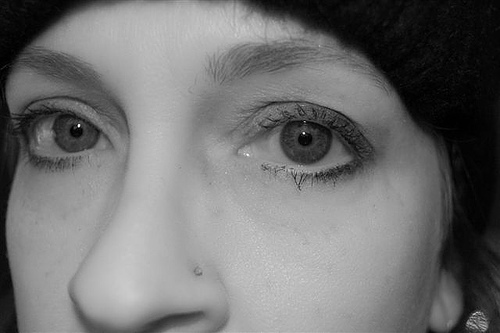
What you see there in my eyes is pain.  All the things I try to push away in order to do — this — day.  Yes, I was yelled at, raged at almost daily growing up when he wasn’t working or traveling for more than eighteen years. Oh, she was so sad — always sinking into the pretext of being sick so that she wouldn’t have to face the fact that he was yelling, rebuking, bullying.  Making his children shrink into a ball of tears and fear.  Stunted, unable to process the world around.  Yes, she drank, and drank, until a week before he died; she was burying herself in a bottle of Vodka.  Yes, he died, his brain slowly crumbling around him.  Yes, that melancholy that has followed me — sometimes chased me — through my life.  It comes in and intends to stay.  Until I rise up and scream,  NOoooooooo!  You are not welcome!  These are the demons that come and sometimes I can’t make them go away.  I just crawl up into a ball and let the waves of pain wash over me.

I did that.  But today these eyes, which have been trying to tell the world what he did and how it feels, today these eyes are saying it hurts, but I am strong.

I am not going to repeat history. 

I am going to be someone who can stop the rage, listen to my fears, process my pain, and I will NOT, above all, take it out on my beautiful husband and children.

These eyes are saying, I am strong.

this life-long fast [*a poem*]

This Life-Long Fast

Just saw a headline
in the Huffington Post.
Winter Cocktails Gone Wild.
And I am choked
by my longing.  I can’t explain it
easily, but I’ll try. I still crave alcohol.  Not
in the way
you might think.  Infrequently.  And not when
or where you might expect.
I go to church in a bar, but that only reminds me
of my gratitude
and drives deeper into God.  My
humiliation is my heartfelt cry
There, my worship. Inside, every Sunday
I am on my knees.

[Dare I say
lest I tempt fate]  I am not tempted
to break this life-long fast I have taken.  Yes.
I can say that and mean it.  I do not feel
like I need alcohol but it still
charms me. I think I want it.  Especially if I linger
with the thoughts that whisper to me.
Drinking is about
the moments, about intimacy
and good conversation. The idea
of being cultured,
intellectual and refined.  All those remembered
or imagined
moments swirl in my mind.

The Liar brandishes his greatest weapon, uttering:

“That is what you’re missing.”

And I find myself thinking

If Only!

Then immediately — I don’t even
have to force it, the list of reasons come for
why I will

not ever = never

drink again.
They come.  The list my counselor made me
so painstakingly write on a 3×5 card
(so that I would never forget.) Oh, I won’t
forget.

Memory brings it
and I remember
the vomit,
the disappointment,
the regrets (so many),
the fear,
the sink hole of depression and anxiety,
the danger.

No I don’t easily forget

that.
Alcohol, that sweet elixir
was my personal hell.  Oh no, the truth

is so fresh and real as if

I quit yesterday.
And soberly and gingerly, I consider

how far I have come.

I am Not Ashamed


At the end before I quit completely, I was a messy drunk because by then I had to drink a lot to be messed up.   More than I want to admit I had occasions of being a mess, stumbling to bed.  And many, many Sundays I sat through church with the world’s worst hangover.  My faith was shot.

I don’t really know why I was in church, except that I was still keening inside for God to help me.  I am glad I was there, in the end.  Thankful!

Those days were vile, don’t misunderstand.  But I do not feel ashamed.  I’ll tell you why in a minute.  Anyone who regularly reads my blog also knows I also suffer from major depression and that too wrecked my life.  You’re basically non-functioning when it is at its worst.

But I’m talking about why I am not ashamed of suffering from depression or of being a recovering alcoholic.

Why should I be ashamed?

I recently told a group of new friends (They are perhaps more like close acquaintances that I believe will become friends eventually) about my years of depression.  I told them quite matter-of-fact, asking for prayer for the process of slowly stepping down from the anti-depressant I take.  Afterwords, one of them came up to me and whispered out of the side of their mouth, full of embarrassment and clearly full of fear, “I struggle with depression too!”

In that moment I saw how frightening and risky it was for them to tell me.  And I realized all of a sudden that I did not feel that self-consciousness or shame.  I quite accept my lot in life.   Should I feel ashamed?  Am I supposed to be, because I’m a Christ-follower, perfect? I think too often people feel that same reticence.  They fear judgment.

This is the real deal.  Life is not perfect.  Life is what happens when you’re making other plans right?  I don’t know who said that?  But don’t get me wrong, I have not always felt this way — free and unashamed.

I have been there — Where I could not say these words in one sentence: I– am– an– alcoholic.  That four-word sentence took me five years to say out loud and two more to another human being. (Yes, I talk to myself.)  And now that I have, I am not going back to live in that shame.  So, no I don’t look at the person who shared with me in any judgmental way.  I understand the fear.

It took me almost two months to admit to anyone, including Tom for five weeks, that I was depressed.  There is an incredible bias or self-conscious reluctance (for Christians especially) to admit to the illness of depression.  I run into people all the time.  Well forget it.  I am not ashamed.

I’ve talked a lot here about alcoholism and family history.  Depression runs in families too.  Both of these things are simply my Thing.  My challenge.  My opportunity.  Other people have other Things.

As a Christian, what I hope people will hear the WOW in my storythe thing is that God is healing me! Yes, that is what I said.  That is what I believe.  There’s a psychological aspect to getting past/through/beyond these things, of course.  Doctors have played an important part.  Medication.  Finding balance.   But it came down to believing this simple statement:

You are the one Jesus loves.

My father sent me a postcard with this written on it, when I had the first episode of major depression eight years ago.  It was framed when I got it and clearly very important to him.  He had taken it right off his desk, stuck it in a padded envelope, wrote on a post-it that he loved me, and mailed it off to me.  The glass didn’t survive the journey, but the postcard did.  And over the years that statement has stayed with me.

When I read that day that “You are the one Jesus loves” I recoiled.  My stomach lurched.  Because, at that time in my life, I did not believe in the claims of Jesus I don’t think. I believed in the historical figure and in most of what the Bible said.  But, as for Jesus, the human and the son of God, who gave up life in a gruesome way FOR ME, well, I did not believe it.  I never believed I was loved growing up.  Not by God, not by my parents.  And definitely I hated myself.

So the healing that came in discovering how much Jesus actually loved me, well … as you can imagine that changed me.  Changed my life.  Changed my belief system.  Changed how I interacted with and treated others.  Changed my priorities.

I am a different person.

I not only like myself, but today I believe I am loveable.  I guess psychiatrists would say that my “self-esteem” is stronger.  Yay!  It’s true.  No wonder my mood is better.  But in all seriousness, knowing — believing — that Jesus would have given his life for me, and me alone, only me, well, that’s incredible!

[This wasn’t one of those miracles that happened quickly.  It took lot a of Bible study, times of prayer, listening to and working hard with my Shrink, giving up shit (drinking, smoking, being mean to people, compulsive spending, obsessive self-centeredness, … still working on perfectionism and a lot of other things.)

What I mean to say is this process took years. Deep times in the word of God (ie. Bible).  Time with friends in long conversations.  Opening my heart to love from others – especially Tom.]

So, no I am not ashamed of my ills, damn it! (Yeah, Tom thinks I should give up cussing for Jesus too.  It’s the last cheap drug to go aside from caffeine.)

You see, all of these thing they are a “weakness” of a sort that humble me and help me stay connected to the true source of everything.  And for that, I am oh — so — grateful!

The Slow Crawl of Healing

I have begun what feels like a slow crawl of healing which requires that I carefully take less and less of the antidepressant drug Effexor.  This choice frightens me no matter how much I tell myself that this will be a straightforward and matter-of-fact thing.  And remind myself that I am ready!

This day has been years coming.  Eight years since I fell into the major depression that would change me and my life forever.  Eight years since I have gone a full year without a depressive episode that I was unable to pull myself out of.  [I had one that began in May which lasted four months.  But, with the things I have learned, I was able to recover on my own (By that I mean without my psychologist’s help.)]  More than two years since I have had an alcoholic drink. 

Of course I would desperately like to get off the medication but I fear the worst – the side-effects which I have read will mimic a depressive episode.  I believe the medication is doing very little for me now.  But I fear the crippling, seemingly uncontrollable plunge, the inevitable decline; though I know a number of things that I can do to keep myself strong.  Still, the brain plays tricks and already has begun to whisper to me that madness will come, the despondency and stupor are inevitable.  And although I am certain these are lies and I counter with what I know, what I have learned, and what I believe more than anything — that this is a spiritual thing.  I must wait on the LORD, knowing what he has promised.  This is vital. 

I waited patiently for the LORD;
he turned to me and heard my cry.
He lifted me out of the slimy pit,
out of the mud and mire;
He set my feet on a rock
and gave me a firm place to stand.
He put a new song in my mouth,
a hymn of praise to our God.
Many will see and fear
and put their trust in the LORD.
Blessed is the one who makes
the LORD her trust.  (from Psalm 40, NIV)

I’ve said before that I am no good at waiting.  When is comes to spiritual things it infrequently that we are only waiting for minutes.  Usually on spiritual matters there is a waiting for months and at times for years.  But God hears us. 

He heard me.  He pulled me from that grim, terrible place.  My life has become (more) solid and sure. I am confident that  He has given me words to hold in my heart and to write “a new song.”  Selah!

Slowly, I Gave Up And Forfeited Living For Peace


Finding My Feelings.

I am listening to an NPR interview, on people who have lived with traumatic experiences and it adds to a growing unease I have had all week, a compelling need to write.  But I have had no computer.  I’ve borrowed one now. It is one of those times when I write to unearth what’s inside me.  To recover some bit of story that up until now was lost.

When My Father Died I Was Reborn.  This Is A Fact. 

To be quite honest I didn’t know it, but I was numb and deadened inside for most of my life.  I do remember brief moments as a child when I was conscious; happy and aware of it.  It was a beautiful time in Papua New Guinea running barefoot in the jungle, blithely unaware.  Even being thrown into the ocean at a young age, in order to learn to swim, was scary but for the most part an innocent lesson.  But I remain fearful of the ocean to this day.  I do not take any pleasure in swimming.   

 It Hurts Me Now, To Know How Much Memory Is Simply Gone

 I am a human being who lived more than forty years of life and yet today I cannot recall a good deal of it; I have very little memory of childhood.  And the memories I do have are full of the trauma we experienced.  I don’t want to only remember the dread and fear.  I do not choose to remember the ugliness; the ruthless cruel anger that we experienced.  I don’t want to focus on that, but you see it isn’t a selective focus at all – it is all I have left. 

 I am hopeful though that if I spend the time to remember what little is there, perhaps somehow, some day I will find more of the good memories.  I know those experiences must be there .  I would think that I and my sisters would not be as “normal” as we are able to be.  Would we not have become monsters — like — him? 

I am gratified that today I recognize goodness when I see it and so I must have experienced this at some time.  I see the tenderness and sweetness of casual, physical affection between a mother and her teenage children and I think “that is normal.  That is good.”  But I never experienced it.  By the time I was a teen, I loathed my father’s controlling touch, a hug or kiss at the beginning or end of the day was a salutation to him.  For me, it was a reminder of cage we lived in.  And my mother never had a physical connection or bond with anyone — at least not with her children.

Often Today, Unless I Force Myself To Allow It, I Cannot Feel. 

My dear mother, aged 73, called yesterday asking if she could pay for my children to attend the Messiah show that I will be in this December since we were choosing to “not afford it.”  After years of missing concerts and other things that were important to me due to their travel, she was remembering that this had hurt me as a teenager.  I was actively involved in orchestra and chorus.  She offered to pay the $30 per child so that my children can attend the concert.  She felt this was important to me.  I promised her I would think about whether I felt that way. I have learned that if I am not careful, I just feel what she tells me I’m feeling.   She wants to help.  She’s aware of old pain.  She attempts to remake life now, for the adult child.  It’s complicated.  I have no idea what I feel about this situation. 

Feeling things — for me, it takes peeling back the layers of the moment to find – my – feelings.  Crushing them was how I survived.  Now it takes such hard work to feel.  And to trust the feelings. 

Remembering what it was like growing up is hard for me.  Whether I was conscious or not, it was important to hide or be invisible.  I spent lots of time in my room escaping into a book; the fantasy of a romance or historical novel or a Ludlum mystery.   I hid in the music, playing the piano or the bass clarinet.  In the concerts that my parents received free tickets to over the years.  Music has always been an escape.

And I found myself when I was welcomed at church by my youth pastor and in his grizzly hugs.  There I found an acceptance of “ME” that I had never experienced in my life.  I had a budding faith.  I recall lying in my bed late at night, after church, praying out loud the prayer that I could not make myself utter out loud at church; too afraid of not getting it just right.  The need to be perfect was true for all of my sisters and for me if I couldn’t be perfect then I would not try. 

 I do not recall much conversation with my parents as a child and teen.  I remember no talks with parents, except being forced to speak about certain things by my father.  What does Easter mean to you, tell me!  What are you thankful for?  Everyone must participate. I recall being yelled at for grades that were below my “potential.”  I was dragged, not physically but emotionally, down to the counselor at school so that the person could tell me what a high IQ I had and why I could (i.e. should) do better at school.

 I recall gazing at my bitten & bleeding fingernails in the microscope in Biology, wondering if I would ever feel good about myself.  Somehow, my hands came to symbolize my brokenness, pain and the ugliness I saw in myself.  They represented the self-loathing and to this day, they remain so; if there is anguish inside it always manifests itself on my fingernails and indicates nervousness I can’t control.

I recalled recently, being spaced out started young, a pattern of feeling just slightly crazy or numb.  Constantly tuned out started as a way to cope with the unpredictable nature of my father’s anger which could be triggered by anything;   A slip of the tongue, a comment coming out a too sarcastically or being considered disrespectful, not remembering an instruction and doing something else, and of course having ideas other than his.  That made him the most furious.  Enraged.  He was never physically punishing to us, but verbally hounding, over and over again; “At you” continuously until you admitted your offense – whatever it was — random things that bothered him. 

I began to shut down.  Concede not fight.  Give in. Confess. Not rebel.  Slowly, I gave up and forfeited living for peace. 

Even some of my last memories of my father, when they came to visit in October before he got sick, were of making concessions to his disapproval.  I had been suffering from five months of deep depression that had slowly been eroding my confidence and energy.  When they came to visit “to help, to support” I was very sick.  I didn’t have it in me to cook for them, so we took my parents out to dinner at our favorite Thai restaurant.  It was admittedly expensive.  It was delicious.  It was challenging with young kids.  He disapproved of the extravagance and made it known.  He went on about it as I slowly shut down.  There’s no productive discussion when he is convinced of something.  No reminder of the symptoms of depression being an inability to make decisions shopping for groceries or to focus for a long time on cooking or overcoming the fear of messing it all up.  I would rather have climbed back into bed, but because they were there I was up, dressed and attempting to function.

That is one of my last memories of my father before his tumors began to grow and his personality and ability to speak became impaired.  He came to help, to be of assistance, but he spent his visit on the phone and laptop and but he only criticized when he engaged me.  That’s a fact.  That’s what happened.

As I remember, sometimes I wish I could sugar coat the memories or even just deny them.  But what would that accomplish? 

Today, I choose feelings. 

And, I move toward memory. 

And living, well that comes slowly.  But it comes.

re|think everything

(re|think)

noun

Pronunciation:/ˈriːθɪŋk/

[in singular] a reassessment, especially one that results in changes being made.

I am thinking about many things including the future of this blog.  I was particularly challenged by a conversation this weekend.  My sister questioned why I “live so much in the past?”  She was wishing for me that I would be able to “get on with my life.”

Long before that conversation, I have asked for a clear insight about what is next for me.  I have been seeking — praying — listening.

Rethinking What I Know about Myself.

  • I need to know  that my life contributes to a grander and larger story than simply my own.
  • I have certain passions — God-given, I believe.  Most notable photography.  biblical studies.  women.  any injustice.
  • One spiritual gift I have seems to be Mercy. My heart breaks over the corruption and greed in some that leads to poverty and pain for others.  Over persecuted people groups.  Over homophobia, racism, sexism.  Over anyone being homeless.
  • My voice, in writing, is loud and clear and sometimes even challenging.  Out loud I am meek and unclear, which I experienced this weekend to my dismay.

Rethinking Biblical Translation & Interpretation.

I have a hunger to understand scripture for myself.  Dare I say this?  It frightens me that so much of (most or all) biblical interpretation throughout history was done by men.  It gnaws at me from inside out.

I am not a raging neofeminist or even a strong proponent of a feminist or liberation theology.  (I guess I don’t know enough about them to say one way or another.)  Simply put, things have been stacked against us:women

  • A patriarchal society& culture brought us the message of the scriptures that we live our lives by. 
  • Another group of men translated it into the language for “everyone.”
  • And, then in most churches today men stand up and interpret scripture every Sunday and all week long.

“The Bible has shaped the life of the church in a way that nothing else has done and Christians today are the product of the history of its interpretation.” 1

Why should I trust their translations and interpretations categorically without question?  This is simply foolish, in my opinion.  And still I pray for a spirit of humility — that I would be a fertile ground.  I ask why do I think these things and if my motives are wrong or I am simply being foolish in my thinking, that this thinking would change.  And, I have thought of many responses to this conundrum, from applying to be an unpaid intern at my church in biblical hermeneutics, I would hope, to bring a feminine voice to the teaching being done, to going to seminary.

Rethinking My Role.

As I seriously consider the perception of being a “woman of leisure” which I wrote about recently, I get mired in my own frustrations and can’t pull together clear thoughts.  Because it is emotional for me!  I don’t care about the money (perhaps I should) but I want respect.  And I know if I don’t respect women who stay home, then how can I expect others to respect me?

And before you email me about the value of being at home with kids, know that I’ve had more than ten years to ponder this subject.  I don’t need “encouragement” in that regard.  It is an incredibly complicated personal decision for every women and I do respect the difficult place women (so much more than men) are in.  So if you are a man, butt out. No one can make this choice for a woman or explain away her doubt, fear, aspirations, goals, or desire for “accomplishment” or get why she cries to be away from her babies.

Recently, First Lady Michelle Obama was named Most Powerful Woman of the Year, beating out heads of state, chief executives and celebrities in Forbes magazine’s annual listing.  Some women came out saying Ms. Obama talks about herself as a wife and mother and were questioning how that makes her influential?   Gr…..

But I digressed into an issue that is only a side story in my search for a place to make an impact and contribution.

And I am still left thinking at this point, is this blog much ado about nothing?  Is it time to stop?”

Rethink Everything.

It is difficult for me, at times, to look back over the last decade of my life.  In human terms — quitting  a meaningful, challenging job, succumbing to clinical depression, becoming addicted to alcohol, and straying far away from the LORD — it was all failure on my part. And yet, it was through those experiences, as mortifying as they are and were to me, that I have come to recognize many things.

I am actually grateful to have been brought so low.  I can only hope that I am still learning and am becoming a person useful to the LORD.  I had to trudge through the violence of my childhood and my feeling of betrayal and disappointment towards my parents — and forgive them.  This has opened me up to a new life.

Christ’s broken body for me was real and meaningful in a new way never understood until my humiliation.  And gratefully I can say, this drove me to my knees.  I went from someone who felt she was competent, powerful, knowledgeable and puffed up with my importance to a broken reed, hardly knowing up from down.  Alcohol devastated me — became the thing that I lived for.  The passion, the dreaming, the hoping, the living stopped.

I am so grateful to not have lost everything. It is humbling to sit here in the comfort of my home knowing that I am loved by my husband and adored by my children.  Undeserved, as I know how close I came to losing  all that I now hold dear and even my life.

As I consider what the future holds for me I want to be fertile ground.  Looking back, mostly glad to have fallen.  To have learned.  As I look ahead there is no perfect plan.  I must trust while serving, not knowing the future.  Trust that I have a contribution to make, but if that “thing” the “plan” never happens, hope that I will continue to be grateful and if I am never made whole, still I will ask for it.  And hope.  And stay open.

===================================

I have more than fifty poems I have written here.  This one, is called addict.


Being an addict catches me by surprise.  Today,

seemingly innocent things — a drink, a smoke, a purchase, food, even exercise can become

urgent

need.

In the time that it takes to feel a flash of happiness, sadness or regret;

less than 60 seconds of my life

and I remember,

I am an addict.  How could I have forgotten?

Today I must ask what brought this on?

For tomorrow I must fill the need

with OTHER.

As for yesterday, I can only look back and remember

I am an addict, but I am stronger than my need.

And as for this moment — I know I am an addict;

I am. I was. I always will be, always will be

an addict.

ADDICT written april 9, 2009 by melody harrison hanson

Those that have no background in addiction look at the word ADDICT and the word alcoholic as kind of wicked and weak.  Face it, our culture doesn’t understand.  But if you’ve been there, if you live there, if you love someone who does or has you know exactly what I mean.  And I thank you for understanding.

1 Bray, Gerald.  Biblical Interpretation: Past & Present, 1996, IVP

There’s no cute title for writing about Clinical Depression.

And isolation breeds isolation which creates the stigma and discrimination we need to eliminate. The brain is an organ — just like the heart, liver and kidneys — and we need to encourage everyone to treat it as such from both a medical and social perspective.

Joe Pantoliano, Founder of “No Kidding, Me Too.”

If are new to my blog, I have clinical depression.  The first time I experienced the REAL, genuine, gut-wrenching, debilitating, life altering, horrible, sink hole depression started in the Spring or early Summer of 2002.

Each person has a birthright of joy to reclaim. — Foust

What I didn’t know.

When I fell into my worst (and first) case of clinical depression eight years ago, neither Tom or I knew a thing about real depression.  What I mean by real is not that there is “fake’ but clinical depression is different than mood swings or melancholy.   I have since studied and I could give you an ear full on the topic. But I won’t.  This is some of what I have learned over the last eight years.

One of the most impressive things I learned over the years is that you have to fight it. And it’s a fight lemme tell you, at certain points for your own life.  Sometimes it’s fight someone who loves you takes on as well.  You have to want something better.  That’s difficult when you are so depressed that you can’t sleep, eat, talk, move, and lost all pleasure for life — but if you have received  professional help to get out of that place, THEN you have to fight AGAINST the next time.

I have worked hard for the emotional, physical, and spiritual healing that I’ve achieved.  All the while I am confident that this is going to be a lifelong struggle.  I have a propensity toward it, this illness that involves the mind, body and the soul.

That is not true of everyone.  Some lucky people only have situational depression where a life event like a divorce, illness, death, birth of a baby, job loss, or other tragedy occurs and we become depressed in response to it but you don’t have regular episodes for the rest of your life.

Depression affects how you feel.  It changes your thinking in crazy ways.  And it causes you to behave in a way quite unlike yourself.   These can be a clue for a friend or partner that something isn’t right.  If not dealt with it can lead to a variety of emotional and physical problems.  And eventually, in scary cases, you may come to feel as if life isn’t worth living.  You most definitely lose sight of the belief that you have a right to joy.

  • Major Depressive Disorder is the leading cause of disability in the U.S. for ages 15-44.
  • Major depressive disorder affects about 14.8 million American adults, or about 6.7 percent of the U.S. population age 18 and older in a given year.
  • While major depressive disorder can develop at any age, the median age at onset is 32.
  • Major depressive disorder is more prevalent in women than in men.

(Stats from Mayo Clinic website)

I will never forget a relative** (changed to protect the ignorant) calling when she heard about my depression, saying,

“I’m sorry that you feel so sad.”

My heart sank.  Depression is not sadness or the blues or even a bad mood.

The Stigma of Getting Help. Let others help you.

Contrary to what many people believe, depression it is not personal weakness that you can “snap out of.”  Depression is a chronic illness that may require the treatment of a Psychiatrist and the counseling from a Psychologist.  A medical doctor should not be diagnosing it, unless it is to send you to psychiatrist.  I would not (now) trust a Medical Doctor to treat depression with medication.  I have learned that the medications are so unique in their effects on each person, that it takes someone specially trained to help you called a Psychiatrist.

Some liken it to diseases like diabetes or high blood pressure that are serious but treatable.  For me it feels more like a cancer in remission, life threatening but you can fight it.  But it is true that most depression is treatable.

It is easy to get discouraged with the diagnosis.  Easy to begin to feel you will never be free of the stigma of depression.  You will never be happy.  That is I thought for a long time, when I was in weekly therapy working my ass off in counseling.  That is some of the hardest mental work I’ve ever done, not to mention emotional and even physical.  You have to be committed and even when I was there were lengths of time when I had to take a break from weekly therapy.  I simply wanted to enjoy a month or so of feeling okay.  Then something would trigger, and I’d be back at it.  My work was on the past, learning to rewrite the negative tapes in my head, attacking the lies.  Waking up grateful.  On taking risks and daring to succeed.

As I mentioned I have received a lot of help from psychological counseling and eventually at a dangerous point, began to take medication.

I do not want this to be a life sentence.  I have worked hard.   But there’s also a spiritual aspect that cannot be overlooked.  And as a person who believes in the message of Jesus, I have disciplined myself to be open to  the Holy Spirit and I have quit a few bad habits because of that including admitting that I am an alcoholic July 17, 2008.  My last alcoholic stupor… (that’s it’s own story. Check the TAGS.)

Through writing poetry I have made inroads into my Life Story and discovered how it made me who I am.  I have discovered a lot, admitted to anger that I didn’t know was there.  The opposite side of the coin of depression is anger, but I thought I didn’t have any anger.  Perhaps most important, I worked on forgiveness and on being a more honest person.

Over the years I have had a lot of help and support.  Number one being my husband Tom who not only carried the load of a full-time job but during those very difficult times he did everything else. I have a number of incredible friends who are always right there when things are really bad.

So many people tell me how amazing it is that I am so frank and all I can do is thank them.  Alcoholics are liars.  Addicts are liars.  Whether you lie to yourself or to everyone else, you convince yourself of many things that are untrue.  I protect myself from that by being brutally honest.   I have worked very hard to give up the destructive things that were impacting my body for the worse.  I will always be an alcoholic. I’m not ashamed of that.  I’m strong enough to have quit and let me tell you, there are a lot of people out there who struggle with drinking habits but are unwilling to consider giving it up.  I get that.  It took me about five years to admit it finally.

What I’ve learned.

So beyond what I’ve already said I came up with a list of eight things that I have learned along the way.  If you don’t suffer from depression, you  likely know someone who does and it is hard to know what to do.  Perhaps these thoughts will offer some help and hope.

1]  Each person must find the healing path for themselves.

(with the help of professionals, family and friends.)

Because I’m a curious person and I want to help myself, I read a lot and have learned there are many, many opinions for how to get help or to help yourself.  There are new things to try all the time and you have to keep working until you find what works for you.  New to me is Yoga something that I have never done.  Up until hearing about Amy Weintraub (see below) I had not heard Yoga described as a practice for healing from depression. I have tried an eight week class in Mindfulness and found it to be terrific, but like any discipline it must be maintained for it ongoing benefits.  Exercise of any sort is the same way.   Research shows that exercise is equal to or more effective than medications for treating depression. Both exercise or medication must be combined with the therapy work of a counselor.

What I do know is that I do not want this struggle my whole life.  But I accept that I may never be free of depressive episodes.  I know this.  If this is the case then my ability to work on being healthy will be important.   My commitment to managing the pain also important.  Perhaps I will have to work on acceptance of it so that I don’t get resentful or bitter.  I think it is important to prepare either way.

2]  You can learn to feel it coming.

Though you can’t pull yourself up by your bootstraps when clinically depressed, YOU CAN LEARN TO FEEL IT COMING. And before it completely takes over, you can fight back.  But how does one fight back?  Keep reading.

3]  You should listen to your body and take care of it.  Also, listen to your mind.

  • Get back to counseling.  Sometimes just a check-in with your Psychologist can help get back on track.  For me the voice of reason asking me “What’s the worst that can happen?”  or “And you believed that, why?” is good!  Logical questioning helps me immensely.  Tom is also able to do this for me now, but not at first.  I’m stronger now so I “hear” him differently.
  • Make sure you are exercising regularly.
  • Make sure you are eating regularly and well (fruits & veggies, protein, whole grains.)  I crave sugar and it’s the absolute worst for my moods.  I stop eating meals and binge on bad things.  It’s true.  When those habits pop up again it’s a sure sign something is up.

4]  Take care of our soul —  whatever that means for you.

  • Get back to church (if you go) no matter what it takes.
  • Pick up the phone.  Get together with a  friend; one on one is best.
  • Learn to be a friend even when you aren’t well.  I was completely knocked out recently by the realization that my good friend was also suffering and in my complete focus on myself I didn’t even know it.  We got together and laughed, cried and hugged, and listened to one another.  It was a profound lesson for me that one can heal by giving and receiving.

Perhaps the next suggestion should be first, underlined and italicized.

5]  Don’t be afraid to admit that you are depressed.

  • Tell a trusted person what’s really going on.  This is sometimes the first and most difficult step.  My pride, my fear,  my feelings of failure and personal responsibility for “allowing” it to come back — the lies that crowd in — are hard to overcome, but when I finally admit what’s going on it is such a relief.  A trusted person will help you walk through getting help.  I guarantee you will get to a point where it gets more and more difficult the longer you wait.  Once you start to fight back against what is happening to you, you will get better.  And fighting is good and necessary.  Do talk to your spouse, partner or a parent.  Anyone who has walked with you through life’s challenges.
  • It isn’t wise to tell an acquaintance or a friend on the periphery of your life because you will be disappointed by their inability to stick with you.  It is not because they are bad people or even that they don’t care, but because they just cannot be there.
  • Don’t let pride get in the way.  Need is humbling.  But it may come down to a  life or a death.
  • Your friends cannot help you if you are unwilling to tell them.  People live busy fractured lives.  Good, caring people rush from one activity to the next, especially in the Christian community.  So busing doing, slowing down to notice you is difficult.  It’s simple a fact of American culture.  Tell a friend.
  • If someone tells you they plan to take their own life, no matter who they are to you ALWAYS believe them.  Get them help.

6]  Repeat after me.

I have intentionally written this in the first person.  (Tom always has to remind me.  Yep, every single time…)  Say it with me now:

  1. I am not responsible for my depression coming or returning.
  2. Depression is an illness, not a weakness or character flaw or sin.  It is not a spiritual mistake.
  3. I will be “happy” some day!

7]  Work on your relationships when you are not struggling.

Life brings all sorts of people to us.  The ones that will stick with you when you are at your lowest  or “worst” are the ones that we can be investing in when we are at our best. Never forget that the people in your life need you as much as you need them.  Remember the corny phrase “You have to be a friend to have a friend.”  Well, as silly as that sounds it is true.

I hope my life will include months and  some day years where I am healthy and my depression is in “remission.” I want to pour myself into the people I love.

Depression has given me a sense for people that I never had before, or at least an empathetic ear.  I never ask “how are you?” unless I have time to hear how they are doing.   Once the answer took three hours.  Sometimes it is just a hug.

People are hurting all around us.  They have physical trials and pain.  They live most of their lives alone or lonely.   They hurt and I will never know that if I don’t ask.  You will never know unless you ask, and mean it.  Unless you notice the people in your life and push back when they say “I’m fine” you won’t be able to show them that you heard them.

8]  It is important to have a creative outlet or a hobby that you love.

There is a woman in my neighborhood that I don’t know well, but I enjoy very much.  She has Multiple Sclerosis.  She uses her blog to chart her illness’ progress and to write about something that she loves, which also nourishes and heals, which is FOOD.  It arose out of her wish to pay attention to her body and her healing. She says on her blog:

“I am working with what I am given, trudging through difficulties without turning away.”

I love that.  That’s why I write about my depression.  That’s why I blog.  I want to encourage others and I need to be continuously learning and reminding myself of the progress.  By writing I make discoveries about myself.  I can celebrate the journey I am on and not turn away from it.  I can tell the truth.

But I also have my photography which has been an incredible place to express myself, even on the worst days.  When I feel so badly that I don’t pick up the camera, that’s an alert.

My Complete Honesty Now.

When the clinical depression is at its worst, it is hell — It saps your energy, your self-esteem, your passion for life, your decision-making ability and steals everything that makes you unique.  It is a liar and a thief.   A betrayer. (I have some powerful poems about it.)  Here’s a powerful one .

I Am Destruction

I wake with the familiar headache.
Deeply tired.  My bones in protest.
Emotions already chafing; dazzling, fluorescent, raw. Ablaze.
Coffee the first panacea of the day.
Sip by sip, its power over me if not to heal, then to awaken.

Slowly flooded by familiar disappointment.
Weary, I begin to See myself.
I am Destruction.
I am Broken Promises
wielding their power.
The surge of rage,  justified.
It hurts.
My body adjusting to an awareness
of this old enemy within.
Destruction’s impact yet unknown.
Fury toward the innocent who contribute to the chaos
of my life and toward, the hell inside me.

10/27/08

But I have learned, over the years, how to live with depression and “manage” it.  I do believe this strategy is the only hope for me and perhaps something here will help you or someone else.  That is my hope.

Be well, friends.

Melody

  • I recently learned about Amy Weintraub who worked to cure her own clinical depression over time by practicing yoga.  She tells her story in her book Yoga for Depression.   I can’t wait to read it.    The thought that I might be free from depression some day; I do not believe it if I am completely honest with you.  I am a realist when it comes to dealing with pain.  Pain just is.  And so I  have imagined the diagnosis of clinical depression as a life sentence from which there is no long-term cure.  Unless I can find something more to help or experience a modern-day miracle life will be challenging to manage.  Who knows, perhaps yoga.  As I said, search until you find what works.

A New Way to be Human

A New Way to be Human

To look at the last decade of my superficially is to miss the miracle.

Everything flows back to my father who was addicted to a vitriolic and cruel rage and took it out on us all.  His anger was cruel and it undermined what I thought of him.  Though his public figure was charming and people always wanted to be around him.  He was a minister to others throughout his life but at home – he was unforgivably harsh.

We were all affected differently.  My three sisters in their own unique ways are each formidable women.   Though we all live with the legacy of Dad’s anger, it has unlocked different things in us.  For me the heartbreak of his disapproval was especially hurtful.  I do not think that my spirit & soul ever fully developed.

After college I learned quickly that I had Dad’s skill for managing process and people.  Creativity energized me and I soon ran my own communications department at a small non-profit.  I was given more and more responsibility, promotions and opportunities for influence and I loved the constant challenge.

I was doing well, but didn’t feel any triumph.  I tried working longer and harder and better, but it could not satisfy the colossal hole inside me.  Instead the needy monster of insecurity grew inside me. Anxiety and dread hovered.  I stayed busy and numb.  Somehow unaware of my pain, because I didn’t allow myself time to think or feel.

Little by little I stopped believing in all the reasons I was doing my job.  Slowly I was turning into a critical, perfectionist, and overly competitive person — I became my father, without the rage.  Newly married, I brought it all home with me.  I was the horrible person that I had feared and loathed growing up.  Life became a difficult dance — of work and home –the thought of quitting it all began to compete in my head with the need for significance eating at me.

My spirit was troubled.  Life was a constant push and pull of expectation and disappointment.

What a relief it was when I finally quit — though it was not an easy decision.  My husband and I looked practically at our earning power, my extreme dissatisfaction with my job and agreed together that one of us should be home with our three kids who were under four. To his credit, he always thought I would not like being at-home. I talked to women about their experiences for more than a year.  I do remember being afraid to give up personal income power.   All of my life I watched my mother at-home and saw that it guaranteed she was trapped without options.  I connected it to being “at-home.” So in a sense I was giving up when I quit working and stayed home.

When I left full-time work in 2001, I was bone tired.  I didn’t have work to define me any longer.  Suddenly I had vast stretches of undefined time.  I went into autopilot at first, letting being a full-time mommy distract me.  But nine months after leaving full-time work, I became pointedly aware that I hated being at home; which is dreadful to admit among certain circles.  I was disappointed with who I had become both at work and at-home.

I was headed toward a major life crisis –and after years of denying how bad I felt I faced it.  That was when I became clinically depressed. That was when things fell apart.

I have always been mildly melancholy in temperament.  But this was different — so different it is really quite inconceivable until it happens to you.

True Depression is a sink hole – It slows time down.  Hours turn into days.  It fogs my brain and makes it impossible to think.  The rules that I lived by all my life are swept off the table without consideration or consequence.  Up is down and down is up or maybe even sideways.  It hurts physically; even my skin hurts.  Asking for help is insurmountable.  But overwhelmingly, you need human contact.  Isolation only reinforces. Those that love me can recognize it in my eyes – meaning I cannot lie and say I’m okay, which I have tried a few times.  But the truth is that while I want to deny depressions’ return, health and healing come in the telling – in admitting your need.  A true friend listening helped me crawl out of the trance where simply breathing hurts.

Back then, I knew nothing about depression or what was happening to me.   For a while I focused on care of our children. That I did, somehow. Was it one long day—or a year—that I nursed, changed diapers, read story books, comforted and loved?  I have no memory of it hoping they don’t either, but sadly my daughter sometimes—still—gets overcome by fear that she will lose me.  Some inner notion tells her that she almost did.  I—so—regret this…  My sorrow is deep.  I didn’t know or understand what was happening to me for a very long time.  Eventually, I asked for help.

Service and sacrifice, along with higher degrees, are the pinnacle of success for my parents.  I have always known this and been frightened that I could never meet their expectations. The voices in my head have always told me that I was worthless.  Now they say I will always be a mess.  But they are wrong.

That first depressive episode took months to get through and became the beginning of a new way of being. I am not the person I used to be.

I was driven to succeed out of fear of failing.  Now, somehow I don’t have to look at these years as lost – though for nearly a decade I did nothing to further my career.  Sometimes I do compare myself to my sisters who during those same years were very busy.  One is ordained, running a parish and working on a PhD.  Another adopted two Chinese children and works at her church.  My youngest got her masters and worked full-time, while having three kids.  (My father, who died during that time, would be ecstatic.)

And me?  I have been here—

At my computer finding healing through writing;

In my garden growing a delight in the beauty all around me;

With my photography expressing my spirit and soul.   And, lest you think that it has been easy, know that I have working hard on my stuff.

Depression broke me—it was an unexpected and unimaginable grief in the midst of life’s toss and tumble of a young family and work.

It taught me to stop and reconsider many things.  It forced me to truly look and see myself for the first time. If forced me to stop running.  Though I was not much of a drinker for most of my life, I found myself craving a glass of wine to get me through the evening which soon became two, or three, until I knew – years before I admitted it out loud – that I was addicted.  Admitting that was by far harder than admitting depression.  Although both are illness (this has been proven by research) alcoholism holds a stigma that is hard to get over, especially as a soccer-mom in her thirties.

It must be said that there is no way I could have gotten through clinical depression and alcoholism without health insurance.  Psychological counseling, medication, a hospitalization and alcohol counseling have been integral to my health and are expensive!  Without that help — and my incredibly supportive husband and precious friends, and a renewed faith — I have no doubt that I would have drunk myself to death by now.   I am gratefully sober today two years later.

Life doesn’t stop because you are unwell.  My father was diagnosed with cancer and died during those years. Our family has faced many trials.  Although I reconciled with my father before he died, I have spent the seven years since working on forgiving him.

As I look at those years, I see what I thought was success was anything but and what was necessary – to lose so much made me strong.

These days some might say I don’t do anything.  But I am very content for now to work on my physical and mental health, which are intricately woven together.  I write in order to learn and sometimes it helps others.

Yes, I have learned a new way to be human.  I breathe life in—slowly—with full appreciation. I still long for more – but for now it is enough to be alive and thankful.

Can depression lead to a richer spiritual life?

Our tears so blind our eyes that we cannot see our mercies.
               -- John Flavel (1627-1691)

The thoughts by Dr. Parker Palmer below are beautifully expressed and echo my experience with clinical depression.  If you’ve never suffered, it may enlighten or expand your notions and ability to empathize.  Reading it was a comfort to me and perhaps it will be to you, as well, if you have suffered.

I also have a poem I wrote a while back about being in the middle of clinical depression titled “Sink Hole.”

How could depression lead to a richer spiritual life?

“I can answer this question only after the fact, because in the midst of severe clinical depression I have never felt anything redeeming about it, spiritually or otherwise. But when I emerge back into life, several things become clear.

* One is that the darkness did not kill me, which makes all darknesses more bearable—and since darkness is an inevitable part of the cycle of spiritual life (as it is in the cycle of natural life) this is valuable knowledge.

* Two, depression has taught me that there is something in me far deeper and stronger and truer than my ego, my emotions, my intellect, or my will. All of these faculties have failed me in depression, and if they were all I had, I do not believe I would still be here to talk about the experience. Deeper down there is a soul, or true self, or “that of God in every person” that helps explain (for me, at least) where the real power of life resides.

* Three, the experience of emerging from a living hell makes the rest of one’s life more precious, no matter how “ordinary” it may be. To know that life is a gift, and to be grateful for that gift, are keys to a spiritual life, keys that one is handed as depression yields to new life.

Sinkhole

the woman thought to herself,
what’s really important?

[some days I wake up so lost I can’t remember
why I got up the day before;
what mattered enough to make
me want to get up?]

the woman told herself
breathe, just breathe in.
exhale, do it because you can.

[I haven’t had a day like this in a long time.
such a long time that it almost hurts worse
than before when the bad days
were constant.]

the woman laid down, her skin hurt
she gave in, just for a moment, an hour.
thinking perhaps if I sleep
this feeling will flee, and it will almost be
as if it never happened.

[I know from experience
you can NEVER give in to it.
depression is like a Sink Hole.
FIGHT,  get up.  Don’t let it win.]

the woman thought to herself
and took a breath.
and another, and accepted
again,
that this was a fight, but it was her fight.
and one that she wanted to win.

What’s a Woman of Leisure? (Not that you asked)

“I just want to be happy.”

As I spoke those words to my father on the telephone, I meant them.  I could not remember the last time I felt genuine joy.  I was coming off of three pregnancies in rapid succession and being a person that worked 60+ hour weeks in a rewarding but stressful job.

Tom and I had decided together that I would stay-home with our three kids who were all still in diapers for two reasons.  One, because I wanted “out” of my job.  And secondly, it made sense financially to not put three kids in daycare.  But I hadn’t found it to be a positive change for me and after a year at-home I was suffering from major depression — although I did not yet know  what to call.

I was expressing a desire for something that I could not have defined exactly.

Happiness.

This was one of the last real conversations I remember having with my father.  It was the summer of 2002, and I recall my father saying, “Do you need me to come?  I will come if you need me.” and I deflected, thinking as usual that my need was not important.  I said, “No, I’ll be okay.”  Which was the farthest from the truth.

I wasn’t okay and wouldn’t be okay for a very long time.  But that day, sitting on my back stoop looking out at my yard with unseeing eyes, I couldn’t imagine what he could do to make things any better.

You see the idea of him coming was better than the actuality.  My parents did visit in October, and my father was preoccupied with work —  on his laptop and cell phone the entire visit.  He was critical of our choices — We took them out to a Thai restaurant for dinner instead of cooking.  That was wasteful or indulgent, which he did not approve of, never mind that we were buying.

But I was depressed still five months later.  And when you are, things like grocery shopping and cooking are impossible to do.  I didn’t stick up for myself at the time.   And I knew Tom felt no criticism of me for not cooking.  So we went out.

It turns out Dad was suffering from brain tumors (though no one knew at that time) which would be diagnosed a few weeks later.  He had brain surgery in early December.  He died five months later, in May of 2003.)

Recently we were dining (at home, if you must know) with some new friends.

Tom and I are both making an effort to make some new relationships, as this has been a theme at church lately. We were gathered in the kitchen — as often happens in the minutes before enjoying a home cooked meal together — and Tim asked if I needed any help?  I usually do leave some things for when guests have arrived, because it gives me something to do with my hands.  (I’m a nervous, socially introverted tongue-tied  person, especially with new people.)  And a task sometimes makes a guest feel good.

I flippantly and off the top of my head said “No, I’m a woman of leisure,  so I finished everything ahead of time.”  Where in the hell did that come from, I thought immediately? 

I’d never described myself that way before.  Haven’t even put those words together in a sentence before. And I haven’t felt bad about being a stay-at-home for a good long while.

Oh, it creeps in now and then, as people ask the “good ol’ American get to know ya questions” like “What do you do?”  Awkward when you have all your kids in school and you’re not “working” outside the home.  My self-esteem would definitely be enhanced by a salary and some hours working at tasks that have a higher purpose or a more obvious result.  But no, for now this is working for us.  I am at-home.  I am a full-time MOM, two-hour a day max home-keeper, and working on my health.

It all leads back to that desire to be happy.

Am I a woman of leisure?  God help me, no!  But I guess I joked about it because I don’t know how to tell people what my life really involves.  It’s not typical for someone to admit ,

“My #1 job is staying healthy mentally. What do you do?”

Yup, I have a mental illness (there I said it) and it’s chronic (meaning it comes back, all too frequently) and I am learning through trial and error, research, and lots of effort and hard work what it takes to get healthy, stay healthy, and be healthy. 

I know that I could do a 9-5 job and sort these things out on the weekends.  But I am grateful that I don’t have to and so I’m working on my health every day (or most days. Many are too full to think about me. I am a mother of four, active in my church, and writing…)

Major depressive disorder was the diagnosis and it has led me to a half-dozen different therapists, psychologists as well as psychiatrists. A near fatal suicide attempt.  Medication.  Hospitalization.   Alcoholism.  And …the depression comes back.  I start all over again.  Well, the truth is …

I work, work, work  …

on my sanity.  And on the good days I think why the hell does it take so much time just to be healthy?  On the bad ones, well, I just can’t think. I struggle to be functional.  But it’s not quite like that.   A depressive episode builds, like a few rolling waves at first sliding into a tsunami.

If you’ve never been in therapy, you’ve no idea how much work it is.  It’s hard when you are not depressed.  Hellishly difficult if you are.  If you are committed to getting better and growing and changing, you have to do it.  There is no other choice.  No one wants a  relapses, of which I’ve had more than a half dozen over six years.

It feels like two to three months of going through life like The Undead.  Your body is heavy all the time — It feels like you are filled with sand.  And your head, your mind, your soul, your psyche is a Black Hole.  Everything swirls around into it and nothing worthwhile comes out.)

If your commitment is to health you have work on it EVERY DAY:

  • On your spirituality, because I’d hate to give you the impression that “healing” only comes from doctors.
  • On your physical health, I have learned that exercise and diet are probably most important, after Psychotherapy.
  • On your friendships.  Isolation is a big danger and a signal that you’re slipping backwards.
  • On your relationships with family, which must stay positive and healthy.
  • You have get off drugs or alcohol, because at least alcohol is a depressant.  [The story of alcoholism well, it will have to be another day for that.  I am two years and two months into sobriety as of this writing.]
  • You have to do the therapy, which only works if you do the work.

So what does a woman of leisure do?

This one works on her stuff.  And sometimes keeps house and cares for four kids — nine, 11, 12 and 22.  Our youngest has learning difficulties which have involved years and years of advocacy and therapies and doctors appointment.  Being an advocate for him meant getting an education on many things including how the public school system works to help children with disabilities, pushing the insurance company and doctors and teachers, learning about hearing, and speech and attention-deficits.  Learning about nutrition and medication and side effects.  Just regular stuff mom’s do if they have the time.  Most women have much less time for this than I do, so I feel fortunate.  But managing all that, during the same years that I’ve been ill has been hard.  Rewarding but difficult.

I volunteer my photography skills and writing when I can or when asked. I ventured into a photography business for about three years, but decided that I didn’t really want it that badly.  I serve in various places with a variety of things — as I hear of needs at church and school.  I study further on things will help me do all this in an intelligent way.  When they were little I was in the kid’s classrooms volunteering every week and was going on field trips.

I do love being at home when my children come home from school — world-weary, and kind of beat up from their day — offering a shoulder to cry on or an ear to listen or a word of advice.  It just happened last night with my 22-year-old and it is awesome.

We only have a few years with our children and so I have concluded – selfishly perhaps – that if I can take these years then I will.  Gladly.  Joyfully.  And try to best of my ability and with all the strength I have in me to live well. 

For them.  For myself.  For the pure sake of being happy to be alive. 

Who knew, as a child, that just being happy would be so much work.  What does this woman of leisure do all day?  Some days I wonder that myself if I’m truthful.  But I hope I will look back, in the years to come, and have no doubt it was time well spent.

MHH September 15, 2010

For more of my story scroll down to TAGS and click on MY STORY.

Do you run from your shame?

Fetus at 8 weeks after fertilization 3D Pregna...
Image via Wikipedia

I have avoided words for a while.

I mean my own — on the page — telling me things I may not want to acknowledge.  I find out about myself as I write.  What have I been afraid of knowing, I wonder, as I put off writing day after day?

I am uncomfortable with how narcissistic blogging is and yet I can’t seem to write any more without knowing others are reading.  Except what is in my prayer journal, I am completely out there — laid open, exposed.  And by choice.  I don’t know what I think about this.

For a month now I have exercised six times a week.

Taking vigorous walk/run on the treadmill downstairs.  I am up to three miles a day.  I’ve lost about four pounds.  I reassure myself that this pace is the healthy way to lose weight and that this rate is one that can actually be maintained.

I find myself angry and discouraged, when I think of all the weight loss programs that promise miracles and sometimes provide them.  I once lost 17 pounds in about five weeks.  It was years ago.  My body was younger. I did it without exercise.  But I was told that I looked ill.  And inevitably it all returned.  Those pounds brought friends to the party I call my thighs and double chin.  I remind myself that wasn’t on an antidepressant then and weight gain is one of the top side effects of this medication.

But I hate the weight — It’s visceral.  I am ashamed of being fat and more so of being ashamed.  But how I loath being fat.  It is complicated by my mother’s yo-yo dieting my entire life.  And in God’s irony I married a yo-yo dieter as well.

In my mind being fat equals failure. Although intellectually I challenge this idea, it seems to be winning.  I have to challenge it over and over again, because of people I love and respect working their whole adult lives on this issue and “failing?”

Up until a few years ago weight wasn’t an issue for me.  Now I judge myself for my “failure” and I assume others are judging me too.  I realize suddenly how I have utterly bought into the idea that “thin = beautiful, intelligent and successful.”  Imagine the judgmental thoughts I have then.  The shame.

And so I run, longer and harder each day, hoping the weight of my shame will be lost with the physical pounds.

I’ve thought a lot recently about time passing.

I suppose because we’ve come full circle with Molly moving back home after four years on her own.  And a new school year for the other three kids. Around the time that my father was ill my depression was at its worst.   I was trying to decide if I should go on an antidepressant to help manage it.  For Tom and I, going on an antidepressant was a sobering choice that we thought and prayed and researched ad nauseam.  It was one  that we struggled with for months, so when I decided to go ahead I had to take a prerequisite pregnancy test.  No-one could have been more shocked to find out I was pregnant, it was just too much.  Dad was sick with cancer – basically dieing.  Mother was caring for him, in Colorado alone, and was at the height of her drinking.

Being pregnant was the worst news possible.  Mostly because there was no research on the impact o this medication on the fetus.  And I was desperate for help coping.managing.surviving the depression.

A few weeks later I miscarried seven weeks into the pregnancy.

As I look back on those days now, with distance and perspective, I am filled with longing for that child.  She would have started kindergarten this year and as I watch the tiny children walking hand in hand to school, their seemingly enormous backpacks on their tiny shoulders, lunch box dragging, their new white tennis shoes, I am crushed with the sight of it.

And wonder will I mark the passing of every year with this lost child?

I had a dream about her.

I was in a busy train station.  People were flowing in and out of trains and it was difficult to figure out which way to go.  I felt confused about my direction, overwhelmed.  Then a tall blond college-age young woman turned her head toward me.  She was beautiful, angelic, and strikingly similar in looks to my daughter Emma and she had downs syndrome.  I knew she was my daughter.  She looked me and said, ‘They wouldn’t let me come.”  She smiled. This was my daughter that I had lost when she was just seven weeks old in my womb.

I woke up with the knowledge that she wanted to come to me and that she was at peace.

I am six years into the battle of dealing with depression.

There is so much learned.  Many things I have lost or given up.  Much grief and more joy that I could have imagined.  Depression has made me the person that I am now — stronger, genuinely in love with Jesus, disciplined spiritually, more and more at peace with myself in the world.  Twenty pounds heavier and hating that.  But knowing that this depression is a conduit to a better life for me.

I exercise because I know that it helps me manage my depression and my goal is to be off medication.  And it makes me feel good.   I exercise because it means I am willfully thumbing my finger at the Sink Hole of depression.

Keeping balance, along with the wrong attitudes I have about fitness and weight, well, that’s another story.