I am a Reformed Control Freak (Advent Musings)

I am a reformed control freak.  By reformed I suppose I mean that I know I am, was, can be a controlling person who wants things just so. Christmas is a perfect example of what really gets my ire up.  OK, once again I’m showing what a wreck I am.  Yesterday I found myself at the hardware store ready to purchase lights for the house.  Yes, outside lights.  Just that is progress for me, twenty years it took.  Colored lights and all the glitter and s*** that we’re supposed to buy for this holiday, and Halloween, and all the other supposed “Hallmark Holy Days” — Well I rebel.

Yes, I have been told that I am “no fun” when it comes to decorations at holidays of any kind.  I don’t do ghosts in the trees at Halloween.  I don’t do little plastic hearts on the windows on Valentine’s day.  And I’ve felt sort of righteous in my snootiness.

Most especially at Christmas.    From the year I had my first tree we had our first tree, I have tried to control it.  My need for control being off the charts I would allow no colored lights, only clear ones.  No home-made ornaments, only accepting matching ones with a theme on my tree.

((Sigh)).  I am reformed because we do have home made ornaments.  And this year, after eighteen years of marriage, I have decided that it would be “festive” and “fun” to have lights on the house outside for all the world to see in their glorious tackiness   I mean isn’t really all about the kids?  And their imaginations?

And this didn’t help.  Driving home the other night, I heard my ten-year old son counting out loud.  When asked, he said, he was counting the number of people on our street that had “Christmas spirit.”

I knew this was the year.  I was going to get some spirit, let go and lighten up and have a little fun.  Who cares if the house is garish if it makes kids happy? Screw Martha Stewart.  And so I found myself at the hardware store putting down the lovely-green-genuine-pine-wreath-that-matches-my-house, for the front door.  And buying a bright red, bow that lights up.  And colored lights. (Picture forthcoming.)  Yes, I am a reformed control freak.

This isn’t about me.  This year for Christmas I’m giving everyone a decidedly much better time.

Isn’t everyone controlling at Christmas, with expectations ramped up to 110% for perfection!?

In all honesty Christmas never lives up to expectations because it isn’t about us and whatever experiences we can conjure up.

It’s about a babe born to a girl, quite unexpectedly and miraculously, who grew up to give his life up for me. And you.

Blessed, Is She? [Re-imagining Christian Feminism]

NOT MY IMAGE

Blessed is she who has believed that what the Lord has said to her will be accomplished! Luke 1:45 NIV
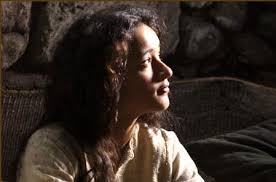
Mary learned that she was to be mother of Jesus when she was only a child herself. And all of the social implications had the potential to ruin her life.  I am sure, as she was being told by the angel that this was her destiny — doubt, disbelief, and dismay all ran through her. And yet what did she say in response?  Not, “Yes, but…”  Not, “Oh no!”  Not, “Do you have any idea what this will do to my life, for that matter my reputation?!”

She did not question it or seek clarification.  She said only, “Yes.  Blessed is she who has believed that what the Lord has said will be accomplished.”  She believed.

Two thousand years later the Church is made uneasy by conversations about the role of women.  Today, if they could change it, I wonder who “the Church” would choose to be the first to know of the Savior’s coming?  Who would the Church choose to be caretaker of the babe?  

When Rachel Held Evans said recently on her blog, that she doesn’t really know what a feminist is, I was mildly surprised though I think she was kidding, kind of.  The truth is that in the Church we don’t talk about being a Christian feminist.  The words are laden with ancient history and pain, not blessing.  With the climate surrounding even the idea of feminism in the Church, it begs the question:  What do you mean when you say you are a Christian feminist?

I did not think of myself as a feminist for a very long time. Slowly I have gained confidence in my understanding of what I mean when I call myself a feminist, but my path of discovery has been bumpy. For years I did not really know what to call myself.  But it became clear that I needed some way to make it unequivocal what I believed.  If I was going to stay in my evangelical church, I had to figure out how live with myself and learn to defend my view that God meant women to fully use our gifts and talents in the Church. I needed language that was clear.

For years I asked everyone else to tell me what they believed. I wrote many letters to my pastor asking for his thoughts, ideas, book recommendations, and for suggestions of people to talk to.  My thoughts developed in a fractured way and I had a fearful and insecure tone.  Always being put off, I became concerned that I needed to adjust my attitude.  I “worked on my attitude” because I was being sent the clear message that I was wrong. I continued to study, but I just could not let go of the fact that there were no female teachers at my church and that eldership was restricted to men.  Coming out of a Presbyterian background this was a step backward in my mind.  I had been an elder at my last church.  Every time the elder nomination process started the pain — the wound was scratched open.

When I asked why there were no women teachers I was told that teachers will rise organically.  To me this was short sided and underestimated how important it is for anyone, but especially women, to be celebrated, mentored, cheered, invested and believed in with whatever gifts they have.  Women and girls are less likely to put themselves forward and rarely self-promote. And, when the church doesn’t have models of women teaching and there is thousands of years of church history one is going up “against” it is a rare person who is able to stand up say “I have a gift!”

When I wrote my elders (all men) and received a lengthy letter in reply, they said they really do agree with me.  But I needed to know how difficult it is to change things and it hasn’t been looked at in more than two decades.  I was told that the likely controversy that would arise out of changing this was more than they were prepared to address at this time.  Clearly they are afraid to talk about the issue of women, fearing it is too divisive. Did you catch that, they actually agreed that it was time that women were teachers and elders but it’s “too hard to change.”  What kind of a message is that sending?  That women and girls are not important.   

This apathy and fear will produce a whole new generation of ignorance and is another reason why we must talk and write about it.   It is gravely sad for me, as I raise my children in the church that so many men and women have no idea that there is any theological debate about the role of women in the church.  The these things are up for debate.  That there is more than one biblical perspective.  My own daughter looks at the status quo and listens to me and shrugs saying “Mom, why are you always on about women’s rights?”  Even with her own mother trying to teach her differently she thinks what she sees and experiences is the way it is supposed to be.

Leaving is not the answer.  My friends outside the evangelical church tradition just shake their heads at me asking: “Why are you still there? Come over here where you will be valued and appreciated.”   While it is true that most people at my church just don’t want to think about it and it would be easier to just leave, I don’t for two reasons.  Firstly, yes I am a feminist, but I am a Christ follower first and when my feminism rises above that in my life then I believe it is an idol for me.  Secondly, I continue to be spiritually challenged. This issue does not totally hamper my ability to learn and receive from my church. So I remain, believing that perhaps I am supposed to be there.

But there is no getting around people’s strange ideas about feminists.

Here are some of the generalizations I run in to:

  • Feminists all hate men and are angry!

That is just not true.  Let me give you an example of how hard it is.

We are studying attributes of God at church.  Commenting in a small group made up of ten to fifteen men and women that we meet with weekly, about my perceptions of God as Father, I tried to talk about the fact that my perceptions are skewed and harmed by my relationship to an angry and abusive human father.  As I stumbled over my words, trying to be as clear as possible (I really hate thinking out loud and find it challenging) and trying not offend anyone, the men in the room seemed to physically recoil, as if I was saying that I hate men.  “Do I want the men to all leave?” one of them joked.   I found myself saying “No, of course not. I don’t hate men.  I don’t, obviously, hate my husband for being a man.  I just don’t find it helpful that God is characterized as father/male when my experience with my father was so difficult.” 

I think it is absurd the pretzels we have to twist ourselves into trying to explain ourselves sometimes, because people think of all the negative generalizations about feminists.   But that is because of the lack of women willing to speak out about their experiences. And the current climate surrounding the role of women in the Church makes it hard for women who label themselves as feminists in the Church.

  •  Feminists are offended by any song or creed with male pronouns.  

I have been there. When I was first on this journey everything hurt, male pronouns especially.   Gratefully I have come to a place where male pronouns in ancient hymns no longer offend me but I do notice them, every time.  I find it unfortunate that we have to be distracted by this while worshiping God.  I don’t choose to be offended, I just notice it.

And scripture readings still give me a twinge – though I know (because I also read the inclusive translations) which of the verses are strictly and only written to men and which (most) are referring to people.

I do that extra work because it is meaningful, and crucial to me. 

  • Feminists are just out for power.

Questioning the Church’s ancient rules isn’t about power.  These are things that need to be questioned.

Based on a recent e-book written by Scot McKnight, I have concluded even more strongly that my desire to know scripture for myself is important.   “Sometimes it takes extra energy to get a silenced voice back.” Scot McKnight wrote in is riveting essay Junia is Not Alone.  “There is no evidence … in ancient manuscripts or translations” that Junia was a man.  “The church got into a rut and rode it out.”  A rut is kind way put it — more like a stinky hell-hole in my opinion, if a woman was completely cut out of the story in scripture and most people in the church don’t know. 

What else are they interpreting or changing?  We have an obligation to study if for ourselves.  The reality is that the Church needs women’s  voices.   It is wrong that our children growing up in the church not learning of the many incredible women in the Bible.  They are growing up to watch, and listen, and see all that isn’t there.  And yet it is there and no one told us.

Together we can re-imagine Christian Feminism.

  • Men and women, use your platform and speak!

Things are changing.  There are many and varied platforms for people to educate themselves if they choose to.  The internet has opened up the world for us.  Gratefully, one can jump on FB or twitter and instantly feel connected to others.  Blogs are another incredible resource for connecting with intelligent and inspiring women and men willing to engage in these important topics.

As society has changed and women’s opportunities have expanded, as women have gained responsibility and influence (and dare I say power) in the marketplace, sadly the Church remains static and seems to have a narrow view of women’s potential.  For a thousand years, the belief was held that women were not included with men as image bearers of God.  Though the church has mostly abandoned that idea, they have not abandoned the authority structures that perpetuate the subjugation of women.

An important part of my development as a feminist, and my spiritual maturation, was forgiving the ancient church fathers and the current ones (though this is harder for me) for this divisive and ugly interpretations of scripture that damage and harm women.  I had to take my pain to God for “allowing” these practices to exist, ones that limit, stifle and repress women in the church.

Blessed is she who has believed that what the Lord has said to her will be accomplished! – Luke 1:45

Rachel Held Evans, who I mentioned above, is a firecracker commentator on the current climate for women in the church.  She recently posted 13 Things that Make Me a Lousy Feminist.  What I like about Rachel is that she is courageous and willing to use her platform.  She stirs the pot, but her blog has respectful conversations.  Her tone is winsome and she laces her thoughts with humor, forcing us to think about our own inconsistencies.  And she receives some crap from people, but she is learning to put her opinions out there humbly and then listen to others.  That is a quality of a Godly leader.  I read with her list and reflected on what it means to me to be a Christian feminist.

These are (some of) the things I wish others understood about being a Christian Feminist.

Being a feminist is complex and is as different for every person just as is being male or female.  It cannot be summed up easily.

For me at least it means that women should have equal opportunities at home, at church, and in their professional lives.

Christian feminism is to me is the crazy belief that women and men are both created in God’s image and that each deserves a life of freedom and opportunity inside or outside the Church.  When the church’s systems keep that from happening we should speak up and challenge them with grace and aplomb knowing this may take years, even decades, to bring change.  It will certainly take patience, prayer, and perseverance.  It will take a loving yet persistent voice.  It will require us to build relationships with and trust and respect from the leadership structures. That too takes time.  I have not achieved this yet in my church and I have been there for ten years.  But I remain hopeful.

  • We all have a role to play.  We are all necessary.  We all have a voice. We must take every opportunity that we can to share a positive, healthy perspective of feminism.  Women and men have a job ahead of us to change the opinions of others who do not understand what it means to be feminists, who are Christians.
  • Being a feminist is a mindset and worldview.  Anyone can be a feminist – men and women.
  • There are feminists who are decidedly feminine and those people actually might have more access and a voice in the Church than the stereotypical hard-core militant feminists.  (While I am no princess, I sometimes wear makeup and I shave my legs, these things are not the antitheses to being a feminist.)
  • While one can be a feminist and personally opposed to abortion, taking away a woman’s right to choose is an inherently anti-feminist position.  I know that is controversial, but I would push back and say that human rights and dignity should be heralded at the beginning and end of life, each are a life and the position of many in the Church on death row executions is equally murder in my estimation.
  • Making sexist comments against men, in favor of women, is un-feminist and only enforces gender stereotypes.
  • We must respect others choices. There is nothing wrong with the choice of being a stay-at-home mom and the male in a relationship be the breadwinner.  That is what we have chosen right now and it came with a high price for me.  But those that choose this admittedly very traditional lifestyle must also respect those with both spouses working outside the home or those that choose to have the man staying at-home and a woman being the breadwinner.  These are all options that are good and different for each family.
  • Work in any area of life should be based on talent, skill and passions as well as spiritual gifting.  This goes for everything from cleaning the house and mowing the lawn at home, to leading and managing teams, to teaching or ministering to others.    That said; don’t give any woman a job or a role, because you need a token woman. Do it because she is good at it.  Always work hard to find the best person for the job but know that in order to reconcile the injustice of institutional sexism and racism, work even harder to be sure that women and minorities are represented.   Like someone said “we’re all trying to be successful within a hierarchy of privilege.”
  • I took my husband’s name, but only because I was tired of having my father’s name.  Women should be able to choose their name without feeling slammed from both ends by their choice.  I want my own name but there isn’t a way to achieve that currently and I don’t have a solution for it other than make up or choose a new name.

These are just a few of the ways that I have felt misunderstood as a Christian feminist.  What have you run into?

It’s hard to talk about injustice anywhere, but especially in the Church, without others developing a posture of fear and defensiveness and even condemnation.  I would simply ask that the next time a woman raises an issue or talks about their experiences as a woman in the church, try to remember a few things.

  1. They may be in pain.
  2. They may not have worked out exactly where they stand.
  3. They may not have a full biblical worldview developed.
  4. They may not be able to defend their position.
  5. They may just want to be heard, understood, and loved.

Let’s respect one another’s differences, ask questions, and be open to change.

Our Lord came into the world in the womb of a young girl.  This teenage child was entrusted with the care and development of God himself, in the form of a babe.  She was told “You are blessed” and she believed she was!  Her faith was huge.  Her role was incredibly important.  The church today seems so caught up in what women and girls can’t do.  Let’s enlarge our faith and ask what can we do?  What are we being called to?

Another blogger that I love to read recently said this:

“It’s always befuddled me that people could think of women’s standing in the church as some sort of unimportant secondary issue, something to be held loosely and regarded coolly. Do we not realize that this has a significant personal impact on more than half the church?  Do we not acknowledge that the limits we do or do not place on women impact ministry efforts, evangelism and world missions? Do we not consider the implications this has for women’s understanding of their standing before God?   (Not to mention men’s understanding of a woman’s standing before God–and before them.  Ideas have consequences, and the consequences of subjugation tend to be ugly, like the thistles growing up in the field, hindering the work God has for us to do in the world.)”  — Jenny Rae Armstrong

I believe it is imperative that all believers in Christ (individually and corporately with whatever power and influence each has been given) learn to speak about the injustices that plague humanity — war, poverty and hunger, and sexism and other forms of prejudice, bigotry and racism.  And the next time someone wants to talk about women in the Church how refreshing it would be if we were open, embracing and full of love.  

Ask yourself, “Blessed, is she?”

“Blessed is she who has believed that what the Lord has said to her will be accomplished!”  Luke 1:45 NIV

We can no longer take their word for it. [A response to Scot McKnight’s Junia essay]

“Greet Andronicus and Junia, my kinsmen and my fellow prisoners, who are outstanding among the apostles, who also were in Christ before me.”–Paul writing in Romans 16:7

This is life affirming and beautiful, I thought, as I read  for the first time in my life (and after having grown up in the church) that Junia, the apostle in the New Testament, was actually a woman.  She was “outstanding among apostles.”

The lack of women in leadership in the church is a tragedy. The Church needs our voices. As I try to advocate for how difficult it is to be a woman in the Church and not have our stories told more easily and readily.  I talk about how wrong it is to have our children growing up in the church without being taught about the many incredible women in the Bible.

Our children, and women are growing up to watch, and listen, and see all that isn’t there.  

And yet it is there and no one told us.

“Sometimes it takes extra energy to get a silenced voice back.” Scot McKnight wrote in is riveting essay Junia is Not Alone.  “There is no evidence  …  in ancient manuscripts or translations” that Junia was a man.  “The church got into a rut and rode it out.”

A rut is kind way put it — more like a stinky hell-hole in my opinion!

When I was young woman studying for the first time in university, I was expected to take a bible class at my Christian liberal arts college.  For the first time in my life, I learned the fact that scripture was translated from other languages.  I didn’t know that.  (Perhaps I wasn’t paying attention.)

As I reflected on this, my passion to really understand scripture grew!  I wanted to study these texts for myself!  As I began I noticed there’s a lot left to one’s interpretation.  I began to wonder why I should just  blindly trust or believe someone else’s interpretation or opinion?  The longer I studied the more conscious I became.   I saw that my bible professors were all male, the bible translators were male,the  authors we were reading were male, and pastors are male.

Hey wait a second?!  I started looking around the church and realized everyone in authority is male. It’s a slow waking up sometimes to justice and truth, especially when you are questioning what you have always been told and injustice as you begin to see it.

Although unsettled, I didn’t really develop an understanding of the priesthood of believers and what equality in Christ means until I was in my late thirties.  My bible professor had actually discouraged me from further language study saying “What will you do with it?”  And it has been a strange and painful path, because I now know differently.  I have found people who are writing about egalitarian ideas and I do not feel so crazy or alone.

Actually often I feel very crazy and very alone which I suppose is why Scot’s essay struck me between the eyeballs.  Junia is not alone.  I am not alone.

I go back to my evangelical free church where women never preach.  And women can’t be elders. And they won’t really say publicly what they believe about women — too controversial and divisive.  And my church is open-minded.  They care about women and work to have women on the platform singing and playing instruments.  They do not restrict women from serving on committees and women definitely outnumber men in participation in the church I was told.  There are even a few women pastors who manage program areas although they cannot be ordained.  So why should I have a problem?

What is my problem?

It’s clear to me that my pastor’s (who I love and respect) don’t read books by women, don’t study commentary by women, nor have trusted advisors who are women (except their wives, which is cool if they actually respect them and the women speak up for these things), nor do they appear to have major influences on them who are women.  How do I know?  They never quote women, or suggest books by women.  And I think this matters.

Reading about Marie Dentière for the first time I felt angry for her and I often feel like her, as McKnight described “her tone was preachy, her mood was argumentative, her hermeneutic was clearly liberationist, her biblical knowledge vast…”

Screech.  Halt!  No my biblical knowledge isn’t vast.   I had never even heard that Junia was a woman, rather that she may have been but it was unlikely.  I could not tell you the stories of almost any of women listed below.  I am a simple person.

I believe in Galatians 3:28  – – that it liberates women to use the gifts God gave us!  God gave me this gift of putting words together compellingly, compassionately, and sometimes even clearly.  When Scot McKnight asks these questions I want to shout AMEN!

“Why the silence on the stories of women?

Why are men and women so obsessed with studying

the subordination of women?

Who says translations are not political documents?”

Halle-fricken-lujah Scot!  That’s what I’ve been thinking and saying all along, even with my ignorance and lack of theological study and lack of penis.

I am challenged by what he says.  Women need to study for themselves.

We need read the Bible for ourselves.  This almost sounds  silly to write because in the 21st century it is so obvious — duh, read it for yourself!  But it is not so in the church!   I am challenged to look up every single woman in scripture, now with several translations open, and a suspicious mind (already had that) to see what those women actually did.  What was their role?  How did God gift them?  If scholars and translators have been able to turn a woman into a man just because they said so, what else might they possibly have done?

These are a few of the women I jotted down from Scot’s article… Many of which I have never heard talked about or have just briefly referenced in Church.

Huldah famous prophet that helped provoke israel’s revival 2 kings 22; Miriam the prophetic national music director; Esther the dancing queen; Phoebe the benefactor of Paul’s missions probably the first to read Romans aloud in public. The first to defend and commentate on Romans. (Scot asks “Why the silence of woman commentators on Romans?”; Priscilla the teacher of Apollos; Rebekah mother of Jacob; Ruth; Esther; Mary mother of Jesus; Phoebe was a Deacon, not “deacon”; Shulamite woman in song of songs; the Proverbs 31 woman; Deborah;  and finally Junia  (married to Andronicus) was “outstanding among the apostles.” Romans 16:7

McNight says that all early translations of the New Testament translated Junia as a woman. From Tyndale to the last quarter of the 19th century, Junia was a woman. Then Luther played an important part in turning her into a man.

“Look at Junia in several translations:

  • NIV 2011: Junia was woman, but apostles unclear about their opinion of her. “Outstanding among the apostles.”
  • ESV: Junia may be man.  May be messenger.
  • CEB: prominent among the apostles.
  • NRSV and Holman Christian Standard Bible:  MIX the options.”

(Noted from Junia is A Woman by Scot McKnight)

Peter the Apostle said: “In the last days our sons and daughters will prophesy.”  And he said, “Even on my servants both men and women I will pour my spirit.”

My conclusions:

  1. Always look at more than one translation for any and all references of women in the bible.
  2. Never blindly trust what you are told about interpretations.
  3. Study it for yourself!  If we don’t we have no one to blame but ourselves.
  4. And personally, God gave me this gift of putting words together compellingly, compassionately, and sometimes even clearly.  I need to write about women.

Yes, it is sad that we have to do this for ourselves but if not me or you, then whom?  It is clear that we can no longer take their word for it.  Also, it is redemptive and life affirming.  Just as this essay by McKnight was significant for me, so will the other stories of women in scripture be on the future church!  It will be a call, a challenge, a cry for the girls and women and men who do not know the truth.

It is our challenge, our obligation, our honor to tell these stories.

May it be so!

————-

Scot McKnight is a recognized authority on the New Testament, early Christianity, and the historical Jesus. He is the Karl A. Olsson Professor in Religious Studies at North Park University (Chicago, Illinois).

“Why The Silence?” Forgive me the Cynicism … (on Women in the Church)

I don’t know about you, but when I first read this it shocked and appalled me.

During the times of Jesus, the religious leaders prayed at least three times a day and always thanked God for three specific things:

  • Thank God that I am a Jew and not a Gentile.
  • Thank God that I am free and not a slave.
  • Thank God that I am a man and NOT a woman.

In the Babylonian Talmud, a Rabbi still says that one is obliged to recite the following three berakhot daily: “Who has made me a Jew”, “who has not made me a woman”, “who has not made me an ignoramus.”

Ouch!  I’ll bet a lot of men in seminary today secretly thank God they are not a woman or an ignoramus, that is if they think of women at all.

I love pastor Eugene Cho’s reflection thanking God he is a man (tongue in cheek kind of) saying:

“There’s great privilege and power in simply being a man. This is why I contend that the treatment of women is the oldest injustice in human history. We can talk equality and equity all day long and while we can acknowledge how far we’ve come, we still clearly live – even in 2011 – where there’s great advantage in simply being a man.”

This is why the message of Jesus is so powerful.

The apostle Paul in Galatians 3:28 subverted the dominant worldview by saying in the Kingdom of God, “There is neither Jew nor Gentile, neither slave nor free, nor is there male and female, for you are all one in Christ Jesus.”  Powerful, meaningful words to me of the way God intended things and what he promises to restore in us all.  And yet, I easily become discouraged about the state of things.

I needed prudence yesterday when within the same hour I read two very different posts.

One was this post by a pastor saying that women should not read scripture in church.  Apparently, according to this writer, women are not to read scripture out loud in public. WOW.   I post it just to give perspective to some of my more progressive and enlightened friends about why I always seem concerned with women in the church.  It’s sexist crap  and I found myself  wishing a Bible scholar like Scot McKnight, or Sharon Hodde Miller, or Mary Elizabeth Fisher would please take him on.  I wrote him asking where he got the idea that only MEN should be the ones to do public reading of scripture.  It was is a sincere question as a Christ follower who loves scripture passionately, because I have never seen anything there that prescribes such an action.  He promised to write on it soon.

And then I saw this ebook by one of those wonderful people by Scot McKnight, titled Junia is Not Alone. You must pick it up.  You must read it.  He encourages more women to study, research and speak out on “women in the ancient world, about women in the early church, and women in church history … many whose stories are untold.” Amen!

Amazon says:

It tells the story of Junia, a female apostle honored by Paul in his Letter to the Romans—and then silenced and forgotten for most of church history. But Junia’s tragedy is not hers alone. She’s joined by fellow women in the Bible whose stories of bold leadership have been overlooked. She’s in the company of visionary women of God throughout the centuries whose names we’ve forgotten, whose stories go untold, and whose witness we neglect to celebrate.  But Junia is also joined by women today—women who are no longer silent and who are experiencing a re-voicing as they respond to God’s call to lead us into all truth.

Scot says:

Moving toward my second decade of teaching college students, more than half of whom grow up in a church, of this I am certain: churches don’t talk about the women of the Bible. Of Mary mother of Jesus they have heard, and even then not all of what they have heard is accurate. But of the other woman saints of the Bible, including Miriam, the prophetic national music director, or Esther, the dancing queen, or Phoebe, the benefactor of Paul’s missions, or Priscilla, the teacher, they’ve heard almost nothing.

Why the silence?

Why do we consider the mother/wife of Proverbs 31 an ideal female image but shush the language of the romantic Shulammite woman of the Song of Songs? Why are we so obsessed with studying the “subordination” of women to men but not a woman like Deborah, who subordinated men and enemies? Why do we believe that we are called to live out Pentecost’s vision of Spirit-shaped life but ignore what Peter predicted would happen? That “(i)n the last days… your sons and daughters will prophesy…” and that “(e)ven on my servants, both men and women, I will pour out my Spirit.”

You can buy the ebook for $2.99.

Sometimes God answers your prayers in strange ways.

Not a direct response obviously, but rather this was an encouragement to me.  Women are quite literally being silenced in the church by men like Tim Challies and Piper who talks about women’s submission even with in abusive marriages.  And movements like Mark Driscoll’s Mars Hill Church and his crazy notions about men and women.

In my article, The Voice of The Feminine I said:

I’ve been thinking about the lack of presence and example of women in the Church.  That Sunday* at my church in particular, women were simply spectators, the audience, the bystanders, the recipients and beneficiaries.

And the more I thought I could not remember the last time one of the teaching pastors suggested a book they were reading written by a woman.  Women are never quoted in my church.  Female theologians or scholars are never referenced or even mentioned, probably because the pastors don’t read them.  I can’t remember the last time, if ever, a pastor in my church has suggested or referred to or quoted a female theologian, religious author, or historian.  Am I the only one that notices these things?

The entire thing makes me very sad.  And so tired.  I am tired of the male dominated culture on the platform, as authors, as experts, as theologians, as speakers at conferences and in the Church at large. Considering women are half the church (some would say more) I do not buy the argument that there aren’t capable women to select from, though I’ve been told that very thing.  “The women haven’t risen up who have the gift of teaching.”

Risen up?   To be honest, one would think in a service-by-gifts based church there must not be any qualified gifted female teachers.   I attend an EFCA church of 5,000. You do the math.

*this is not always true!

But there are wonderful people who are articulating a different reality.  And I am most grateful to them. Perhaps in the coming weeks I will try to highlight more of them.

I worry at times that I think about this topic too much.  My overwhelming focus when it comes to thinking about injustice is the place of women in the church, their identity before God and whether they are using those talents for the purposes of the Kingdom.  I care about whether women, my daughters, who are made in God’s image too, know that they are indeed made to be that way.  I think about it all the time.  How much is too much?

Theologian Willard Swartley talks about the degree to which our ideologies warp our reading of Scripture.

 “Our willingness to be changed by what we read, to let the Bible function as a “window” through which  we see beyond self-interested ideologies, and not a “mirror” which simply reflects back to us what we want it to show.  Biblical interpretation, if it is worthy to be so called, will challenge the ideology of the interpreter.  It can and will lead to change, because people do not come to the text thinking as God thinks, or even as the people of God thought in serving as agents of divine revelation.  Interpreters [must] listen to the text carefully enough not to like it.  [When they do so] it powerfully demonstrates that the text’s message has been heard and respected.”

This is challenging because I am full of self-interest when it comes to being a Christian woman.  I am a proud woman and this is my tribe which I feel a responsibility to care for, not because I crave authority, but because I long to see every women and girl carrying out every gift from God in their lives, not just in the marketplace, but within the church!  I am hopeful that this will happen in my lifetime.

Much of the church is stifling more than half of the church  and our “interpretations” are silencing many incredible women.  My heart weeps with that thought.

MHH

Other things I have written on the subject:

There is more, just search for WOMEN in the categories.

Strongest in the Broken Places: A Tale of Domestic Abuse

Watching this video I was a child again.

It validated experiences I had growing up.  It made me sad.  I grieve watching it for beyond my own experiences, as I know three women who are living right now in this sort of marriage.

  • One is married to an elder in my church.  (Actually, he was an elder at the time that she talked to me.  We were in a Bible study together.)  He had anger and control issues, perpetrated in the name of “biblical submission.”
  • Another friend stays in an habitually abusive marriage out of love and commitment to her husband saying “Would you leave your husband if he had cancer?  Then how could you leave if he has a mental illness?”  I’m not saying that she should leave her marriage, but I grieve that she is so alone!   And I am ill equipped to help, though I listen.
  • Another friend asks for prayer for friends whose marriage that is in trouble saying he “may be abusive” but likely she “may be making it all up.”

You never know when someone is a perpetrator of rage and control.  I can tell you with assurance that is the most unlikely person.

I grew up in a home where my father was in ministry and was a generous, gracious loving God-fearing man.  To this day when I write openly about my experiences growing up (here and here and here  and here and here and here and here and here and here and here and I only stop because the list is endless.  He’s one of the reasons I started my blog.)

Here is the best example of what it felt like growing up.

To this day I have people who say to me “I knew your father…” implying that somehow perhaps I didn’t, though I lived in his home for nearly two decades and worked for him for many years.   They imply by their statement that my experience and my mother’s and my sister’s didn’t happen.  The man in this video could have been my father — except Dad had a lot more personality!

The video below is one of the best that I have ever seen that talked about raging in a home as a domestic violence.  It made me feel “less alone” when it comes to domestic violence which is not always physical!  It was not physical in my home, except one time when my parents were first married my father put my mother’s head through a wall.  This was before I was born, but he put it in his book and that is how I heard about it.  Even though he wrote about his anger he was unable to change.  And it became the Achilles heal for him over and over again, hurting people around him.  It was a significant factor in my spiritual life and my perceptions of God.

It is real and destructive and is painful for me to this day.  I so wish that my father could have found this kind of help and felt it was safe to “come out” the way the brave heroes in this video have.  I so wish the church was better equipped to help women who do suffer in this way and could create a context where it is safe to speak out.  And I wish the church helped men who know they have a problem but don’t know how to get help.

“Statistics show that victims of domestic violence most often go to churches for help. Unfortunately, churches are often ill-equipped and not helpful. This clip tells the story of one couple’s search for help and also offers some advice for creating an environment conducive for recovery.”

Please watch.  If the video doesn’t work you will have to follow the link prior.

This is a hard post for me to write.  By even talking about this others could be at risk and yet that is the great irony.

Carrying depression around is like being punished for a crime I cannot identify

Coming home after a day of chauffeuring that completely disrupts my day I do enough chores to make it look like I do enough chores.

Driving all over town is enough to make anyone get down;  needing to go to the bathroom when you’re late somewhere; nearly running out of gas, running into my husband’s employees in my front yard in my pajamas this morning; hitting the curb and scraping the front of my newish car.  Last night I dented my husband’s fender. Yesterday, I was unable to make decisions on Christmas lights at the hardware store. After twenty minutes of indecision I walked out empty handed and overwhelmed by my muddled head.

I feel it in my bones – I am still carrying depression around.  It feels like a punishment for a crime I cannot identify.  This is wrong.

The skies are not even gray, rather white and as usual it gets me down.

The road on the southeast side of town is bumpy and uncared for, the neighborhood’s buildings are depressed and rundown.  I tell my daughter clearly how wrong this is that this area of town is so neglected, oppressively so.  They don’t even fix the roads here and in our neighborhood in the same city the streets are quite literally washed and swept.  This is wrong.

I think about the economy and the need for jobs.  Perhaps I need a job.  I would do almost anything, I think.  I could do any job.  I’m college educated.  I notice the crossing guard isn’t a retired person like I usually see, but a man about my husband’s age.  What unimaginable difficulties would drive a middle-aged man to be a crossing guard?  I mean I would take that job for something to do, but to need to do so?  This is wrong.

I actually napped this afternoon – an anathema, I can barely live with the shame.  I just couldn’t get my body to do anything else but sneak inside the house like a criminal, so the dog wouldn’t hear me.  I skulked up the stairs with my coat still on, flipped on the alarm so I wouldn’t miss my daughter’s need for a ride,  and fell slowly into sleep.  Although my mind and body cannot figure anything else to do, I feel ashamed of sleeping middle of the day. This is wrong.

I consider cancelling my appointment tomorrow.  Two times I open up my phone to send the email.  Two times I question myself.  Why exactly am I cancelling?  It would be easier to convince her than myself that I have a good reason.  Honestly I think that I just cannot bear it and know that this is just when I need to go.  I still do not know if I will end up going.

I got tired of myself today.  So many random chaotic thoughts. I am an agitator online and I don’t think that’s very Godly.  I ask myself is it for agitation’s sake that you ask so many questions or is it that you actually want to make things better?  Of course, make things better for women in the church I answer.  How does all this idea slinging online accomplish that exactly?  It makes people think.  Yes, but does it actually change anything?  I don’t know.  All I know is I am tired of myself. 

Exhausted by my dissatisfaction.  I’m not sure where it comes from.  When did I become so frustrated with the church?  And how am I helping to be a positive force?  But the last time I got agitated about something how artists are encouraged in the church — I came away with two jobs to do for them that have nothing really to do with that.  I keep thinking just do this good work so that I build some chips up so that people will listen to me.  Make change that way.  Perhaps, or perhaps I’m just busy doing a bunch of church activities for other’s agenda’s that I don’t even really feel that strongly about?  This is wrong.

I am tired.  What is the root of my frustration about the way that women are perceived in the church?  I cannot clearly identify it.   I flip on my “Happy” lamp, and begin to write.  I am hoping to find some answer in my own grasping for words.

The F-word is a Dirty Word in the Church

I have had something percolating for a while — thoughts on being a woman in the church.

  • It is good to be human. But is it good to be a woman in the church?  
  • And what about the f-word?  It’s hard to be a feminist in the Evangelical church. 
  • Do you ever wonder why people of faith don’t talk more about how Jesus treated women?   

 I keep picking at the edges of it, writing, and rewriting.  Here is just a few paragraphs…

It is difficult and painful to be on the faith journey as a Christian Feminist woman who grew up in the evangelical church.  At first, for me, as I broadened my perspective.  I was cautious, suspicious even.  Mostly I was fearful because of what I had been taught.  And I’ll admit it, even angry at some of the assumptions that people made about what the Bible teaches.  It seemed to me that these conclusions were drawn without being willing to actually study it.

As I felt an internal pull, a tugging of my heart toward the truth, I was afraid.  Whereas I had been especially affirmed and promoted at work, at church it was crystal clear that this was not to be expected.  Women were “supposed” to do the receiving and watch men do the vital ministry of teaching and leading the church.

But more than anything, I just wanted other people to talk to about what I heard God stirring inside me.  I could not find anyone to talk to about it.  So I began the lonely venture of studying the scriptures for myself.  I also read theologians, including feminist theologians, with heartfelt trepidation, fearing that I may end up leaving the evangelical church based on what I learned.

The f-word is a dirty word in the Church. 

I went back early this morning to a letter I wrote to my elders last year.   I put everything in those pages, there for them to take in.  My heart out there on the page.  I was told by the elders of my church, not now.  Just wait.  Be patient.  And I think I hear the Lord saying, Sh…………  Stop.  Wait.  Just wait…………..  And be quiet a while.  I have a sense that he wants to work on my heart, my lack of forgiveness, and anger, and so though I have pages and pages I’m waiting.   

In the meantime…

I read a beautiful post on Eugene Cho’s blog that I resonated with greatly.  Pastor Cho is also a great advocate for women.  The article by Dr. Michelle Garred, who is a researcher and consultant in international peace building, talks about experiences at a Christian event as a recently married and yet professional woman, and asks compellingly:

Why does this distorted social setting appear to pit me in competition against my husband and best friend? Why can’t someone meet a couple and assume that these two inter-dependent individuals both have something to offer? Why should I be forced to wield my trump cards as instruments of power, making conversation into a contact sport? Most importantly, what about the many women who don’t have trump cards, but who do have boundless gifts to be shared with the Church? Who sees those women? And who hears them?

I found myself telling the author …

“Thank you for writing so simply and eloquently, with a gentleness that isn’t angry. I found myself resonating loudly! And I have to say that once you lose the credentials of “important work” and you are a “wife” then you seem to have even less stature and credibility, which is partly the culture of “work” being valued over all else. But it is also sexism rearing its ugly head.I know I am very angry and I know that I need to get beyond it to forgiveness somehow. I too resonate when people of colour talk about their experiences with racism, because they echo my own as a woman in the church.  All this to say – amen! Preach it! You are saying something really important and hopefully, PhD or not, others will listen!

I would encourage you to read it: Gender, church, and the art of alternate endings.

I also read and resonated loudly with this article by David Park another great advocate for justice, in the EFCA church.  He talks of  Six Postures of Ethnic Minority Culture towards Majority Culture.  And oddly enough, or not, I found that this has been similar to my response as a woman in the church.   But if you want to read it in its entirety it’s here.   These postures are:

Posture 1: Unaware.
Posture 2: Angry and Wounded.
Posture 3: Silent and Resigned.
Posture 4: Duty and Pleasing.
Posture 5: Unity as Assimilation.
Posture 6:  Equal and Empowered Partnership.

I have lived, am living these.  Park says: In the effort “to build bridges between minority and majority cultures, that there is the feeling that this whole race dialogue is “unfair” to the majority, but it’s really not. It’s hard on both sides to work towards having a relationship, especially a relationship that is part of our witness of a common savior. It takes work, and it is fair. So jump in and assume the right posture. We are in it for the long haul.”

Yes we are in it for the long haul as we work together to build up the Church, to see it as Jesus would and become the beautiful reconciled body of Christ with everyone serving our of their gifts and talents.

I hear God’s call to be a voice for certain voiceless populations, especially for women in the evangelical church.  I am constantly clarifying, are you sure Lord?  And at times I have been unproductive, and not very Godly, allowing myself to be anxious or angry, or even trying to please others rather than listen well.

Each of us must ask ourselves, male and female alike, are we living as an old person or a new creation?  In the flesh or in the Spirit?    And what are we being called to as we serve?

I’d love to know what you think on this or anything.  And in the meantime, as I actively wait to know what I am to do with my writing on women in the church, pray for me will you?

Melody

In your Highs and your Lows, God is satisfied

Many, many times after I write, I think I’m too emotional in my writing.  I woke up this morning thinking only of regret.  Too out there (sometimes.)  Too vulnerable (definitely.)  Too emotional and effusive.  It is not always easy for me to put myself so far out there.

I got to thinking of the Psalms and how much they reach me because of their free, outpouring or flowing emotions toward God not unlike what I often do.   And  I was thinking more specifically King David after reading something written by an internet friend.

David was such a mess, at times such a coward and a failure, definitely a letch, but at other times very brave and strong.  What he did well was lament and cry out to God!

I just get embarrassed at myself at times. And disappointed that I can’t just “be happy” like so many of my friends, who have crazy joy in the simplest of things. I have written before that I regret not being happy.  And others I see who model a raucous family life, full of delight and fun.  (I secretly want to be adopted in.)  Or even those that know their place is “home” whether that is their own or with their children, because it is so satisfyingly good to be together.

I have such longing for normalcy, but I don’t think it will ever come nor do I know how to create it, most days I’m stumbling around in the dark unsure how to be an adult child much less a Mother.  I believe at times might find a kind of peace and contentment, but I doubt I’ll ever find true joy.  King David’s life, reflected in scripture shows his highs and lows. 

I hope God is honored or at least pleased by our highs and lows.  If our faith is deep and genuine, I think we are strong even in our weakness; in our days hounded by our pain and in the days when it is enough just to hold on and to be thankful.

But godliness with contentment is great gain. For we brought nothing into the world, and we can take nothing out of it.  — 1 Timothy 6:6-7 (NIV)

In this season of Advent, of active waiting, I hope that you find, in your high and your low moments, that God is satisfied with you for simply being you.  He knows you — made you — loves you and is deeply pleased with you.  No, you are not perfect.  May you learn this advent season how much our God just wants you to be — to ABIDE with him which means progressively to “await,” “remain,” “lodge,” “sojourn,” “dwell,” “continue,” “endure” with Him.

And of course I am preaching to myself.

God Never Tires of Being our Comforter

The first Sunday of Advent I walk in to church wanting to smell candles and incense.  At this time of the year especially I miss the high church traditions, since we have been going to church in a bar.  As I walk in, late, I run into an acquaintance and he asks how I am.  There is always a pressure within choosing honesty in the midst of my struggle with depression, while still remaining true to being a positive person, as I wrote recently at Provoketive Magazine.   I ask him if he is well?  With a pause he says “I can’t complain.” And I instantly wonder if he read my piece?

As I walk away, I begin to wonder if anyone reads anything I write?  The old dog of depression is under my feet, tripping me up as I walk into the service.  Silly dog, panting with about me with its “Doubt. Fear.  Self hatred.  Self loathing.  Is there anything I do that matters to anyone anywhere?”

Shaking it off at the same time I take off my winter coat, I prepare to listen to God, knowing that sometimes you simply must choose.  Choose faith. Choose joy.  As I laid in bed earlier this morning, slightly dreading being alive, I chose to get up.  I “do another day” many days when I am depressed, because this is what I choose to do.

I choose to see and feel the Comforter.   At least this is what I am thinking as the band starts up.  They’re really good this morning.  The A team, I think to myself.

We begin by singing…

“Our God is a God who saves… He holds the keys of life, our Lord. Death has no sting, no final word.”

I settle in, in order to stop the hard work of choosing and  let God save me— again.  He is the one who saves.  We are reminded in this song our job is to wait…

We will wait. We will wait upon the Lord. We will wait upon the Lord.”

I raise my hands almost in a plea, a prayer “Oh God, my hope, my Strong Deliverer, you are the everlasting God.” I say the words, choking on them, because I cannot sing them.  Not to worry, my heart tells me, because God doesn’t get tired of being your comforter.

The everlasting God — You do not faint. You won’t grow weary. You’re the defender of the weak.

I am weak, so blasted tired.

You comfort those in need.

I choose you Lord, but I have such a great need.

You lift us up on wings like eagles. Even though I walk through the valley of the shadow of death, Your perfect love is casting out fear, And even when I’m caught in the middle of the storms of this life I won’t turn back I know you are near And I will fear no evil for my God is with me And if my God is with me Whom then shall I fear? Whom then shall I fear?

And I weep with the realization that I don’t have to be afraid — of myself, of depression, of the mess in my heart, of the fear of not ever being useful, of my shame for the way my life has come together.

Oh no, You never let go
Through the calm and through the storm
Oh no, You never let go
In every high and every low
Oh no, You never let go
Lord, You never let go of me

And I can see a light that is coming for the heart that holds on a glorious light beyond all compare.
And there will be an end to these troubles. But until that day comes
We’ll live to know You here on the earth
Yes, I can see a light that is coming for the heart that holds on
And there will be an end to these troubles
But until that day comes.

The band launches into :

I will enter his gates with Thanksgiving in my heart 

I will enter His courts with praise

I will say this is the day that the Lord had made

I will rejoice for he has made me glad.

And I’m not ready to “be glad”– this song is too jubilant for me, I am still weary from sobbing my way through worship, barely catching my breath, tears coursing down my face warm and salty.  I feel so loved!  My son, concerned to see me cry twice in as many days and perhaps only a half-dozen times in his twelve years of life, puts his arm around me.  He whispers “Are you okay, Mom?”  Oh yes, I am very okay!

Though I am weary from weeping and knowing and choosing, I know that if I can rejoice, the word in hebrew ‘gil’ means to be glad, yes, I think, even joyful in this, I will endure anything life can bring.  The deep, deep well of despair lifts a little bit more.  I want to shout “Bring it on, Mother F***er!” with a raised fist to the Evil One who has tormented me.  But that would be inappropriate.  I laugh inside, almost gleeful because the inexplicable darkness, the unimaginable hell is lifting.

Psalm 2: 11 says I will rejoice with trembling.  And that is me in this moment.  I sit in stunned reverence.  For God enfolded me this morning in his love through the music, the kicking keyboard and amazing bass, the beautiful female voice and my friend Paul — all those who led us in to the holy of holies.

And as they did, I fell — stumbled toward my God broken, frail, unable to even be glad I was alive.  Simply hoping, tired of the dailiness and deadliness of depression.

Oh yes! Sometimes, you can rejoice even when you had to choose to do it first.

Oh no, You never let go
Through the calm and through the storm
Oh no, You never let go
In every high and every low
Oh no, You never let go
Lord, You never let go of me

And I can see a light that is coming for the heart that holds on
A glorious light beyond all compare
And there will be an end to these troubles
But until that day comes
We’ll live to know You here on the earth

Until that day comes.

A Dare to Name all the Ways that God Loves Me

For He is always speaking, if only I could hear Him, see Him, receive Him.

I’ve been reading One Thousand Gifts by Ann Voskamp. To honor the intent of the book, I’ve begun my own list I titled a Dare to Name all the Ways that God Loves Me.   

I had to rename this list because even if I lost every single thing listed here I know that God still loves me.

I’m Thankful For:

  1. Health insurance.
  2. A husband’s love.
  3. A home.
  4. The truth of scriptures.
  5. That Daniel gave thanks.
  6. For children’s laughter.
  7. For children’s questions.
  8. For childlike faith.
  9. Imaginations of children.
  10. The sound of LEGOs pieced together, clicks and clinks as the youngest boy digs.
  11. The click of computer keyboard, as ideas fall onto the screen.
  12. The tinkling of guitar chords, rising from the basement.
  13. Skinny boy legs.
  14. Coffee, warm and soothing.
  15. Enthusiasm of children.
  16. Emma’s laughter.
  17. A loyal pup.
  18. Ginger tea’s reminder of  many things shared with Tom.
  19. A warm, heated home.
  20. A trusty car.
  21. The prayers of friends, new and old.
  22. The hope of Cross Stitch.
  23. Full tummies.
  24. Silly belly laughing at dinner.
  25. Frost on the fall morning’s grass.
  26. The stories of Ho-Chunk people “People of the Big Voice” which I heard about on the radio.
  27. Public radio.
  28. Public teachers and leaders, truly humble people.
  29. The New Yorker magazine.
  30. Books. Books piled up in corners.
  31. Used book store smell.
  32. The sounds of the heater kerchunking in the winter.  (It still works!)
  33. A husband who does laundry.
  34. Drinking Jasmine tea with a friend.
  35. Feeling understood.
  36. the Bible plain and simple, that anyone can open, read and try to understand.
  37. that the Bible doesn’t have to make complete and total “sense.”
  38. my depression.
  39. my alcoholism.   Being sober three years and four months.
  40. Handel‘s Messiah!
  41. Tears, being able to cry again.
  42. Tom.
  43. Tom’s job.
  44. God’s abundant provision!
  45. Good health (so far) for our children.
  46. Molly living at home.
  47. The CIVA project to work on.
  48. The illogic of faith.
  49. My sisters, strong resilient women each one.
  50. That I was able to travel twice to Russia and Ukraine.
  51. The hope that I will one day travel overseas again.
  52. So many talented, creative friends who make music and art!
  53. For pecan pie. 11/28/2011
  54. For the ability to express myself in writing.
  55. A child who tells me when she’s afraid.
  56. A grown up daughter that still listens and grows.
  57. And her big, open heart!
  58. the smell of rice cooking.
  59. the dog growling at baby Jesus and the reindeer in my neighbor’s yard.
  60. Turkey curry with coconut milk.
  61. Vietnamese Noodles with a good friend.
  62. Home made hot cocoa for a sick girl.
  63. sunlight in the window.
  64. Chai warm and sweet goodness.
  65. Mosaics.
  66. Clouds in the blue sky.
  67. Ice on early morning windows.
  68. boy drinking broth with a straw.
  69. the agility and ability of children to sleep in any place or position.
  70. home-made corn bread cooking sweet in the oven.
  71. the grass sparkling with frost. 11/30/2011
  72. Learning humility from a dear friend who is constantly insulted by others’ insensitivity to her beautiful Japanese culture & heritage.
  73. Vanilla Ice Cream!
  74. A night out with Tom and no kids.
  75. Dinner with friends.
  76. Fires in the fireplace.12/5
  77. Classical music.
  78. Jacob’s “graduating” from help at school after eight years of speech and language help!
  79. Sunsets, the color and majesty.
  80. Heat, as in sand and palm trees and sun!
  81. That Junia was a woman and that I know it.
  82. The honor of serving on the board of Lilada’s Livingroom.
  83. Historians, like Doris Kearns Goodwin.
  84. Blackhawk church downtown!
  85. That “public servants” is not a misnomer.
  86. For the teachers, aids, doctors, speech therapists, tutors and interns that have worked with J for the last eight years, giving him language, and speech and the discovery of his own intelligence.
  87. Men who aren’t sexist.

The Thanksgiving Miracle

Being with my family is always something complex – rich and stark at the same time.  My people are full of ancient pain.  Mostly we have learned to carry on, but I the least of all.  For some reason I live stuck.

“I’m sorry you’ve been sad” she said kindly, as I fingered my sweaty water glass.  Standing there, more comfortable in the place just outside the kitchen, where Serbian is being spoken which I do not understand, than in the living room where I will be expected to be something.  I know not what, except that I cannot do it today.   And so I stand there listening to the beautiful Slavic sounds, watching the cooking.  Bread is baking.  Gravy slowly bubbles.

The sun peeks in through the window where a cacophony of herbs is growing, so unlikely in this stark Midwestern winter.  But this kitchen is a place of miracles.  I finger the sage, basil, mint, “Such a wonder, herbs growing.” I had whispered more to myself than anyone.  My brother-in-law looks as me curiously, perhaps he is wondering at my wondering.

“It is not sadness” I quip sometime later.  I immediately regret my correction if it is harsh or sounds mean when really I am only bone tired. I apologize, contrite, in the same breath. And this is the miracle moment I can only see looking back.  It is an instant. A simple choice.  She persists.

And doesn’t walk away as we have done to one another a thousand, even a hundred thousand times.  We, my broken family, are quick to quit on each other in moments like this.  Too afraid of the conflict, of anxiety, of misunderstanding.  Of harsh even mean words, for which I am often guilty.  We become weary of the simple effort of inquiry, wary of the risk and the liar tells us “It’s not worth it” the pushing through, the desire to understand, to heal; to change the ancient rules of misunderstanding.  Persisting, she asks “What is it?”  That moment is unbelievable to me and I know she really wants to know.

“Fractured.” The first word burst out of me for I was ready, longing for the question and I find myself wanting her to know.  “Anxious.  Fearful.  Lacking hope.” The words tumble.  Slowly at first, I persist through my shame.  And she listens to me in those miraculous moments after our mother left choosing football alone over Us. We know where we stand.  I don’t judge my mother.  I feel her rejection sharp.

But as my sister stands there and listens, I talk about the deepest kind of despair. “From ancient wounds,” she asks? And I stare at her in wonderment.  Has she read my blog or poetry, echoing words I have scribbled there?  Or has she read my heart, my mind?  She has never spoken to me of the words I put down there, a selfish scribbling down of the story of my shattered heart that I put on my blog lacking the courage to speak them in real life.

Feeling a little bit more known I stammer out the words, finally.  I talk of this family we are a part of and how we don’t know how to be together.  How I long for more.  And it makes me so sad. And yet my husband has a theory that ultimately we all “do what we really want.”  If you want more connection do something about it, is the implication.  But we both know, my sister and I, that it is not so simple for us, having started from a place of broken with no capacity to build something good.  I share that I really long to know her, know my brother-in-law, be a part of their lives.   I share this place of hurt.  Where I become stuck.  These triggers to my depression, of fearing rejection that hasn’t actually happened.

Then I begin to speak of our Father, long dead and it is clear he is inside my head.  “I cannot remember him kind” I sputter as tears begin to flow, the second miracle or third after the questions and the herbs, for I am the woman who cannot cry.  I long to, but my frozen heart, cemented to its pain has been shut solidly closed.  It may have been a decade since tears have flowed.  And I stand there in the kitchen of miracles and weep ancient tears.  And speak of the terror in my heart and head as I hear my father’s rage.  “I am stuck there with him, terrifying and terrorizing me.”  And she comforts me with her presence.  And her tenacious probing attention.  I shudder with the pain of speaking my genuine admiration for her achievements, of living.  She has somehow been able to live.  “The boxes we were put in as toddlers,” she says.  This is a revelation, since we two girls were babes our father has said she was smart and I was somehow something other.  Though he wasn’t particular as he raged about grades.  But for some reason I was the recipient of his anxiety, disappointment and fear.  That is when she voices their anxiety.

She speaks of a class she took on Anxiety and how it spreads in organizations and families and what a revelation that was to her!  The anxiety of our parents was a constant presence and fueled his anger, her sadness and all the sickness in our home growing up.  Even today, every word my mother expresses is laden with fear of rejection, misunderstanding.   I wonder what she really thinks, feels but I will never know.  And I know that I cannot talk to her about any of this, my ancient wounds, because she is too fragile.  The threat all these years has been that she will fall apart.

Every time you feel in God’s creatures something pleasing and attractive, do not let your attention be arrested by them alone, but passing them by, transfer your thought to God and say: ‘O my God.  If thy creations are so full of beauty, delight and joy, how infinitely more full of beauty, delight and joy art Thou Thyself, Creator of all? — Nicodemus of the Holy Mountain

We stay a long while, and laugh, and talk and simply be.  We leave more connected.  I am overwhelmed by the miracle.  This tale is supernatural in that it happened.  It is not the tears or the ancient pain spoken out loud though they are incredible.  This is about the persistence of My Sister who gave a thanksgiving miracle to me. Yes in that I can say, thanks be to God.

He did this.  She did this.  We did this.

And what remains is hope.

Giving Thanks for What Is

At first light I wake.

My temples pounding and piercing me with pain, I am angry with the fierce illogic of it all.  I try to understand.  I wake resentful.  Am I thirsty?  Did I wake too late my body screaming for caffeine?  Or is this another manifestation of the depression, the black fog that has clouded my days for – I count them – fourteen long days.  And fourteen hostile, dreamless nights.   I wake wondering if I slept at all?  This morning with a headache, I question it.  Headaches hold messages, ciphers of secret coded understanding; though today’s meaning I am too foolish to fathom.  I stumble downstairs, the dog at my heels.  Coffee.  Migraine medication. Water. Toilet. In that order.  I can only focus on these four whispered words.  Each step, my head aches as I blink and blink again.  My right foot’s bones twinge, piercing through the fog.  Again, foot pain.  Why?  It is always worrying me these days, why all the pain?

This thanksgiving day, I want gratitude. 

I am so blessed.  I know this, it is almost appallingly clear – I have nothing to be depressed about.  But my depression is something deeper, old, even ancient pain that has nothing to do with today’s abundance.

I sit and drink in the silence.  The oldest son is awake, the early bird, tap — tap –tapping keys of his fingers on the keyboard.  Otherwise silence.  It sounds so good.   Even as my stomach lurches, and my head continues to pound, I sit in the wonder of silence and ask God to open my ears.

For He is always speaking, if only I could hear Him, see Him, receive Him.

I’ve been reading One Thousand Gifts and I pick it up, again – for what could be better on this day of thanksgiving than a book about learned gratitude?  It hurts to read.  Eyes blurry from sleep, head still piercing I feel a flood of the Tears That Never Come, flood the walls of my heart, full.  Bursting. Pain.  To honor the intent of the book, I’ve begun my own list.  I’ve only cobbled together – I count them — Twelve things this week. I titled it:

A Dare to Name all the Ways that God Loves Me:

  1. Health insurance.
  2. A husband’s love.
  3. A home.
  4. The truth of scriptures.
  5. Daniel gave thanks.
  6. For children’s laughter.
  7. For children’s questions.
  8. For childlike faith.
  9. Imaginations of children.
  10. The sound of LEGOs pieced together, clicks and clinks as the youngest boy digs.
  11. The click of computer keyboard, as ideas fall onto the screen.
  12. The tinkling of guitar chords, rising from the basement.

I add to the list, even through my headache…

  1. Skinny boy legs.
  2. Coffee, warm and soothing.
  3. Enthusiasm of children.

 “For God speaks again and again, though people do not recognize it.”  Job 33:14

Yes, I hear Him speaking.   And the promise I hear from him today:

“See now that I, I am He, and there is no god besides Me;

It is I who put to death and give life.

I have wounded and it is I who heals.”  — Deuteronomy 32:39  NASB

I am tempted to focus on  his words I have wounded, but I “should” remain, even linger with these words — It is I who heals.