Imagine my Surprise. I read the Bible “Wrong.”

I never knew  that there was a right or wrong way of reading the Bible.  

I have always thought, naively I will now acknowledge, that all that mattered was how one responded to what they read in the Bible.  Nope, I’ve been all wrong.  I don’t know where I learned this idea either.  I’ve absorbed a way of looking at the Scriptures that I never questioned.

“It’s how I was raised.”  

What do I mean? Fundamentalists and conservative evangelicals (and I was taught to believe this but no longer) have a view of the Bible that it’s perfect, as in ” inerrant and infallible” by which they mean, it’s a divine product and its authority comes in “that God literally wrote it” by whispering his intents to people who then wrote it down (like God’s holy scribes).  And unless it clearly was metaphor, most every word was literally the truth, word for word from God.  These people also believe that the Bible is basically all God wants us to know in communicating his will to us, which precludes the work of the Holy Spirit and prayer, among other things.  They believe the Bible has everything we need and is totally relevant to the Christian life today.  That it is simple and plain, obvious; meaning if you just read it you’ll “just get it.”  There’s a morsel of goodness in that idea that anyone can read the Bible.  Unfortunately, even though anyone can read it isn’t simple!  What about the fact that it was written in languages we do not read or speak (most of us) and in a culture and time that we know nothing about. And the last, most heinous thing that simplistic reading of the Bible brings is the idea that one can pick and pull verses out of the context, not believing context is that important.  They read the Bible seeking blessings and affirmations for life.

Guilty. Guilty.  Guilty.

I do believe, and it is important to affirm, as Temper Longman says in How to Read Genesisthat the Bible is:

“… grounded in the ultimate divine authorship of the whole.  Thus in spite of a variety of styles, genres, themes and motifs, it is important to ask how the parts fit into the whole.”

And that is what I have known.  I guess one can make the Bible say pretty much whatever you want it to if you work at it.  People do it all the time!  I’m forty-five years old, been reading the Bible for myself since high school, and in many ways this is how I have always understood things.

That is what makes thinking about it in a new way so frightening.

I have to admit that I’m learning.

That fact should not be embarrassing, but it is.  People don’t like to admit very often that they don’t know something.  We all like  to come off as experts, if not experts than knowledgeable, if not knowledgeable then at least well-informed.  (

(Sigh)).  It’s hard to admit when you’re wrong, uninformed, even lacking knowledge.  It is hard to admit but I believe if I’m willing to do that then perhaps others will become open to considering the same.

Do I dare even talk about this topic of reading the Bible?  I am by no means an expert but I’ve read some things recently. I am armed and dangerous but I’ll list my sources so that you can do your own homework.  (And you always should.)

Here’s what I’ve learned.

The Bible is a piece of literature.

It is a book made up of books.  It is a big story of God and the world.  It is made up of stories and poems that tell us about God.  It is also a series of smaller stories.   It is, like any other book you read, written within a genre and knowing the type of genre you are reading helps you know how you are supposed to read it; whether it is poetry, myths, parables, history, legends or a combination.  And like other literature you study you should know a little of the customs and culture of the time it was written.

“The truth of the matter is that the proper interpretation of any piece of literature, and in particular a text as ancient and important as the Bible, deserves our careful reflection.” — T. Longman.

Hermeneutics is just a technical name for interpretation or “how you read.”

There is a way to read the Bible for what it is not just for what we’d like it to say.  And as we learn to interpret the Bible — as literature, within a genre, written in a time and place, a culture, with a certain purpose, we are less likely to be “Biblical Literalists.”  Just because you find verses that supports your view doesn’t mean you’ve probed fully the biblical view.

How we read the Bible has become very divisive among Christians and has been a contributing factor in the “culture wars.”  Biblical literalists fear the “culture slide or culture creep” and tightly hold a grip on the Church and on their ideas; that a few texts yanked out of any context or culture, are prescriptive of how to “do church” for all time. This keeps churches from changing, in ways that may seem obvious to those of us (women and men) being raised with a different way of looking at Scriptures – raised to think, study and apply scripture for ourselves.

I do believe that the Bible guides us and has everything to say to us in the twenty-first century, it can and should guide us, it changes our ideas about our moral and intellectual life, it forms how we think and behave, how we treat others, and transforms us and shapes who we are becoming …

But …

It’s all about how you read and interpret the Bible. 

I think there may be many people in the Church today who were raised to be biblical literalists. I was.  I no longer believe this is correct in fact I know now that it is wrong.  But I don’t exactly know what I do think, yet.  That’s why I’m “developing my biblical hermeneutic.”

I’m learning that there are some that believe there are lots of parts of the bible that you cannot take literally, either as historical fact or direct will of God.

I agree with Tom Wright when he says that the authority of God is embodied in Jesus himself, not in the literal words of the Bible.  (Loosely quoted.)

Of course how you read and interpret is subject to the wisdom and biases of humans.

Everyone comes at the Bible with a “world view.” We are all guilty of cherry picking verses to be factual and literal truth or determining that something is cultural.   Everyone does it.

Take 1 Timothy for instance.

“Women should dress themselves modestly and decently in suitable clothing, not with hair braided, or with gold, pearl, or expensive clothes, but with good works, as is proper for women who profess reverence for God.  Let a woman learn in silence with full submission. I permit no woman to teach or to have authority over a man; she is to keep silent. For Adam was formed first, then Eve; and Adam was not deceived, but the woman was deceived and became the transgressor.  Yet she will be saved through childbearing, provided they continue in faith and love and holiness, with modesty.”

If you read it literally, women are not permitted to teach or have authority over men but also they are not to braid their hair or wear pearls or gold or expensive clothes.   Also women are responsible for the origin of sin in the world.  The “good news” is that we can be saved by bearing children.  If you interpret it literally these are God’s instructions/restrictions for behavior and roles of women.  Some churches choose to prohibit women’s leadership in churches because they use this verse to “prove” that God doesn’t approve.  But they happily ignore the rest of the verses as cultural.

That’s cherry-picking. 

But if you look as the Bible as being written by a person in a particular time and culture, if you know the historical cultural setting they were writing in then you see that this is how one man in the early Christian church saw things.

When you read it with context, looking at the contrast between this and other texts in the New Testament, if we recognize or listen to more than one voice speaking about the role of women we can seek to discern which voice to honor.  In the New Testament there are examples of women apostles and teachers, women financing the ministry, women sitting at Jesus’ feet learning from him with the other disciples, a woman being the first to speak to Jesus after his Resurrection.  These stories all empower of women in the early church.  You can see this if you don’t restrict your reading to Timothy’s set of verses, which are very restrictive.

Listen to more than one voice. 

Look for themes and overarching ideas.  I believe one must recognize more than just one voice in trying to figure out anything in the Bible.  And it takes discernment and wisdom and doing your homework in trying to figure out which voices to honor.  I look at how Jesus treated women when it comes to this topic.  I do not look at the verses about early church as prescriptive of how we should run our churches today.  But that’s just me.   But as you can see, a lot is at stake in how we read and understand the Bible.

Everyone wants to read the bible for today – for guidance and wisdom for today’s problems, for today’s trials, for this moment.  The problem inherent in that is that without doing the hard work of asking the questions of the context and placement in history, we endanger our ability to hear God.   I am greatly encouraged with the knowledge that there are essential ideas from God that are clear and reinforced many places in scripture.  Those broad strokes from God are the things that guide us — point us to God and deepen our relationship with the trinity.

Those are my thoughts offered humbly because like I said, I am no expert and I am likely much too opinionated.

On the topic of unlearning and learning How to Read the Bible Again:

  1. The Blue Parakeet: Rethinking How You Read the Bible by Scot McKnight.  He’s a professor at North Park Seminary.  He also has a blog Jesus Creed which is for me critical reading.
  2. Scripture and the Authority of God: How to Read the Bible Today by NT Wright.

And to add to my list of commentary suggestions (from why I’m Afraid to Read the Bible):

  1. New Testament Commentary for Everyone, by Tom Wright.  They could be in the “For dummies”series.  But not really, for everyone is a nicer way to put it.  These are really good.  They go through books of the bible and explain the background and what it’s saying.  I really like them.  Straightforward, not dumbing it down too much, just enough to make easy.  Not everyone has time to do a lot of study.  These are really informative and interesting.  And short.

Melody

Developing a Habit of Abundance

I am sometimes wrecked by my unbelief.  “Lord I believe.  Help my unbelief.” scripture says Mark 9:24.  I am coming to see.

Must I always put on habits?  It seems that I must choose daily, sometimes moment to moment.  I have to wear my belief like an new sweater or twist the rubber band on my wrist  to remind myself of what I want, what I know, what I need.  I am so full of need, so empty.

Like the havoc of the wind, I am wrecked by my unbelief.  The slang definition of the word wrecked is to be drunk or intoxicated.  I have always gotten high on all the wrong things – shopping, my own panic, books and other “things”, easily addicted even to the lack in my core, in my soul.  I am even hooked on my own sadness. In this I know what I need.  As I come to depend on all these highs that I choose for myself – my inner core isn’t worthy of my own trust.

Have I always been a vessel in ruin?  Shipwrecked.  Does that mean that I cannot be trusted?  That is what some believe and say that 1 Peter 3:7 means : that women cannot trust themselves. That man cannot trust woman who are the weaker vessel. What does that mean?  Others say that “Both Peter and Paul wrote about mutual, reciprocal submission in Christian relationships.”  If I believe I cannot be trusted, I’ll never learn to trust myself.  I’ll never trust anyone.  Can I then learn to trust God?

Growing up in the narcissistic family that I did, it is no wonder I do not trust myself.  Everyone in my family fluttered around one person, my father.  We existed to ensure his happiness and help him succeed at all costs.  The costs were many.  The price was high.   All my life I was told what to do by him.  I learned to always seek my father’s approval.  He was my universe.  What do you become when your “god” is cruel, selfish and destructive?  You cower.  You play the supporting role.  Never learn how to live your own.  Did he really become my god?  I don’t believe that is what he really wanted.  How did it happen?

I’ve been physically “free” of my father for eight years.  I am only learning how to breathe on my own.  Jesus is reshaping my view of the world and myself.  I am starting to see that I may be wrecked, like a ship cast to pieces against the shore and torn to pieces, but I did not create the storm.  And I am slowly being healed by the Jesus who healed, he healed women as much as men.  He empowers me.  He trusts me.  He is teaching me.

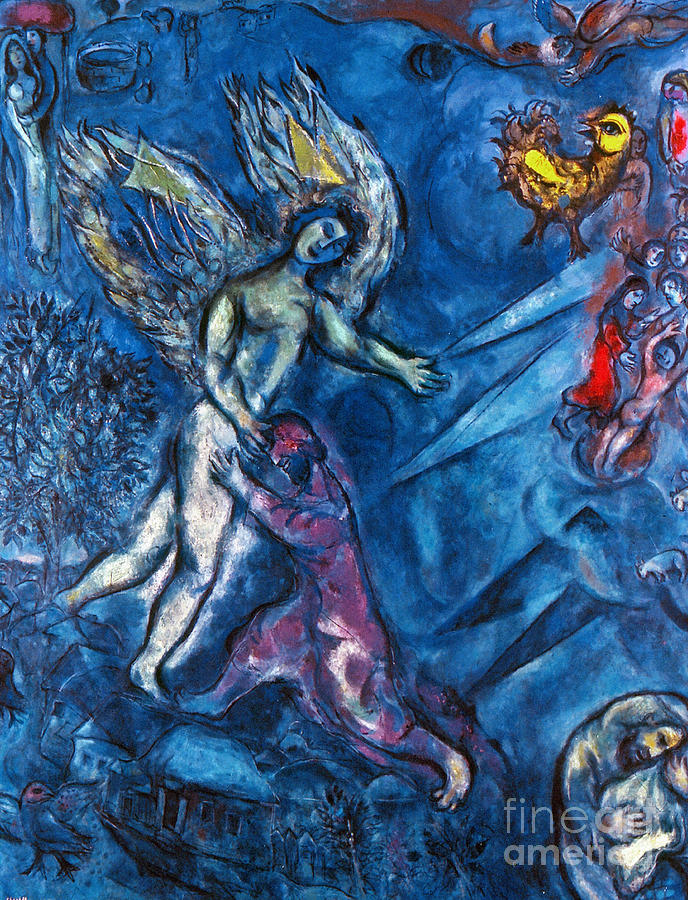
I have been fighting him, Jesus, and God, the Father.  As I fight, I am wounded like Jacob who wrestled with God and I am afraid.

I am afraid of my life.  I have been fighting and demanding.

I read and wonder if it is true:

“The Lord has to break us down at the strongest place of ourselves before he can have his own way of blessing with us. “ (James H. McConkey, Life Talks)

As I have healed, I have slowly demanded a purpose for myself, a big dream, a significant place to contribute, and God has been quiet.  At least it seems to be so.

“This is the work (service) that God asks of you: that you believe in the one whom he has sent. ”  That means cling to Jesus, trust Jesus, rely on Jesus, and have faith in Jesus.

“God created the world out of nothing.  As long as we are nothing, He can make something out of us.” [Martin Luther]

Really?

I cannot lose this ever present need and instead of making me feel strong, it shames me.  I feel my lack of belief, my frequent anger and pain, absence of joy or gratitude; I feel powerfully this emaciated, hollow life.  Is this what I am known for?  I pray not.  I pray that I can surrender, even now.  Even today give up every part of me, the resilient and the faint fragments , to him.

I tell myself I do not fear my own flaws.  But I fear that it will be used against me to prove that women are weak.   I fear my own power too.

Jesus says, “Lay it all down.”   Let it all go again.  As I am developing the habit of abundance, I doubt that have never responded like Mary did.  “Let this happen,” she said, when told that she would mother the king of kings (Luke 1:38)

Whatever it is, “this life” for I do not know what it is yet.  For I cannot even imagine.   I am learning to respond.

Let this happen.

Melody

P.S. I am inspired by reading Ann Voskamp’s One Thousand Gifts.

Why I am Afraid to Read the (entire) Bible

Here’s the honest and mortifying truth.

I have never read the entire Bible, whole.  I have studied various books at length, sometimes on my own but more often with a group of others.  But I have never opened the whole of the great book of God’s WORD, Old and New Testaments, and soaked it in as a grand story.  Of course, any “sheep” knows, don’t they, that the Bible wasn’t written to us but for us.  The Bible is not a handbook of do’s and don’ts, but rather a beautiful story which we can carefully apply to our lives.  And if we fear what it says, if we are unwilling to challenge and question it, we deserve to be ignorant fools (like I have been.)

I have never put my full attention, put my full brain, toward the Bible.  I have been afraid of reading the entire thing and these are my reasons.

I am afraid of my own ignorance.  I don’t know what I don’t know.  If I don’t know then I can continue stumbling in the darkness.  At least it is a familiar place, my ignorance.  Sounds dumb when you actually write it down.  But how many of us do this in the Church?  Far too many.

I am afraid of what the Bible actually says.  For too long I have simply listened to others and accepted what the “experts” say about spiritual things without really challenging any of it.

I am a frequently boiling pot, kept simmering by the cool head of Tom, my husband.1 He often keeps me from boiling over.  It seems that he will be doing this a lot as we began reading the entire Bible in one year – a challenge from our church they are calling: Eat This Book.

So I would add another point to my list of reasons that I have never the read the Bible in its entirety.

I am afraid of how I will respond to the Bible as a woman.  We all have a worldviews and as such, we read the Bible differently. I respond as a woman.  How can I not?  And that is different from my pastors (both male) and my husband, and most of the commentary I am reading.  As a woman I have different questions.  I am afraid of what  to do with those.  How do I sort out how much of my response needs to be talked about, questioned, and challenged?

On the other hand there is a lot that excites me about finally reading the entire Bible.

I look forward to diving in.  Already Genesis has perplexed me, made me extremely angry, and left me with more questions than answers when I look at it story by story.  I want to be able to see the big picture — to soar over the parts that jump out to me as problematic and see God and hear God, asking him what he wants me to focus on.   I look forward to how this Grand Story changes my life. 

Just last week, my pastor was preaching on Gen 1-3.  He was explaining a very important idea about how we look at scripture overall, which I mentioned already, that the Bible is not written to us but for us and that much of it is metaphor and poetry.

But then he highlighted the verses about man and woman becoming one.  Now I’ll acknowledge that it is beautiful, the whole picture of marriage.  But I actually thought it would have been more important (coming from my worldview, as a woman) or at least more valuable to women, if he had taught about how we are both, male and female created in God’s image.  To emphasize and thus explain what the Hebrew word ezer  (helper) actually means. These verses being misunderstood have diminished and hurt women.  He thought the other verses were more important.  We disagreed nicely by email.

I have to admit that how we interacted mattered a great deal to me and I’m learning that this is more important to me than me being right.   I shared my thoughts with him and he heard me.  I felt heard.  And this is a form of giving someone respect.

And so I would add another point to my list of reasons why I haven’t read the Bible it it’s entirely.

I am afraid of the disagreements among Christians.  I hate the way that Christians wrangle with one another over the baggage that goes into “being theological.”  Are you on the Left or are you on the Right?  Are you conservative or liberal?  Are you a feminist?  Egalitarian or a Complementaran?  A new Creationist or …. ?  I don’t even know all the camps of disagreement and I don’t want to.

I just want to read the Bible and get a little help along the way.

If you haven’t  yet, I’d encourage you to read The Blue Parakeet by Scot McKnight, which will help you rethink how you read the Bible.  Other resources I am finding helpful are the NIV Compact Bible Commentary and the Women’s Bible Commentary.  

The important truth is that I cannot allow my fear of my own ignorance, my fear of this faith tradition that I have followed my whole life, or my fear of disagreement keep me from the next step in my faith journey.

Being that I can be hot-headed, I just might say or do something stupid along the way.  And I would hate that but I cannot allow it to keep me silent.

A friend said to me  this week:  “I am praying that Jesus would guide you as you study His word.   May we always be in search for bringing glory to Him!”  Amen!  I suspect that I will be sharing more of this as I go along.

I wonder, have you read the entire Bible and if not, ask yourself what are you afraid of?    If we seek to follow Christ we are to live in the Bible today and every day.   The question is how?  Let us join together in our KNOWLEDGE not our ignorance.  Let us be SEEKERS together.  

Wouldn’t it be wonderful if Christians were known for their knowledge, agreeableness and love?

“Blessed Lord, who caused all Holy Scriptures to be written for our learning: Grant me so to hear them, read, mark, learn, and inwardly digest them, that I may embrace and ever hold fast the blessed hope of everlasting life, which you have given us in our Savior Jesus Christ, who lives and reign with you and the Holy Spirit, one God, for ever and ever.  Amen”  But when he, the Spirit of truth, comes, he will guide you into all the truth.

Jesus, according to John 16:13

Melody

 ————————————————————————————————–

1 Tom and I have an egalitarian or mutually submissive marriage. And I was challenged by Rachel Held Evans (she does this a lot) this week .  She asked the question of whether more people need to talk about the ways of egalitarian marriages, to give others an idea of what it’s like.  I never talk about mine.  It’s precious to me and I’d not want to ugly it by my bumbling attempts to describe it.  But I’ll be thinking about that and try to weave things into my blog as appropriate.

2 Blackhawk’s pastors have given us a challenge.  “By reading the Bible every day, our hope is that we’ll become a people who are shaped by the Scriptures – people who are marked by love, joy, peace, patience, kindness, goodness, faithfulness, gentleness and self-control.”  And they are taking it a step further by providing mini videos and teaching tools.  It’s quite good.   I am grateful to attend a church that doesn’t spoon feed, that helps the “sheep” figure some of these things out for ourselves, but also provide solid ways to learn.

The things to look for in reading Genesis are:

  1. The main plotline in the book: God’s desire to bless humanity consistently meets human stubbornness and sin, keeping a record of the words for “bless, blessing” as you read: God wants to pass on a blessing, but humans constantly thwart that blessing.
  2. Genesis 12, 15, 17 and the covenant with Abraham are the key to understanding the entire Bible: God is going to rescue the world from sin and corruption and restore blessing through his promises to Abraham.  The rest of the biblical story will focus on God’s relationship with Israel, because these are the people who bear the promise for the whole world.  Keep track of how the promises to Abraham keep getting repeated and passed on to the next generation and God works out his plan.
  3. Find your story in the characters: All of the characters in Genesis struggle with God, and we are meant to find our story in theirs: the characters wrestle with their own sin and failure, doubt and faith, selfishness and generosity as they try to follow God.  Use each character’s experience (for example, Adam and Eve’s temptation, Abraham’s struggle with doubt, Jacob’s journey from selfishness to trust in God) to find parallels with your own journey with God.
  4. God’s faithfulness: notice how many times God rescues people, or stays committed to blessing humanity. Allow Genesis to reshape your ideas of what it means for God to be faithful to you.


3 “Helper”- ezer.  Gen 2:18   According to R. David Freedman, the Hebrew word used to describe woman’s help (ezer) arises from two Hebrew roots that mean “to rescue, to save,” and “to be strong” (Archaeology Review (9 [1983]: 56–58). Ezer is found twenty-one times in the Old Testament. Of these references, fourteen are used for God and four for military rescue. Psalm 121:1–2 is an example of ezer used for God’s rescue of Israel: “I lift up my eyes to the mountains—where does my help come from? My help comes from the Lord, the Maker of heaven and earth.”


he wipes my spilling tears [a poem]

Trying to write my story

is sometimes like cutting back flesh, recently pink and scarred

to find the plain cold truth.

I want to heal and so I wonder if this is wise.  This rending,

backward into ancient despair

to find the open rot inside.  It is a kind of hell.

But I go there.

I climb into that putrid place with

the fresh hope of Jesus.

Tonight, he wiped my spilling tears,

crawled around inside my wounds, and

held my thumping, aching heart

while it was tender and sore.

He took that pain.  Jesus was here

inside my story, so full

of sorrow and regret.

Foul, bitter, wretched I know that

I still am.  Quietly, he’s saying

let me rewrite the end.

What I will “Keep in my Pocket” this year?

Write thy blessed name, o Lord, upon my heart, there to remain so indelibly engraved, that no prosperity, no adversity shall ever move me from thy love.  Be thou to me a strong tower of defense, a comforter in tribulation, a deliverer in distress, a very present help and a guide to heaven through the many temptations and dangers of this life.

— Thomas a Kempis


What will I “keep in my pocket” this year?

Reflecting on the past year, I discovered some patterns – some good, some not so much.  I have had to face that I am can be a negative, scattered, and discontented person. (Ouch.) This is no surprise to those who truly know me. I’m a pessimist. A Cynic. An agnostic by nature?

I prefer the term realist because I know that on one level I will never forget. I believe I will always be a person that sees injustice and screams, an advocate against bigotry and discrimination.  And I will always speak and work for a more just world. And yes, sadly I can be a whiner, pessimistic and well, I’ll go ahead and name it:  I can be a downer!

Many times this year I have been so caught in my own brokenness — to a degree that I could no longer make out God’s voice in the cacophony of my injuries and the world’s throbbing sorrows.  And tragically then one ceases being useful.

And God is speaking.  He never ceases to speak. 

And it is intoxicating and magnificent.  Humankind cannot even imagine the kingdom of God here on earth, the way he wants it.  Even this year, God as has been healing me, I cannot conjure up what he intends. Most days I struggle just to believe. Amid his miraculous work, I only limit God by fixating on all my limitations.

And I know that others, perhaps you, certainly members of my own family, have difficulty trusting me, when I am so frequently scattered and shattered; when I don’t even trust myself.

I want to learn to trust in God, more.  And I want to become trustworthy.  

For 2012, I will focus on Abundance.  (as well as: Peace. Cease. Create.)

I believe this will come through discipline…

The discipline of giving thanks, of daily prayer and learning the WORD of God for myself.

I long for Peace.  I believe this will come in focusing on these things.

Being mindful. Being strong. Being a healer. Being trustworthy. Being healthy.

Some things need to Cease.

Less weight (as in actual poundage).

Less stuff.

Less (focus on my) pain.

I was made to Create. I will do that through being purposeful …

Words. Images. Life.

How did I get this list?

I was helped in thinking this through, by something a friend wrote when I asked about the process of finding three words, with intentionality, for the coming year. It took some time for me to sort this out for myself.

She said:

“the month of dec i spend a lot of time reflecting on the year passing by. it ends up beckoning the hopes for the coming year. i start making lists of words that feel representative of my intentions for the time coming. …  the words end up weaving in and out of the decisions i make, the way i take notice. they really impact the dailies. and since that is the marrow of our living- this daily bit- i love having them in my pocket. “

I love that.  “Having them in my pocket” whether it is literally or not, it’s a beautiful metaphor.

Really, what do any of us have but today—yes, this one day.  We are promised nothing more. We are given this one life and with it we can be scattered and flighty, erratic, untrustworthy, as I have been; or we can become intentional and resolute and positive, as I long to be.

How are you, as you head into 2012? What things will you keep in your pocket? How will you face today?

Turn the other Cheek? That just makes you a Chump.

Have you ever noticed that the Golden Rule comes with no promise at the end?  No words of hope — do this and you will get this.  Nothing. Do it because it’s the law. 

“Do to others whatever you would like them to do to you.”  (Matthew 7:12, NLT)  The ESV says “So whatever you wish that others would do to you, do also to them, for this is the Law and the Prophets.” and the NASB says “In everything, therefore, treat people the same way you want them to treat you.”

I think that stinks.  I have struggled with a situation where I believe I have the higher ground to stand on.  I have made good choices.  I have done well.  I have been the loving daughter, yes.  I have accepted.

And this Christmas — as always happens, when will I ever learn — I got slapped in the face by my mother again.  I don’t even know that the details or the reasons matter.  I think she is incapable of keeping her promises.  She is unable to do something based on what’s right.  For all my disputes with my father, I can say at least that he lived by his convictions.

I could make a list and this would be a long one, of the significant times in my life when I trusted her and she betrayed that trust.  I’m so tired.  I know that I am to forgive her but when will I learn?  If forgiveness means putting yourself out there to let it happen again, and again, then, well, that just makes you a chump.

But what if the person that hurts you with regularity is your own mother?  And what if that person is almost alone in the world?  Isolated (if by her own choice) and living for herself, impulsive with her generosity and love, unpredictable in her withdrawal?  What if …?

Lewis Smedes in his book The Art of Forgiveness, says:   “we filter the image of our villain through the gauze of wounded memories and in the process alter his reality.”

And yet, even she was made in God’s image and is loved by Him.  I don’t want vengeance, as Smedes suggests is the next step to forgiveness — surrendering our desire to get even.  I don’t want her to hurt.  She’s lived with enough pain.

She oozes her pain and fear of life.  I actually want my mother to be whole.  I long for, wish for in my deepest sad places for my mother that she would heal and be free.

And I’m just tired.

I want to surrender to the idea that she can no longer hurt me.  But every time I let her close she does just that.  And I’ve been searching mentally for days with my questions and I have been trying to figure out what to do.

“Forgiving is not meant for every pain people cause us.  Never has been, any more than Prozac was invented to cure the Monday morning blahs.  Forgiving is for the wounds that stab at our souls, for wrongs that we cannot put up with, ever, from anyone.  When we forgive people for things that do not need forgiving we dilute the power, spoil the beauty, and interrupt the healing of forgiveness. But when we forgive the things that forgiving is for we copy God’s own art.

God is the original, master forgiver.  Each time we grope our reluctant way through the minor miracle of forgiving, we are imitating his style.  I am not at all sure that any of us would have had the imagination enough to see the possibilities in this way to heal the wrongs of this life had he not done it first.”(Smedes)

When I first read these words I was angry, for I have an unreturned call to my mother and I have to figure out what I am going to do.  She asked to spend Christmas Eve with my family, she chose to come to church with us and celebrate with our brood.  And then she called and said she wasn’t coming though she only lives across town.  Ten minutes. “I could pick you up”, I said.  “No I don’t want to come.” was her reply.   I don’t know why.  Sure, I’ve speculated.  And as I have in the past, I could try to pick her brain to discover what small hint of truth is there that will appease the gaping hole in my soul, feeling her rejection physically.

This rending is old — My heart is shredded.

My heart weeps with pain that I don’t understand – the sense of being rejected my parents.  It is an ancient unhappiness, pain that feels older than me, going back a generation to my father and mother.  Neither of them felt loved by their parents.  Both experienced rejection, they tell stories of actual real rejection, which I never experienced.  Not really.  But for some reason I live it.  And every action they live out has become either proof of their rejection of me or proof of their acceptance.

She is set up to fail even before she does.  And she does.  Oh she does!

When she told me over the phone that she was moving with no processing, no reasons, no explanation just fact.  When she chose not to invite me to Mother’s day, with no reasons, or explanation.  “I don’t know why I didn’t invite you.”  “I don’t know why I didn’t process my moving with you.”  “I don’t know why I couldn’t come for Christmas with your family.”

“Forgiving isn’t meant for every pain people cause us.” (Smedes)

And then the moment of clarity comes.

What’s going on inside me is more about my frailty.  I can love without being loved in return, because it is the right thing to do.  And I can adjust my expectations, to none, so that I won’t be hurt so often.  And I can and must stop talking about my feelings of rejection so that my children can have some semblance of relationship with their grandmother.

Without the generations whispering fear and brokenness into their hearts.

That is my challenge.  That is the higher choice.  That is what it means to forgive as you were forgiven.  I don’t necessarily agree with every word Smedes says about forgiveness, or perhaps that too is simple semantics.

I have a phone call to return.  I expect to listen.  And offer simply my ear and perhaps a tiny piece of my heart.  I expect that I will be hurt again, but for today I will not turn away but turn toward my mother.

Offer her the other cheek and who knows, perhaps one day rather that a slap I will receive a kiss.

See there I go again, feeling hope. Thank you Jesus.  

If you love only those that love you, what reward is there in that?  If you are kind to only your friends how are you different than anyone else?  (Matthew 7)

On Silencing Myself


But if I say, “I will not mention his word or speak anymore in his name,” his word is in my heart like a fire, a fire shut up in my bones. I am weary of holding it in; indeed, I cannot.  — Jeremiah 20:9

For days now I have been nursing wounds that feel as new today with each intake of breath, as they have been heavy all these years of living.  Each breath that keeps me alive hurts.  The ache and injury that I have carried for as long as I recall tell me that I am overdue for spiritual healing.   The stones in my heart both compel me and keep me humbled.  But I have allowed them to overpower me and shut me up.

And this limits my service, my usefulness to God.  I have allowed my brokenness to become a crutch.  Ironically, though I want him to I don’t think God will ever take this away completely, the very things that make me who I am. But He may, I hope and pray heal me to a point of being useful.  That is all I ask really to be useful to Him.

I have developed a small following here, a few hundred reading off and on, from time to time.  The more people that follow my words, it becomes a burden, opportunity and responsibility all intertwined.  I am so conscious of all that I have developed, a voice, emerging to be sure but still a voice.   That is one reason why I believe I need biblical studies, because I am all too aware of my own ignorance. And I am becoming aware of the fact that people listen to me.

And this is what I told my friend, and pastor, as I met with her recently.  As she spoke to me of my talents as a writer and encouraged me to take it more seriously, even work to develop my voice and audience, I felt inept, inadequate.  I know my own level of  ignorance biblical and otherwise!   Was it a coincidence that her words echoed with what another important person in my life had said to me only a few hours earlier?  The person that knows me best and in whom I trust the most is my husband.

They say I am to write. 

For a long time I have been asking God what I should do with this obvious ability to put words together in a compelling way.  Coupled with the desire he has given me to care for others, my unusual inquisitiveness and naturally challenging mind, a constantly questioning spirit, and eyes that see injustice all around me.  Compound that with the extra burden of a heart that is utterly broken by the ancient pain and silencing of women in the church.  Why does he break my heart so relentlessly over women who are stifled and smothered, yes silenced in the church? These are the things that others have been affirming in me and I have been asking God what He would possibly have me do with it?  I believe that if we are to live authentically as Christians we are to live by doing justice. (See Micah 6:8) I believe all Christians are to serve the poor, the widow, the orphan and the alien which  was also one of Jesus’ more frequent and strongly worded commands (see Matthew 25:31-46 )  So how does all of this fit with how I am gifted by God?      

Before Christmas.

As I mentioned, I met briefly with a pastor from my church.  This person is also my life group leader.  We have many things in common.  We hadn’t met alone for many years and I found myself worrying about whether she met with me as a person in her flock or as a friend.  I felt confused as we talked because, as much as I longed for our friendship to be mutual, I was suffering.

(((Here is where I confess that I am a very controlling person, overly proud and always over thinking and managing my image and reputation before others.  That is why this blog is essential to my desire to be an honest person.  As a recovering alcoholic, I struggle to be truthful.  Addicts are liars, to themselves and to those they love.  And I don’t want to be a liar. )))

I did not want to tell her how badly I have been doing nor confess that I was in the pit of depression.  It felt extremely weak, even threatening to my reputation (for whatever it is worth) at my church.  If I was ever to be accepted into the cadre of leaders at my church, to admit that the state of my self-esteem was lower than it had been in years, was excruciating!  This weakness was unacceptable.  To confess the bleary, bleak thoughts I have been consumed with for months was painful.  I needed a friend, but to share with her my state of mind, my fears and self-doubts, and my anger was almost impossible

It was embarrassingly awkward to admit that I was so low, that things had become so bewildering, and that I had actually sat in church two weeks earlier believing that my life was not worth living because I had nothing to offer God.

But somehow I did tell her. As she calmly listened and said that I must have been under spiritual attack (being that the suicidal thoughts occurred in church) I felt such relief, yes a spiritual attack was very likely!  And although thankfully that fog has lifted a bit, I think that I have continued to be under attack in the weeks since, at my core, in the place where I feel the most unloved and unlovable.    Depression is isolating.  You hear lies shaking about in your head that are ludicrous and yet wholly believable in the moment.  These things, which I know are not from God, have hurt so much.  And it has taken everything to not fall prey to the misery, and the pain of rejection and to most of all not fall prey to accepting the evil thoughts as truth.

I have felt in the last two months like the evil one is trying to destroy me via my mind, and my heart, and is trying to crush my soul that I may succumb to some madness but I am clinging to what I know.   He who is within me is a greater than he who is in the world.  

So this is my confession to you, those that read my blog both friends and strangers. I am hurting.  Though I am profoundly weak, I know He is strong.  

I don’t know what the future holds.  I cannot say.  I cannot see anything clearly.  All I know for a fact is that I am inadequate.  I don’t know how I am to be used, to be useful.  I feel inadequate to be a voice for anyone.  I feel inadequate to write about much of anything.

And because of it my human impulse is to be silent, to silence myself.   I have so many good excuses for silencing myself …  That I don’t know enough.  That I don’t have the training.  That I don’t have the knowledge and experience.  That for a long time I have been at home and not actively working.  That I am no longer actively serving in ministry. That I struggle with depression and all that goes with it.  That I am broken.  That some days, just breathing hurts.

Would you pray for me?  That I would somehow know the real Truth and listen well.  And, that I would know when to speak out and when I should be silent.  And more than anything that I would become stronger in Him.  This is the irony, the tension of being broken and still being useful, about feeling unloved and yet being totally loved by God.

Pray with me that this blog, which has become a place of responsibility and opportunity, would honor God.   Would you pray with me that I would know how I am to use it this year — for good, for healing, for teaching and most of all for blessing others? And if he was going to do a work of healing in my life, now would be a good time! And as I actively pursue other writing avenues and even perhaps further education, that I would remain steadfast in Him.  

I hope your new year begins and ends in Him.

Why do you Love me? [Advent Reflection]

That was the question, an aching appeal, a cry of  a sad heart.

Children can be so difficult, argumentative and surly.

They question everything.

They take up space and create messes.

 Interrupt.  They wreck things that once were beautiful.

 Children don’t deserve our love.

Do they?

Why do I love you, I answered?  Because you are my child.  You were a gift to me and I think you are perfect.  Nothing you ever do will change that because you are mine.  My lovely child.  It’s unconditional.  Do you know what that means?  That you can’t earn it.  And you can’t lose it.  I love you.

And still, a little later, she returns.  She wants the reassurance.  The reasons that I love her because she feels so utterly unworthy.

Sounds familiar.

I am often asking God why do you love me?  What can I do to earn or deserve your love?

And God says …

Why do I love you?  Because you are my child.  You were a gift to me and I think you are perfect.  Nothing you ever do will change that because you are mine.  My lovely child, beloved.  It’s unconditional.  Do you know what that means?  That you can’t earn it and you can’t lose it.

I love you.

That’s why we celebrate the birth of Jesus because of what he did for you and me.

Something New [a poem]

Jacob Wrestles

Often, I wrestle with God.

I am

a doubter.  I regret my own suspicions and fears

and I am also strangely grateful.

Yes, I am glad.

For to wrestle is honest.

And I have seen that as I face my darkest hours, as twilight turns

to morning and I am awake, still.

As I am fighting and the agony of depression and anxiety seem to overwhelm.

God is my comforter.  Even as I

fight, I know his consolation and that all this comes, unsurprisingly.

All this is for me.

Somehow I know that it is through the dog of depression jumping at my heels

and the albatross  of fear

heavy on my shoulders, and the arrows of anxiety stabbing at my chest,

I know that God is God,

and I am simply and solely,

wholly and fully, unabashedly

beloved.  Oh, I may plead

with God to bless me, but I understand its slow coming.  And my slow

learning that even here, now, today I am blessed.

I may walk through life

with this sorrow, the scars that are constant and deep, so deep

for I have been wounded.  I cry out

begging God to prove himself to me.  Does he mean for my life

to mean — anything?

Can I trust you, God?

Can I count on you for whatever the future holds?

Trust you that my life matters?

I know

these encounters in the dark, the isolation and despair of depression

change me.  Deep within, through my abrasions and soul pain,

God is making

something new.

I bear the mark of my pain, scars.  Perhaps I always will.

But I am also

something else. Therein is promise.  And hope.

I am something redeemed.  So even while I stumble, shattered

I am being made strong – perhaps even useful, resolute

and yes, somehow my life is something good.

I believe

when God made me he was pleased.

And nothing I can do, have done, will do

changes that.

Deep within

my abrasions and soul pain, God is making

something new.

What is lost when the Church echoes with the sound of women’s silence?

Polski: Andronik, Atanazjusz i Junia (po prawe...
Image via Wikipedia

What is lost when the church echoes with the sound of women’s silence?

In many respects I am too strident– because of my lack of “role”, my current joblessness lacks authority, lack of higher degrees, perhaps this is why I find myself speaking out more often, and more loudly.   I have finally accepted that one cannot command respect at church or anywhere.  It must be earned.  And I have not earned the respect of the leaders in my church and so I have no real voice there. But this being true does not negate the veracity of what I have to say.  Because it is that which isn’t heard, which needs to be heard.  “Not to speak is to speak.”

And even more so, from within the Church needs to hear the sounds of women’s silence.

In “the Church” what I hear all too frequently is the voices of men.  I see the male faces on the platform, on the bookcovers that are recommended, and in the Christian magazines, blogs and conferences.  Women are relegated to their own blogs or their own tracks in the Church and at events, yes that are “For Women.”  The reason I have such a problem with these things “for Women” is that although women may be talking to each other, are our ideas being heard? 

When women are unrepresented at “the table” or underrepresented then it goes without saying that half the church, or more than that statistically, are silenced.  

What is lost when the church echoes with the sound of women’s silence?

When I learned recently that Junia was a woman I felt angry, filled with a level of fury that shook me to the core.  And then a degree of apathy came over me.  You see, I have always believed and worried that the voices of women were stifled in scripture.  For most of my life, I chose “forgiving possible human error” because this was the “inspired Word of God.”  But in actuality, we are talking about a misrepresentation of the truth.  This is a way of looking at scripture that doesn’t allow for any understanding of the characters that are missing from the biblical story because they are never directly mentioned, given voice, or described or simply rewritten as in the case of Junia.

Is it important to ask what other stories are squelched by the translators or simply quieted by the culture in which the stories were written? I think so.  Scholars are needed to investigate the tensions between the story of scripture and characters large and small, depending on emphasis.  The conversations in the church are continuously around all of the well-known biblical characters most of whom are male.  Others are only briefly mentioned and this simply reinforces the silence.

The sounds of women’s silence run deep.
Let us attune our ears to the sounds of women’s silence,
to attend and listen to what is not said,
what has never been said,
what is only now beginning to be said.
Let this silence cry aloud in our ears,
let it resound and reverberate inside our heads,
let it deafen our whole being with a colossal roar.
This silence is eloquent, articulate of women’s pain and women’s lives.
It is compelling, hypnotic, fearful, overwhelming.
It speaks louder than words.
It utters volumes of speech.
It drowns out all other language.
Where are the women in our history, in our heritage?
Where are the stories of our women heroes, mystics, leaders and teachers?
Who will guide the footsteps of our daughters?
Born today into a deafening silence about their ancestors, about themselves?

So many women’s voices have been lost in the pages of history,
erased and blotted out and passed over in silence

by the rulers of patriarchy, the makers of culture.
So few have survived in the pages,
and their stories have so often been ignored,
trivialized, marginalized, distorted.  (Praying Like a Woman, Nicola Slee)

What is louder in the Church today than the sound of women’s silence?

There was a woman, who spoke from a place of no authority.  She brought the only resources she had which were not many.  She came boldly to Jesus.  She broke open and poured out oil, a blessing, over Jesus.

Jesus was at Bethany, a guest of Simon the Leper. While he was eating dinner, a woman came up carrying a bottle of very expensive perfume. Opening the bottle, she poured it on his head. Some of the guests became furious at the waste, in their indignation over her actions. But Jesus said, “Let her alone. Why are you giving her a hard time? She has just done something wonderfully significant for me. She did what she could when she could—she pre-anointed my body for burial. And you can be sure that wherever in the whole world the Message is preached, what she just did is going to be talked about admiringly.”  (Mark 14:3-9)

Are we talking about this woman that risked all her personal resources, public ridicule and the possibility of being rejected by Jesus, by Simon, by her community?  Still she came and anointed Jesus. Are we talking about her courage, and faith and importance?

Oh, that we would have the courage of this woman.  She stepped out of all of the comforts of her culture and Jesus affirmed her for it!

So I end with where I began.  I don’t have the affirmation of my church, I am not really listened to I know.  I am known for my view or position, possibly in a tiny way for being strident about my views on women.  But I need to let that go and simply listen for the ways and places in which I do have a voice.  And speak to those that are listening.

Amen.

Advice for Women in Ministry

(I am) Under Construction: I Believe in the God who keeps time and has a long view that I cannot comprehend

daughter & dad

I am grieving my father’s absence today.

I miss him terribly. (This is true, even while it is also true that I was afraid of him all my life.)  He was my father and I loved him.  He was wise and could be gentle and kind.

Yesterday while reflecting on where I have come from, I realized that my perceptions of what I see as my “successful” years are a direct result of my Dad’s view of the world and his active presence in my life.

The way he viewed one’s personal value was that it comes directly from one’s significant contribution to the world, the “great” things you would do for God. 

This has messed me up.

I went to work for my Dad soon after college.  I wanted to be near him, to come to know the man who others seemed to revere so highly.  As a child, I missed out on a lot of time with my father because of he was constantly working and frequently traveled.  I thought that this was a way to be close to him.

Those years working for him at InterVarsity and on Urbana conventions were full, busy and challenging.  I learned a lot of good things:  the value of being a hard worker, of doing things excellently, of receiving correction, of trying things even when not an expert (basically taking risks!), and the value of pursing your passions.

I also learned some things about myself — one is good, that I loved hard work.

But I also came to believe that work could fill the empty spaces in my soul – places of loneliness, need for relevance and love, and the insidious fear of being a failure.

All of my life it was those people who served others, who worked hard, who accomplished many things, who were pioneers in their ideas and accomplishments, who challenged the status quo, who took risks, who “made a difference” – those were the people admired by my father! 

And that is what I learned to do and believe mattered most.

Growing up the things that were okay to sacrifice were family, friendship, and knowing and accountable relationships.   I even saw that it was okay to not live up to the great character qualities aspired to in Scripture, if you meant well or asked forgiveness afterward.  Growing up in a missionary family it was made clear to us that you should be willing to work for less, less money as missionaries and nothing in terms of payment for my mother, who worked for the mission but received no monetary compensation.  And we learned that God would always provide.  We lacked for nothing materially growing up.

Dad was driven to do many “important things” and I admired him for this, even as I missed having a daddy in my life.   It is only as an adult that I accepted the power and impact of being driven on one’s priorities, relationships and family for the worse.

When I left work to be at-home, I had become my father — driven, passionate, crazy busy and “weary from well-doing,” as well as lonely and constantly fearing failure.  No matter what I accomplished, I was unsatisfied and rarely felt good about it or myself.   It just made sense to leave, if I was that unhappy at work.  We had three children in diapers and a budding teenager, my stepdaughter, at home. When I quit I was a mess and didn’t know it!

I am now grateful to have learned, after more than ten years at-home, that there is more to life than what you do but even now, even yesterday the devilish ideas return saying that I am nothing without what I am doing, and it better be something significant!  Accomplishments are heady things and degrees boost the ego, but they do not offer one the solid, sweet confidence that comes from knowing who you are in the Lord – beloved, fully known and loved.  I thought that my father would love me more if I was able to do more!  He had spent his whole life driven by this need as well.

This was what I knew “You are loved, more lovable, when you are doing important things.”

It was in November, 02, that I got the call that my dad was sick – he’d been having what they thought were TIAs, losing the ability to speak in mid sentence.  Through some connections, my parents always had connections, Dad got in quickly to see a brain specialist who made the diagnosis of cancer.  It was tumors in his brain.

The first of December found us in Colorado, with brain surgery on.  I didn’t know it at the time, but this would be the only time, in the months that he was sick, that Dad would allow a conversation about his possible death.  He could sometimes be a pragmatic man.  Going into surgery held risks and a conversation needed to occur with his children just in case something went wrong.  

I wish I had known that this was the only time he would allow such a conversation.  I still have so many questions, things that remain unspoken, proper goodbyes, … 

But that was his way … He lived absolutes and when he came out of surgery alive, he believed that God would heal him and more importantly that he would return to work.  “God still had plans for him, things Dad was to do.  It was unacceptable, lacking faith to be quite honest, to talk of his possible death.”

And so he and I went to tea.  It was a conversation that changed my life.  For the first time, I knew I could say whatever needed saying.  I was admittedly terrified!  He could be volatile and capricious.  And later, in a conversation with my sister he proved how much so.  This was partly due to the tumors changing him but he was erratic and mean many times over the years, which made it hard to trust in the benevolent moments.

At great personal risk, I told my father how his actions throughout my life had hurt me — his anger, his raging, his criticism, his absence had injured me. And this was his reply.  Yes, regret and he sought my immediate forgiveness.  (It was a transaction for him, forgiveness.  One asks.  One receives.  End of story.)

But he also said something that struck me as strange , a non sequitur, which I have reflected on many times since. It was new information.  He said, “I didn’t know how to be a parent.  I felt incompetent.  But I was good at doing work …  accomplished, affirmed and admired. And so that’s what I did, I worked. “

Yes, I felt that growing up.  Both that being a parent was not his priority though I didn’t know why.  And that what you do was a way to feel good about yourself.  And I also did that for many years and when work became untenable, even the accomplishments weren’t enough, would not fill the hole in my heart and made me feel like there was continuously more I need to do.  Have.  Accomplish.  Take on.  Achieve.   And so I quit.

I was unprepared for the full stop! Of all of a sudden, not being significant in the world’s eyes.  And what I had done in the past was irrelevant.  

And it wasn’t that being a parent was too hard but rather that I didn’t believe in its value.  In many ways still don’t.  I mean intellectually I do know the value of parenting, but I cannot seem to convince my heart and soul.

This is the root of my discomfort with being at home.  My depression came on very soon after.   I wasn’t happy but not because of being at-home, or being a mother, or even because I no longer had “a job” to make me feel important or worthwhile.

I had never been that happy.  I was only now coming to a place of acknowledging that reality.

I had a very good friend and mentor years ago, Pete Hammond, that wrote this wisdom:

“Being a sinner means having the terrible ability to misuse every good thing!  That ability to misuse includes relationships, possessions, passions and pleasures, citizenship privileges and rights, freedoms, work and jobs, family, etc.  Thanks be to God that Christ offered to help us break this terrible pattern on the cross.” – Pete Hammond, Re:Learning Family.

The good news is that though I am broken and lost, I have hope.  Paul progressed in his transformation, he said,

“Christ died for our sins … I am the least of all the apostles, unfit to be called an apostle. … But, by the grace of God, I am what I am, and this grace toward me has not been in vain.”

“I know that nothing good dwells within me… Wretched man that I am!  Who will rescue me?… Thanks be to God through Jesus Christ our Lord.

“I, too, had reason for confidence in the flesh (religion, ethnicity, family, profession, temperament, citizenship) … but I have come to regard these as loss… and regard them as rubbish… I want to know Christ.” 

“Christ Jesus came into the world to save sinners – of whom I am the greatest.  For that reason I received mercy…making me an example … To God be the glory for ever and ever!”

Transformation seems to take time.  I have to trust in God who keeps time and has a long view that I cannot know, comprehend, but I can believe in.  Looking at Paul, he was also growing in his understanding of himself from being a dangerous pre-Christian to becoming a mature and humble leader.  Paul changed.  In his life, I find hope!   He was being changed, he was “under construction” and when he said “Be imitators of me, as I am of Christ”(In 1 Cor. 4:16, 11:11 and Phil 3:17, 4:9) I understand what he meant!  Not that he was perfect, but that Christ was still transforming him.

I long for a day when I will have arrived to full maturity and not have days like yesterday when I sink into depression.

I pray for the fruit of love, joy, peace, patience, kindness, generosity, faithfulness, gentleness and self-control in life.

For serenity and healing, I pray.  And I believe that Christ is still transforming me.

Amen.

Empty and Waiting

I must apologize in advance for this essay.  I could delete it, I almost did.  Perhaps I still shall. 

———————————————————————————————————————

I stopped dreaming.  I realized this as I sat in church yesterday.

It’s hard to feel hopeful when you no longer dream.  What you conceived for your life is not this, when you look around and hate who you have become.

[It takes me a long time to learn things.   I am hard-headed. ]

Perhaps, it is too much to ask?  I just wanted to be significant.  I imagined that I would do something amazing with my life — all those years of working on Urbana conventions, I felt I was doing something important.  Now what?

Is this it? I am a mother and not that good at it, seemingly always failing my children, a wife which I will never write about, a terrible homemaker, yes I mean lazy and bad at it, an infrequent friend and missing sister, ungrateful daughter who just feels forgotten, a hobbyist-at-best photographer and a sometimes I put words together on the page and call myself a writer  … Even this blog is simply an exercise in navel gazing.  And here I go again.

My fight with my maker is almost daily – my depression or remission, anxiety seems constant, recovery from alcoholism, battling with the isolation, feeling only loneliness.

I know that I am foremost an ingrate.  I don’t need reminders.  I have so much!  Four beautiful children, a home and husband and all I can think is, …  I thought I would be something, more.  I put these words here  for what?

I feel empty. I feel useless.   What purpose does my life serve?  Yes, I am looking for evidence of good, any good that I do, and hope.

God is faithful to his promises.  What are they, his promises?  What has God promised?

I’ve already lost whatever I heard in the sermon yesterday. 

He said “God’s results will look different than what we dream or imagine, what we prescribe for ourselves.  The book of Isaiah is filled with a promise that wasn’t fulfilled for 700 years.  God is not predictable but he is faithful. “

I am filled with longing — sick with it.  Perhaps this too is the waiting of Advent.

At times, we wait just for hope. We know we are ungrateful.  We know we are useless to Him.  He doesn’t need us.

We are simply empty and waiting.  

“In this harsh world, draw your breath in pain to tell my story.” — Hamlet