Something New [a poem]

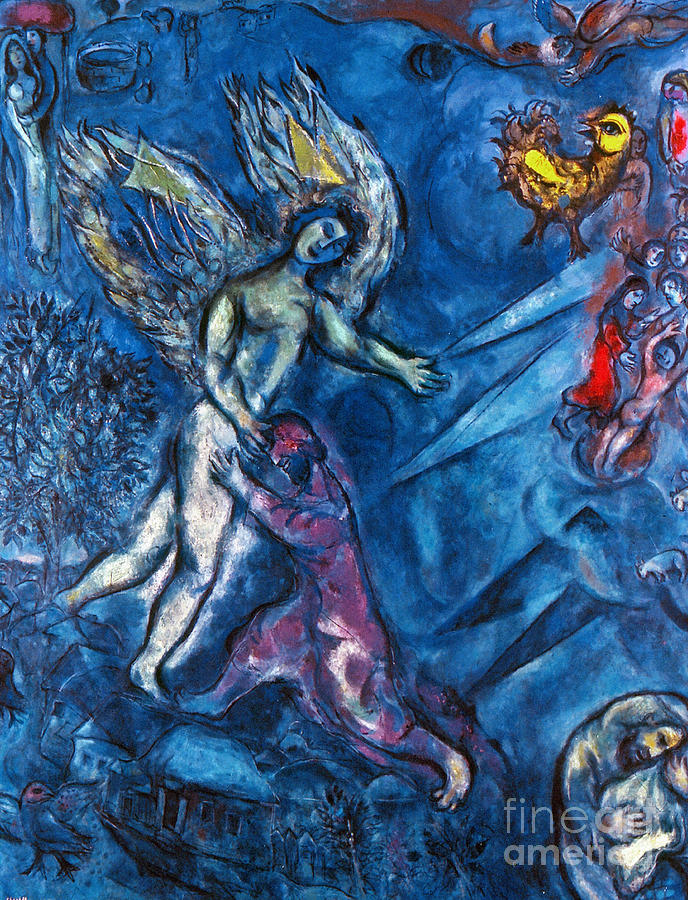
Jacob Wrestles

Often, I wrestle with God.

I am

a doubter.  I regret my own suspicions and fears

and I am also strangely grateful.

Yes, I am glad.

For to wrestle is honest.

And I have seen that as I face my darkest hours, as twilight turns

to morning and I am awake, still.

As I am fighting and the agony of depression and anxiety seem to overwhelm.

God is my comforter.  Even as I

fight, I know his consolation and that all this comes, unsurprisingly.

All this is for me.

Somehow I know that it is through the dog of depression jumping at my heels

and the albatross  of fear

heavy on my shoulders, and the arrows of anxiety stabbing at my chest,

I know that God is God,

and I am simply and solely,

wholly and fully, unabashedly

beloved.  Oh, I may plead

with God to bless me, but I understand its slow coming.  And my slow

learning that even here, now, today I am blessed.

I may walk through life

with this sorrow, the scars that are constant and deep, so deep

for I have been wounded.  I cry out

begging God to prove himself to me.  Does he mean for my life

to mean — anything?

Can I trust you, God?

Can I count on you for whatever the future holds?

Trust you that my life matters?

I know

these encounters in the dark, the isolation and despair of depression

change me.  Deep within, through my abrasions and soul pain,

God is making

something new.

I bear the mark of my pain, scars.  Perhaps I always will.

But I am also

something else. Therein is promise.  And hope.

I am something redeemed.  So even while I stumble, shattered

I am being made strong – perhaps even useful, resolute

and yes, somehow my life is something good.

I believe

when God made me he was pleased.

And nothing I can do, have done, will do

changes that.

Deep within

my abrasions and soul pain, God is making

something new.

What is lost when the Church echoes with the sound of women’s silence?

Polski: Andronik, Atanazjusz i Junia (po prawe...
Image via Wikipedia

What is lost when the church echoes with the sound of women’s silence?

In many respects I am too strident– because of my lack of “role”, my current joblessness lacks authority, lack of higher degrees, perhaps this is why I find myself speaking out more often, and more loudly.   I have finally accepted that one cannot command respect at church or anywhere.  It must be earned.  And I have not earned the respect of the leaders in my church and so I have no real voice there. But this being true does not negate the veracity of what I have to say.  Because it is that which isn’t heard, which needs to be heard.  “Not to speak is to speak.”

And even more so, from within the Church needs to hear the sounds of women’s silence.

In “the Church” what I hear all too frequently is the voices of men.  I see the male faces on the platform, on the bookcovers that are recommended, and in the Christian magazines, blogs and conferences.  Women are relegated to their own blogs or their own tracks in the Church and at events, yes that are “For Women.”  The reason I have such a problem with these things “for Women” is that although women may be talking to each other, are our ideas being heard? 

When women are unrepresented at “the table” or underrepresented then it goes without saying that half the church, or more than that statistically, are silenced.  

What is lost when the church echoes with the sound of women’s silence?

When I learned recently that Junia was a woman I felt angry, filled with a level of fury that shook me to the core.  And then a degree of apathy came over me.  You see, I have always believed and worried that the voices of women were stifled in scripture.  For most of my life, I chose “forgiving possible human error” because this was the “inspired Word of God.”  But in actuality, we are talking about a misrepresentation of the truth.  This is a way of looking at scripture that doesn’t allow for any understanding of the characters that are missing from the biblical story because they are never directly mentioned, given voice, or described or simply rewritten as in the case of Junia.

Is it important to ask what other stories are squelched by the translators or simply quieted by the culture in which the stories were written? I think so.  Scholars are needed to investigate the tensions between the story of scripture and characters large and small, depending on emphasis.  The conversations in the church are continuously around all of the well-known biblical characters most of whom are male.  Others are only briefly mentioned and this simply reinforces the silence.

The sounds of women’s silence run deep.
Let us attune our ears to the sounds of women’s silence,
to attend and listen to what is not said,
what has never been said,
what is only now beginning to be said.
Let this silence cry aloud in our ears,
let it resound and reverberate inside our heads,
let it deafen our whole being with a colossal roar.
This silence is eloquent, articulate of women’s pain and women’s lives.
It is compelling, hypnotic, fearful, overwhelming.
It speaks louder than words.
It utters volumes of speech.
It drowns out all other language.
Where are the women in our history, in our heritage?
Where are the stories of our women heroes, mystics, leaders and teachers?
Who will guide the footsteps of our daughters?
Born today into a deafening silence about their ancestors, about themselves?

So many women’s voices have been lost in the pages of history,
erased and blotted out and passed over in silence

by the rulers of patriarchy, the makers of culture.
So few have survived in the pages,
and their stories have so often been ignored,
trivialized, marginalized, distorted.  (Praying Like a Woman, Nicola Slee)

What is louder in the Church today than the sound of women’s silence?

There was a woman, who spoke from a place of no authority.  She brought the only resources she had which were not many.  She came boldly to Jesus.  She broke open and poured out oil, a blessing, over Jesus.

Jesus was at Bethany, a guest of Simon the Leper. While he was eating dinner, a woman came up carrying a bottle of very expensive perfume. Opening the bottle, she poured it on his head. Some of the guests became furious at the waste, in their indignation over her actions. But Jesus said, “Let her alone. Why are you giving her a hard time? She has just done something wonderfully significant for me. She did what she could when she could—she pre-anointed my body for burial. And you can be sure that wherever in the whole world the Message is preached, what she just did is going to be talked about admiringly.”  (Mark 14:3-9)

Are we talking about this woman that risked all her personal resources, public ridicule and the possibility of being rejected by Jesus, by Simon, by her community?  Still she came and anointed Jesus. Are we talking about her courage, and faith and importance?

Oh, that we would have the courage of this woman.  She stepped out of all of the comforts of her culture and Jesus affirmed her for it!

So I end with where I began.  I don’t have the affirmation of my church, I am not really listened to I know.  I am known for my view or position, possibly in a tiny way for being strident about my views on women.  But I need to let that go and simply listen for the ways and places in which I do have a voice.  And speak to those that are listening.

Amen.

Advice for Women in Ministry

(I am) Under Construction: I Believe in the God who keeps time and has a long view that I cannot comprehend

daughter & dad

I am grieving my father’s absence today.

I miss him terribly. (This is true, even while it is also true that I was afraid of him all my life.)  He was my father and I loved him.  He was wise and could be gentle and kind.

Yesterday while reflecting on where I have come from, I realized that my perceptions of what I see as my “successful” years are a direct result of my Dad’s view of the world and his active presence in my life.

The way he viewed one’s personal value was that it comes directly from one’s significant contribution to the world, the “great” things you would do for God. 

This has messed me up.

I went to work for my Dad soon after college.  I wanted to be near him, to come to know the man who others seemed to revere so highly.  As a child, I missed out on a lot of time with my father because of he was constantly working and frequently traveled.  I thought that this was a way to be close to him.

Those years working for him at InterVarsity and on Urbana conventions were full, busy and challenging.  I learned a lot of good things:  the value of being a hard worker, of doing things excellently, of receiving correction, of trying things even when not an expert (basically taking risks!), and the value of pursing your passions.

I also learned some things about myself — one is good, that I loved hard work.

But I also came to believe that work could fill the empty spaces in my soul – places of loneliness, need for relevance and love, and the insidious fear of being a failure.

All of my life it was those people who served others, who worked hard, who accomplished many things, who were pioneers in their ideas and accomplishments, who challenged the status quo, who took risks, who “made a difference” – those were the people admired by my father! 

And that is what I learned to do and believe mattered most.

Growing up the things that were okay to sacrifice were family, friendship, and knowing and accountable relationships.   I even saw that it was okay to not live up to the great character qualities aspired to in Scripture, if you meant well or asked forgiveness afterward.  Growing up in a missionary family it was made clear to us that you should be willing to work for less, less money as missionaries and nothing in terms of payment for my mother, who worked for the mission but received no monetary compensation.  And we learned that God would always provide.  We lacked for nothing materially growing up.

Dad was driven to do many “important things” and I admired him for this, even as I missed having a daddy in my life.   It is only as an adult that I accepted the power and impact of being driven on one’s priorities, relationships and family for the worse.

When I left work to be at-home, I had become my father — driven, passionate, crazy busy and “weary from well-doing,” as well as lonely and constantly fearing failure.  No matter what I accomplished, I was unsatisfied and rarely felt good about it or myself.   It just made sense to leave, if I was that unhappy at work.  We had three children in diapers and a budding teenager, my stepdaughter, at home. When I quit I was a mess and didn’t know it!

I am now grateful to have learned, after more than ten years at-home, that there is more to life than what you do but even now, even yesterday the devilish ideas return saying that I am nothing without what I am doing, and it better be something significant!  Accomplishments are heady things and degrees boost the ego, but they do not offer one the solid, sweet confidence that comes from knowing who you are in the Lord – beloved, fully known and loved.  I thought that my father would love me more if I was able to do more!  He had spent his whole life driven by this need as well.

This was what I knew “You are loved, more lovable, when you are doing important things.”

It was in November, 02, that I got the call that my dad was sick – he’d been having what they thought were TIAs, losing the ability to speak in mid sentence.  Through some connections, my parents always had connections, Dad got in quickly to see a brain specialist who made the diagnosis of cancer.  It was tumors in his brain.

The first of December found us in Colorado, with brain surgery on.  I didn’t know it at the time, but this would be the only time, in the months that he was sick, that Dad would allow a conversation about his possible death.  He could sometimes be a pragmatic man.  Going into surgery held risks and a conversation needed to occur with his children just in case something went wrong.  

I wish I had known that this was the only time he would allow such a conversation.  I still have so many questions, things that remain unspoken, proper goodbyes, … 

But that was his way … He lived absolutes and when he came out of surgery alive, he believed that God would heal him and more importantly that he would return to work.  “God still had plans for him, things Dad was to do.  It was unacceptable, lacking faith to be quite honest, to talk of his possible death.”

And so he and I went to tea.  It was a conversation that changed my life.  For the first time, I knew I could say whatever needed saying.  I was admittedly terrified!  He could be volatile and capricious.  And later, in a conversation with my sister he proved how much so.  This was partly due to the tumors changing him but he was erratic and mean many times over the years, which made it hard to trust in the benevolent moments.

At great personal risk, I told my father how his actions throughout my life had hurt me — his anger, his raging, his criticism, his absence had injured me. And this was his reply.  Yes, regret and he sought my immediate forgiveness.  (It was a transaction for him, forgiveness.  One asks.  One receives.  End of story.)

But he also said something that struck me as strange , a non sequitur, which I have reflected on many times since. It was new information.  He said, “I didn’t know how to be a parent.  I felt incompetent.  But I was good at doing work …  accomplished, affirmed and admired. And so that’s what I did, I worked. “

Yes, I felt that growing up.  Both that being a parent was not his priority though I didn’t know why.  And that what you do was a way to feel good about yourself.  And I also did that for many years and when work became untenable, even the accomplishments weren’t enough, would not fill the hole in my heart and made me feel like there was continuously more I need to do.  Have.  Accomplish.  Take on.  Achieve.   And so I quit.

I was unprepared for the full stop! Of all of a sudden, not being significant in the world’s eyes.  And what I had done in the past was irrelevant.  

And it wasn’t that being a parent was too hard but rather that I didn’t believe in its value.  In many ways still don’t.  I mean intellectually I do know the value of parenting, but I cannot seem to convince my heart and soul.

This is the root of my discomfort with being at home.  My depression came on very soon after.   I wasn’t happy but not because of being at-home, or being a mother, or even because I no longer had “a job” to make me feel important or worthwhile.

I had never been that happy.  I was only now coming to a place of acknowledging that reality.

I had a very good friend and mentor years ago, Pete Hammond, that wrote this wisdom:

“Being a sinner means having the terrible ability to misuse every good thing!  That ability to misuse includes relationships, possessions, passions and pleasures, citizenship privileges and rights, freedoms, work and jobs, family, etc.  Thanks be to God that Christ offered to help us break this terrible pattern on the cross.” – Pete Hammond, Re:Learning Family.

The good news is that though I am broken and lost, I have hope.  Paul progressed in his transformation, he said,

“Christ died for our sins … I am the least of all the apostles, unfit to be called an apostle. … But, by the grace of God, I am what I am, and this grace toward me has not been in vain.”

“I know that nothing good dwells within me… Wretched man that I am!  Who will rescue me?… Thanks be to God through Jesus Christ our Lord.

“I, too, had reason for confidence in the flesh (religion, ethnicity, family, profession, temperament, citizenship) … but I have come to regard these as loss… and regard them as rubbish… I want to know Christ.” 

“Christ Jesus came into the world to save sinners – of whom I am the greatest.  For that reason I received mercy…making me an example … To God be the glory for ever and ever!”

Transformation seems to take time.  I have to trust in God who keeps time and has a long view that I cannot know, comprehend, but I can believe in.  Looking at Paul, he was also growing in his understanding of himself from being a dangerous pre-Christian to becoming a mature and humble leader.  Paul changed.  In his life, I find hope!   He was being changed, he was “under construction” and when he said “Be imitators of me, as I am of Christ”(In 1 Cor. 4:16, 11:11 and Phil 3:17, 4:9) I understand what he meant!  Not that he was perfect, but that Christ was still transforming him.

I long for a day when I will have arrived to full maturity and not have days like yesterday when I sink into depression.

I pray for the fruit of love, joy, peace, patience, kindness, generosity, faithfulness, gentleness and self-control in life.

For serenity and healing, I pray.  And I believe that Christ is still transforming me.

Amen.

Empty and Waiting

I must apologize in advance for this essay.  I could delete it, I almost did.  Perhaps I still shall. 

———————————————————————————————————————

I stopped dreaming.  I realized this as I sat in church yesterday.

It’s hard to feel hopeful when you no longer dream.  What you conceived for your life is not this, when you look around and hate who you have become.

[It takes me a long time to learn things.   I am hard-headed. ]

Perhaps, it is too much to ask?  I just wanted to be significant.  I imagined that I would do something amazing with my life — all those years of working on Urbana conventions, I felt I was doing something important.  Now what?

Is this it? I am a mother and not that good at it, seemingly always failing my children, a wife which I will never write about, a terrible homemaker, yes I mean lazy and bad at it, an infrequent friend and missing sister, ungrateful daughter who just feels forgotten, a hobbyist-at-best photographer and a sometimes I put words together on the page and call myself a writer  … Even this blog is simply an exercise in navel gazing.  And here I go again.

My fight with my maker is almost daily – my depression or remission, anxiety seems constant, recovery from alcoholism, battling with the isolation, feeling only loneliness.

I know that I am foremost an ingrate.  I don’t need reminders.  I have so much!  Four beautiful children, a home and husband and all I can think is, …  I thought I would be something, more.  I put these words here  for what?

I feel empty. I feel useless.   What purpose does my life serve?  Yes, I am looking for evidence of good, any good that I do, and hope.

God is faithful to his promises.  What are they, his promises?  What has God promised?

I’ve already lost whatever I heard in the sermon yesterday. 

He said “God’s results will look different than what we dream or imagine, what we prescribe for ourselves.  The book of Isaiah is filled with a promise that wasn’t fulfilled for 700 years.  God is not predictable but he is faithful. “

I am filled with longing — sick with it.  Perhaps this too is the waiting of Advent.

At times, we wait just for hope. We know we are ungrateful.  We know we are useless to Him.  He doesn’t need us.

We are simply empty and waiting.  

“In this harsh world, draw your breath in pain to tell my story.” — Hamlet

I am a Reformed Control Freak (Advent Musings)

I am a reformed control freak.  By reformed I suppose I mean that I know I am, was, can be a controlling person who wants things just so. Christmas is a perfect example of what really gets my ire up.  OK, once again I’m showing what a wreck I am.  Yesterday I found myself at the hardware store ready to purchase lights for the house.  Yes, outside lights.  Just that is progress for me, twenty years it took.  Colored lights and all the glitter and s*** that we’re supposed to buy for this holiday, and Halloween, and all the other supposed “Hallmark Holy Days” — Well I rebel.

Yes, I have been told that I am “no fun” when it comes to decorations at holidays of any kind.  I don’t do ghosts in the trees at Halloween.  I don’t do little plastic hearts on the windows on Valentine’s day.  And I’ve felt sort of righteous in my snootiness.

Most especially at Christmas.    From the year I had my first tree we had our first tree, I have tried to control it.  My need for control being off the charts I would allow no colored lights, only clear ones.  No home-made ornaments, only accepting matching ones with a theme on my tree.

((Sigh)).  I am reformed because we do have home made ornaments.  And this year, after eighteen years of marriage, I have decided that it would be “festive” and “fun” to have lights on the house outside for all the world to see in their glorious tackiness   I mean isn’t really all about the kids?  And their imaginations?

And this didn’t help.  Driving home the other night, I heard my ten-year old son counting out loud.  When asked, he said, he was counting the number of people on our street that had “Christmas spirit.”

I knew this was the year.  I was going to get some spirit, let go and lighten up and have a little fun.  Who cares if the house is garish if it makes kids happy? Screw Martha Stewart.  And so I found myself at the hardware store putting down the lovely-green-genuine-pine-wreath-that-matches-my-house, for the front door.  And buying a bright red, bow that lights up.  And colored lights. (Picture forthcoming.)  Yes, I am a reformed control freak.

This isn’t about me.  This year for Christmas I’m giving everyone a decidedly much better time.

Isn’t everyone controlling at Christmas, with expectations ramped up to 110% for perfection!?

In all honesty Christmas never lives up to expectations because it isn’t about us and whatever experiences we can conjure up.

It’s about a babe born to a girl, quite unexpectedly and miraculously, who grew up to give his life up for me. And you.

Blessed, Is She? [Re-imagining Christian Feminism]

NOT MY IMAGE

Blessed is she who has believed that what the Lord has said to her will be accomplished! Luke 1:45 NIV
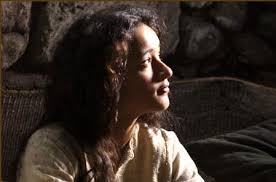
Mary learned that she was to be mother of Jesus when she was only a child herself. And all of the social implications had the potential to ruin her life.  I am sure, as she was being told by the angel that this was her destiny — doubt, disbelief, and dismay all ran through her. And yet what did she say in response?  Not, “Yes, but…”  Not, “Oh no!”  Not, “Do you have any idea what this will do to my life, for that matter my reputation?!”

She did not question it or seek clarification.  She said only, “Yes.  Blessed is she who has believed that what the Lord has said will be accomplished.”  She believed.

Two thousand years later the Church is made uneasy by conversations about the role of women.  Today, if they could change it, I wonder who “the Church” would choose to be the first to know of the Savior’s coming?  Who would the Church choose to be caretaker of the babe?  

When Rachel Held Evans said recently on her blog, that she doesn’t really know what a feminist is, I was mildly surprised though I think she was kidding, kind of.  The truth is that in the Church we don’t talk about being a Christian feminist.  The words are laden with ancient history and pain, not blessing.  With the climate surrounding even the idea of feminism in the Church, it begs the question:  What do you mean when you say you are a Christian feminist?

I did not think of myself as a feminist for a very long time. Slowly I have gained confidence in my understanding of what I mean when I call myself a feminist, but my path of discovery has been bumpy. For years I did not really know what to call myself.  But it became clear that I needed some way to make it unequivocal what I believed.  If I was going to stay in my evangelical church, I had to figure out how live with myself and learn to defend my view that God meant women to fully use our gifts and talents in the Church. I needed language that was clear.

For years I asked everyone else to tell me what they believed. I wrote many letters to my pastor asking for his thoughts, ideas, book recommendations, and for suggestions of people to talk to.  My thoughts developed in a fractured way and I had a fearful and insecure tone.  Always being put off, I became concerned that I needed to adjust my attitude.  I “worked on my attitude” because I was being sent the clear message that I was wrong. I continued to study, but I just could not let go of the fact that there were no female teachers at my church and that eldership was restricted to men.  Coming out of a Presbyterian background this was a step backward in my mind.  I had been an elder at my last church.  Every time the elder nomination process started the pain — the wound was scratched open.

When I asked why there were no women teachers I was told that teachers will rise organically.  To me this was short sided and underestimated how important it is for anyone, but especially women, to be celebrated, mentored, cheered, invested and believed in with whatever gifts they have.  Women and girls are less likely to put themselves forward and rarely self-promote. And, when the church doesn’t have models of women teaching and there is thousands of years of church history one is going up “against” it is a rare person who is able to stand up say “I have a gift!”

When I wrote my elders (all men) and received a lengthy letter in reply, they said they really do agree with me.  But I needed to know how difficult it is to change things and it hasn’t been looked at in more than two decades.  I was told that the likely controversy that would arise out of changing this was more than they were prepared to address at this time.  Clearly they are afraid to talk about the issue of women, fearing it is too divisive. Did you catch that, they actually agreed that it was time that women were teachers and elders but it’s “too hard to change.”  What kind of a message is that sending?  That women and girls are not important.   

This apathy and fear will produce a whole new generation of ignorance and is another reason why we must talk and write about it.   It is gravely sad for me, as I raise my children in the church that so many men and women have no idea that there is any theological debate about the role of women in the church.  The these things are up for debate.  That there is more than one biblical perspective.  My own daughter looks at the status quo and listens to me and shrugs saying “Mom, why are you always on about women’s rights?”  Even with her own mother trying to teach her differently she thinks what she sees and experiences is the way it is supposed to be.

Leaving is not the answer.  My friends outside the evangelical church tradition just shake their heads at me asking: “Why are you still there? Come over here where you will be valued and appreciated.”   While it is true that most people at my church just don’t want to think about it and it would be easier to just leave, I don’t for two reasons.  Firstly, yes I am a feminist, but I am a Christ follower first and when my feminism rises above that in my life then I believe it is an idol for me.  Secondly, I continue to be spiritually challenged. This issue does not totally hamper my ability to learn and receive from my church. So I remain, believing that perhaps I am supposed to be there.

But there is no getting around people’s strange ideas about feminists.

Here are some of the generalizations I run in to:

  • Feminists all hate men and are angry!

That is just not true.  Let me give you an example of how hard it is.

We are studying attributes of God at church.  Commenting in a small group made up of ten to fifteen men and women that we meet with weekly, about my perceptions of God as Father, I tried to talk about the fact that my perceptions are skewed and harmed by my relationship to an angry and abusive human father.  As I stumbled over my words, trying to be as clear as possible (I really hate thinking out loud and find it challenging) and trying not offend anyone, the men in the room seemed to physically recoil, as if I was saying that I hate men.  “Do I want the men to all leave?” one of them joked.   I found myself saying “No, of course not. I don’t hate men.  I don’t, obviously, hate my husband for being a man.  I just don’t find it helpful that God is characterized as father/male when my experience with my father was so difficult.” 

I think it is absurd the pretzels we have to twist ourselves into trying to explain ourselves sometimes, because people think of all the negative generalizations about feminists.   But that is because of the lack of women willing to speak out about their experiences. And the current climate surrounding the role of women in the Church makes it hard for women who label themselves as feminists in the Church.

  •  Feminists are offended by any song or creed with male pronouns.  

I have been there. When I was first on this journey everything hurt, male pronouns especially.   Gratefully I have come to a place where male pronouns in ancient hymns no longer offend me but I do notice them, every time.  I find it unfortunate that we have to be distracted by this while worshiping God.  I don’t choose to be offended, I just notice it.

And scripture readings still give me a twinge – though I know (because I also read the inclusive translations) which of the verses are strictly and only written to men and which (most) are referring to people.

I do that extra work because it is meaningful, and crucial to me. 

  • Feminists are just out for power.

Questioning the Church’s ancient rules isn’t about power.  These are things that need to be questioned.

Based on a recent e-book written by Scot McKnight, I have concluded even more strongly that my desire to know scripture for myself is important.   “Sometimes it takes extra energy to get a silenced voice back.” Scot McKnight wrote in is riveting essay Junia is Not Alone.  “There is no evidence … in ancient manuscripts or translations” that Junia was a man.  “The church got into a rut and rode it out.”  A rut is kind way put it — more like a stinky hell-hole in my opinion, if a woman was completely cut out of the story in scripture and most people in the church don’t know. 

What else are they interpreting or changing?  We have an obligation to study if for ourselves.  The reality is that the Church needs women’s  voices.   It is wrong that our children growing up in the church not learning of the many incredible women in the Bible.  They are growing up to watch, and listen, and see all that isn’t there.  And yet it is there and no one told us.

Together we can re-imagine Christian Feminism.

  • Men and women, use your platform and speak!

Things are changing.  There are many and varied platforms for people to educate themselves if they choose to.  The internet has opened up the world for us.  Gratefully, one can jump on FB or twitter and instantly feel connected to others.  Blogs are another incredible resource for connecting with intelligent and inspiring women and men willing to engage in these important topics.

As society has changed and women’s opportunities have expanded, as women have gained responsibility and influence (and dare I say power) in the marketplace, sadly the Church remains static and seems to have a narrow view of women’s potential.  For a thousand years, the belief was held that women were not included with men as image bearers of God.  Though the church has mostly abandoned that idea, they have not abandoned the authority structures that perpetuate the subjugation of women.

An important part of my development as a feminist, and my spiritual maturation, was forgiving the ancient church fathers and the current ones (though this is harder for me) for this divisive and ugly interpretations of scripture that damage and harm women.  I had to take my pain to God for “allowing” these practices to exist, ones that limit, stifle and repress women in the church.

Blessed is she who has believed that what the Lord has said to her will be accomplished! – Luke 1:45

Rachel Held Evans, who I mentioned above, is a firecracker commentator on the current climate for women in the church.  She recently posted 13 Things that Make Me a Lousy Feminist.  What I like about Rachel is that she is courageous and willing to use her platform.  She stirs the pot, but her blog has respectful conversations.  Her tone is winsome and she laces her thoughts with humor, forcing us to think about our own inconsistencies.  And she receives some crap from people, but she is learning to put her opinions out there humbly and then listen to others.  That is a quality of a Godly leader.  I read with her list and reflected on what it means to me to be a Christian feminist.

These are (some of) the things I wish others understood about being a Christian Feminist.

Being a feminist is complex and is as different for every person just as is being male or female.  It cannot be summed up easily.

For me at least it means that women should have equal opportunities at home, at church, and in their professional lives.

Christian feminism is to me is the crazy belief that women and men are both created in God’s image and that each deserves a life of freedom and opportunity inside or outside the Church.  When the church’s systems keep that from happening we should speak up and challenge them with grace and aplomb knowing this may take years, even decades, to bring change.  It will certainly take patience, prayer, and perseverance.  It will take a loving yet persistent voice.  It will require us to build relationships with and trust and respect from the leadership structures. That too takes time.  I have not achieved this yet in my church and I have been there for ten years.  But I remain hopeful.

  • We all have a role to play.  We are all necessary.  We all have a voice. We must take every opportunity that we can to share a positive, healthy perspective of feminism.  Women and men have a job ahead of us to change the opinions of others who do not understand what it means to be feminists, who are Christians.
  • Being a feminist is a mindset and worldview.  Anyone can be a feminist – men and women.
  • There are feminists who are decidedly feminine and those people actually might have more access and a voice in the Church than the stereotypical hard-core militant feminists.  (While I am no princess, I sometimes wear makeup and I shave my legs, these things are not the antitheses to being a feminist.)
  • While one can be a feminist and personally opposed to abortion, taking away a woman’s right to choose is an inherently anti-feminist position.  I know that is controversial, but I would push back and say that human rights and dignity should be heralded at the beginning and end of life, each are a life and the position of many in the Church on death row executions is equally murder in my estimation.
  • Making sexist comments against men, in favor of women, is un-feminist and only enforces gender stereotypes.
  • We must respect others choices. There is nothing wrong with the choice of being a stay-at-home mom and the male in a relationship be the breadwinner.  That is what we have chosen right now and it came with a high price for me.  But those that choose this admittedly very traditional lifestyle must also respect those with both spouses working outside the home or those that choose to have the man staying at-home and a woman being the breadwinner.  These are all options that are good and different for each family.
  • Work in any area of life should be based on talent, skill and passions as well as spiritual gifting.  This goes for everything from cleaning the house and mowing the lawn at home, to leading and managing teams, to teaching or ministering to others.    That said; don’t give any woman a job or a role, because you need a token woman. Do it because she is good at it.  Always work hard to find the best person for the job but know that in order to reconcile the injustice of institutional sexism and racism, work even harder to be sure that women and minorities are represented.   Like someone said “we’re all trying to be successful within a hierarchy of privilege.”
  • I took my husband’s name, but only because I was tired of having my father’s name.  Women should be able to choose their name without feeling slammed from both ends by their choice.  I want my own name but there isn’t a way to achieve that currently and I don’t have a solution for it other than make up or choose a new name.

These are just a few of the ways that I have felt misunderstood as a Christian feminist.  What have you run into?

It’s hard to talk about injustice anywhere, but especially in the Church, without others developing a posture of fear and defensiveness and even condemnation.  I would simply ask that the next time a woman raises an issue or talks about their experiences as a woman in the church, try to remember a few things.

  1. They may be in pain.
  2. They may not have worked out exactly where they stand.
  3. They may not have a full biblical worldview developed.
  4. They may not be able to defend their position.
  5. They may just want to be heard, understood, and loved.

Let’s respect one another’s differences, ask questions, and be open to change.

Our Lord came into the world in the womb of a young girl.  This teenage child was entrusted with the care and development of God himself, in the form of a babe.  She was told “You are blessed” and she believed she was!  Her faith was huge.  Her role was incredibly important.  The church today seems so caught up in what women and girls can’t do.  Let’s enlarge our faith and ask what can we do?  What are we being called to?

Another blogger that I love to read recently said this:

“It’s always befuddled me that people could think of women’s standing in the church as some sort of unimportant secondary issue, something to be held loosely and regarded coolly. Do we not realize that this has a significant personal impact on more than half the church?  Do we not acknowledge that the limits we do or do not place on women impact ministry efforts, evangelism and world missions? Do we not consider the implications this has for women’s understanding of their standing before God?   (Not to mention men’s understanding of a woman’s standing before God–and before them.  Ideas have consequences, and the consequences of subjugation tend to be ugly, like the thistles growing up in the field, hindering the work God has for us to do in the world.)”  — Jenny Rae Armstrong

I believe it is imperative that all believers in Christ (individually and corporately with whatever power and influence each has been given) learn to speak about the injustices that plague humanity — war, poverty and hunger, and sexism and other forms of prejudice, bigotry and racism.  And the next time someone wants to talk about women in the Church how refreshing it would be if we were open, embracing and full of love.  

Ask yourself, “Blessed, is she?”

“Blessed is she who has believed that what the Lord has said to her will be accomplished!”  Luke 1:45 NIV

We can no longer take their word for it. [A response to Scot McKnight’s Junia essay]

“Greet Andronicus and Junia, my kinsmen and my fellow prisoners, who are outstanding among the apostles, who also were in Christ before me.”–Paul writing in Romans 16:7

This is life affirming and beautiful, I thought, as I read  for the first time in my life (and after having grown up in the church) that Junia, the apostle in the New Testament, was actually a woman.  She was “outstanding among apostles.”

The lack of women in leadership in the church is a tragedy. The Church needs our voices. As I try to advocate for how difficult it is to be a woman in the Church and not have our stories told more easily and readily.  I talk about how wrong it is to have our children growing up in the church without being taught about the many incredible women in the Bible.

Our children, and women are growing up to watch, and listen, and see all that isn’t there.  

And yet it is there and no one told us.

“Sometimes it takes extra energy to get a silenced voice back.” Scot McKnight wrote in is riveting essay Junia is Not Alone.  “There is no evidence  …  in ancient manuscripts or translations” that Junia was a man.  “The church got into a rut and rode it out.”

A rut is kind way put it — more like a stinky hell-hole in my opinion!

When I was young woman studying for the first time in university, I was expected to take a bible class at my Christian liberal arts college.  For the first time in my life, I learned the fact that scripture was translated from other languages.  I didn’t know that.  (Perhaps I wasn’t paying attention.)

As I reflected on this, my passion to really understand scripture grew!  I wanted to study these texts for myself!  As I began I noticed there’s a lot left to one’s interpretation.  I began to wonder why I should just  blindly trust or believe someone else’s interpretation or opinion?  The longer I studied the more conscious I became.   I saw that my bible professors were all male, the bible translators were male,the  authors we were reading were male, and pastors are male.

Hey wait a second?!  I started looking around the church and realized everyone in authority is male. It’s a slow waking up sometimes to justice and truth, especially when you are questioning what you have always been told and injustice as you begin to see it.

Although unsettled, I didn’t really develop an understanding of the priesthood of believers and what equality in Christ means until I was in my late thirties.  My bible professor had actually discouraged me from further language study saying “What will you do with it?”  And it has been a strange and painful path, because I now know differently.  I have found people who are writing about egalitarian ideas and I do not feel so crazy or alone.

Actually often I feel very crazy and very alone which I suppose is why Scot’s essay struck me between the eyeballs.  Junia is not alone.  I am not alone.

I go back to my evangelical free church where women never preach.  And women can’t be elders. And they won’t really say publicly what they believe about women — too controversial and divisive.  And my church is open-minded.  They care about women and work to have women on the platform singing and playing instruments.  They do not restrict women from serving on committees and women definitely outnumber men in participation in the church I was told.  There are even a few women pastors who manage program areas although they cannot be ordained.  So why should I have a problem?

What is my problem?

It’s clear to me that my pastor’s (who I love and respect) don’t read books by women, don’t study commentary by women, nor have trusted advisors who are women (except their wives, which is cool if they actually respect them and the women speak up for these things), nor do they appear to have major influences on them who are women.  How do I know?  They never quote women, or suggest books by women.  And I think this matters.

Reading about Marie Dentière for the first time I felt angry for her and I often feel like her, as McKnight described “her tone was preachy, her mood was argumentative, her hermeneutic was clearly liberationist, her biblical knowledge vast…”

Screech.  Halt!  No my biblical knowledge isn’t vast.   I had never even heard that Junia was a woman, rather that she may have been but it was unlikely.  I could not tell you the stories of almost any of women listed below.  I am a simple person.

I believe in Galatians 3:28  – – that it liberates women to use the gifts God gave us!  God gave me this gift of putting words together compellingly, compassionately, and sometimes even clearly.  When Scot McKnight asks these questions I want to shout AMEN!

“Why the silence on the stories of women?

Why are men and women so obsessed with studying

the subordination of women?

Who says translations are not political documents?”

Halle-fricken-lujah Scot!  That’s what I’ve been thinking and saying all along, even with my ignorance and lack of theological study and lack of penis.

I am challenged by what he says.  Women need to study for themselves.

We need read the Bible for ourselves.  This almost sounds  silly to write because in the 21st century it is so obvious — duh, read it for yourself!  But it is not so in the church!   I am challenged to look up every single woman in scripture, now with several translations open, and a suspicious mind (already had that) to see what those women actually did.  What was their role?  How did God gift them?  If scholars and translators have been able to turn a woman into a man just because they said so, what else might they possibly have done?

These are a few of the women I jotted down from Scot’s article… Many of which I have never heard talked about or have just briefly referenced in Church.

Huldah famous prophet that helped provoke israel’s revival 2 kings 22; Miriam the prophetic national music director; Esther the dancing queen; Phoebe the benefactor of Paul’s missions probably the first to read Romans aloud in public. The first to defend and commentate on Romans. (Scot asks “Why the silence of woman commentators on Romans?”; Priscilla the teacher of Apollos; Rebekah mother of Jacob; Ruth; Esther; Mary mother of Jesus; Phoebe was a Deacon, not “deacon”; Shulamite woman in song of songs; the Proverbs 31 woman; Deborah;  and finally Junia  (married to Andronicus) was “outstanding among the apostles.” Romans 16:7

McNight says that all early translations of the New Testament translated Junia as a woman. From Tyndale to the last quarter of the 19th century, Junia was a woman. Then Luther played an important part in turning her into a man.

“Look at Junia in several translations:

  • NIV 2011: Junia was woman, but apostles unclear about their opinion of her. “Outstanding among the apostles.”
  • ESV: Junia may be man.  May be messenger.
  • CEB: prominent among the apostles.
  • NRSV and Holman Christian Standard Bible:  MIX the options.”

(Noted from Junia is A Woman by Scot McKnight)

Peter the Apostle said: “In the last days our sons and daughters will prophesy.”  And he said, “Even on my servants both men and women I will pour my spirit.”

My conclusions:

  1. Always look at more than one translation for any and all references of women in the bible.
  2. Never blindly trust what you are told about interpretations.
  3. Study it for yourself!  If we don’t we have no one to blame but ourselves.
  4. And personally, God gave me this gift of putting words together compellingly, compassionately, and sometimes even clearly.  I need to write about women.

Yes, it is sad that we have to do this for ourselves but if not me or you, then whom?  It is clear that we can no longer take their word for it.  Also, it is redemptive and life affirming.  Just as this essay by McKnight was significant for me, so will the other stories of women in scripture be on the future church!  It will be a call, a challenge, a cry for the girls and women and men who do not know the truth.

It is our challenge, our obligation, our honor to tell these stories.

May it be so!

————-

Scot McKnight is a recognized authority on the New Testament, early Christianity, and the historical Jesus. He is the Karl A. Olsson Professor in Religious Studies at North Park University (Chicago, Illinois).

“Why The Silence?” Forgive me the Cynicism … (on Women in the Church)

I don’t know about you, but when I first read this it shocked and appalled me.

During the times of Jesus, the religious leaders prayed at least three times a day and always thanked God for three specific things:

  • Thank God that I am a Jew and not a Gentile.
  • Thank God that I am free and not a slave.
  • Thank God that I am a man and NOT a woman.

In the Babylonian Talmud, a Rabbi still says that one is obliged to recite the following three berakhot daily: “Who has made me a Jew”, “who has not made me a woman”, “who has not made me an ignoramus.”

Ouch!  I’ll bet a lot of men in seminary today secretly thank God they are not a woman or an ignoramus, that is if they think of women at all.

I love pastor Eugene Cho’s reflection thanking God he is a man (tongue in cheek kind of) saying:

“There’s great privilege and power in simply being a man. This is why I contend that the treatment of women is the oldest injustice in human history. We can talk equality and equity all day long and while we can acknowledge how far we’ve come, we still clearly live – even in 2011 – where there’s great advantage in simply being a man.”

This is why the message of Jesus is so powerful.

The apostle Paul in Galatians 3:28 subverted the dominant worldview by saying in the Kingdom of God, “There is neither Jew nor Gentile, neither slave nor free, nor is there male and female, for you are all one in Christ Jesus.”  Powerful, meaningful words to me of the way God intended things and what he promises to restore in us all.  And yet, I easily become discouraged about the state of things.

I needed prudence yesterday when within the same hour I read two very different posts.

One was this post by a pastor saying that women should not read scripture in church.  Apparently, according to this writer, women are not to read scripture out loud in public. WOW.   I post it just to give perspective to some of my more progressive and enlightened friends about why I always seem concerned with women in the church.  It’s sexist crap  and I found myself  wishing a Bible scholar like Scot McKnight, or Sharon Hodde Miller, or Mary Elizabeth Fisher would please take him on.  I wrote him asking where he got the idea that only MEN should be the ones to do public reading of scripture.  It was is a sincere question as a Christ follower who loves scripture passionately, because I have never seen anything there that prescribes such an action.  He promised to write on it soon.

And then I saw this ebook by one of those wonderful people by Scot McKnight, titled Junia is Not Alone. You must pick it up.  You must read it.  He encourages more women to study, research and speak out on “women in the ancient world, about women in the early church, and women in church history … many whose stories are untold.” Amen!

Amazon says:

It tells the story of Junia, a female apostle honored by Paul in his Letter to the Romans—and then silenced and forgotten for most of church history. But Junia’s tragedy is not hers alone. She’s joined by fellow women in the Bible whose stories of bold leadership have been overlooked. She’s in the company of visionary women of God throughout the centuries whose names we’ve forgotten, whose stories go untold, and whose witness we neglect to celebrate.  But Junia is also joined by women today—women who are no longer silent and who are experiencing a re-voicing as they respond to God’s call to lead us into all truth.

Scot says:

Moving toward my second decade of teaching college students, more than half of whom grow up in a church, of this I am certain: churches don’t talk about the women of the Bible. Of Mary mother of Jesus they have heard, and even then not all of what they have heard is accurate. But of the other woman saints of the Bible, including Miriam, the prophetic national music director, or Esther, the dancing queen, or Phoebe, the benefactor of Paul’s missions, or Priscilla, the teacher, they’ve heard almost nothing.

Why the silence?

Why do we consider the mother/wife of Proverbs 31 an ideal female image but shush the language of the romantic Shulammite woman of the Song of Songs? Why are we so obsessed with studying the “subordination” of women to men but not a woman like Deborah, who subordinated men and enemies? Why do we believe that we are called to live out Pentecost’s vision of Spirit-shaped life but ignore what Peter predicted would happen? That “(i)n the last days… your sons and daughters will prophesy…” and that “(e)ven on my servants, both men and women, I will pour out my Spirit.”

You can buy the ebook for $2.99.

Sometimes God answers your prayers in strange ways.

Not a direct response obviously, but rather this was an encouragement to me.  Women are quite literally being silenced in the church by men like Tim Challies and Piper who talks about women’s submission even with in abusive marriages.  And movements like Mark Driscoll’s Mars Hill Church and his crazy notions about men and women.

In my article, The Voice of The Feminine I said:

I’ve been thinking about the lack of presence and example of women in the Church.  That Sunday* at my church in particular, women were simply spectators, the audience, the bystanders, the recipients and beneficiaries.

And the more I thought I could not remember the last time one of the teaching pastors suggested a book they were reading written by a woman.  Women are never quoted in my church.  Female theologians or scholars are never referenced or even mentioned, probably because the pastors don’t read them.  I can’t remember the last time, if ever, a pastor in my church has suggested or referred to or quoted a female theologian, religious author, or historian.  Am I the only one that notices these things?

The entire thing makes me very sad.  And so tired.  I am tired of the male dominated culture on the platform, as authors, as experts, as theologians, as speakers at conferences and in the Church at large. Considering women are half the church (some would say more) I do not buy the argument that there aren’t capable women to select from, though I’ve been told that very thing.  “The women haven’t risen up who have the gift of teaching.”

Risen up?   To be honest, one would think in a service-by-gifts based church there must not be any qualified gifted female teachers.   I attend an EFCA church of 5,000. You do the math.

*this is not always true!

But there are wonderful people who are articulating a different reality.  And I am most grateful to them. Perhaps in the coming weeks I will try to highlight more of them.

I worry at times that I think about this topic too much.  My overwhelming focus when it comes to thinking about injustice is the place of women in the church, their identity before God and whether they are using those talents for the purposes of the Kingdom.  I care about whether women, my daughters, who are made in God’s image too, know that they are indeed made to be that way.  I think about it all the time.  How much is too much?

Theologian Willard Swartley talks about the degree to which our ideologies warp our reading of Scripture.

 “Our willingness to be changed by what we read, to let the Bible function as a “window” through which  we see beyond self-interested ideologies, and not a “mirror” which simply reflects back to us what we want it to show.  Biblical interpretation, if it is worthy to be so called, will challenge the ideology of the interpreter.  It can and will lead to change, because people do not come to the text thinking as God thinks, or even as the people of God thought in serving as agents of divine revelation.  Interpreters [must] listen to the text carefully enough not to like it.  [When they do so] it powerfully demonstrates that the text’s message has been heard and respected.”

This is challenging because I am full of self-interest when it comes to being a Christian woman.  I am a proud woman and this is my tribe which I feel a responsibility to care for, not because I crave authority, but because I long to see every women and girl carrying out every gift from God in their lives, not just in the marketplace, but within the church!  I am hopeful that this will happen in my lifetime.

Much of the church is stifling more than half of the church  and our “interpretations” are silencing many incredible women.  My heart weeps with that thought.

MHH

Other things I have written on the subject:

There is more, just search for WOMEN in the categories.

Were I to forgive you, Daddy … [A tale of domestic abuse, Part 2]

I just posted a piece on domestic abuse.  This is a tiny bit of my personal story that I wrote several years ago.

The stupid neither forgive nor forget; the naive forgive and forget; the wise forgive, but do not forget.  — Thomas  S. Szasz

First published in March 2010.  This was not easy to write and it will not be an easy read.   Although my father was a dynamic, incredible, and beautiful human being he was also the perpetrator of psychological abuse in my life.  The ongoing work of processing that hasn’t been easy.  He’s been dead more than five years.  That’s created some space for honesty.  My goal has been, for many years, to get to a place where I can forgive him.  It has been interesting.

If you were a fan of my father, Dan Harrison, this will be the most difficult for you.  Just as it was unimaginably hard for me to write.

Note:  I DO NOT SPEAK FOR OR REPRESENT ANYONE ELSE IN MY FAMILY.  THANKS FOR UNDERSTANDING THAT each of OUR EXPERIENCES WITH MY FATHER WERE UNIQUE.   SOME WERE TREATED MUCH WORSE, SOME BETTER.

If I were To Forgive.

If I were to forgive you Daddy, does that mean I must forget the pulse pounding fear I felt when I was around you?  The acid stomachs you gave me.  The rage dreams I still sometimes have at night.  The shuttering tears that I couldn’t stop, even when you yelled at me to do so and now I can’t make tears come at all.  The stutter you hated, but couldn’t make me lose.

You made me something broken, something messed up.

Our family was Sadness.  Illness.  Meanness.  Pride.  Anger.  Fear.  Our family was Rigid. Perfectionist.  Isolated.  Secretive.   Constant striving.  Never measuring up.

I found some small strength and safety in sarcasm and attempted humor.  And when you made me stop, there was only safety in distance, in invisibility.  Like mine, your words punctured something deep inside.

Sometimes we laughed; it was a shrieking, jaw aching, gut busting laughter from the relief of it — it was almost a sob — until you pounded on the table.  Stop, you would roar!  You felt we came too close to meanness.  You’re damn right we did.  And then, we didn’t.

If I were to forgive you Daddy, does that mean I must forget the yelling?  Door slamming.  Your rage fits.  Should I forget the fearful anxious cleaning when you were coming home – after weeks and weeks of travel while Mother was always alone?  Why did we clean, to please you.  Why were we afraid, because you were never pleased.

Should I forget the religion you forced down our throats?  Say “I forgive you.” Say “I am sorry.”  Say “I believe.”    I couldn’t forgive.  I wasn’t sorry.  I didn’t believe. “You will sing this song and study the Bible, because I say so.  And never, ever argue with me for I am never wrong.”

Daddy, it takes my breath away to remember all the times you had one of us up against the wall, sobbing.  And you wouldn’t stop.  You kept on, and on until you broke us.

You made me something broken, something messed up.

Our family was Sadness.  Illness.  Meanness. Pride.  Anger.  Fear.  Our family was Rigid. Perfectionist.  Isolated.  Secretive.   Constant striving.  Never measuring up.

If I forgave you Daddy, would the bad memories stop?

… When I was about ten we spent Easter at a cabin.  You had certain ideas of what would happen.   But you can’t make me sing.  You couldn’t make me feel whatever you were feeling.

… Or Thanksgiving with the gorging on turkey almost worth being forced to be thankful.    There was no ‘pass’ when it came to gratitude.  Or whatever you expected.

There was no pass. You changed us.  You made us something broken, something messed up. Our family was Sadness.  Illness.  Meanness. Pride.  Anger.  Fear.  Our family was Rigid. Perfectionist.  Isolated.  Secretive.   Constant striving.  Never measuring up.

Were I to forgive you Daddy, I’d have to stop being invisible for within this “super power” I found a certain peace.  If you can’t hear me or see me, you will leave me alone.  I’d hide out in my room — reading.  Reading romantic novels where the hero was larger than life — loving and devoted, trying to be somewhere, anywhere other than home.

There was so much pain.  So much fear. You changed us.

Daddy, would you have me forgive your dying confession that you were addicted to your rage? It made you feel righteous.   At the end of your life, you felt regret but wanted me to know you still felt right all those years.

Well I’m addict.  I know the lies we tell ourselves that ”I can’t stop.” I know a little of what it takes to overcome an addiction.  It starts admitting you are powerless.  That is what you could never do.  Oh, you would return full of regret and self-pity you never changed.

I reject Your Jesus who never freed you from your pain. I reject your life and actions of hypocrisy, serving God and abusing at home.

And yet, I have forgiven you.  Why?  Because that is not the Jesus I have known. The God I have known has expected me to change.  Clearly spoken and told me to lie down, be humble, let go, cast off, and cut away the things that make me broken.  As I give them up, the addictions, the anger, the bitterness, the lack of forgiveness, the depression, the fear, the isolation, the invisibility …  He fills me.

I am filled up, and as I experience going back over two and a half decades sorting memories and returning — making furtive glances and long wretched journey’s back. —  There are things that I do remember and that I will never forget.

But I forgive

You. Because I must.  God said to me forgive as you were forgiven.

And though this brings no justice, I can live with it.  You may have changed me from whoever I was meant to be, and I will always remember that and wonder who I might have been.

ON THE OTHER HAND God made me, not you.  And I have begun to overcome all that pain, a broken spirit.  I have begun to paint a portrait of a life that is visible; a colorful life, with joy, generosity, gentleness and kindness.  I have become a woman with a heart once broken, but pieced back together and strong.  And my heart is bursting with the forgiveness that I have received. And I am laughing.  And some day I believe my tears will return.

You were the sort to put rubbing alcohol on my mosquito bites, because you couldn’t stand how I wouldn’t listen and stop scratching.  You were constantly picking at me, never satisfied.  But, as a child this was something I could control. You can’t make me stop, though I would bleed and it hurt.  It is cathartic to be in control.  But some day I hope I will let go completely and won’t need absolute control of myself.  Someday, God will open up my heart completely from the prison I put it for protection and long ago lost the key.  The day God unlocks it will be a day I can only imagine, but I believe it can happen.  Then I won’t be so afraid of people.  I will jump toward life not constantly be pulling away!

Yes, I forgive you Daddy.  For now I can laugh and love when I want to, I pray and study because my heart craves more from God and I believe I have begun to create the life I was meant to have lived.

Yes, I do forgive you Daddy because there is no justice in love.

The Lord says, “I will guide you along the best pathway for your life. I will advise you and watch over you. (Psalm 32:8 NLT)

Related articles.

Reblog this post [with Zemanta]

Strongest in the Broken Places: A Tale of Domestic Abuse

Watching this video I was a child again.

It validated experiences I had growing up.  It made me sad.  I grieve watching it for beyond my own experiences, as I know three women who are living right now in this sort of marriage.

  • One is married to an elder in my church.  (Actually, he was an elder at the time that she talked to me.  We were in a Bible study together.)  He had anger and control issues, perpetrated in the name of “biblical submission.”
  • Another friend stays in an habitually abusive marriage out of love and commitment to her husband saying “Would you leave your husband if he had cancer?  Then how could you leave if he has a mental illness?”  I’m not saying that she should leave her marriage, but I grieve that she is so alone!   And I am ill equipped to help, though I listen.
  • Another friend asks for prayer for friends whose marriage that is in trouble saying he “may be abusive” but likely she “may be making it all up.”

You never know when someone is a perpetrator of rage and control.  I can tell you with assurance that is the most unlikely person.

I grew up in a home where my father was in ministry and was a generous, gracious loving God-fearing man.  To this day when I write openly about my experiences growing up (here and here and here  and here and here and here and here and here and here and here and I only stop because the list is endless.  He’s one of the reasons I started my blog.)

Here is the best example of what it felt like growing up.

To this day I have people who say to me “I knew your father…” implying that somehow perhaps I didn’t, though I lived in his home for nearly two decades and worked for him for many years.   They imply by their statement that my experience and my mother’s and my sister’s didn’t happen.  The man in this video could have been my father — except Dad had a lot more personality!

The video below is one of the best that I have ever seen that talked about raging in a home as a domestic violence.  It made me feel “less alone” when it comes to domestic violence which is not always physical!  It was not physical in my home, except one time when my parents were first married my father put my mother’s head through a wall.  This was before I was born, but he put it in his book and that is how I heard about it.  Even though he wrote about his anger he was unable to change.  And it became the Achilles heal for him over and over again, hurting people around him.  It was a significant factor in my spiritual life and my perceptions of God.

It is real and destructive and is painful for me to this day.  I so wish that my father could have found this kind of help and felt it was safe to “come out” the way the brave heroes in this video have.  I so wish the church was better equipped to help women who do suffer in this way and could create a context where it is safe to speak out.  And I wish the church helped men who know they have a problem but don’t know how to get help.

“Statistics show that victims of domestic violence most often go to churches for help. Unfortunately, churches are often ill-equipped and not helpful. This clip tells the story of one couple’s search for help and also offers some advice for creating an environment conducive for recovery.”

Please watch.  If the video doesn’t work you will have to follow the link prior.

This is a hard post for me to write.  By even talking about this others could be at risk and yet that is the great irony.

Carrying depression around is like being punished for a crime I cannot identify

Coming home after a day of chauffeuring that completely disrupts my day I do enough chores to make it look like I do enough chores.

Driving all over town is enough to make anyone get down;  needing to go to the bathroom when you’re late somewhere; nearly running out of gas, running into my husband’s employees in my front yard in my pajamas this morning; hitting the curb and scraping the front of my newish car.  Last night I dented my husband’s fender. Yesterday, I was unable to make decisions on Christmas lights at the hardware store. After twenty minutes of indecision I walked out empty handed and overwhelmed by my muddled head.

I feel it in my bones – I am still carrying depression around.  It feels like a punishment for a crime I cannot identify.  This is wrong.

The skies are not even gray, rather white and as usual it gets me down.

The road on the southeast side of town is bumpy and uncared for, the neighborhood’s buildings are depressed and rundown.  I tell my daughter clearly how wrong this is that this area of town is so neglected, oppressively so.  They don’t even fix the roads here and in our neighborhood in the same city the streets are quite literally washed and swept.  This is wrong.

I think about the economy and the need for jobs.  Perhaps I need a job.  I would do almost anything, I think.  I could do any job.  I’m college educated.  I notice the crossing guard isn’t a retired person like I usually see, but a man about my husband’s age.  What unimaginable difficulties would drive a middle-aged man to be a crossing guard?  I mean I would take that job for something to do, but to need to do so?  This is wrong.

I actually napped this afternoon – an anathema, I can barely live with the shame.  I just couldn’t get my body to do anything else but sneak inside the house like a criminal, so the dog wouldn’t hear me.  I skulked up the stairs with my coat still on, flipped on the alarm so I wouldn’t miss my daughter’s need for a ride,  and fell slowly into sleep.  Although my mind and body cannot figure anything else to do, I feel ashamed of sleeping middle of the day. This is wrong.

I consider cancelling my appointment tomorrow.  Two times I open up my phone to send the email.  Two times I question myself.  Why exactly am I cancelling?  It would be easier to convince her than myself that I have a good reason.  Honestly I think that I just cannot bear it and know that this is just when I need to go.  I still do not know if I will end up going.

I got tired of myself today.  So many random chaotic thoughts. I am an agitator online and I don’t think that’s very Godly.  I ask myself is it for agitation’s sake that you ask so many questions or is it that you actually want to make things better?  Of course, make things better for women in the church I answer.  How does all this idea slinging online accomplish that exactly?  It makes people think.  Yes, but does it actually change anything?  I don’t know.  All I know is I am tired of myself. 

Exhausted by my dissatisfaction.  I’m not sure where it comes from.  When did I become so frustrated with the church?  And how am I helping to be a positive force?  But the last time I got agitated about something how artists are encouraged in the church — I came away with two jobs to do for them that have nothing really to do with that.  I keep thinking just do this good work so that I build some chips up so that people will listen to me.  Make change that way.  Perhaps, or perhaps I’m just busy doing a bunch of church activities for other’s agenda’s that I don’t even really feel that strongly about?  This is wrong.

I am tired.  What is the root of my frustration about the way that women are perceived in the church?  I cannot clearly identify it.   I flip on my “Happy” lamp, and begin to write.  I am hoping to find some answer in my own grasping for words.

The F-word is a Dirty Word in the Church

I have had something percolating for a while — thoughts on being a woman in the church.

  • It is good to be human. But is it good to be a woman in the church?  
  • And what about the f-word?  It’s hard to be a feminist in the Evangelical church. 
  • Do you ever wonder why people of faith don’t talk more about how Jesus treated women?   

 I keep picking at the edges of it, writing, and rewriting.  Here is just a few paragraphs…

It is difficult and painful to be on the faith journey as a Christian Feminist woman who grew up in the evangelical church.  At first, for me, as I broadened my perspective.  I was cautious, suspicious even.  Mostly I was fearful because of what I had been taught.  And I’ll admit it, even angry at some of the assumptions that people made about what the Bible teaches.  It seemed to me that these conclusions were drawn without being willing to actually study it.

As I felt an internal pull, a tugging of my heart toward the truth, I was afraid.  Whereas I had been especially affirmed and promoted at work, at church it was crystal clear that this was not to be expected.  Women were “supposed” to do the receiving and watch men do the vital ministry of teaching and leading the church.

But more than anything, I just wanted other people to talk to about what I heard God stirring inside me.  I could not find anyone to talk to about it.  So I began the lonely venture of studying the scriptures for myself.  I also read theologians, including feminist theologians, with heartfelt trepidation, fearing that I may end up leaving the evangelical church based on what I learned.

The f-word is a dirty word in the Church. 

I went back early this morning to a letter I wrote to my elders last year.   I put everything in those pages, there for them to take in.  My heart out there on the page.  I was told by the elders of my church, not now.  Just wait.  Be patient.  And I think I hear the Lord saying, Sh…………  Stop.  Wait.  Just wait…………..  And be quiet a while.  I have a sense that he wants to work on my heart, my lack of forgiveness, and anger, and so though I have pages and pages I’m waiting.   

In the meantime…

I read a beautiful post on Eugene Cho’s blog that I resonated with greatly.  Pastor Cho is also a great advocate for women.  The article by Dr. Michelle Garred, who is a researcher and consultant in international peace building, talks about experiences at a Christian event as a recently married and yet professional woman, and asks compellingly:

Why does this distorted social setting appear to pit me in competition against my husband and best friend? Why can’t someone meet a couple and assume that these two inter-dependent individuals both have something to offer? Why should I be forced to wield my trump cards as instruments of power, making conversation into a contact sport? Most importantly, what about the many women who don’t have trump cards, but who do have boundless gifts to be shared with the Church? Who sees those women? And who hears them?

I found myself telling the author …

“Thank you for writing so simply and eloquently, with a gentleness that isn’t angry. I found myself resonating loudly! And I have to say that once you lose the credentials of “important work” and you are a “wife” then you seem to have even less stature and credibility, which is partly the culture of “work” being valued over all else. But it is also sexism rearing its ugly head.I know I am very angry and I know that I need to get beyond it to forgiveness somehow. I too resonate when people of colour talk about their experiences with racism, because they echo my own as a woman in the church.  All this to say – amen! Preach it! You are saying something really important and hopefully, PhD or not, others will listen!

I would encourage you to read it: Gender, church, and the art of alternate endings.

I also read and resonated loudly with this article by David Park another great advocate for justice, in the EFCA church.  He talks of  Six Postures of Ethnic Minority Culture towards Majority Culture.  And oddly enough, or not, I found that this has been similar to my response as a woman in the church.   But if you want to read it in its entirety it’s here.   These postures are:

Posture 1: Unaware.
Posture 2: Angry and Wounded.
Posture 3: Silent and Resigned.
Posture 4: Duty and Pleasing.
Posture 5: Unity as Assimilation.
Posture 6:  Equal and Empowered Partnership.

I have lived, am living these.  Park says: In the effort “to build bridges between minority and majority cultures, that there is the feeling that this whole race dialogue is “unfair” to the majority, but it’s really not. It’s hard on both sides to work towards having a relationship, especially a relationship that is part of our witness of a common savior. It takes work, and it is fair. So jump in and assume the right posture. We are in it for the long haul.”

Yes we are in it for the long haul as we work together to build up the Church, to see it as Jesus would and become the beautiful reconciled body of Christ with everyone serving our of their gifts and talents.

I hear God’s call to be a voice for certain voiceless populations, especially for women in the evangelical church.  I am constantly clarifying, are you sure Lord?  And at times I have been unproductive, and not very Godly, allowing myself to be anxious or angry, or even trying to please others rather than listen well.

Each of us must ask ourselves, male and female alike, are we living as an old person or a new creation?  In the flesh or in the Spirit?    And what are we being called to as we serve?

I’d love to know what you think on this or anything.  And in the meantime, as I actively wait to know what I am to do with my writing on women in the church, pray for me will you?

Melody