A Hope Manifesto? Hope Or Love Without Faith, Is it Possible?

Featured

Can we have hope without faith? I have always believed not.  Both are spiritual concepts to me, but love, which comes in that package has been romanticized and turned into a hallmarked,  trivial, and humanized idea, so why not hope?

When my faith lost its order, structure, and community, hope went with it. Where it went I don’t know. I feel like they are near, but I can’t grasp them. Perhaps they are still with me just languishing from a lack of being fed like monsters or a pet?

I’m really at a loss. It feels like there’s no room inside me for faith and hope when I’m so full of anger and despair, some resentments, lots of melancholy, and bits of sloth. Retirement does not suit me. My internal garden has run wild.

Rather, I should pray for intelligent holiness, as Flannery O’Connor penned. Does longing for count as prayer?

To describe my broken faith is difficult for me, raised as I was a missionary kid. I can tell you that no one has asked about my faith in all these years since Holly’s murder. I need to talk about it but everyone is silent.

Everyone has their presumptions.

My faith has always been a shaking, spindle-legged thing, mainly because I couldn’t sever the connection to my human father from God the father. To know me is to know that.

When Holly was murdered I shattered into pieces like her mirror punctured by the bullets that pierced through her. And when I pulled myself back together faith was missing in the puzzle of my soul. Just gone. Inaccessible.

I never made a conscious decision. It simply wasn’t there anymore. And faith and hope being so closely associated for me meant I couldn’t find hope.

Perhaps they are nearby waiting for me to turn on the light. For now all I have to hold on to is love.

But with only love, I despair of the world. With my love I see the suffering around us all, the devastated, the hungry, the freezing, the fearful, all this is loud for me. Love gives me empathy and compassion, but without faith and hope, I have no strength to help, and the world continues full of misery.

What can we make of this? The Christian understanding of hope is rooted in faith in God through Jesus Christ, representing a confident assurance that God is faithful. In contrast, Nietzsche believed that hope is detrimental, as it prolongs the “torments of man.” I can relate to this perspective—love and hope that lack faith can be painful.

I don’t know maybe these are just words, stupid and ignorant words.

Because for faith, I do believe one needs the Holy Spirit and I’ve never been able to conjure her. That’s the truth.

Hope is the worst. Unattached to faith and love.

Prompt: #theisolationjournals to write a manifesto of hope. What would you like to make come alive and why?
On Writing Now, On Childhood Then

Featured

It would be comforting to write in a place with other writers. Much like the kitchen in the show Shrinking, where the Shrinks haphazardly gather with no purpose, no appointment. It’s unstructured time to top off coffee or fill a water bottle. Ask how are you and sit for a minute or stand.

In my life, the only persons who ask me how I am are my therapist every few weeks and my psychiatrist today. I haven’t seen her in 11 months!

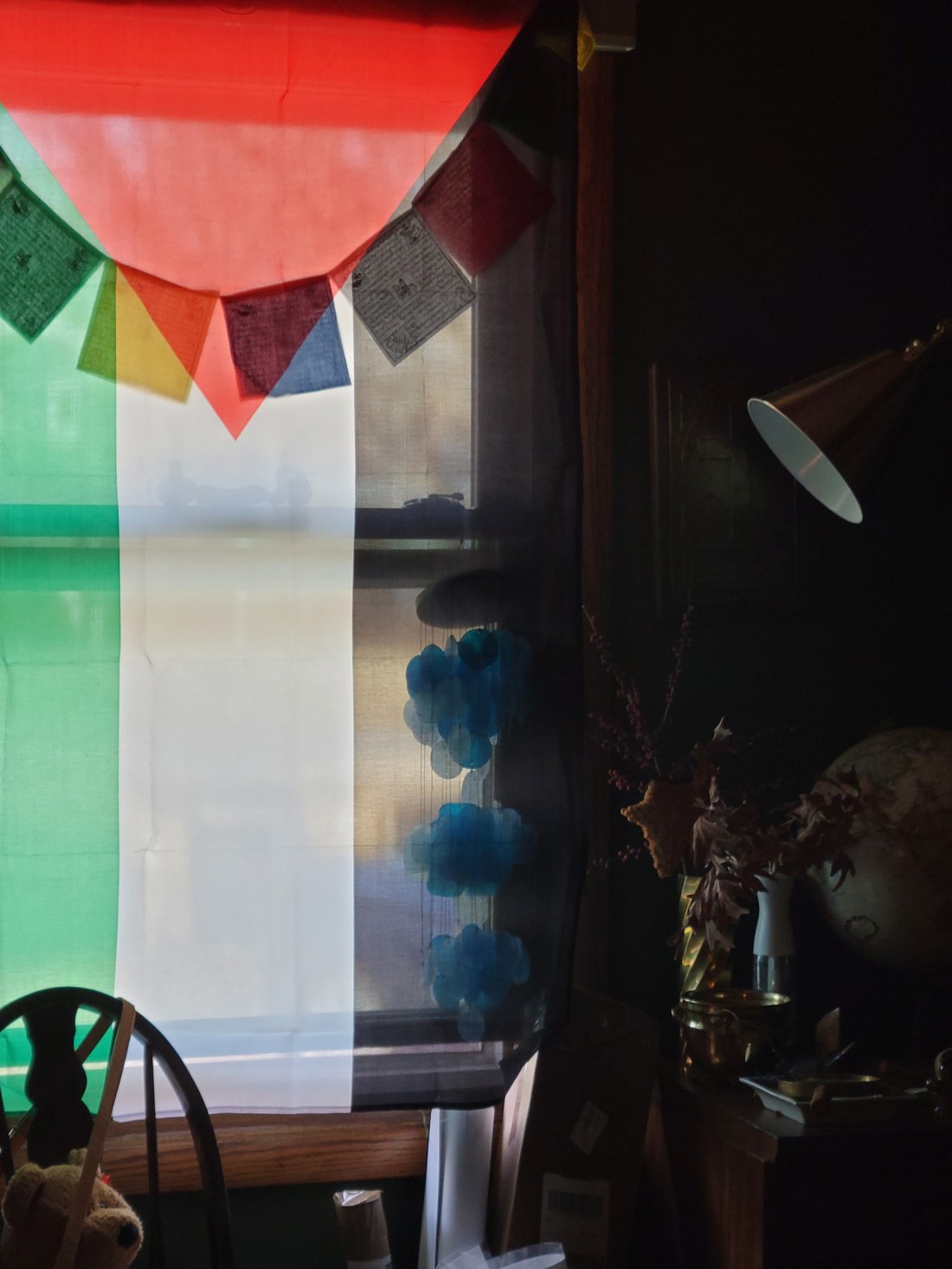
My writing room is slightly musty from old books stacked on shelves and the floor. The light, dusty, dances with the fabric of my Palestinian flag hung on the window along with the shadows. The breeze flows in from four inches of open window, winter or summer. Fresh air on my skin makes me feel alive, and I have a problem of not feeling alive.  I also love to sweat in the humid air of a Wisconsin summer. But then I worry about my books.  I checked my hygrometer today worrying about the books being too dry in winter.

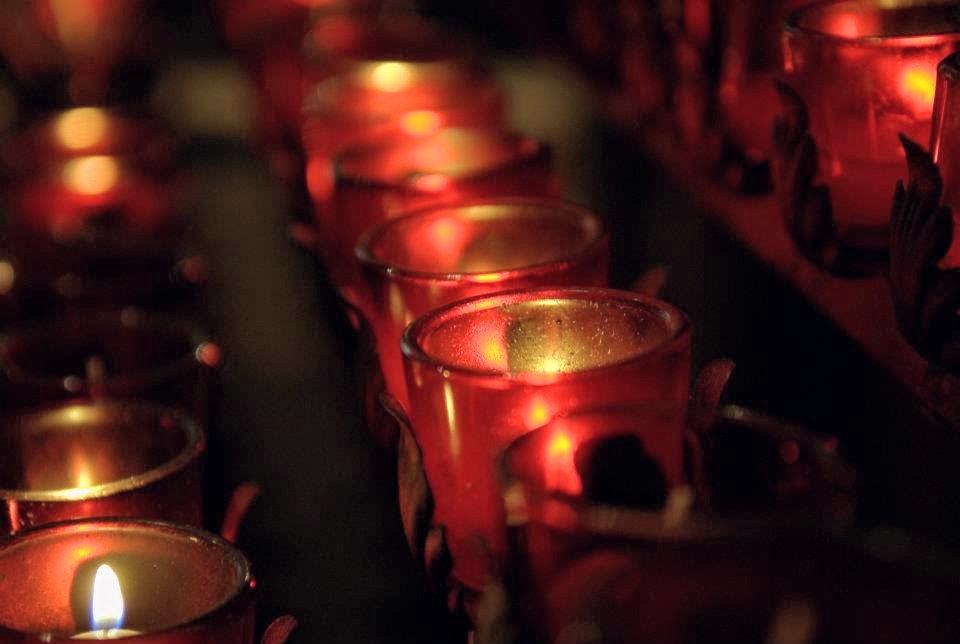
Candles have burned in this room. Incense too. The sweet tobacco scent, must books, trinkets from antiquing with my kids, artifacts from Papua New Guinea what little I have, feel familiar. It is home to me.

As a child, home wasn’t a place– it was my parents. Though I was born in Lae, at six, we moved to Ukarumpa, then out to the bush, to create a missionary home.  At seven my parents moved us to California. In 6th grade, we landed in Texas, not on a ranch with cowboys and horses, much to my extreme disappointment. Rather, a ranch-style house in the burbs of Duncanville. Middle and high school are spent there playing the bass clarinet and marching in the band.

They frequently traveled together my parents. Friends took care of us.  I remember the strange family friend, a man who wore a togalike skirt around our house, much to our dismay. Probably something cultural from Australia, but quite shocking for four girls living in Texas ranging in age from elementary to high school. We made sure to quickly inform our mom what a weirdo their friend was in our opinion.

For my mom, I think, traveling with my father was better for her than staying home with us four girls. He was on his best behavior at work. And dealing with Dad when he arrived back weeks later, tired, cranky, critical, and correcting every decision she made while he was gone, well, that was hard on all of us.

I don’t remember talking to my parents as a child. Only when forced. Those conversing were multiplied in difficulty because he wanted a certain respect and responses that suited him. Sometimes I just didn’t want to say what he wanted to hear. But typically, it was easier to concede whatever it was.

I think parents need to interrogate their kids only in the sense that we’re amazed by their brains and awestruck at their creativity. Tell me more! What are you thinking about these days? I love talking to my kids.

I always felt my parents were annoyed they had children. Especially when I displeased my father. That was a surefire way to get the wrong kind of attention; I started to do poorly in school; I was bored. But I read all the time and have a quizzical mind.  Just not in school. There I languished.

More to come.